Drop Down Necklace Guide: How to Style and Layer It
Learn how to style a drop down necklace with our beginner guide. Discover ideal lengths, neckline pairings, and layering techniques.


What Exactly Is a Drop Down Necklace?
If you are exploring vertical jewelry silhouettes, the drop down necklace is an essential addition to your collection. Often referred to interchangeably as a Y-necklace, lariat, or sautoir, this style features a standard base chain that connects to a secondary vertical chain extending downward toward the sternum. Unlike traditional pendants that hang from a fixed bail, a drop down necklace creates an unbroken, elongating line that draws the eye downward, making it a powerful tool for balancing proportions and elevating simple outfits.
For beginners, navigating the nuances of this style can be tricky. The vertical drop introduces unique physics, chain tension, and styling rules that do not apply to standard collar or princess-length chains. This guide breaks down the anatomy, material science, and styling frameworks you need to master the vertical drop.
The Anatomy of a Vertical Drop
To understand how to wear and care for this jewelry type, you must first understand its three structural components. According to the Jewelers of America, chain architecture dictates how a piece drapes on the body.
- The Base Chain: The portion that wraps around the back and sides of the neck. This typically measures between 14 and 18 inches.
- The Junction: The critical connection point where the base chain meets the drop. This can be a fixed soldered ring (creating a permanent Y-shape) or a sliding friction clasp (allowing adjustable lariat styling).
- The Terminal Weight: The element at the very bottom of the drop. This is not just decorative; it serves as a gravitational anchor to keep the chain hanging straight and prevent tangling.
Standard Lengths and Drop Ratios
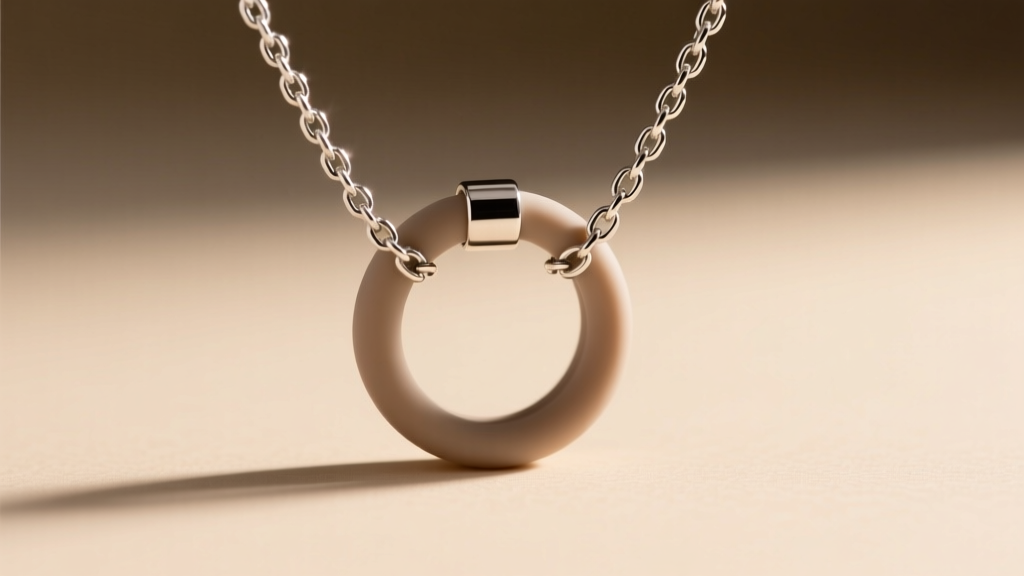
Not all vertical drops are created equal. The ratio between the base chain and the drop length determines where the terminal weight rests on your torso. Use this matrix to select the right proportions for your wardrobe.
| Style Profile | Base Chain Length | Drop Length | Total Reach | Ideal Neckline |
|---|---|---|---|---|
| The Subtle Y | 16 inches | 2 - 3 inches | 18 - 19 inches | Scoop & Crew Necks |
| The Classic Lariat | 18 inches | 4 - 5 inches | 22 - 23 inches | Deep V-Necks |
| The Sautoir | 24+ inches | 6+ inches | 30+ inches | Turtlenecks & Tunics |
Matching Necklines: The Geometry of Styling
The most common beginner mistake is pairing a vertical drop with a conflicting neckline. Because the necklace creates a strong vertical axis, your clothing must either mirror or intentionally contrast that geometry.
1. The Plunging V-Neck (Mirroring)
A classic 18-inch base with a 4-inch drop is mathematically designed to parallel the lapels of a V-neck blouse or wrap dress. Ensure the terminal weight rests at least one inch above the apex of the V-neck to avoid a cluttered, overlapping focal point.
2. The Boatneck and Bateau (Contrasting)
Boatnecks emphasize horizontal width across the collarbones. Dropping a long Y-chain over a boatneck breaks up the horizontal line, creating a flattering cross-axis that slims the upper body. Opt for a longer 20-inch base with a 5-inch drop for this silhouette.
3. The Turtleneck (Canvas Layering)
High necklines require longer sautoir-style drops (30+ inches total). The solid fabric of a turtleneck acts as a blank canvas, allowing intricate terminal pendants or gemstone drops to stand out without competing with exposed skin.
"The secret to a drop down necklace is gravity. If your terminal pendant is too light for the gauge of the chain, the necklace will constantly flip and tangle. Always ensure the drop weight is proportional to the chain thickness."
Material Science: Chain Tension and Junction Friction
When investing in this style, you must consider the mechanical wear at the junction point. If you choose an adjustable lariat style where the chain slides through a ring, friction is your biggest enemy.
As the chain slides back and forth during daily wear, it acts like a microscopic file against the junction ring. If you purchase gold vermeil or gold-plated brass, the friction will wear away the plating at the junction within three to six months, leaving a bare brass or silver ring that can tarnish and stain your skin. For sliding lariats, always invest in solid 14k gold, platinum, or surgical-grade stainless steel. The Gemological Institute of America (GIA) notes that solid alloys withstand mechanical abrasion significantly better than plated alternatives.
Furthermore, avoid snake chains for the drop portion. Snake chains consist of tightly wound metal bands that easily kink and bend under the localized stress of a terminal weight. Instead, opt for box chains or cable chains, which offer superior structural integrity and fluid drape.
The Framework for Layering Vertical Drops
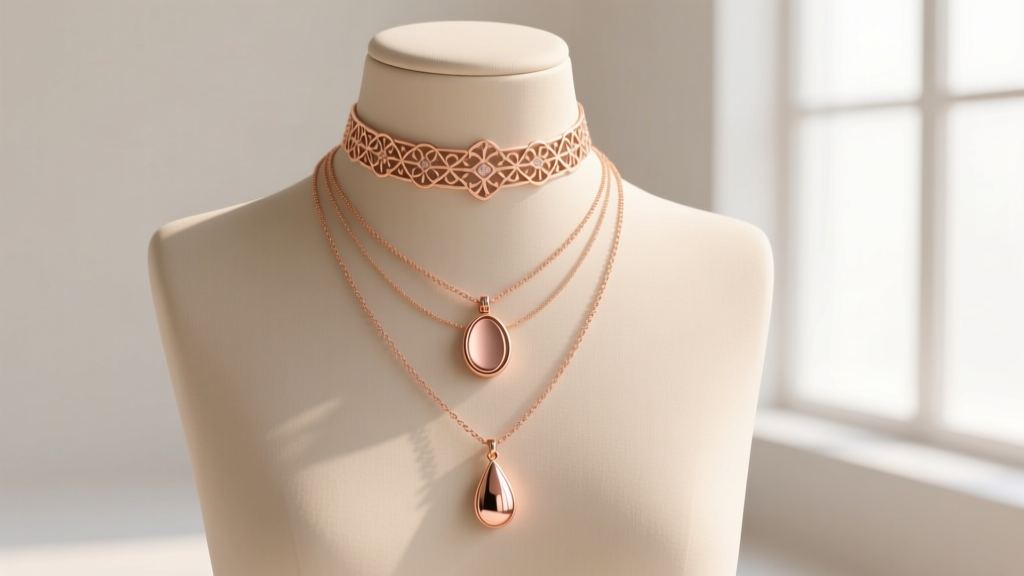
Layering a drop down necklace requires strict adherence to spatial mathematics to prevent the chains from knotting together. Follow the "Rule of Thirds and Gaps" to achieve a curated, professional look.
- The 2-Inch Minimum Gap: The base chain of your drop necklace must be at least two inches longer than the longest chain in your underlying layer. If you are wearing a 16-inch pendant necklace, your drop necklace base must be 18 inches or longer.
- Anchor with a Choker: To balance the extreme verticality of the drop, anchor the top of your neckline with a 14-inch choker or collar. This creates a visual frame that contains the longer, flowing pieces.
- Keep the Drop Clear: Never layer a secondary pendant necklace that falls at the exact same length as your terminal drop. The two pendants will collide, scratch each other, and tangle instantly.
Troubleshooting Common Beginner Issues
Problem: The Drop Chain Keeps Flipping Upside Down
The Fix: This is a physics issue. The chain you selected is too thick or heavy relative to the terminal pendant. The center of gravity is too high, causing the chain to rotate. You must either swap the chain for a finer, lighter gauge (like a delicate 1.2mm cable chain) or add a heavier gemstone cluster to the terminal end to pull the center of gravity downward.
Problem: Hair Snagging in the Junction
The Fix: If you wear your hair down, sliding lariat junctions are notorious for catching fine strands of hair. Look for lariats that feature a "silicone-lined" or "Teflon-coated" junction ring. These modern inserts reduce the gap between the chain and the ring, eliminating the snag point while maintaining smooth adjustability.
Problem: The Clasp is Difficult to Reach
The Fix: Because the weight of the drop pulls the chain downward, the back clasp often migrates to the side of the neck or slides down to the collarbone, making it hard to unfasten. To counter this, purchase a drop necklace with a slightly heavier lobster clasp at the back, or ask a local jeweler to solder a small counterweight tag near the clasp to keep it anchored at the nape of your neck.
Final Thoughts
Mastering the drop down necklace is about understanding the interplay between gravity, geometry, and material durability. By selecting the correct base-to-drop ratio for your wardrobe, prioritizing solid metals at high-friction junctions, and applying strict layering gaps, you can transform this striking silhouette into a versatile staple of your everyday jewelry rotation.


