How to Choose a Durable Patriotic Necklace: Material Guide
Discover which metals and gemstones make a patriotic necklace last. We compare enamel, anodized titanium, and solid gold for red, white, and blue jewelry.

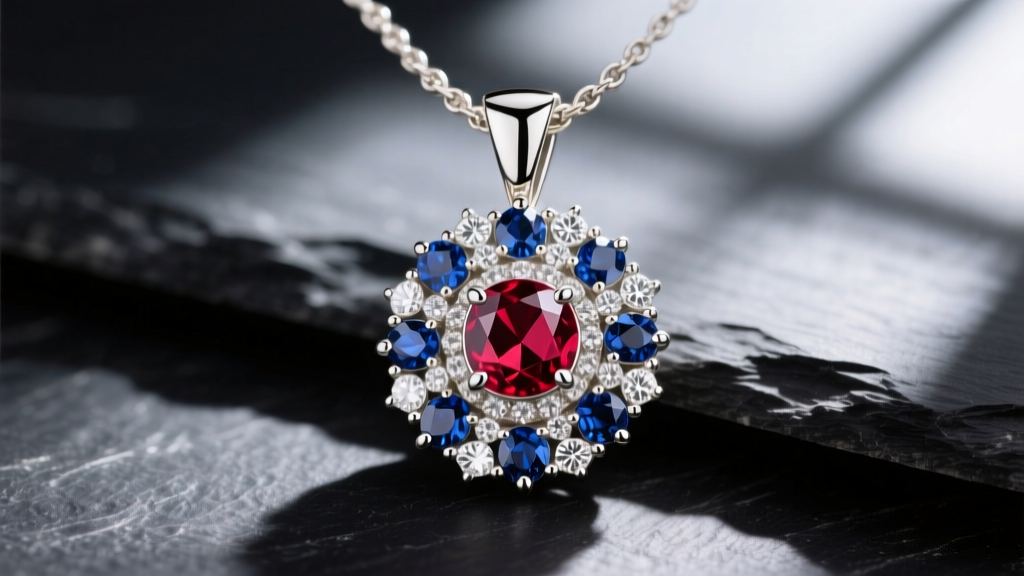
The demand for a patriotic necklace surges predictably around national holidays, commemorative events, and election cycles. However, the market is heavily saturated with fast-fashion alternatives that prioritize cheap manufacturing over material integrity. Most mass-produced red, white, and blue pendants are constructed from brass bases coated in epoxy resin or low-grade enamel. Within months, these pieces succumb to copper oxidation, UV yellowing, and structural chipping. If you want a piece of national pride that transitions from a temporary accessory to an enduring heirloom, understanding the metallurgical and gemological properties of your jewelry is non-negotiable.
The Fast-Fashion Trap: Why Base Metals and Resins Fail
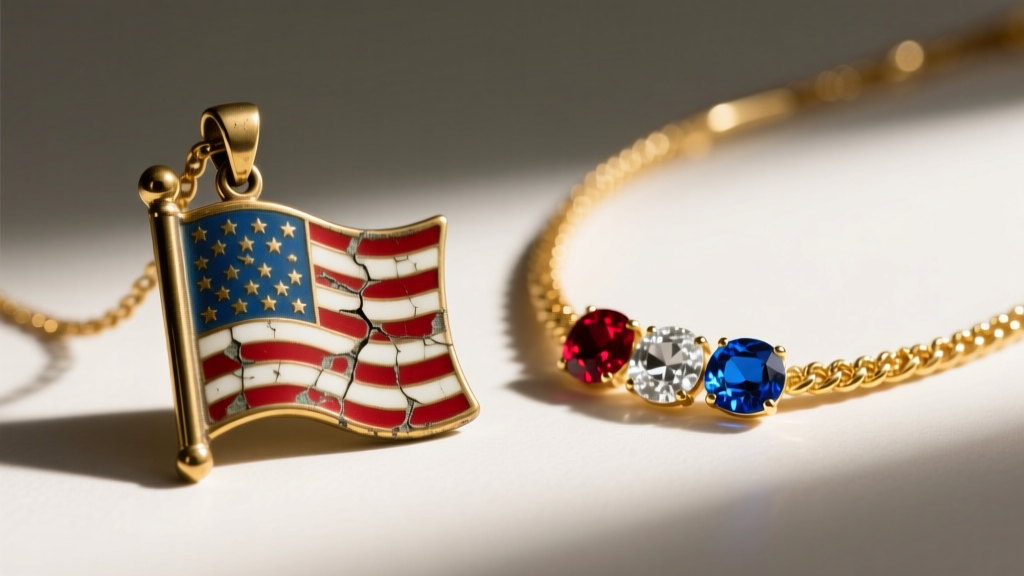
The most common failure mode in budget-friendly patriotic jewelry is galvanic corrosion and enamel delamination. Manufacturers frequently use cast brass or zinc alloys for the pendant base, plating them with a microscopic layer of gold or rhodium before applying colored cold enamel. When the plating wears thin—often within weeks of daily wear—the underlying copper and zinc react with the sulfur and moisture in human sweat. This creates copper chloride, resulting in the notorious 'green skin' effect and a pitted, degraded pendant surface.
Furthermore, the red and blue pigments used in cheap resins are highly susceptible to ultraviolet (UV) degradation. A vibrant crimson resin star will often fade to a dull, chalky pink after just one summer of outdoor exposure. To build a lasting patriotic necklace, we must discard these composite shortcuts and look toward aerospace-grade metals and stable crystalline structures.
Base Metal Breakdown: Structural Integrity and Biocompatibility
The foundation of any enduring necklace lies in its base metal. For a piece meant to be worn close to the pulse point, biocompatibility and tensile strength are paramount.
Anodized Titanium (Grade 23 / Ti-6Al-4V ELI)
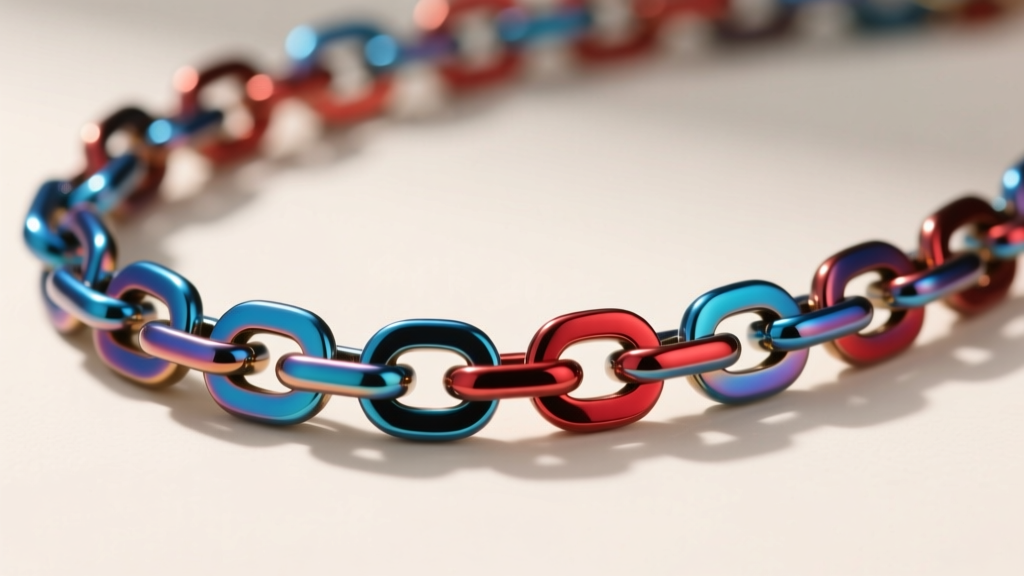
Titanium is arguably the most innovative metal for modern patriotic jewelry, specifically when utilizing anodization rather than chemical dyes. Grade 23 titanium (Extra Low Interstitial) is the same alloy used in surgical implants. By passing an electrical current through the metal in an electrolytic bath, jewelers can manipulate the thickness of the titanium dioxide layer on the surface. This structural color change requires zero pigments. Applying roughly 90 to 110 volts yields brilliant, permanent sapphire blues and deep purples, while lower voltages produce bronze and gold hues. Because the color is a physical property of the oxide layer, it will never fade, chip, or cause contact dermatitis.
Solid 14k and 18k Gold (Nickel-Free Alloys)
For traditional luxury, solid gold remains the benchmark. However, the alloy composition is critical. Standard 14k white gold is often alloyed with nickel to achieve a bright white color, which triggers severe allergic reactions in up to 15% of the population. When commissioning or buying a high-end patriotic pendant, specifically seek out palladium-alloyed white gold. Palladium is a platinum-group metal that provides a naturally white, hypoallergenic base without the need for rhodium plating, ensuring the 'white' in your red, white, and blue motif never wears off to reveal a yellowish underlayer.
Enamel-Plated Brass (The Option to Avoid)
While vitreous enamel (glass fused to metal at high temperatures) is durable, the vast majority of patriotic pendants use 'cold enamel' (epoxy resin). Epoxy has a Mohs hardness of roughly 3 to 4, making it highly prone to micro-scratches that trap dirt and oils, dulling the optical clarity of the red and blue fields.
Achieving Red, White, and Blue: Gemstones vs. Synthetics
To achieve the tri-color motif without relying on degrading resins, modern jewelers utilize both natural and lab-grown gemstones. The 2026 jewelry market has seen a massive shift toward lab-created stones, which offer identical chemical and optical properties to their mined counterparts but with superior clarity and ethical sourcing.
| Material (Color) | Mohs Hardness | UV Stability | Estimated Price (per carat) | Durability Verdict |
|---|---|---|---|---|
| Lab-Grown Sapphire (Blue) | 9.0 | Excellent | $20 - $50 | Heirloom-grade; scratch resistant |
| Lab-Grown Ruby (Red) | 9.0 | Excellent | $25 - $60 | Heirloom-grade; scratch resistant |
| Cubic Zirconia (White) | 8.0 - 8.5 | Good | $1 - $5 | Moderate; may cloud over years |
| Vitreous Enamel (Any) | 5.0 - 6.0 | Excellent | N/A (Labor cost) | High; can shatter on hard impact |
| Epoxy Resin (Any) | 3.0 - 4.0 | Poor | N/A | Low; yellows and scratches easily |
According to the GIA's Mohs Scale, corundum (the mineral family for rubies and sapphires) sits at a 9, second only to diamond. This makes lab-grown sapphires and rubies the ultimate choice for the blue and red elements of a patriotic necklace. They will not scratch from daily contact with dust (which contains quartz, Mohs 7), ensuring the facet edges remain razor-sharp and highly reflective for decades. For the white elements, while diamonds are the hardest, high-quality lab-grown moissanite (Mohs 9.25) offers a more budget-friendly, highly brilliant alternative to cubic zirconia, which is notorious for developing a milky, opaque patina after prolonged exposure to skin oils.
Chain Gauge, Clasps, and Structural Mechanics
A pendant is only as secure as the chain that holds it. Many patriotic necklaces fail not at the pendant, but at the chain links or clasp mechanism.
- Chain Gauge: Avoid chains thinner than 1.0mm (approx. 18-gauge). For a solid gold or gemstone pendant weighing between 3 and 8 grams, a 1.2mm to 1.5mm (16 to 14-gauge) chain is required to prevent tensile snapping. Curb or cable chains are preferred over snake chains, as snake chains are notoriously difficult to repair once the interlocking plates are kinked.
- Clasp Mechanics: Discard spring-ring clasps. The internal steel springs in cheap spring rings rust when exposed to humidity, causing the clasp to jam open. Opt for a solid 12mm or 14mm lobster clasp. Lobster clasps feature a heavier, cast-metal lever and a more robust internal spring, drastically reducing the risk of accidental unfastening.
- Soldered Jump Rings: Ensure the jump ring connecting the pendant to the chain is soldered closed. An unsoldered jump ring will inevitably warp and open under the pendulum motion of daily walking, leading to lost pendants.
Care and Maintenance for Colorfastness
Even the most durable materials require specific maintenance protocols. If your patriotic necklace features lab-grown sapphires, rubies, and solid gold, it can be safely cleaned in an ultrasonic jewelry cleaner using a mild alkaline solution. The high-frequency cavitation will dislodge sebum and dead skin cells from beneath the bezel settings without damaging the stones.
However, if your piece incorporates any vitreous enamel or fracture-filled natural gemstones, ultrasonic cleaners are strictly prohibited. The vibrations can shatter the glass enamel or widen microscopic fissures in the stones. For enamel pieces, the American Gem Society recommends cleaning only with a soft, lint-free microfiber cloth and warm, soapy water, avoiding harsh chemical dips that can strip the polished finish of the surrounding metal.
Final Verdict: Building a Heirloom Patriotic Piece
A patriotic necklace should be a symbol of enduring values, not a disposable seasonal trinket. By prioritizing Grade 23 anodized titanium or palladium-alloyed 14k white gold for the base, and utilizing lab-grown corundum for the red and blue motifs, you secure a piece of jewelry that is chemically stable, hypoallergenic, and mechanically robust. Investing in proper chain gauges and soldered lobster clasps ensures that your tribute remains intact, brilliant, and wearable for generations to come.


