Egg Necklace Care: Cleaning Enamel, Gemstone & Metal Pendants
Learn expert care, cleaning, and storage tips for your egg necklace. Discover how to safely maintain guilloché enamel, gemstone, and metal lockets

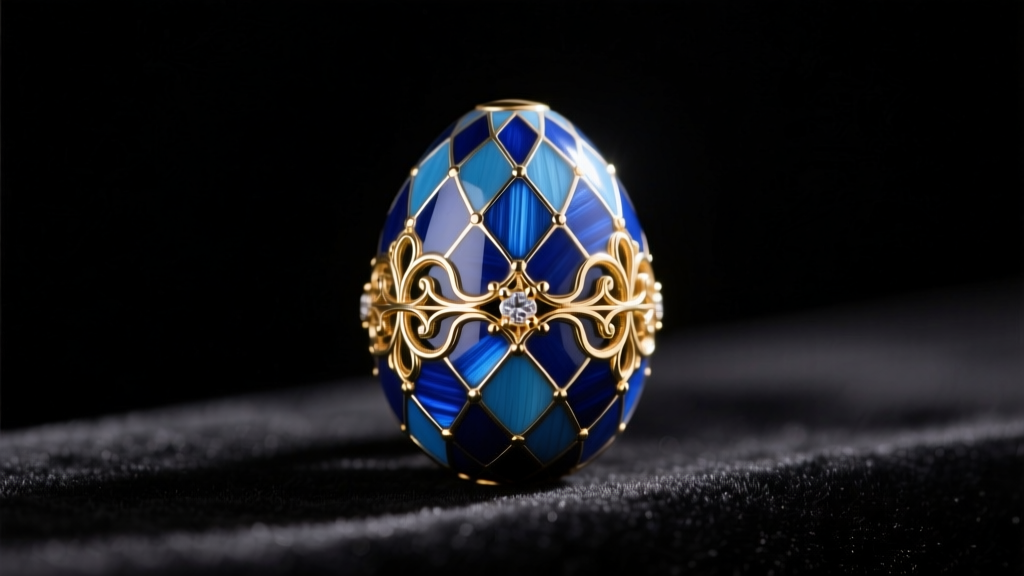
Egg necklaces, ranging from intricate Fabergé-style guilloché pendants to carved gemstone teardrops and hollow metal lockets, are statement pieces that demand specialized maintenance. The curved, often multi-material construction of an egg pendant creates unique vulnerabilities that standard jewelry cleaning methods can easily destroy. Whether you are wearing a vintage 18k gold enamel egg necklace or a modern carved rose quartz pendant, understanding the specific material sciences behind your jewelry is critical for its longevity. As of 2026, the shift toward eco-friendly, non-ammonia enzymatic jewelry cleaners has made at-home maintenance safer, but the fundamental rules of thermal shock, porosity, and mechanical friction still apply. This comprehensive guide breaks down the exact protocols for cleaning, storing, and maintaining the most popular styles of egg necklaces.
The Anatomy of an Egg Necklace: Why Material Dictates Care
Unlike flat pendants or simple solitaire chains, egg necklaces often feature complex three-dimensional structures. A traditional metal egg locket contains a mechanical hinge, a hidden clasp, and an interior cavity that can trap sebum, perfume, and environmental dust. Carved gemstone eggs are susceptible to micro-abrasions along their curved surfaces, while enameled eggs consist of a glass-like silicate layer fused to a metal substrate. According to the Gemological Institute of America (GIA), treating all jewelry with a single 'universal' cleaning solution is the leading cause of irreversible damage to composite pieces. The curvature of an egg pendant also means that light reflects differently, making micro-scratches and chemical etching far more visible than on flat jewelry surfaces.
Guilloché and Enamel Egg Pendants: The Danger Zone
Guilloché enamel is created by fusing powdered glass to a metal base at temperatures exceeding 800°C. While the resulting surface is brilliant and scratch-resistant, it is essentially glass, making it highly susceptible to thermal shock and high-frequency vibrations. Never use an ultrasonic cleaner on an enameled egg necklace. The 40kHz cavitation bubbles generated by ultrasonic machines can easily cause 'crazing'—a network of microscopic spiderweb fractures within the enamel layer that dulls the color and compromises the structural integrity of the glass.
Furthermore, avoid sudden temperature changes. Rinsing a warm enamel egg pendant under cold tap water can cause the glass layer to contract faster than the metal substrate, leading to immediate delamination or cracking. To clean an enamel egg necklace, use a pH-neutral dish soap (pH ~7.0) diluted in room-temperature distilled water. Gently agitate the solution with a 0.05mm soft horsehair brush, focusing on the gold or silver filigree wirework that often frames the egg. Rinse with room-temperature distilled water and pat dry immediately with a lint-free microfiber cloth. Never use paper towels, as the wood pulp fibers can leave micro-scratches on the polished metal accents.
Gemstone Egg Necklaces: Mohs Hardness & Porosity Matrix
Carved gemstone egg pendants are incredibly popular, but their care requirements vary wildly based on their Mohs hardness and porosity. Porous stones can absorb the chemicals in commercial jewelry dips, leading to permanent discoloration. The American Gem Society (AGS) strongly advises against using ammonia-based cleaners on any copper-bearing gemstones. Below is a decision matrix for the most common gemstone egg necklaces.
| Gemstone Material | Mohs Hardness | Porosity | Safe Cleaning Agent | Failure Mode to Avoid |
|---|---|---|---|---|
| Rose Quartz | 7.0 | Low | Mild soapy water, ultrasonic safe | Prolonged UV exposure (fading) |
| Turquoise | 5.0 - 6.0 | High | Dry microfiber cloth only | Ammonia/Chemicals (causes darkening/pitting) |
| Jade (Jadeite) | 6.5 - 7.0 | Low | Mild soapy water, soft brush | Harsh abrasives (ruins polished finish) |
| Opal | 5.5 - 6.5 | Medium | Damp cloth, no submersion | Dehydration (causes internal cracking/crazing) |
| Malachite | 3.5 - 4.0 | High | Dry, soft polishing cloth | Acids/Ammonia (dissolves copper content) |
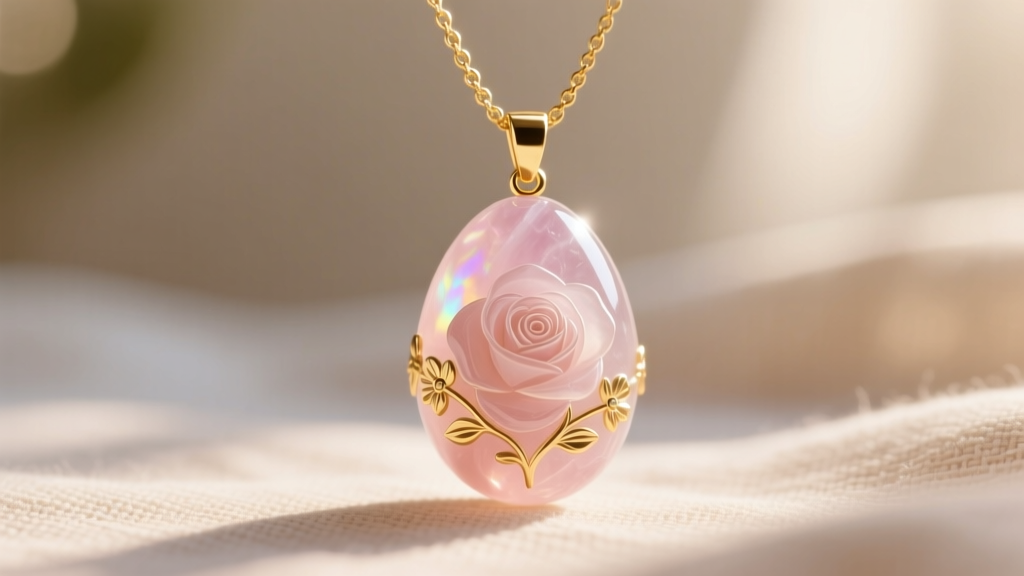
When caring for a turquoise or malachite egg necklace, remember that these stones are often treated with waxes or resins to enhance their color and stability. Submerging them in warm water or using a commercial jewelry dip will strip these treatments, leaving the stone dry, chalky, and prone to cracking. For opal egg pendants, hydration is key. Opals contain between 6% and 10% water; storing them in overly dry environments or cleaning them with harsh alcohols will draw out this moisture, resulting in structural failure.
Step-by-Step Cleaning Protocol for Metal Egg Lockets
Metal egg lockets, whether crafted from 14k gold, 18k gold, or sterling silver, present a unique mechanical challenge: the hinge. The hinge barrel of an egg locket is a magnet for dead skin cells, lotion buildup, and pocket lint. Over time, this organic matter calcifies, causing the locket to become stiff or refuse to close entirely.
Never submerge an egg locket with a mechanical hinge in liquid. Moisture trapped inside the hollow chamber or hinge barrel will cause internal oxidation that is nearly impossible to remove without disassembly.
To clean a metal egg locket safely, follow this protocol:
- Step 1: Dry Debris Removal. Use a wooden toothpick or a specialized jewelry crevice tool to gently dislodge packed debris from the hinge barrel and the interior rim where the locket seals.
- Step 2: Targeted Agitation. Dip a 0.05mm horsehair brush into a solution of pH-neutral soap and distilled water. Scrub the exterior curvature of the egg, avoiding the hinge seam as much as possible.
- Step 3: Hinge Lubrication. If the hinge is stiff, do not force it. Apply a microscopic drop of synthetic watch oil (like Moebius 9010) to the hinge pin using a fine needle. Open and close the locket gently to distribute the lubricant.
- Step 4: Drying. Use compressed air (held at least 6 inches away) to blow moisture out of the hinge barrel, followed by a microfiber cloth for the exterior.
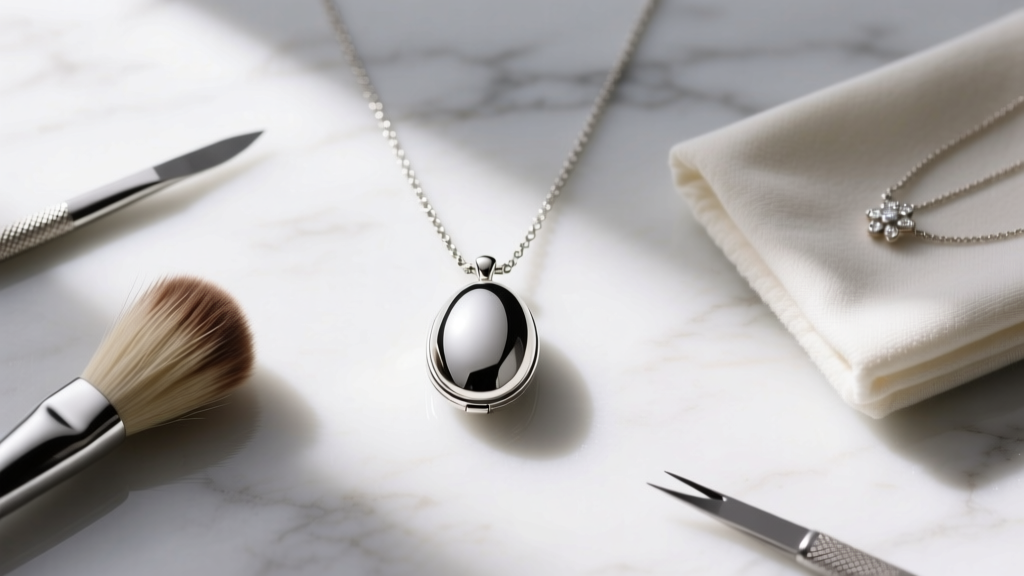
Storage & Maintenance: Preventing Micro-Abrasions
The way you store your egg necklace is just as important as how you clean it. The three-dimensional shape of an egg pendant means it will naturally roll or shift in a standard jewelry box, leading to micro-abrasions if it comes into contact with harder materials. Always store egg necklaces individually in soft, anti-tarnish flannel pouches. For sterling silver egg lockets, include a 3M anti-tarnish strip in the pouch to absorb sulfur compounds in the air that cause blackening.
For heavy gemstone egg pendants (such as solid jade or quartz), the weight of the stone can put undue stress on delicate chains. If your pendant exceeds 15 grams, ensure it is strung on a chain with a minimum wire gauge of 1.2mm, such as a rolo or wheat chain, to prevent the chain links from stretching or snapping under the pendulum effect of the heavy egg.
When to Seek Professional Restoration
While routine maintenance can be handled at home, certain issues require the expertise of a master jeweler. If your guilloché enamel egg necklace suffers a chip or crack, do not attempt to fill it with household adhesives like cyanoacrylate (Super Glue), which will yellow and ruin the optical clarity of the piece. Professional re-enameling and kiln-firing typically cost between $150 and $400, depending on the complexity of the guilloché engine-turning. Similarly, if the hinge pin of a vintage metal egg locket shears off, a jeweler will need to laser-weld a new pin and re-tension the clasp, a service that generally ranges from $45 to $85. By respecting the material limits and mechanical intricacies of your egg necklace, you ensure it remains a flawless, wearable heirloom for decades to come.


