Elephant Necklace Meaning: Symbolism & Material Guide
Discover the elephant necklace meaning across cultures and compare the best metal properties for durable, detailed elephant pendants in this expert guide.

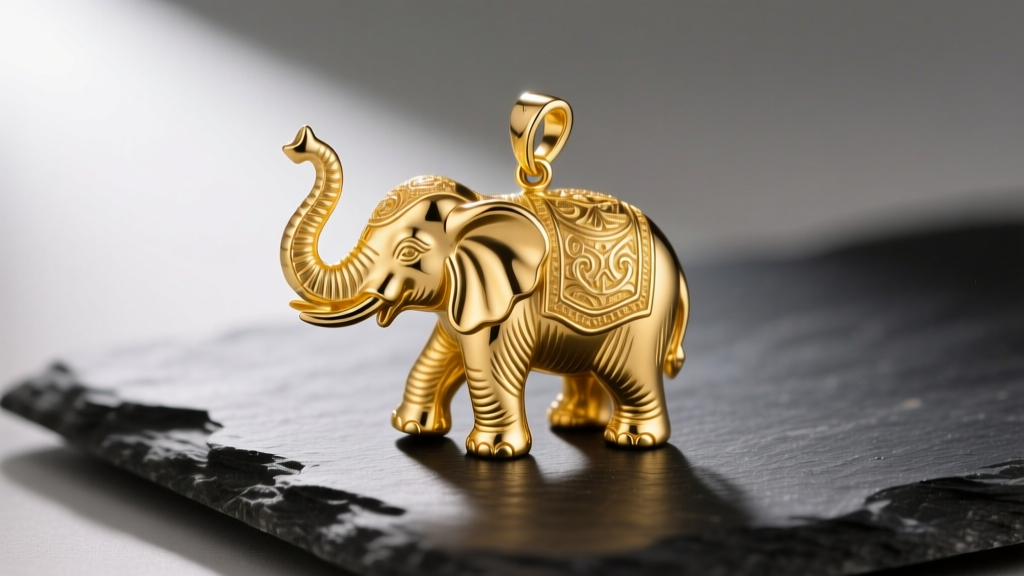
The elephant is one of the most universally revered symbols in global jewelry design, representing wisdom, strength, protection, and good fortune. However, understanding the true elephant necklace meaning requires looking beyond mere aesthetics. The cultural weight of this motif is deeply intertwined with the physical materials used to craft it. A heavy, enduring platinum elephant conveys a vastly different symbolic message than a delicate, intricately carved wooden charm. In this comprehensive guide, we explore the spiritual significance of the elephant pendant and conduct a rigorous material comparison to help you select a piece that aligns with both your spiritual intentions and practical wearability needs.
The Cultural and Spiritual Elephant Necklace Meaning
Across various traditions, the elephant serves as a powerful talisman. In Hinduism, the elephant-headed deity Ganesha is the remover of obstacles and the patron of arts and sciences. Wearing an elephant pendant is often seen as an invocation of his blessings for new beginnings. In Buddhist traditions, the white elephant is associated with mental strength, purity, and the birth of the Buddha. Meanwhile, in many Western and African cultures, the elephant symbolizes familial bonds, memory, and steadfast loyalty.
'The orientation of the elephant's trunk fundamentally shifts the amulet's purpose. A trunk raised upward is universally recognized as a beacon for showering good luck and positive energy outward, while a downward-facing trunk symbolizes grounding, fertility, and the storing of longevity.' — Cultural Motifs in Adornment, Journal of Anthropological Jewelry
When you wear an elephant necklace, you are participating in a lineage of symbolism that dates back millennia. But to ensure this talisman lasts a lifetime, the metallurgical and physical properties of the pendant must be carefully considered.
Why Material Choice Alters the Elephant Motif's Impact
The elephant motif is notoriously difficult to execute in jewelry due to its anatomical complexity. The deep wrinkles of the skin, the curvature of the tusks, and the delicate tip of the trunk require materials with exceptional flow characteristics during casting, or high structural integrity during carving. The material you choose dictates not only the pendant's durability but also its level of detail.
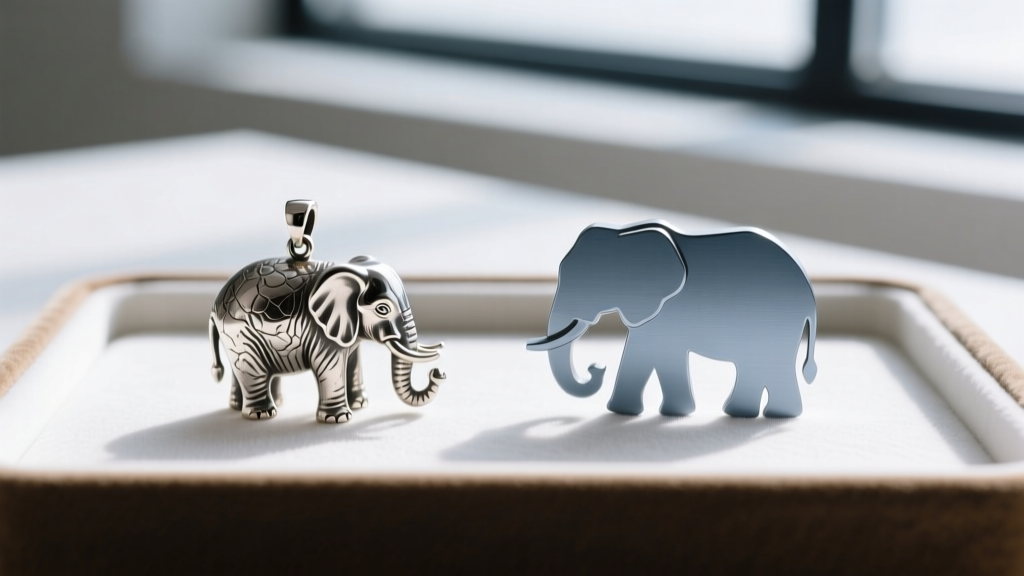
Detail Retention: Capturing the Wrinkles and Tusks
When manufacturers use the lost-wax casting method to create 3D elephant pendants, the metal's melting point and fluidity determine how well it fills the microscopic crevices of the silicone mold. Metals with lower melting points and high fluidity, such as sterling silver and 14k gold, capture the intricate skin textures beautifully. Conversely, harder metals like titanium or tungsten cannot be traditionally cast into complex 3D shapes; they must be CNC-milled or stamped, resulting in flatter, less detailed silhouette charms.
Material Comparison: Metals for Elephant Pendants
Selecting the right metal involves balancing hardness, tarnish resistance, and casting resolution. Below is a technical comparison of the most common metals used for elephant necklaces.
| Metal / Alloy | Vickers Hardness (HV) | Casting Detail Resolution | Tarnish Resistance | Avg. Price Range (Pendant) |
|---|---|---|---|---|
| Sterling Silver (925) | 60 - 75 HV | Excellent (High fluidity) | Poor (Requires maintenance) | $45 - $150 |
| 14k Yellow Gold (58.5%) | 130 - 150 HV | Superior (Optimal flow) | Excellent | $350 - $900 |
| Platinum (950 Pt) | 110 - 130 HV (Work-hardens) | Good (Requires high heat) | Excellent (Develops patina) | $800 - $2,500+ |
| Titanium (Grade 5) | 350+ HV | Poor (Milled/Stamped only) | Superior | $60 - $200 |
According to the The Silver Institute, sterling silver remains the most popular choice for highly detailed, affordable animal charms. However, its low hardness means that protruding elements, like an upward-pointing trunk or thin tusks, are prone to bending if caught on clothing. 14k gold offers a much safer structural profile for these delicate extremities due to its alloyed copper and silver content, which increases its tensile strength.
Carved vs. Cast: Organic Materials and Their Properties
Not all elephant necklaces are cast in metal. Carved organic and semi-precious materials offer a completely different tactile experience and carry their own unique energetic properties. Jade, in particular, is deeply intertwined with elephant symbolism in Asian markets.
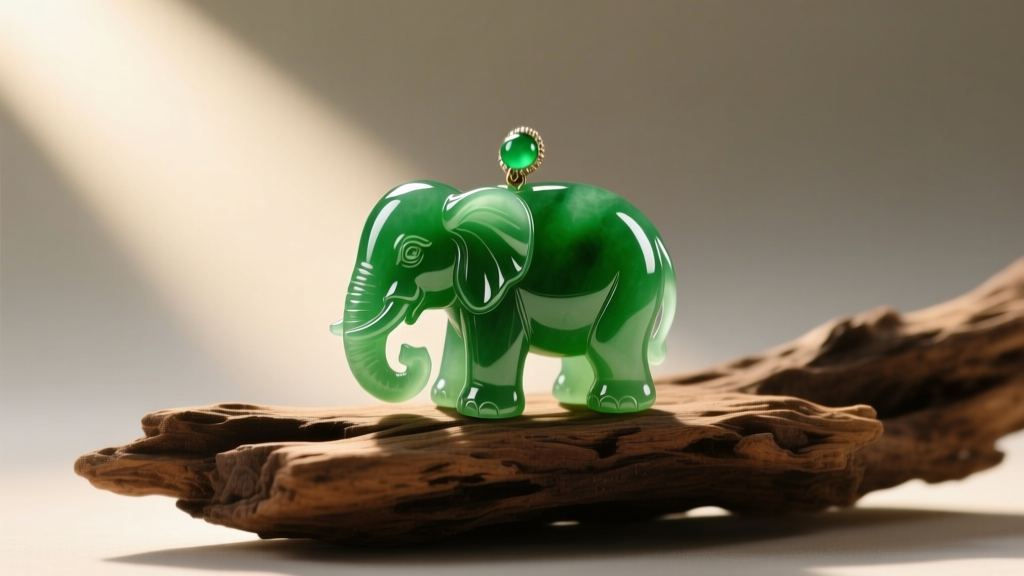
Ethical Sourcing and Durability of Bone, Wood, and Jade
When evaluating carved materials, we must look at the Mohs scale of hardness and, more importantly, toughness (resistance to breaking). The Gemological Institute of America (GIA) notes that while Nephrite jade (Mohs 6.0-6.5) is softer than Jadeite, its interlocking fibrous crystal structure gives it exceptional toughness. This makes Nephrite the superior choice for carving an elephant with a thin, raised trunk, as it is highly resistant to snapping upon impact.
- Nephrite Jade: Best for intricate 3D carvings. Highly durable, but requires careful polishing to maintain its waxy luster.
- Tagua Nut (Vegetable Ivory): A sustainable, ethical alternative to animal ivory. Mohs 2.5. Highly susceptible to moisture and cracking; must be kept away from prolonged water exposure.
- Sandalwood: Prized for its aromatic properties and spiritual use in meditation. Very soft (Mohs 1.5-2.0); details will wear down over years of friction against the skin.
Chain Pairing: Matching the Bail and Chain Material
An often-overlooked aspect of necklace design is the mechanics of the bail (the loop that connects the pendant to the chain). Elephant pendants are typically bottom-heavy and wide. If paired with an inadequate chain or bail, the pendant will constantly flip upside down, hiding the motif and causing uneven wear on the chain links.
For solid metal elephant pendants weighing over 8 grams, avoid standard 20-gauge or 22-gauge jump rings. Instead, look for pendants featuring a hidden tube bail or a tapered soldered bail made from at least 18-gauge wire. The chain itself should be a robust style, such as a 2.0mm to 3.0mm Cuban link, Figaro, or Wheat chain. Delicate chains like the 0.9mm Box chain or standard Cable chain will eventually snap under the pendulum-like swinging motion of a heavy elephant charm. Furthermore, ensure the chain metal matches the pendant's galvanic properties; pairing a sterling silver pendant with a cheap brass chain will cause rapid galvanic corrosion at the point of contact.
Care and Maintenance Based on Material
Preserving the elephant necklace meaning and physical integrity requires material-specific care. Sterling silver elephants should be stored in anti-tarnish cloth pouches and cleaned with a specialized silver polishing cloth, avoiding liquid dips that can strip the dark antiquing intentionally left in the metal's crevices to highlight the elephant's wrinkles. Gold and platinum pieces can be safely cleaned in an ultrasonic jewelry cleaner using a mild degreasing solution, which easily removes sebum and lotions trapped in the intricate texturing of the casting. For carved jade or wood, never use ultrasonic cleaners or harsh chemicals; simply wipe with a damp microfiber cloth and occasionally treat wood with a drop of natural jojoba oil to prevent desiccation.
Ultimately, the best material for your elephant necklace depends on your lifestyle and budget. By understanding the metallurgical and physical properties outlined above, you can choose a talisman that not only carries profound symbolic weight but also withstands the test of time. For more insights into precious metal alloys and their long-term wear characteristics, consult the comprehensive guides provided by the World Gold Council.


