Emerald and Pearl Necklace Trends: 2026 Styling Guide
Discover 2026 emerald and pearl necklace trends. Expert guide on material grades, pricing matrices, styling frameworks, and care tips.

The 2026 Resurgence: Why Mixed-Media Heritage Pieces Are Dominating
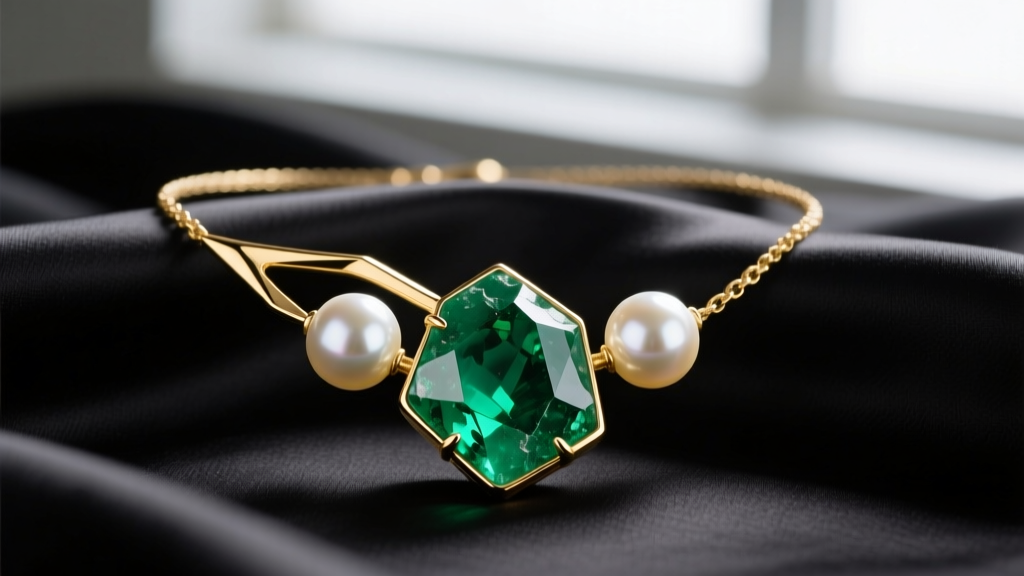
In the landscape of fine jewelry, 2026 has firmly rejected the ultra-minimalist, barely-there chains of the early 2020s in favor of bold, narrative-driven mixed-media designs. At the forefront of this movement is the emerald and pearl necklace, a pairing that contrasts the deep, geological rarity of crystalline beryl with the soft, organic luster of cultivated nacre. This juxtaposition is not merely an aesthetic choice; it represents a broader consumer shift toward "heritage maximalism"—pieces that feel discovered, curated, and inherently storied. According to trend forecasters at the Gemological Institute of America (GIA), the demand for colored gemstones with visible inclusions paired with non-spherical pearls has surged by 34% year-over-year, signaling a departure from flawless, mass-produced uniformity.
Styling an emerald and pearl necklace requires an understanding of both historical context and modern silhouette balancing. The vivid green of the emerald (historically associated with vitality and rebirth) grounds the ethereal, light-reflecting properties of the pearl. When executed correctly, this combination bridges the gap between vintage estate jewelry and contemporary avant-garde fashion.
Material Grades: Decoding the 2026 Market
To invest intelligently in an emerald and pearl necklace, one must look beyond the carat weight and understand the specific treatments and structural integrities that dictate both value and longevity.
Emerald Clarity, Color, and Treatments
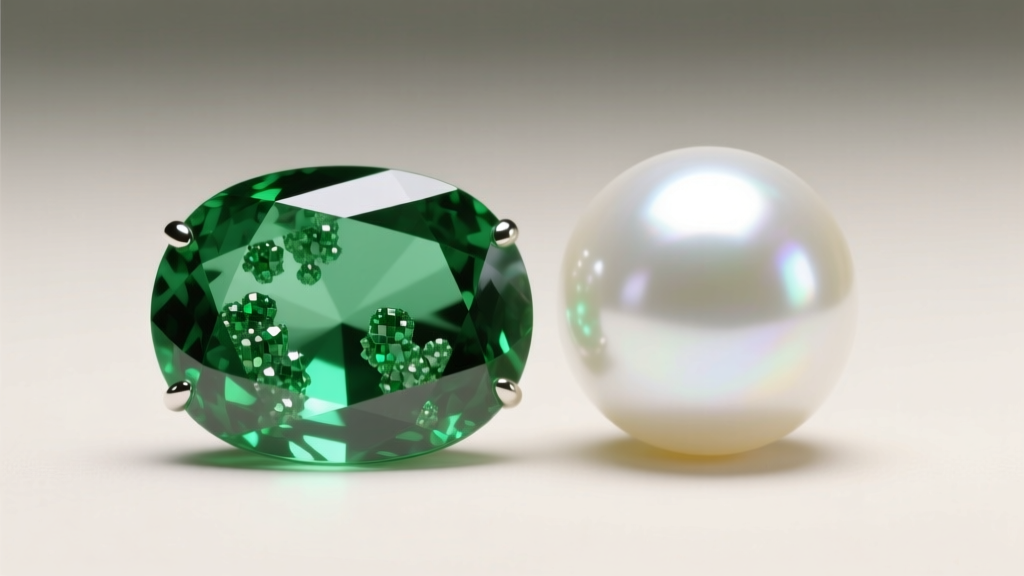
Emeralds are Type III gemstones, meaning they are almost always included. The French refer to these inclusions as jardin (garden). In 2026, the market heavily favors emeralds with a "Minor" clarity enhancement rating. Because emeralds are naturally fractured, they are traditionally treated with cedar oil to mask fissures and improve transparency. However, buyers must avoid stones treated with polymer resins or epoxies, which can yellow over time and drastically reduce the stone's resale value. For color, the benchmark remains the "Muzo" Colombian profile: a deeply saturated, slightly bluish-green with medium-to-dark tone. Zambian emeralds, which offer a cleaner, slightly more yellowish-green hue, have become a highly sought-after, cost-effective alternative for modern station necklaces.
Pearl Luster and Nacre Thickness
The pearl component of the necklace dictates its overall light performance. The GIA Pearl Quality Factors emphasize that luster is the most critical value factor. For a high-end emerald and pearl necklace, Akoya pearls (known for their mirror-like, sharp luster and perfect roundness) are traditionally paired with precision-cut emeralds. However, the 2026 trend heavily leans toward Baroque and Keshi freshwater pearls. When selecting these, ensure the nacre thickness is substantial (ideally over 0.8mm for freshwater varieties) to prevent peeling and ensure the pearl can withstand the tension of gold wire-wrapping.
Design Archetypes: Three Dominant Silhouettes
Jewelers are currently experimenting with three distinct architectural frameworks when combining these two disparate materials:
- The Asymmetric Baroque Drop: A single, large cabochon emerald is set in an organic, unpolished 18k yellow gold bezel, suspended off-center from a strand of irregular, baroque pearls. This style mimics the Art Nouveau era but with a modern, deconstructed edge.
- The Tension-Set Station Choker: Alternating 4mm round emeralds and 5mm Akoya pearls are separated by 1-inch segments of 14k white gold snake chain. The cool tone of the white gold amplifies the icy luster of the pearls while providing a stark, modern contrast to the green beryl.
- The Convertible Y-Chain Lariat: A versatile design where a pearl-studded chain drops into a Y-shape, terminating in a pear-shaped emerald briolette. This design elongates the neck and allows the wearer to adjust the drop length based on the neckline of their garment.
Pricing Matrix: Navigating the 2026 Investment Tiers
The price of an emerald and pearl necklace varies wildly based on the origin of the emerald and the cultivation method of the pearl. Below is a comparative matrix to help you benchmark retail expectations.
| Tier | Emerald Specification | Pearl Specification | Metal & Setting | Estimated Price Range (2026) |
|---|---|---|---|---|
| Entry / Fashion | Lab-Grown Hydrothermal (1-2 ctw) | AAA White Freshwater (Button shape) | 9k or 14k Gold Vermeil | $450 – $900 |
| Mid-Tier / Bridge | Natural Zambian, Minor Oil (2-4 ctw) | AA+ Akoya (Round, 6-7mm) | 14k Solid Yellow Gold | $3,200 – $7,500 |
| Haute / Investment | Natural Colombian, No Oil/Muzo (5+ ctw) | Gem-Grade South Sea or Natural Saltwater | 18k Gold, Platinum Accents | $18,000 – $65,000+ |
Note: Lab-grown emeralds have significantly disrupted the entry-level market, offering identical chemical and physical properties to mined stones, though they lack the geological rarity required for long-term heirloom appreciation.
Styling Framework: Necklines and Occasions
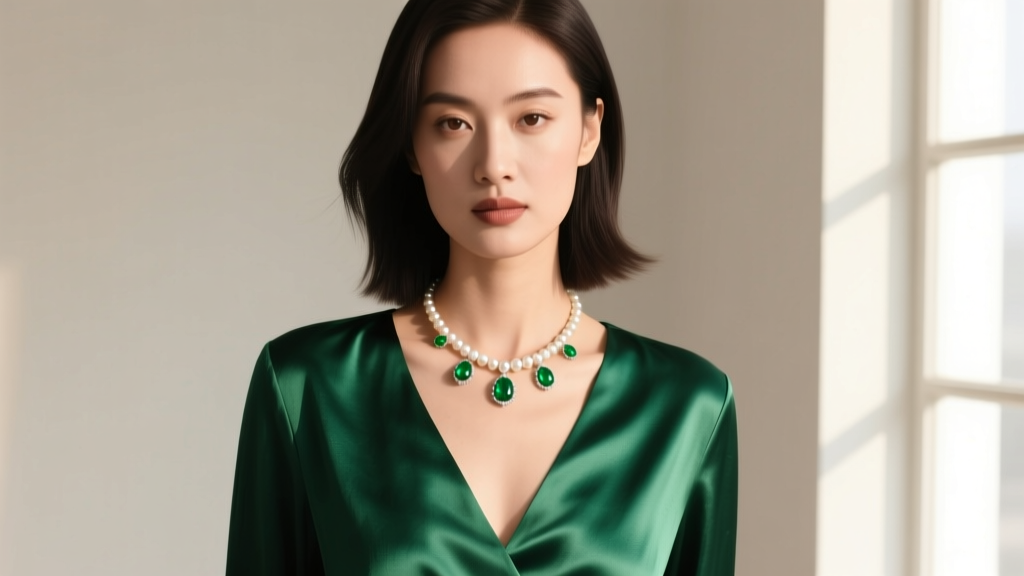
Mastering the styling of an emerald and pearl necklace requires an understanding of negative space and color theory. The deep green of the emerald acts as a visual anchor, meaning the necklace should ideally rest against skin or a neutral fabric to prevent visual clutter.
"When styling mixed-media heritage pieces, let the jewelry dictate the garment's architecture. A heavy emerald and pearl lariat demands a plunging V-neck or a backless silk slip dress, whereas a delicate station choker thrives against a high, structured boatneck or a crisp white poplin collar." — Elena Rostova, Senior Jewelry Stylist
Occasion Mapping
- Daytime / Corporate: Opt for the Tension-Set Station Choker in white gold. The smaller millimeter stones provide a subtle flash of color and luster without overwhelming a tailored blazer or a silk button-down.
- Evening / Gala: The Asymmetric Baroque Drop in 18k yellow gold is ideal. Pair it with a monochromatic, emerald-green velvet gown or a stark black column dress to allow the organic shapes of the pearls to catch ambient, low lighting.
- Bridal / Alternative Engagement: An emerald and pearl Y-chain offers a non-traditional, bohemian alternative to pure diamond or pearl bridal jewelry, particularly for outdoor or vineyard weddings where the natural inclusions of the emerald echo the organic environment.
Care and Maintenance: Preventing Galvanic and Chemical Damage
Pairing emeralds and pearls in a single necklace presents a unique maintenance challenge due to their vastly different physical properties and vulnerabilities on the Mohs scale of mineral hardness. Emeralds rank between 7.5 and 8, making them relatively hard but notoriously brittle due to their internal jardin. Pearls, conversely, are exceptionally soft, ranking between 2.5 and 4.5.
The Scratch Hazard
If an emerald and pearl necklace is stored loosely in a jewelry box, the faceted edges of the emerald will inevitably scratch the delicate nacre of the pearls. Always store this specific combination in a soft, anti-tarnish flannel pouch, ideally with the emerald pendant wrapped in a separate microfiber cloth.
Chemical and Ultrasonic Prohibitions
Never use an ultrasonic cleaner on an emerald and pearl necklace. The high-frequency vibrations can cause internal fractures in included emeralds to expand, potentially shattering the stone, while the heat can boil out the cedar oil used in clarity enhancement, leaving the emerald cloudy and white-fractured. For pearls, ultrasonic cavitation will literally dissolve and pit the nacre layers. Furthermore, pearls are highly susceptible to acids and alcohols. Apply all perfumes, hairsprays, and lotions at least 15 minutes before putting on the necklace. To clean, use only a damp, lint-free cloth and a baby-hair brush with a drop of pH-neutral Castile soap, gently wiping the pearls and avoiding direct scrubbing on the emerald's pavilion facets.
Final Verdict: The 2026 Investment Outlook
The emerald and pearl necklace is not a fleeting micro-trend; it is a return to romantic, textured jewelry that tells a story. While the care requirements are stringent and the entry price for natural, untreated specimens is high, the aesthetic dividend is unmatched. By prioritizing minor-oil Colombian or Zambian emeralds and thick-nacred Akoya or Baroque pearls, collectors can secure a piece that transcends seasonal fads, offering both immediate sartorial impact and long-term generational value.


