Emerald Cut Emerald Necklace Troubleshooting: Fix Chips & Clouding
Fix common issues with your emerald cut emerald necklace. Learn expert troubleshooting for cloudy stones, loose prongs, and fragile inclusions.

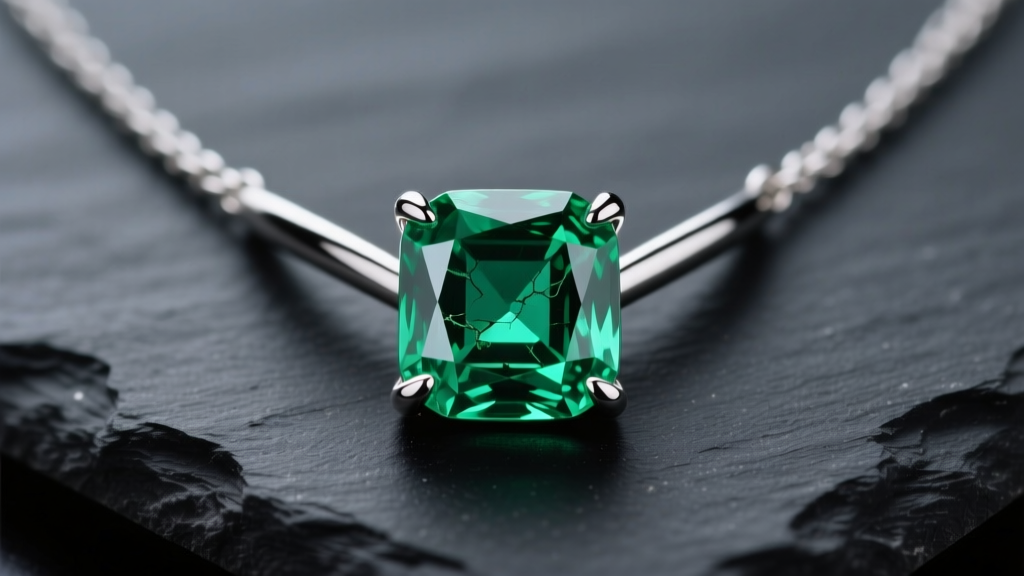
An emerald cut emerald necklace is a masterpiece of geometric elegance, but its striking step-cut facets and elongated shape mask a host of structural and gemological vulnerabilities. While emeralds (beryl) register a respectable 7.5 to 8 on the Mohs hardness scale, their toughness is notoriously poor due to "jardin"—the natural network of fractures and inclusions inherent to the stone. When paired with the sharp 90-degree corners of the emerald cut, the result is a pendant that requires meticulous care, specialized settings, and proactive troubleshooting.
As of 2026, the market is saturated with heavily treated stones, making proper maintenance more critical than ever. Whether you are dealing with sudden cloudiness, a chipped corner, or a fraying chain, this guide provides actionable, gemologist-level troubleshooting to restore and protect your investment.
Diagnosing Cloudiness: The Filler Degradation Problem
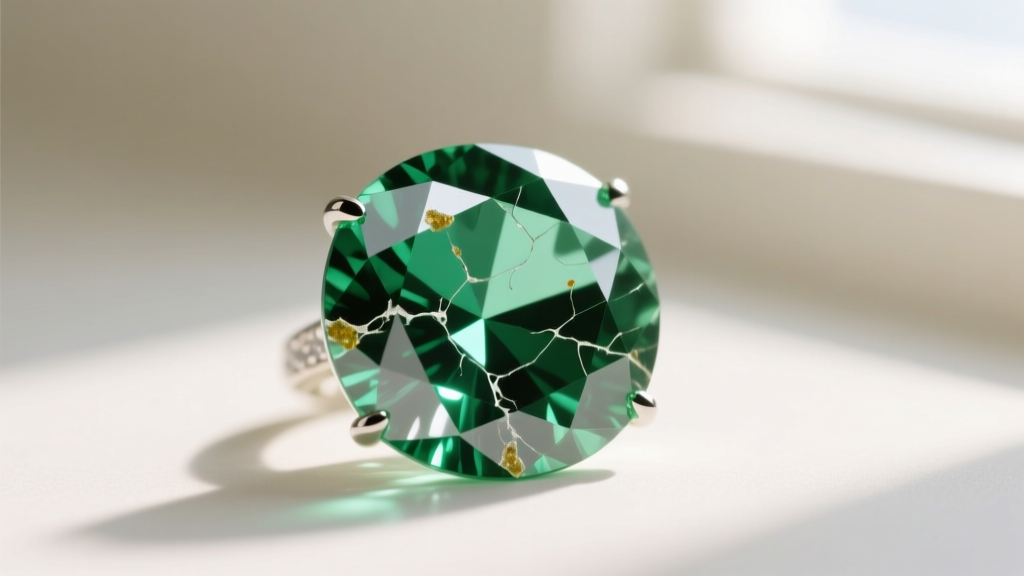
The most common panic-inducing issue owners face is waking up to find their once-vivid emerald cut emerald necklace looking milky, dull, or heavily fractured. This is rarely a new crack; it is almost always a failure of the fracture-filling treatment.
Over 90% of commercial emeralds are treated with oils or polymers to mask surface-reaching fractures. When these fillers dry out, oxidize, or melt, the stone's clarity plummets.
- Cedarwood Oil: The traditional filler. It is highly unstable, drying out within 1 to 3 years, leaving white, flaky residue in the fractures.
- Opticon (Polymer): More stable than oil but prone to yellowing under prolonged UV exposure or heat.
- ExCel (Epoxy Resin): The modern standard for high-end stones. Highly durable, but nearly impossible to remove if it degrades or discolors.
The Troubleshooting Protocol
If your emerald has turned cloudy, do not attempt to re-oil it at home using baby oil or household lubricants. These contain additives that will permanently ruin the stone. Instead, take the necklace to a certified gemologist who can safely extract the old filler using mild, non-acidic solvents and perform a professional re-oiling or resin infusion under a vacuum chamber.
Structural Vulnerabilities: Corner Chipping and Prong Failure
The emerald cut was literally invented in the 1500s to reduce pressure on the stone's corners during cutting, but those corners remain the weakest physical point of the finished gem. A minor impact against a granite countertop or a hard glass door is enough to shear off a corner.
If you are inspecting your emerald cut emerald necklace and notice a missing corner or a loose stone, the culprit is usually an inadequate prong setting. Standard round prongs leave the 90-degree corners completely exposed.
Prong Setting Analysis and Failure Rates
| Setting Style | Corner Protection | Chip Risk (1ct+) | Recommended Application |
|---|---|---|---|
| Standard Round Prong | None | High (45%) | Stones under 0.50ct only |
| V-Prong | Full Metal Shield | Low (5%) | Mandatory for stones over 1.00ct |
| Full Bezel | Complete Enclosure | Very Low (1%) | Daily wear and active lifestyles |
Fixing a Chipped Corner: If a chip occurs, do not try to polish it out. The stone must be removed from the setting and sent to a lapidary to be re-cut and re-polished. This will result in a slight loss of carat weight but will restore the stone's structural integrity. If the chip is minor, a jeweler may be able to hide it by modifying the setting to a V-prong or adding a strategic gold overlay, though this is a cosmetic band-aid, not a structural fix.
Chain and Bail Troubleshooting for Heavy Pendants
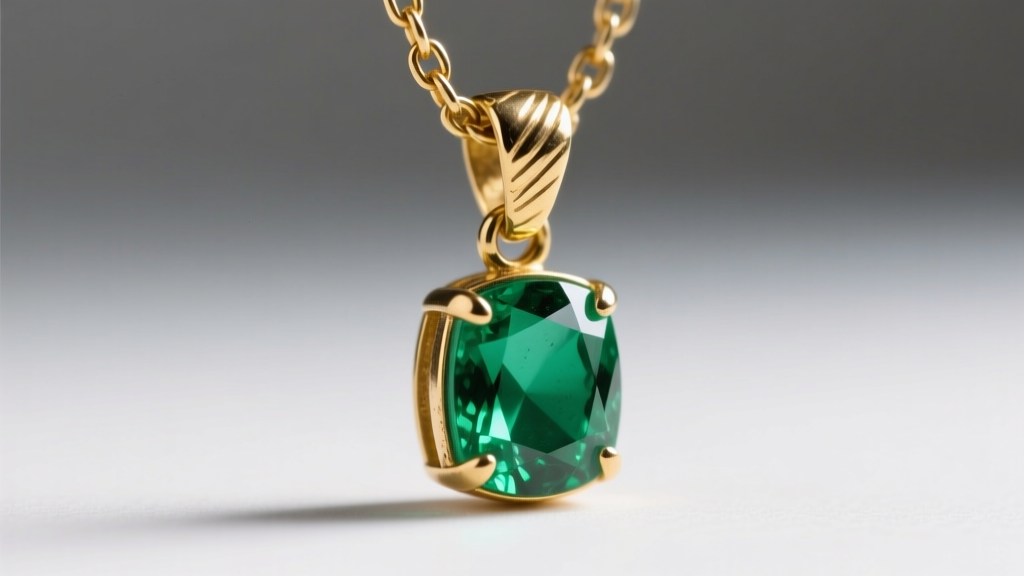
Emeralds have a specific gravity of 2.67 to 2.78, making them surprisingly dense. A 4-carat emerald cut pendant, especially when set in a heavy platinum or 18k gold halo mounting, creates significant dynamic friction at the bail (the loop connecting the pendant to the chain).
The "Sawing" Effect
A common failure mode is the bail acting like a dull saw against the chain. If your emerald cut emerald necklace is paired with a delicate 14k gold rope chain (under 1.2mm), the friction will eventually wear a groove through the chain links, leading to a catastrophic snap and potential loss of the pendant.
Chain and Bail Upgrades
- Minimum Chain Gauge: For pendants over 3 carats, never use a chain thinner than 1.5mm. Wheat, box, or solid cable chains offer superior tensile strength compared to rope or snake chains.
- Bail Material: Avoid gold-plated or electroformed bails. The plating will wear off within months, exposing base metals that can react with skin oils and degrade. Upgrade to a solid platinum or 18k yellow gold bail with a hard-wearing ceramic or ruby-lined interior loop to eliminate friction entirely.
The Cleaning Catastrophe: What to Avoid
The fastest way to destroy an emerald cut emerald necklace is through improper cleaning. Many owners treat emeralds like diamonds, tossing them into ultrasonic cleaners or blasting them with steamers.
"Never subject a fracture-filled emerald to ultrasonic or steam cleaning. The thermal shock and high-frequency vibrations will shatter the stone or melt the filler, causing irreversible clouding and structural failure." — Gemological Institute of America (GIA)
The Safe Cleaning Protocol
- Preparation: Fill a small glass bowl with lukewarm (never hot) distilled water and a single drop of pH-neutral, fragrance-free dish soap.
- Agitation: Submerge the necklace for exactly 3 to 5 minutes. Do not soak for longer, as prolonged water exposure can degrade certain older oil treatments.
- Brushing: Use an ultra-soft baby toothbrush or a specialized gem-cleaning brush. Gently sweep the bristles across the step-cut facets and the back of the stone (the culet area) where lotion and dead skin accumulate.
- Rinsing and Drying: Rinse under a gentle stream of lukewarm water. Pat dry with a lint-free microfiber cloth. Never use paper towels, as the wood fibers can scratch the gold setting and leave microscopic lint trapped in the prongs.
For deeper maintenance, the American Gem Society (AGS) recommends professional cleaning and prong-tightening every 12 to 18 months to ensure the setting has not warped from daily wear.
2026 Repair and Maintenance Cost Guide
Budgeting for the upkeep of fine jewelry is essential. Below are the average market rates for professional troubleshooting and repair services for an emerald cut emerald necklace in 2026:
- Professional Re-Oiling / Re-Filling: $150 – $350 (Depends on the stone's size and the type of filler used. ExCel resin treatments cost more than traditional cedar oil).
- V-Prong Re-tipping: $75 – $125 per prong (Crucial if the metal has worn thin and the corner is exposed).
- Lapidary Re-cutting (Minor Chip): $250 – $600 (Priced by the hour or by the complexity of the step-cut facet realignment).
- Bail Replacement & Soldering: $120 – $250 (Includes the cost of a new solid 18k gold or platinum bail and laser welding to the pendant loop).
Troubleshooting an emerald cut emerald necklace requires a shift in mindset: you are not just maintaining a piece of jewelry; you are preserving a fragile, organic artifact. By respecting the stone's inclusions, upgrading your prong settings, and strictly avoiding ultrasonic cleaners, your necklace will retain its vivid green fire and structural integrity for generations.


