Emerald and Diamond Pendant Necklace: Material Comparison
Compare metals and gemstone grades for your emerald and diamond pendant necklace. Expert insights on durability, pricing, and setting styles.

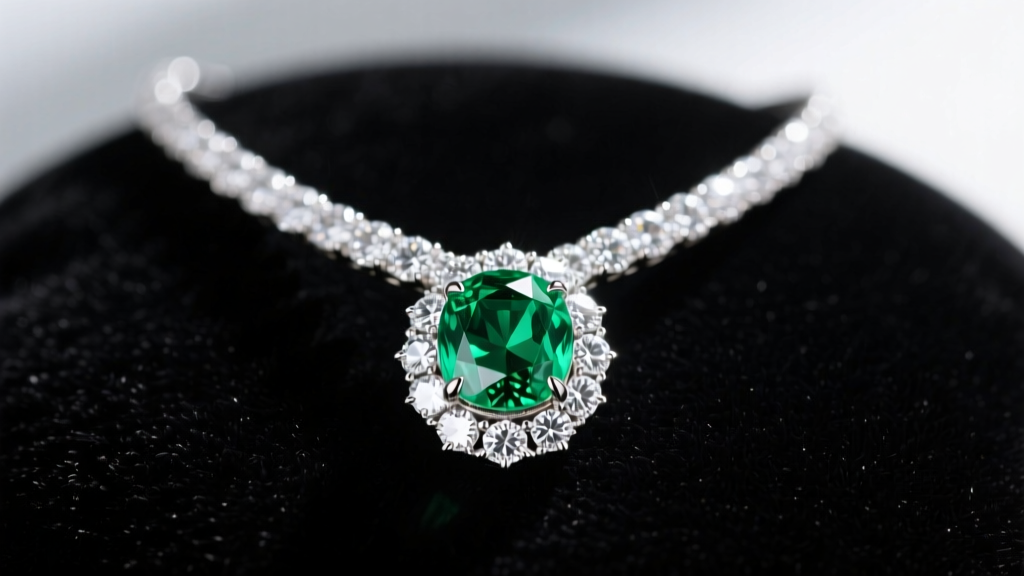
The Material Science of Emerald and Diamond Pendants
When investing in an emerald and diamond pendant necklace, aesthetic appeal is only half the equation. The true longevity and value of the piece depend entirely on the material properties of the gemstones and the precious metals used to secure them. Emeralds and diamonds represent two extreme ends of the gemological spectrum: one is notoriously brittle and heavily included, while the other is the hardest natural substance on earth. Combining them into a single pendant requires a masterful understanding of structural integrity, metal hardness, and gemstone treatments.
This comprehensive material comparison guide breaks down the exact grades, alloy compositions, and structural considerations you need to evaluate before purchasing or commissioning a high-end pendant. By understanding these properties, you can ensure your necklace withstands daily wear while maximizing optical performance.
Gemstone Properties: Evaluating Quality and Durability
The juxtaposition of an emerald and diamond pendant necklace relies on the visual contrast between the deep green beryl and the brilliant carbon crystal. However, their physical properties dictate how they must be cut, treated, and set.
Emerald Grading: Inclusions, Treatments, and Toughness
Emeralds rank 7.5 to 8 on the Mohs hardness scale, but their toughness (resistance to breaking) is generally poor due to natural inclusions known as the 'jardin' (French for garden). According to the Gemological Institute of America (GIA), virtually all emeralds undergo clarity enhancement to fill surface-reaching fractures.
- Cedar Oil (Traditional): Enhances clarity temporarily but requires re-oiling every few years. Highly valued by purists but structurally vulnerable to heat and chemicals.
- Synthetic Resins (e.g., Opticon): Provides a more permanent fix with a refractive index closer to beryl. GIA grades these enhancements as Minor, Moderate, or Significant. A 'Minor' enhancement emerald can command $5,000 to $12,000 per carat, whereas 'Significant' drops the value to under $1,500 per carat.
Diamond Accent Grading: Melee and Halo Specifications
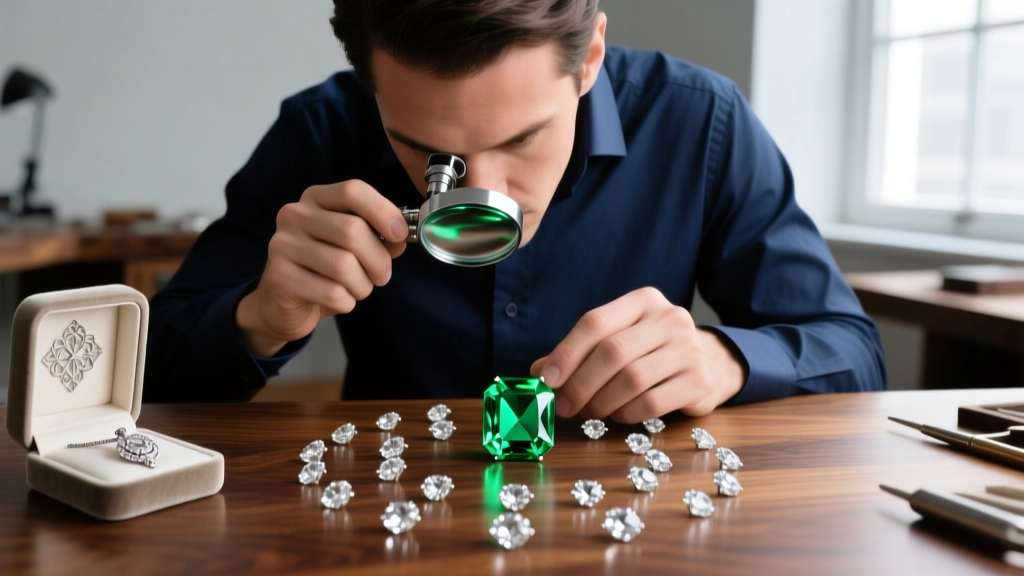
The diamonds surrounding the emerald are typically 'melee' (weighing between 0.01 and 0.15 carats each). Because of their small size, paying a premium for VVS clarity or D color is a poor allocation of budget. For an optimal emerald and diamond pendant necklace, specify melee diamonds in the G-H color range and VS2-SI1 clarity. This ensures the diamonds face up bright white against the green center stone without incurring the steep price premiums of top-tier grades.
Precious Metal Comparison for Pendant Settings
The metal chosen for the pendant's basket and bail must complement the emerald's color while providing adequate structural support. Below is a technical comparison of the most common precious metals used in high-end pendant manufacturing.
| Metal Alloy | Vickers Hardness (HV) | Color Impact on Emerald | Maintenance Profile | Relative Cost |
|---|---|---|---|---|
| Platinum 950 | 125 - 150 | Neutral; enhances cool, blueish-green undertones | Develops a patina; requires occasional polishing | +35% Premium |
| 18k White Gold | 120 - 130 | Rhodium flash provides high-contrast brilliance | Requires rhodium replating every 12-24 months | Baseline |
| 18k Yellow Gold | 110 - 120 | Warm contrast; traditional, vintage aesthetic | Low maintenance; easily polished at home | -5% Discount |
| 14k Rose Gold | 130 - 140 | Pinkish hue; can clash with cooler green emeralds | Extremely durable; hides scratches well | -15% Discount |
For heavy emerald pendants (over 5 carats), Platinum 950 is the superior choice. Its high density and tensile strength ensure that the prongs will not easily bend or snap if the pendant is snagged on clothing, a critical factor given the emerald's fragility.
Setting Styles and Structural Integrity
How the metal interfaces with the gemstones is the most critical failure point in any emerald and diamond pendant necklace. Emeralds are highly sensitive to pressure; a jeweler applying too much force when tightening a prong can easily chip the stone's girdle.
Prong vs. Bezel Settings
While traditional prong settings allow maximum light return, they leave the emerald's vulnerable corners exposed. If your pendant features an emerald-cut or pear-shaped center stone, V-prongs are mandatory to cap the sharp points. Alternatively, a full bezel setting wraps a continuous rim of metal around the gem's girdle. While a bezel reduces the stone's visible surface area by roughly 8%, it offers 360-degree impact protection, making it the safest choice for daily-wear pendants.
'The diamond halo in a pendant is not just decorative; it acts as a sacrificial bumper guard. If the pendant strikes a hard surface, the diamond melee and their shared metal gallery will absorb the shock before the force reaches the brittle emerald.' — Master Bench Jeweler
Chain Selection: Gauge and Material Synergy
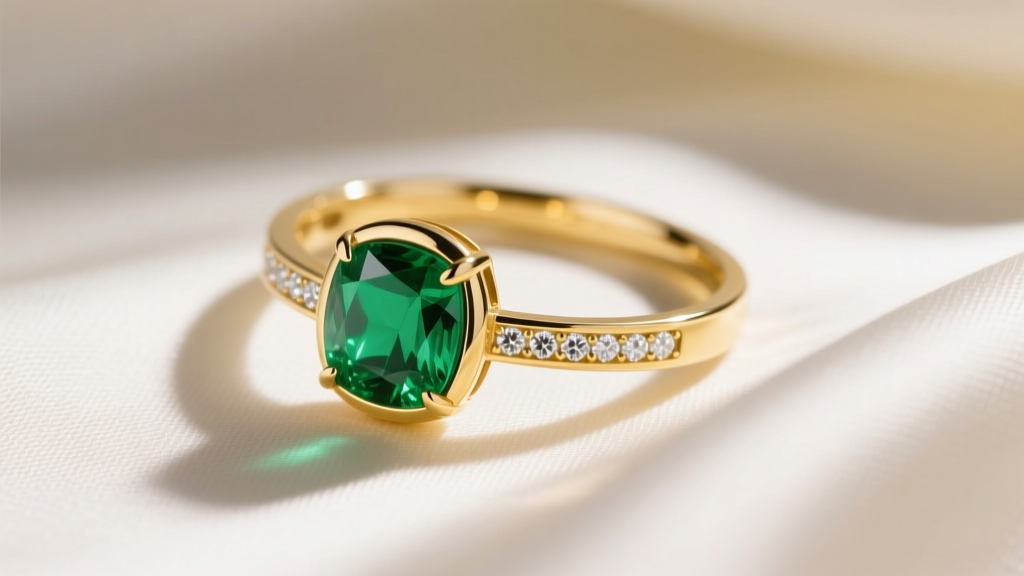
A common mistake is pairing a heavy, gemstone-laden pendant with an inadequate chain. The bail (the loop connecting the pendant to the chain) creates a focal point of friction and stress. To prevent catastrophic chain failure, you must match the chain's gauge and link structure to the pendant's total weight.
- Lightweight Pendants (Under 4 grams): A 0.8mm to 1.0mm cable or box chain in 14k or 18k gold is sufficient. Cable chains offer excellent flexibility and drape.
- Medium Pendants (4 to 10 grams): Upgrade to a 1.2mm to 1.5mm box chain or wheat chain. Box chains feature interlocking square links that distribute weight evenly and resist kinking.
- Heavy Statement Pendants (Over 10 grams): Require a 1.8mm to 2.5mm solid rope or reinforced wheat chain. Ensure the clasp is a lobster claw with a reinforced soldered ring, rather than a fragile spring-ring clasp.
Care and Maintenance Protocols
The material properties of emeralds dictate strict care protocols. Never place an emerald and diamond pendant necklace in an ultrasonic cleaner. The high-frequency vibrations can cause internal fractures to expand, shattering the stone. Furthermore, the heat and harsh chemical solvents used in ultrasonic and steam cleaning will strip the cedar oil or resin treatments from the emerald, leaving it looking cloudy and heavily fractured.
Instead, clean your pendant using a solution of lukewarm water and a few drops of mild, ammonia-free dish soap. Soak the necklace for five minutes, then gently agitate the dirt from the diamond pavé using a soft baby toothbrush. Rinse under a gentle stream of tepid water and pat dry with a lint-free microfiber cloth. Store the necklace flat in a fabric-lined box to prevent the diamond accents from scratching adjacent jewelry pieces.


