Emerald Necklace Marina Styles: Material Properties
Explore the material properties of the classic emerald necklace. Marina B-inspired designs, gemstone toughness, and 18k gold pairings explained.

The Intersection of High Jewelry and Material Science
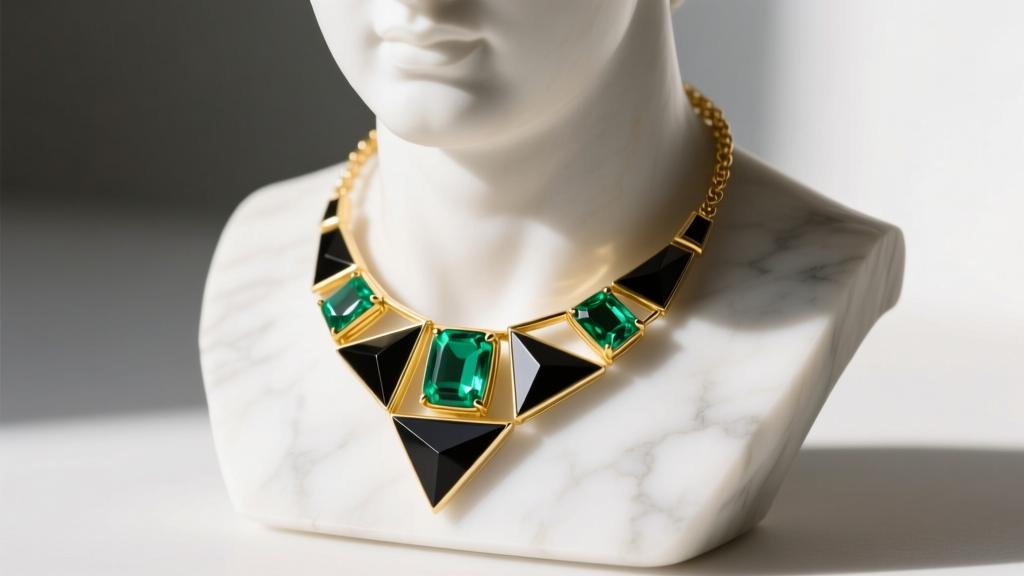
The search for a bold emerald necklace Marina enthusiasts adore often leads to the intersection of high jewelry and material science. Marina Bulgarini, the legendary designer behind the iconic Marina B brand, revolutionized statement jewelry in the 1980s and 1990s by treating gemstones not just as precious accents, but as bold, architectural materials. Her legendary designs frequently paired deep green emeralds with stark black onyx, vibrant amethysts, and rich 18k yellow gold. To truly appreciate, evaluate, and maintain these pieces—or modern interpretations inspired by her geometric aesthetic—one must understand the underlying gemological and metallurgical properties that dictate their longevity, wearability, and ultimate value.
Unlike delicate, minimalist chains, a statement necklace relies on the structural integrity of its materials. When dealing with emeralds, a stone notorious for its complex internal landscape, understanding material hardness, toughness, and chemical treatments is not just academic; it is essential for preserving your investment.
Decoding Emerald Material Properties: Hardness vs. Toughness
Emeralds belong to the beryl family (beryllium aluminium silicate) and derive their signature green hue from trace amounts of chromium and vanadium. On the Mohs scale of mineral hardness, emeralds rank between 7.5 and 8.0. While this makes them highly resistant to surface scratching from everyday dust (which contains quartz at a 7.0), hardness is only half the equation.
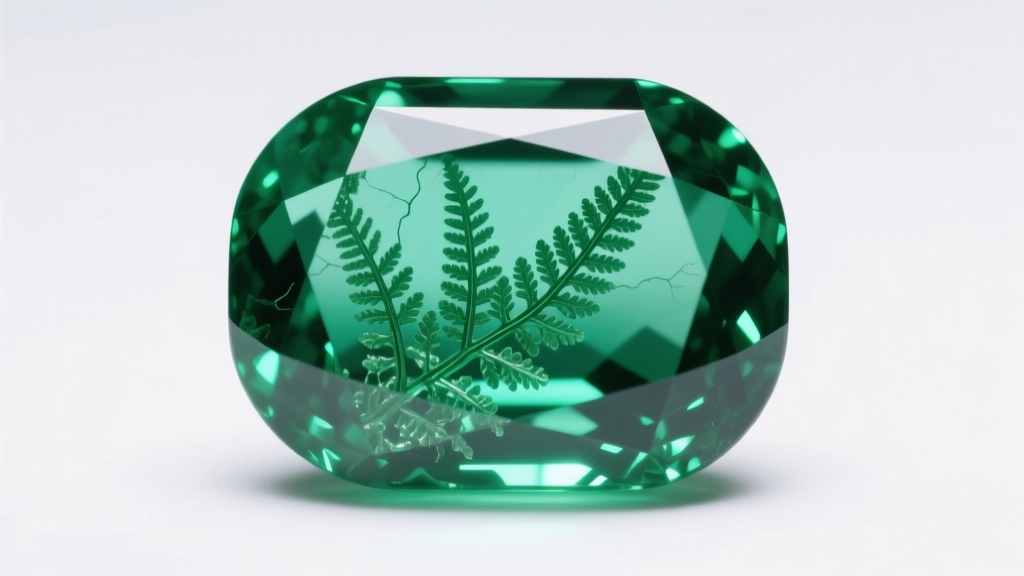
The critical vulnerability of an emerald lies in its toughness—its resistance to breaking, chipping, or cleaving. According to the Gemological Institute of America (GIA), emeralds possess inherently poor toughness due to their 'jardin' (French for garden), the network of internal inclusions, fractures, and liquid-filled cavities that form during the stone's violent crystallization process. In a bold, heavy necklace design where stones are set in substantial gold bezels, a sharp impact against a marble countertop can easily cause an included emerald to fracture along its internal fault lines.
The Reality of Fracture Filling and Oiling
Because surface-reaching fractures are so common, the vast majority of emeralds on the market undergo clarity enhancement. The traditional and most widely accepted treatment is the infusion of natural cedar oil. The oil's refractive index closely matches that of the emerald, effectively masking the fractures and improving the stone's apparent clarity. Modern alternatives include synthetic resins like Opticon or epoxy, which offer greater stability but are often viewed less favorably by purists and auction houses. When purchasing a vintage or contemporary Marina-style emerald necklace, always request a gemological report detailing the type and extent of the clarity enhancement, as heavily resin-filled stones can degrade or discolor over decades of wear.
The Marina B Material Matrix: Contrast and Refraction
Marina B’s genius lay in her mastery of material contrast. She rarely let an emerald stand alone. Instead, she engineered visual tension by pairing the vitreous luster of emeralds with the waxy, opaque finish of black onyx and the glassy brilliance of amethysts. Understanding how these materials interact optically and physically is key to authenticating and appreciating these designs.
| Material | Mohs Hardness | Toughness | Refractive Index | Standard Treatment |
|---|---|---|---|---|
| Emerald (Beryl) | 7.5 - 8.0 | Poor (Brittle) | 1.57 - 1.58 | Cedar Oil / Resin |
| Tsavorite Garnet | 7.0 - 7.5 | Fair | 1.74 - 1.75 | None (Untreated) |
| Black Onyx (Quartz) | 7.0 | Good | 1.53 - 1.54 | Dyeing / Heating |
| Amethyst (Quartz) | 7.0 | Good | 1.54 - 1.55 | Heating |
As the matrix above illustrates, while emeralds are harder than quartz-based stones like onyx and amethyst, they are significantly more brittle. A jeweler crafting a Marina-inspired geometric necklace must account for this disparity. The onyx and amethyst can be cut into sharp, aggressive triangles and squares with crisp edges, whereas emeralds are typically cut en cabochon (smooth and domed) or fashioned into step-cuts with truncated, beveled corners to prevent chipping at the girdle.
Why 18k Yellow Gold Dominates the Setting
The metal alloy used in these statement pieces is just as critical as the gemstones. Marina B overwhelmingly favored 18k yellow gold. Composed of 75% pure gold, 12.5% silver, and 12.5% copper, this specific alloy provides a warm, rich hue that acts as a complementary color wheel opposite to the deep green of the emerald. Furthermore, 18k gold possesses the ideal malleability required for bezel settings. A bezel setting completely encircles the emerald's girdle in a rim of gold, offering superior physical protection for the stone's brittle edges compared to prong settings, which leave the corners exposed to catastrophic impacts.
Evaluating Emerald Quality in Statement Necklaces
When assessing the quality factors of an emerald within a heavy necklace, color saturation supersedes clarity. The most prized emeralds exhibit a bluish-green to pure green hue with vivid saturation and medium-to-dark tone. In the context of bold, architectural jewelry, slightly included stones with exceptional color are vastly preferred over heavily included, pale stones. The 'jardin' is accepted as a fingerprint of natural origin, provided the fractures do not compromise the structural integrity of the cabochon or faceted stone.
Beware of 'color zoning'—uneven distribution of color within the crystal. In large, bold pendants, severe color zoning can make the stone look patchy and unrefined. High-end designers carefully orient the rough crystal during the lapidary process to ensure the table or the dome of the cabochon presents a uniform, saturated green face-up.
Care and Maintenance: Protecting Oiled Gemstones
The material properties of treated emeralds dictate strict care protocols. The cedar oil used to mask fractures is not permanent; it can dry out, leak, or be dissolved by harsh chemicals over time. If an emerald in your necklace begins to look opaque or heavily fractured, it likely requires professional re-oiling by a master lapidary.
- Never use ultrasonic cleaners: The high-frequency vibrations will shatter the internal fault lines of an included emerald and strip away the fracture-filling oil.
- Avoid steam cleaning and thermal shock: Sudden temperature changes can cause the stone to crack instantly.
- Chemical exposure: Remove the necklace before swimming (chlorine), bathing (soaps), or applying cosmetics and perfumes, which can degrade the oil and dull the stone's luster.
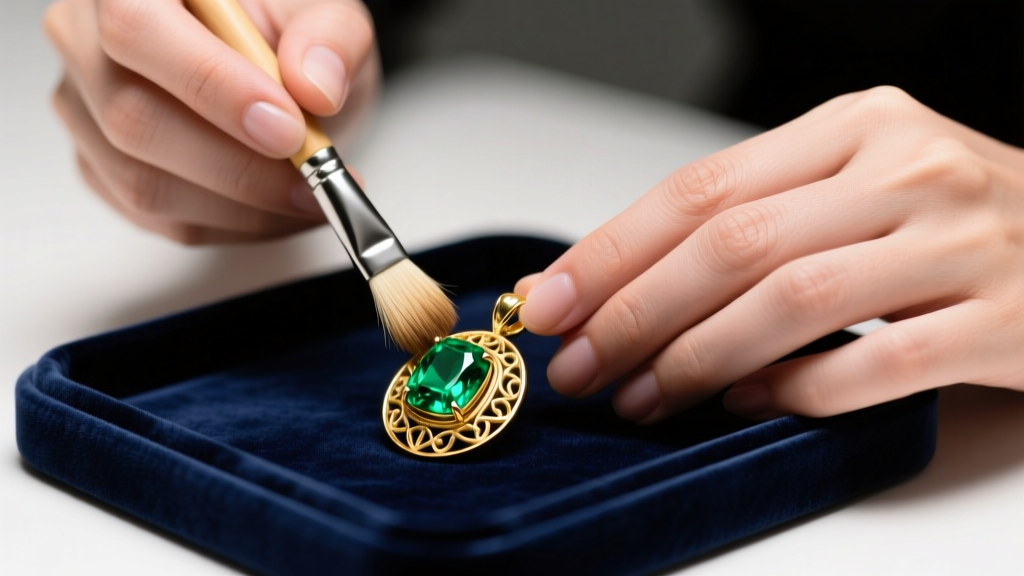
- Routine cleaning: Use only lukewarm water, a mild dish soap, and an exceptionally soft baby-hair brush to gently wipe the surface, drying immediately with a microfiber cloth.
Final Verdict on Material Longevity
An emerald necklace crafted in the bold, geometric tradition of Marina B is a triumph of material contrast and architectural jewelry design. However, it is not a piece for careless, everyday wear. By understanding the inherent brittleness of the beryl crystal, the necessity of protective 18k gold bezel settings, and the maintenance requirements of oiled gemstones, collectors can ensure these magnificent statements of color and geometry survive for generations. The true value of such a piece lies not just in its carat weight, but in the masterful orchestration of its diverse, contrasting materials.


