Ultimate Care Guide for Your Emerald Stone Necklace
Learn how to safely clean, store, and maintain your emerald stone necklace. Discover expert tips to protect oiled gems and prevent fracture damage.

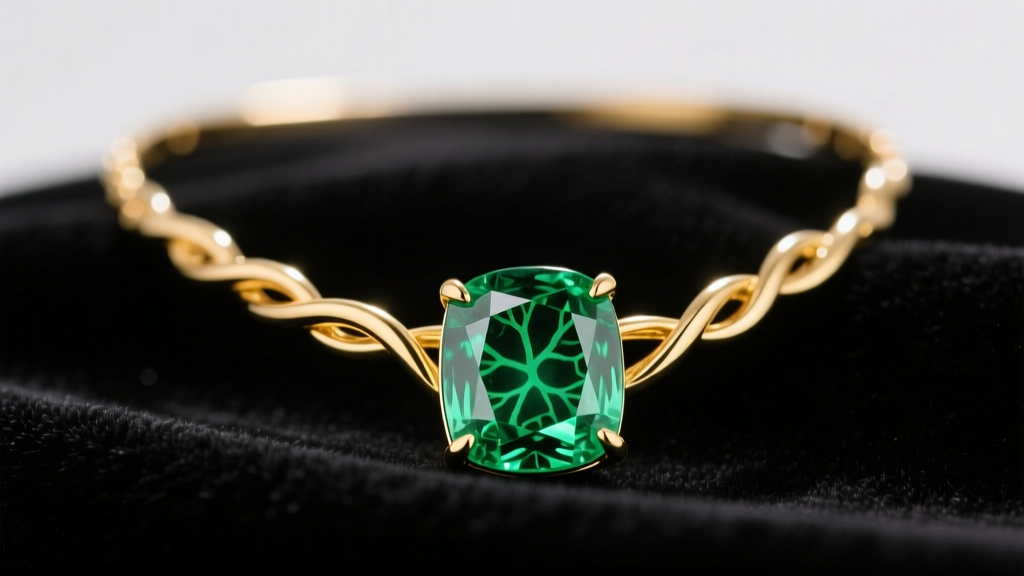
An emerald stone necklace is a breathtaking investment, radiating a lush, velvety green that few other gemstones can replicate. However, owning this magnificent jewel comes with a unique set of responsibilities. Unlike diamonds or sapphires, emeralds are notoriously high-maintenance. Their internal structure, historical treatments, and specific physical vulnerabilities mean that standard jewelry cleaning methods can cause irreversible, catastrophic damage.
If you want your emerald pendant to retain its brilliance and structural integrity for generations, you must abandon generic jewelry care habits. This comprehensive guide provides expert-level protocols for cleaning, storing, and maintaining your emerald stone necklace, ensuring it remains as vibrant as the day you acquired it.
The Science of Emerald Vulnerability: Hardness vs. Toughness
To properly care for an emerald, you must first understand its physical properties. On the Mohs scale of mineral hardness, emeralds (a variety of the mineral beryl) rank between 7.5 and 8. While this means they are relatively resistant to scratching, hardness is only half the equation. The other critical metric is toughness—a gemstone's ability to resist breaking, chipping, or shattering upon impact.
According to the Gemological Institute of America (GIA), emerald toughness is generally rated as 'Fair' to 'Poor.' This inherent brittleness is due to 'jardin' (the French word for garden), the complex network of internal inclusions, fractures, and liquid pockets that form during the gem's creation. These inclusions create internal stress points. A minor bump against a granite countertop that a diamond would easily survive can cause an included emerald to cleave or shatter entirely.
Furthermore, an estimated 90% or more of emeralds on the market are fracture-filled. Because surface-reaching fissures are so common, lapidaries routinely fill them with oils, resins, or polymers to improve clarity and stability. This treatment fundamentally alters how the stone must be cleaned.
The 'Never Do This' List: Fastest Ways to Ruin Your Necklace
Many well-intentioned jewelry owners destroy their emeralds by treating them like diamonds. Memorize these critical prohibitions to protect your emerald stone necklace:
- NEVER use an ultrasonic cleaner: Ultrasonic machines operate at high frequencies (typically 20-40 kHz), creating microscopic cavitation bubbles in the liquid. When these bubbles collapse, they generate localized shockwaves. In a heavily included emerald, these vibrations will exploit internal fissures and literally shake the stone apart.
- NEVER use a steam cleaner: The sudden, intense heat from a steam jet causes rapid thermal expansion. This can melt or boil the cedar oil used in fracture filling, causing the oil to leak out and leaving the stone looking chalky, white, and heavily fractured. The thermal shock can also snap the stone.
- NEVER use harsh chemicals: Avoid ammonia, bleach, alcohol, acetone, and commercial jewelry dips. Solvents like alcohol and acetone will strip the protective oils from the emerald's fissures in minutes. Even mild acids found in some household cleaners can etch the surface of the stone or damage the alloy of the necklace chain.
- NEVER wear it in the pool or hot tub: Chlorine is highly reactive and can degrade the gold or platinum alloy of your necklace setting, weakening the prongs. It can also interact negatively with the fracture fillers inside the emerald.
Step-by-Step Safe Cleaning Protocol
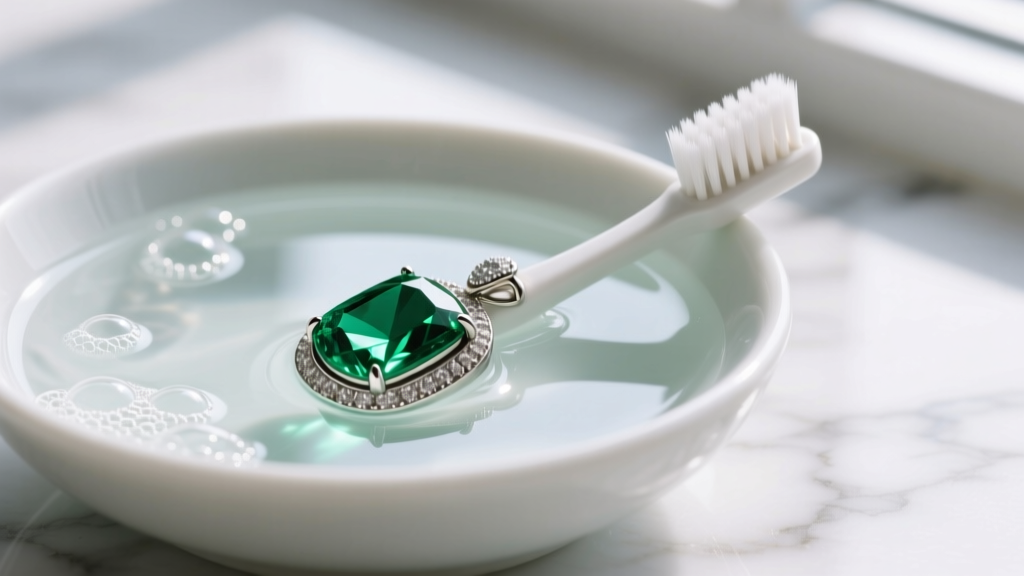
When your emerald stone necklace loses its luster due to everyday skin oils, lotions, and environmental dust, it requires a gentle, manual cleaning process. Follow these exact steps to safely restore its brilliance without compromising the oil treatments.
1. Inspect the Setting First
Before introducing any moisture, examine the prongs or bezel securing your emerald. Use a jeweler's loupe (10x magnification) to ensure no prongs are lifted, bent, or worn thin. If the stone is loose, do not clean it; take it directly to a professional jeweler. Water and soap can act as a lubricant, potentially allowing a loose stone to slip out of its setting and wash down the drain.
2. Prepare the Solution
Fill a small glass bowl with lukewarm distilled water. Do not use tap water, as it contains chlorine, fluorides, and hard minerals like calcium that can leave microscopic deposits inside the stone's surface-reaching fractures. Add two drops of a pH-neutral, mild dish soap (such as original Dawn). Avoid soaps with added moisturizers, citrus degreasers, or harsh surfactants.
3. The Brief Soak
Submerge the necklace in the solution for no more than 2 to 3 minutes. This is just enough time to soften surface oils and cosmetic residue without risking prolonged water exposure to the fracture fillers.
4. Gentle Agitation
Using an extra-soft baby toothbrush (never a standard adult toothbrush, which has bristles stiff enough to scratch gold and dislodge oil), gently sweep the bristles over the emerald and the back of the setting. Do not scrub aggressively. Let the soapy water do the heavy lifting.
5. Rinse and Dry
Rinse the necklace by swishing it in a second bowl of clean, lukewarm distilled water. Never hold it directly under a running faucet, as the water pressure can knock a loose stone out of its setting. Finally, pat the necklace dry with a clean, lint-free microfiber cloth. Allow it to air dry completely in a warm room before storing.
Evaluating Your Necklace Setting for Protection
The physical design of your necklace plays a massive role in the gemstone's longevity. The classic 'emerald cut' features a rectangular shape with truncated, stepped corners. While the corners are clipped, they remain the most vulnerable points for chipping.
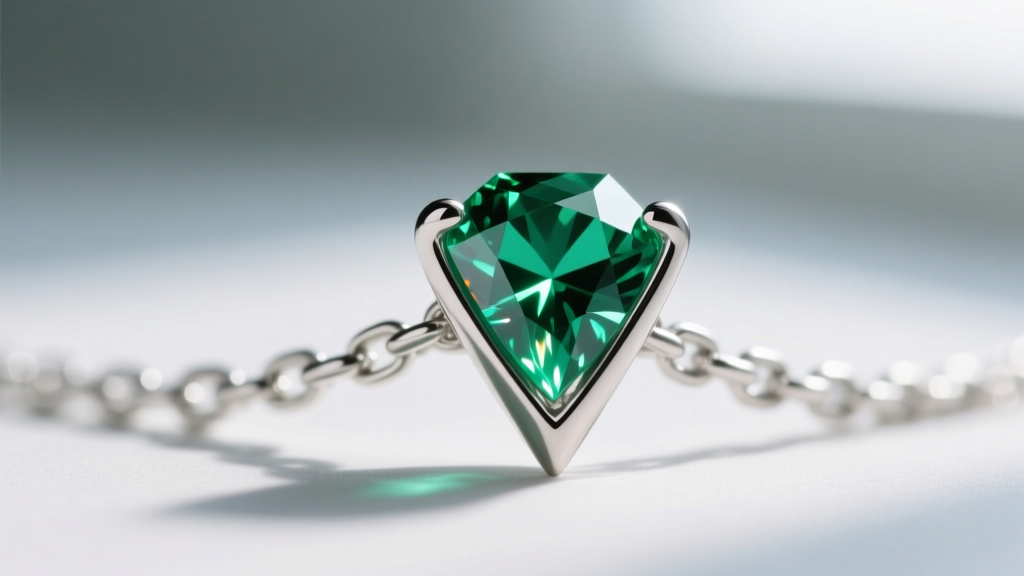
If your emerald stone necklace features standard round prongs, the corners of the stone are exposed to direct impact. For high-value emeralds, a V-prong setting is the industry standard for protection, wrapping the metal entirely around the vulnerable 90-degree angles. Alternatively, a full or partial bezel setting offers the ultimate protection for active wearers, as the metal rim completely shields the gem's girdle and corners from accidental bumps. If your necklace has standard prongs, be hyper-vigilant about removing it during physical activities.
Storage, Travel, and Humidity Control
How you store your emerald necklace when it is not around your neck is just as critical as how you clean it.
- Isolate from Harder Gems: While emeralds are relatively hard, they are easily scratched by diamonds (Mohs 10), sapphires, and rubies (Mohs 9). Always store your emerald necklace in a dedicated, fabric-lined jewelry box compartment or a soft silk pouch to prevent contact abrasion.
- Manage Humidity: Emeralds treated with traditional cedar oil can dry out over time, especially in arid environments. Avoid storing your necklace near heat sources or in rooms with dehumidifiers. Conversely, do not use silica gel desiccant packets inside your jewelry box, as extreme dryness will accelerate the desiccation of the oil fillers.
- Travel Precautions: Airplane cabins are notoriously dry, with humidity levels often dropping below 20%. For long-haul flights, store the necklace in a sealed plastic bag with a slightly damp (not wet) cotton ball to maintain a stable micro-climate. Furthermore, never wear your emerald necklace to the beach; wind-blown sand contains quartz (Mohs 7), which can scratch the stone's polish and the metal setting.
Treatment Types and When to Seek Professional Re-Oiling
Eventually, even with meticulous care, an oiled emerald may begin to look dull, chalky, or display white, web-like fractures. This indicates that the oil has dried out or leaked, and the stone requires professional re-oiling by a master lapidary. The frequency of this maintenance depends entirely on the type of filler used:
| Treatment Type | Durability & Stability | Maintenance Requirement |
|---|---|---|
| None (Untreated) | Extremely rare; structurally stable but highly included. | Low. Clean gently; no re-oiling needed. |
| Cedar Oil | Traditional, natural, but highly unstable. Evaporates over time. | High. May require professional re-oiling every 2-5 years. |
| Opticon (Polymer Resin) | More stable than oil, but can yellow with UV exposure over decades. | Medium. Rarely needs re-treatment unless exposed to heat/solvents. |
| Epoxy / Hard Resins | Permanent and highly durable, but significantly lowers gem value. | Low. Permanent filler, but cannot be easily reversed or cleaned if damaged. |
According to the American Gem Trade Association (AGTA), it is vital to know exactly what treatment your emerald has undergone before attempting any maintenance. Always request a gemological report (from GIA, AGL, or Gübelin) when purchasing an emerald stone necklace, as this document will explicitly detail the type and extent of fracture filling, allowing you to tailor your lifelong care regimen accordingly.
By respecting the delicate nature of the emerald, avoiding modern cleaning shortcuts, and committing to gentle, manual maintenance, your emerald stone necklace will continue to captivate with its deep, verdant fire for a lifetime.


