EMF Blocker Necklace Materials: Shungite, Orgonite & Durability
Compare EMF blocker necklace materials like Shungite, Orgonite, and Tourmaline. Expert guide on durability, Mohs hardness, and chain pairing.

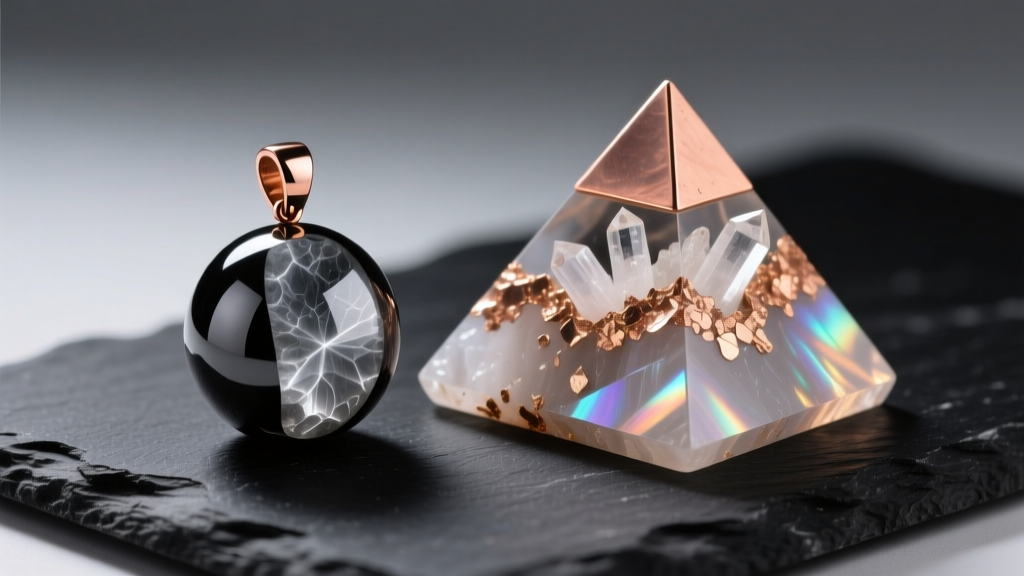
The wellness jewelry market has seen a massive surge in demand for the emf blocker necklace, driven by consumers seeking aesthetic accessories that double as personal grounding tools. While the biomedical efficacy of electromagnetic field shielding via pendants remains a subject of debate within the scientific community, the material science behind the stones, resins, and metals used to craft them is grounded in hard geology and chemistry. As jewelry designers and informed collectors, we must look past the marketing claims and evaluate these pieces based on structural integrity, Mohs hardness, specific gravity, and long-term wearability.
Choosing the right pendant requires understanding how these unique materials interact with human skin, ambient moisture, and the physical stress of daily wear. Below, we break down the material properties of the most popular EMF-focused jewelry components and provide a definitive framework for selecting, setting, and maintaining them.
Shungite: Carbon Content and Structural Fragility
Shungite is a rare, carbon-rich Precambrian rock found almost exclusively in the Karelia region of Russia. Its appeal in the wellness space stems from its unique molecular structure, which contains fullerenes (hollow carbon cages). However, from a lapidary and jewelry-making perspective, shungite presents significant structural challenges.
Type 1 vs. Type 2 Shungite for Pendants
Not all shungite is created equal. Type 1 (Elite or Noble Shungite) boasts a carbon content of up to 98%. While highly prized for its conductivity and metallic luster, it is incredibly brittle. Type 1 shungite has a Mohs hardness of roughly 3.5 to 4.0 and lacks a cohesive silicate matrix, meaning it will easily shatter if dropped or subjected to the pressure of a tight prong setting. According to mineralogical data from Mindat.org, the structural integrity of carbon-heavy rocks requires specialized handling.
Type 2 (Petrovsky Shungite) contains 60% to 90% carbon, with the remainder composed of silicate minerals like quartz and mica. This silicate matrix gives Type 2 a Mohs hardness of 4.5 to 5.5, making it the only viable option for tumbled pendants and cabochons. Even then, shungite is notoriously porous and prone to leaving a black, soot-like residue on the skin and clothing.
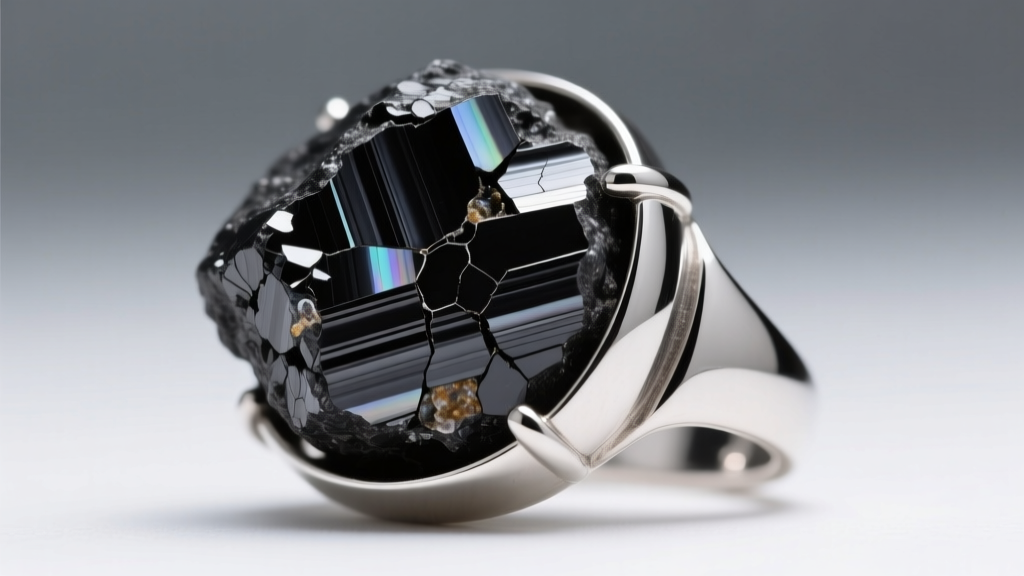
Jewelry Application: Shungite should never be set with prongs. The optimal setting is a deep, thick-walled bezel made of sterling silver or 14k gold, which protects the fragile edges from impact. Alternatively, jewelers often use macrame cord wrapping to avoid metal pressure entirely. To prevent the black residue issue, finished shungite pendants must be sealed with a micro-crystalline wax, such as Renaissance Wax, which fills the microscopic pores without altering the stone's natural matte finish.
Orgonite: Resin Matrices and Metal Shavings
Unlike shungite, orgonite is not a naturally occurring mineral. It is a composite material consisting of a 50/50 mix of synthetic resin and metal shavings (typically copper, brass, or aluminum), embedded with quartz crystals. The material properties of an orgonite emf blocker necklace depend entirely on the chemical composition of the resin used by the artisan.
Epoxy vs. Polyester Resin Degradation
Cheap, mass-produced orgonite pendants are often cast in polyester resin. While inexpensive and fast-curing, polyester resin is highly susceptible to UV degradation. When exposed to direct sunlight, polyester orgonite will yellow, become brittle, and develop micro-fractures within six to twelve months. Furthermore, the exothermic (heat-releasing) reaction during the curing process of thick polyester pours can cause the embedded quartz crystals to fracture or 'craze' due to thermal shock.
High-end jewelry makers utilize jewelry-grade epoxy resin (such as ArtResin or specific deep-pour epoxies). Epoxy offers superior UV resistance, higher tensile strength, and a slower, cooler curing process that preserves the structural integrity of the embedded crystals. When shopping for an orgonite pendant, always verify the resin type; a high-quality epoxy pendant will remain optically clear and structurally sound for decades.
Comparative Material Matrix
To make an informed decision, it is crucial to compare the physical properties of these materials. The Gemological Institute of America (GIA) emphasizes that both hardness (scratch resistance) and toughness (break resistance) must be considered for daily-wear jewelry.
| Material | Mohs Hardness | Specific Gravity | Porosity | Best Setting Style |
|---|---|---|---|---|
| Type 2 Shungite | 4.5 - 5.5 | 2.1 - 2.4 | High | Bezel, Macrame |
| Orgonite (Epoxy) | 2.0 - 3.0 | 1.8 - 2.2 | None (Sealed) | Drilled Bail, Wire Wrap |
| Black Tourmaline | 7.0 - 7.5 | 3.0 - 3.2 | Low | Prong, Bezel, Channel |
| Hematite | 5.5 - 6.5 | 5.2 - 5.3 | Low (but rusts) | Bezel, Flush |
Hardware: Chain Gauges and Bail Sizing
The most common failure point for any heavy pendant necklace is the chain and bail hardware. Shungite, orgonite, and hematite pendants are exceptionally dense, frequently weighing between 40 and 80 grams. Standard 1.0mm or 1.5mm cable chains will inevitably stretch, kink, and snap under this dynamic load.
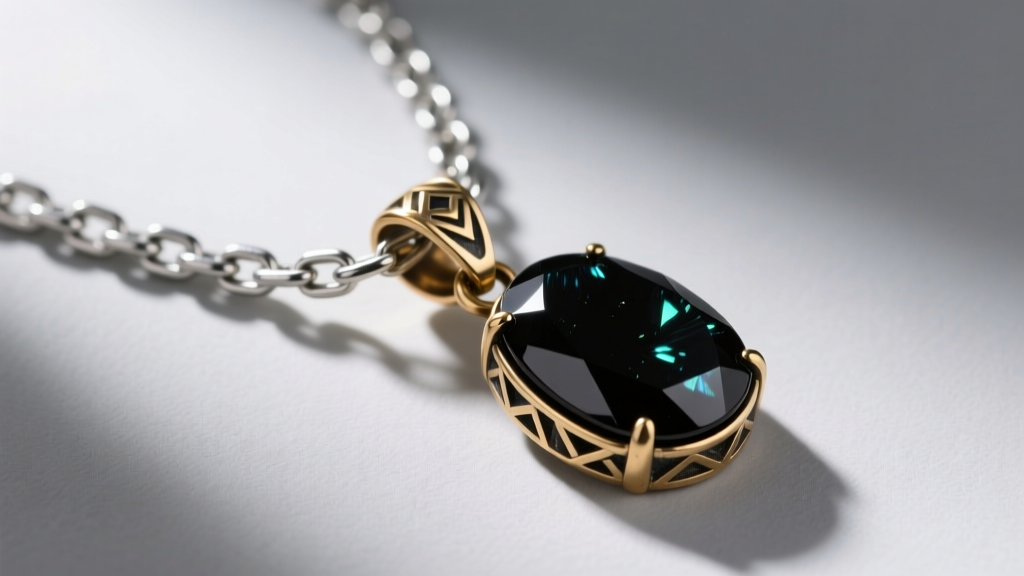
Chain Selection: For pendants exceeding 30 grams, you must upgrade to structural chain weaves. A 2.5mm to 3.0mm wheat chain or a 3.0mm rolo chain provides the necessary tensile strength. Stainless steel (316L grade) or solid 14k gold are mandatory; gold-plated brass chains will wear through at the friction points within months when supporting heavy stones.
Bail Engineering: Avoid glued-on bails. The organic acids in human sweat and the natural oils from the skin will degrade cyanoacrylate and epoxy adhesives over time. Always opt for pendants with soldered metal bails, or use a wire-wrapping technique with 18-gauge or 16-gauge dead-soft copper or argentium silver wire to create a custom, mechanical bail that physically grips the stone or resin matrix.
Skin Safety and Material Toxicity
When wearing an emf blocker necklace directly against the sternum, material toxicity and skin reactions are paramount. Orgonite pendants heavily loaded with copper shavings can cause localized skin discoloration. As copper oxidizes in the presence of sweat (which is slightly acidic and contains salts), it forms copper chloride, leaving a harmless but unsightly green stain on the chest. To prevent this, artisans should seal the back of copper-heavy orgonite pendants with a thin layer of clear polyurethane or skin-safe jeweler's epoxy.
Hematite, an iron oxide (Fe2O3), presents a different challenge. While it has a beautiful metallic luster, hematite is prone to oxidation (rusting) when exposed to prolonged moisture. If you live in a high-humidity environment or sweat heavily, a hematite pendant must be removed before showering or exercising, and occasionally wiped down with a dry microfiber cloth and a light coating of mineral oil to maintain its structural surface.
Final Verdict: Matching Material to Lifestyle
Selecting the ideal pendant requires balancing your aesthetic preferences with your daily activities. If you lead an active lifestyle and require a low-maintenance, highly durable piece, a bezel-set Black Tourmaline pendant on a 2.5mm wheat chain is the superior choice, offering excellent Mohs hardness and zero porosity issues. If you are drawn to the deep, matte aesthetics of Shungite, ensure you purchase a Type 2 specimen sealed with micro-crystalline wax and set in a protective bezel. Finally, if you prefer the vibrant, customizable nature of Orgonite, strictly source from artisans who utilize UV-stable, jewelry-grade epoxy resins to guarantee the longevity of your wearable art.


