Engagement Necklace Gift Guide: Meanings, Metals & 2026 Trends
Discover the perfect engagement necklace with our expert gift guide. Explore diamond pendants, gemstone meanings, chain gauges, and styling tips.

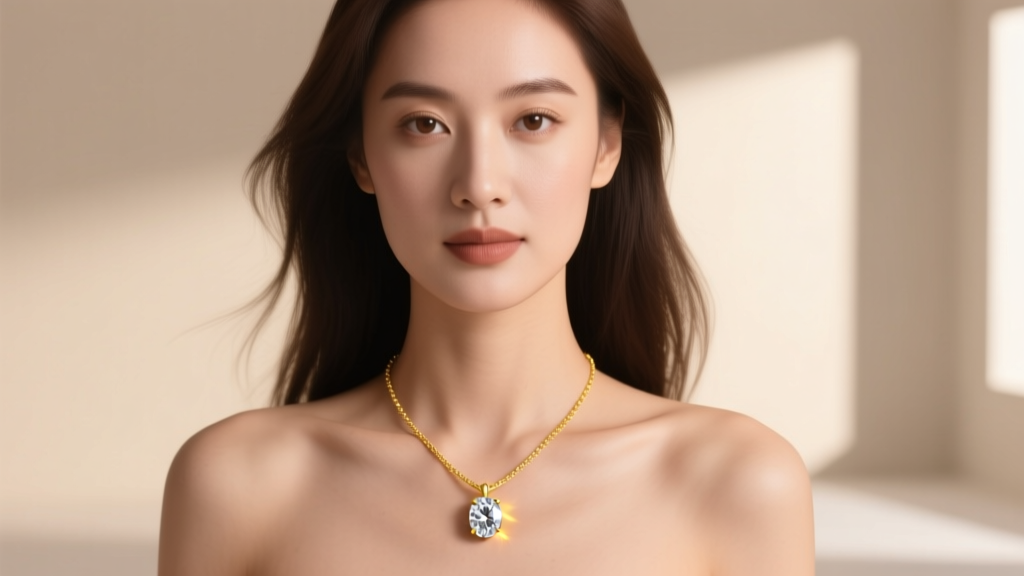
The Paradigm Shift: Why Choose an Engagement Necklace?
For decades, the diamond solitaire ring has monopolized the proposal narrative. However, as we navigate the jewelry landscape of 2026, a profound shift is underway. The engagement necklace has emerged as a highly coveted, deeply symbolic alternative or complement to the traditional ring. Why the change? Practicality and personalization play massive roles. Ring sizing remains one of the most stressful elements of a surprise proposal, often requiring covert borrowing of jewelry or awkward post-proposal resizing trips. A necklace, conversely, offers universal wearability and rests literally over the heart, symbolizing a bond that is deeply emotional and intimate.
Furthermore, modern couples are increasingly prioritizing experiences and travel over traditional milestones, making a versatile piece of fine jewelry that can be worn every day—without the risk of losing a stone in the ocean or damaging a prong during an active honeymoon—an incredibly pragmatic choice. Whether you are looking for a standalone promise piece, a push-present, or a modern proposal centerpiece, understanding the anatomy of an engagement necklace is critical for making a lasting investment.
Gemstone Durability: The Mohs Scale Reality Check
When selecting the focal point of your pendant, you must look beyond mere sparkle and consider the rigorous demands of daily wear. The Gemological Institute of America (GIA) emphasizes the Mohs scale of mineral hardness as the primary metric for scratch resistance. However, hardness is only half the equation; toughness (resistance to chipping) is equally vital.
Diamonds and Lab-Grown Alternatives
A natural or lab-grown diamond scores a perfect 10 on the Mohs scale, making it impervious to everyday scratches from dust and quartz. However, diamonds possess distinct cleavage planes, meaning a hard, direct impact to a specific angle can chip the stone. For an active recipient, a bezel-set diamond pendant is vastly superior to a traditional four-prong basket, as the metal rim protects the vulnerable girdle of the stone. In 2026, lab-grown diamonds (LGDs) dominate the pendant market, offering identical chemical and optical properties at a 40% to 60% lower price point, allowing buyers to upgrade to a 1.5-carat or 2-carat center stone without breaking the budget.
Sapphires and Moissanite
If you are exploring colored gemstones, corundum (sapphire and ruby) is your safest bet, scoring a 9 on the Mohs scale. Sapphires lack the cleavage planes of diamonds, granting them exceptional toughness. Moissanite, scoring a 9.25, is another phenomenal choice that offers superior brilliance and fire compared to diamond, though its distinct double-refraction can sometimes give it a slightly artificial look in larger carat weights. Avoid emeralds, opals, or pearls for an everyday engagement necklace; their porous nature and low hardness make them prone to catastrophic damage from simple household chemicals or accidental bumps.
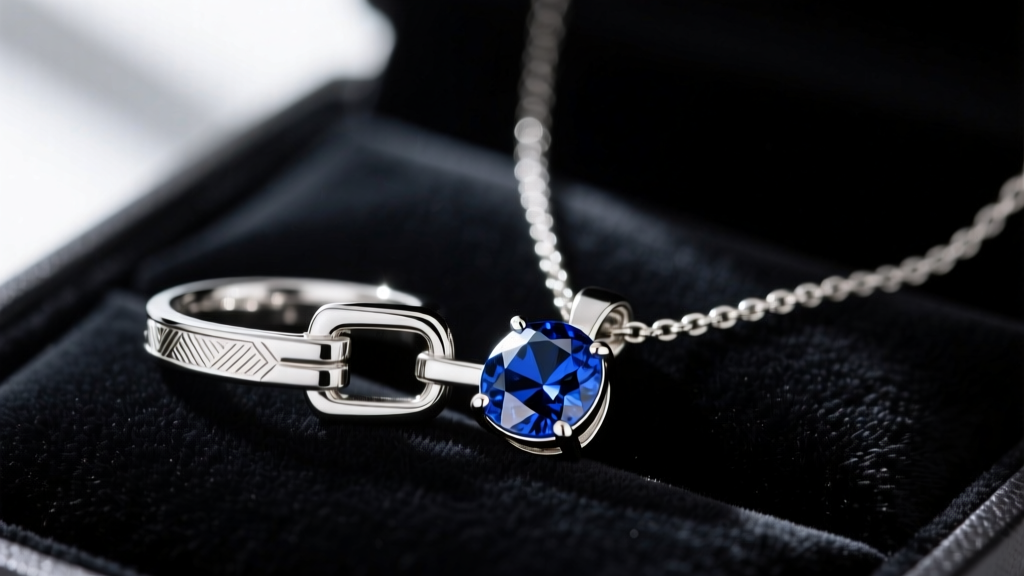
Chain Architecture: Gauges, Links, and Kink-Points
The chain is the unsung hero of any pendant necklace. A beautiful gemstone suspended on a weak, poorly constructed chain is a lost heirloom waiting to happen. When evaluating chains, you must consider the link structure and the wire gauge (thickness). For a pendant weighing between 1 and 3 carats, a chain gauge of 1.0mm to 1.5mm is the absolute minimum for structural integrity.
| Chain Style | Ideal Gauge | Durability & Kink Resistance | Best For |
|---|---|---|---|
| Wheat (Spiga) | 1.2mm - 1.5mm | Exceptional. Woven links prevent kinking and snapping. | Heavy pendants, everyday wear |
| Cable | 1.0mm - 1.3mm | Good. Classic look, but individual links can pull apart if snagged. | Minimalist, lightweight solitaires |
| Box | 1.1mm - 1.5mm | Moderate. Prone to permanent kinking if bent or slept in. | Geometric pendants, formal wear |
| Rope | 1.5mm - 2.0mm | Excellent. Twisted links distribute tension evenly. | Statement pieces, layering bases |
According to master jewelers, box chains are notoriously difficult to repair once kinked because the squared links lose their structural geometry. If your partner is someone who sleeps in their jewelry or leads a highly active lifestyle, opt for a wheat or rope chain. These styles distribute mechanical stress across multiple interlocking links, drastically reducing the risk of a catastrophic snap.
Metallurgy: Decoding Purity and Alloys
The metal you choose dictates not only the color of the piece but its long-term maintenance requirements. The Jewelers of America strictly regulates metal hallmarks, ensuring you know exactly what you are purchasing.
- Platinum 950: Composed of 95% pure platinum and 5% alloy (usually ruthenium or iridium). It is naturally white, incredibly dense, and hypoallergenic. When scratched, platinum develops a 'patina' rather than losing metal, making it the ultimate heirloom choice. Expect to pay a 30-50% premium over gold.
- 18k Gold: Contains 75% pure gold. It offers a rich, warm hue in yellow gold and a deep color in rose gold (alloyed with copper). However, 18k white gold requires periodic rhodium plating to maintain its bright white appearance, as the underlying alloy is naturally yellowish-grey.
- 14k Gold: Contains 58.3% pure gold. It is significantly harder and more scratch-resistant than 18k gold due to the higher percentage of alloy metals. It is the most pragmatic choice for an everyday engagement necklace that will endure rigorous conditions.
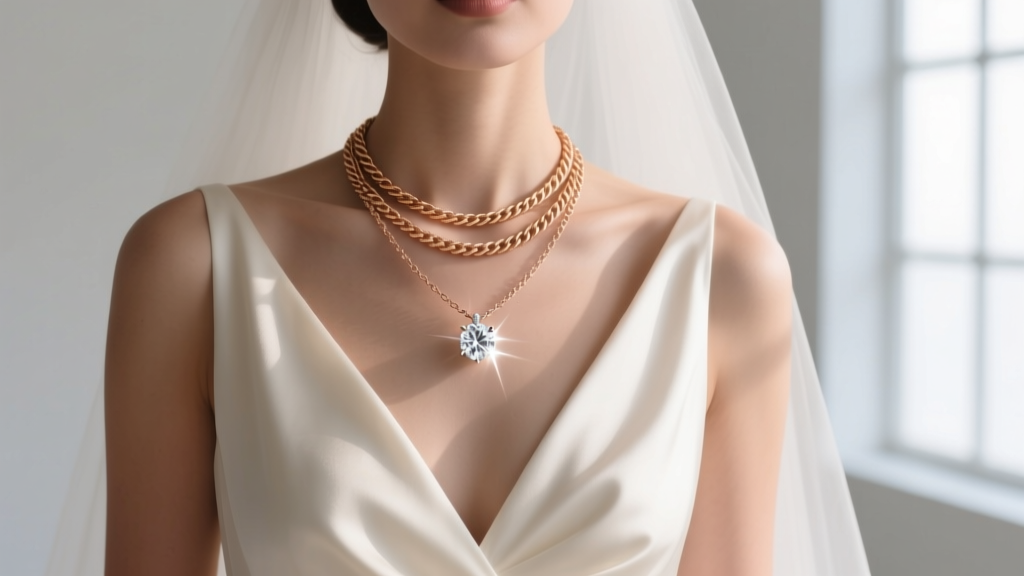
Length and Neckline Pairing Framework
An engagement necklace must harmonize with the wearer's wardrobe and anatomy. The length of the chain determines where the pendant rests, which in turn alters the visual proportions of the neckline.
- 16 Inches (Choker/Collarbone): Rests snugly at the base of the neck. Ideal for open-collar shirts, boat necks, and off-the-shoulder tops. Best suited for smaller, delicate pendants (under 0.5 carats).
- 18 Inches (Princess): The industry standard. It falls gracefully on the collarbone and works seamlessly with almost any neckline, from V-necks to crew necks. This is the safest bet for a surprise gift.
- 20 Inches (Matinee): Drops just below the collarbone. Perfect for layering with shorter chains or wearing over high-neck blouses and dresses. Ideal for larger, heavier statement pendants.
Budgeting and Appraisal Strategy
When budgeting for an engagement necklace, allocate your funds strategically. Unlike rings, where the setting can cost thousands, pendant settings are relatively simple. Direct the majority of your budget toward the center stone and the chain's structural integrity. A high-quality 1-carat lab-grown diamond set in a solid 14k gold bezel on a 1.2mm wheat chain will typically range from $1,200 to $2,500, offering immense value and durability.
Finally, never skip the appraisal and insurance step. The American Gem Society recommends obtaining an independent valuation immediately after purchase. Insuring the piece through a specialized jewelry rider or a dedicated provider like Jewelers Mutual ensures that this profound symbol of your commitment is protected against loss, theft, or accidental damage from day one.
Expert Gifting Tip: When presenting an engagement necklace, avoid flimsy cardboard packaging. Invest in a weighted, velvet-lined wooden presentation box. The tactile weight of the box subconsciously communicates the permanence and gravity of the commitment you are making.


