How to Evaluate a Diamond Flower Pendant Necklace: An Expert Guide
Master the technical details of a diamond flower pendant necklace. Learn expert grading, setting styles, metal choices, and valuation metrics.

The Anatomy of a Floral Motif: Beyond the Aesthetic
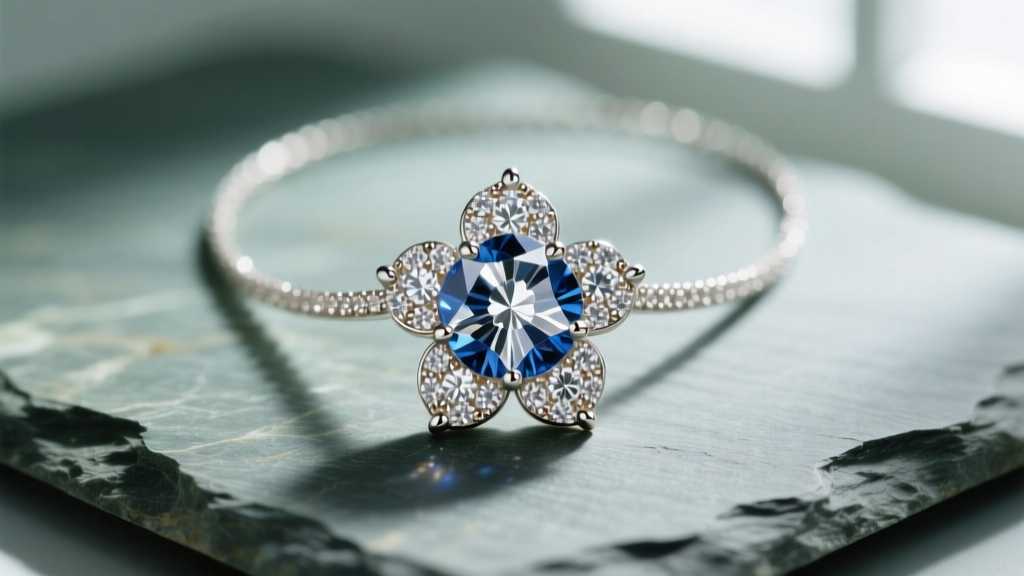
When evaluating a diamond flower pendant necklace, amateur buyers focus solely on the total sparkle, while gemologists and master jewelers deconstruct the piece into its functional anatomy. A floral motif is not merely a shape; it is a complex optical instrument. The anatomy consists of the center stone (representing the pistil or stamen), the melee diamonds (the petals), the gallery (the structural undercarriage), and the bail (the suspension mechanism).
The gallery is arguably the most critical, yet overlooked, component. In high-end manufacturing, the gallery is CAD-designed or hand-carved to be fully open, allowing ambient light to enter the pavilion of the diamonds from beneath. Mass-produced commercial pendants often feature a solid, stamped metal backing with minimal cutouts. This 'closed-back' design traps soap, lotions, and dead skin cells against the pavilion facets, effectively killing the light return and turning a brilliant diamond flower pendant necklace into a dull, lifeless accessory within months of daily wear.
Diamond Melee: Grading the 'Petals' and 'Center'
The petals of a floral pendant are constructed using diamond melee—stones weighing under 0.15 carats each. Understanding the cut and color grading of these micro-stones is essential for assessing quality.
Single-Cut vs. Full-Cut Melee
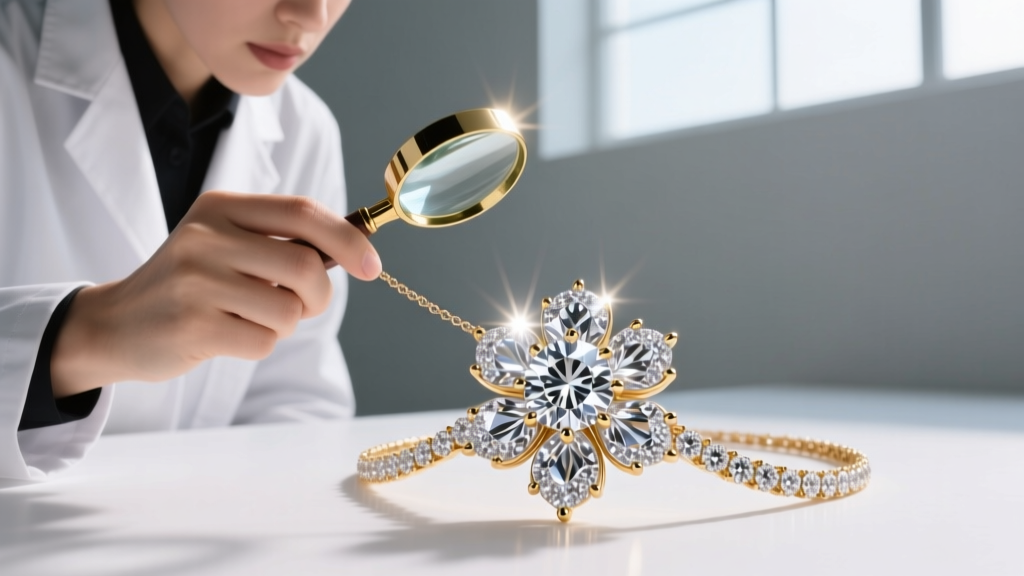
Historically, manufacturers used single-cut melee (featuring only 17 or 18 facets) to reduce costs. However, as of 2026, the widespread availability of precision-cut lab-grown diamonds has made full-cut melee (57 or 58 facets) the industry standard for premium jewelry. Full-cut melee mirrors the scintillation of the center stone, creating a cohesive optical illusion of a single, massive diamond. If you examine the petals under a 10x loupe and count fewer than 8 crown facets, you are looking at single-cut stones, which will appear glassy and flat compared to a brilliant center stone.
The Color Matching Imperative
According to the Gemological Institute of America (GIA), color mismatch is the most common flaw in commercial floral pendants. If the center stone is graded F or G (colorless/near-colorless), but the manufacturer uses I or J-color melee for the petals to save money, the outer edges of the flower will exhibit a faint yellowish-brown tint. Always demand a piece where the melee is graded within one color tier of the center stone to maintain structural harmony.
Setting Techniques: Prong vs. Bezel vs. Pavé in Floral Designs
The method used to secure the melee diamonds dictates both the aesthetic profile and the long-term durability of the necklace. Below is a technical comparison of the three primary setting styles used in floral motifs.
| Setting Style | Light Return | Durability & Snag Risk | Best Use Case in Floral Motifs |
|---|---|---|---|
| Shared Prong | Maximum (95%+) | Low durability, high snag risk on silk/knitwear. | Vintage-style, raised petals where individual stone separation is desired. |
| Micro-Pavé | High (85-90%) | Moderate durability. Metal beads hold stones; requires periodic rhodium plating if white gold. | Modern, seamless 'diamond-encrusted' petals that blur the lines between metal and stone. |
| Bezel | Reduced (70-80%) | Maximum durability. Zero snag risk. Protects the girdle of the melee. | Art Deco or contemporary geometric floral designs prioritizing active, daily wear. |
For a classic diamond flower pendant necklace, micro-pavé remains the superior choice for maximizing surface sparkle. However, buyers must be aware that micro-pavé beads are incredibly small (often under 0.4mm in diameter) and can wear down over 5 to 7 years of friction against clothing, necessitating a professional re-tipping by a master jeweler.
Metal Selection and Chain Pairing: Structural Integrity
The alloy chosen for the pendant and its accompanying chain directly impacts the lifespan of the piece.
14k vs. 18k Gold for Micro-Settings
While 18k gold (75% pure gold) offers a richer, warmer hue and is hypoallergenic, it is inherently softer than 14k gold (58.5% pure gold). In a complex floral design featuring dozens of micro-prongs, 18k gold is more susceptible to prong deformation if the pendant is subjected to impact or caught on fabric. For a diamond flower pendant necklace intended for rigorous daily wear, 14k gold or platinum provides the necessary tensile strength to keep the melee secure.
Chain Gauge and Bail Mechanics
A common failure point in floral necklaces is the chain snapping under the weight of a heavy, multi-carat pendant. A standard 0.5mm or 0.6mm cable chain is insufficient for a pendant weighing over 3 grams. Experts recommend a minimum chain gauge of 1.0mm to 1.2mm in a solid box or wheat chain configuration. Furthermore, inspect the bail. A 'hidden bail' (tucked behind the top petal) preserves the uninterrupted silhouette of the flower, but it restricts the chain thickness you can use. Ensure the chain's end caps can physically pass through the hidden bail's aperture before purchasing.
Valuation and Authentication: What You Are Actually Paying For
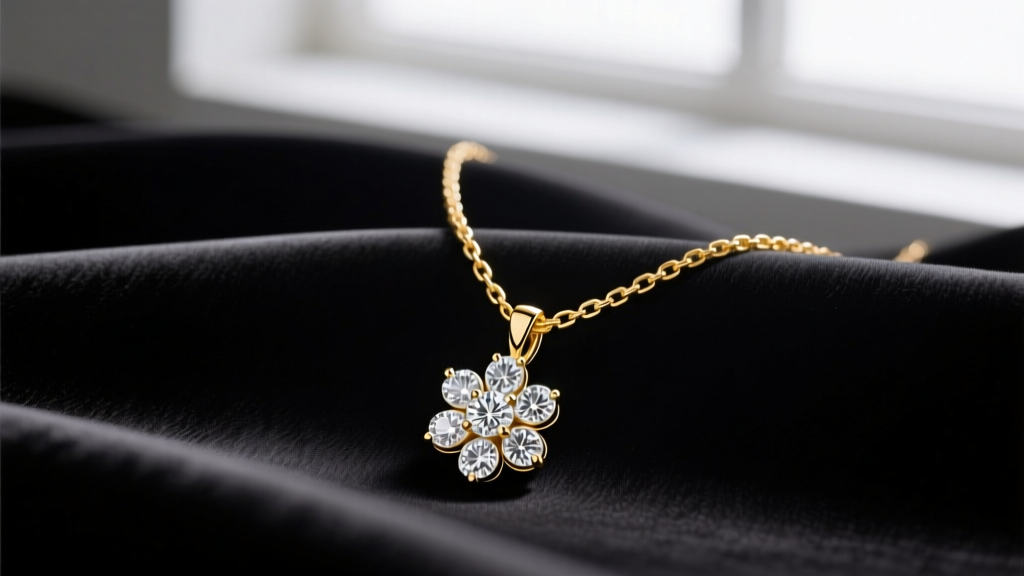
Retailers frequently market pieces using the term Total Carat Weight (TCW). A tag reading '1.50 CTW Diamond Flower Pendant' can be highly deceptive. In many commercial pieces, the center stone may only weigh 0.30 carats, while the remaining 1.20 carats are comprised of low-clarity (I1-I2) melee. Because melee is valued at a fraction of the cost of larger, gem-quality center stones, the actual intrinsic value of the piece is heavily skewed.
As outlined by Jewelers of America, a proper appraisal or point-of-sale disclosure must break down the center stone's specific carat weight, color, and clarity, separate from the melee aggregate. When investing in a high-ticket diamond flower pendant necklace, always request a gemological certificate (such as a GIA or IGI report) for the center stone if it exceeds 0.30 carats, and ensure the invoice explicitly lists the TCW versus the center weight.
Expert Maintenance: Preserving Light Return in Complex Settings
The intricate crevices of a floral motif are magnets for environmental debris. Never use ultrasonic cleaners on a micro-pavé diamond flower pendant necklace. The high-frequency acoustic cavitation can easily shake loose the tiny melee stones from their metal bead settings. Instead, adopt a strict manual cleaning protocol: soak the pendant in a solution of warm water and a few drops of degreasing dish soap for 15 minutes, then gently agitate the gallery and petal crevices with an ultra-soft baby toothbrush. Rinse with distilled water to prevent hard water spotting, and dry with a lint-free microfiber cloth. Have a jeweler inspect the micro-prongs and rhodium plating every 12 months to preemptively address structural wear.


