Expert Guide: Evaluating a Millefiori Necklace Vintage Piece
Learn how to authenticate, evaluate, and restore a millefiori necklace vintage find with our expert step-by-step guide on glass canes and hardware.

The Allure and Anatomy of Authentic Millefiori Glass
The term 'millefiori' translates from Italian as 'a thousand flowers,' a poetic description for a glassmaking technique that dates back to Roman times but saw its most famous revival on the island of Murano. When appraising a millefiori necklace vintage collectors and appraisers look far beyond the vibrant surface colors. True authentication requires a deep understanding of murrine (the glass canes), the matrix glass, and the historical hardware used to string these heavy, fragile beads.
Authentic Murano millefiori is created by fusing multiple layers of colored glass into a thick rod, which is then stretched while hot to reduce its diameter. Once cooled, the rod is sliced into tiny cross-sections. According to the Corning Museum of Glass, these slices are then arranged in molds or fused onto a gather of molten glass to create beads. The precision of this lampworking process is what separates a genuine mid-century Italian artifact from a mass-produced plastic or molded-glass imitation.
Identifying Specific Cane Patterns
To evaluate a piece accurately, you must identify the specific cane patterns embedded in the glass matrix. The most historically significant patterns include:
- Rosetta (Star) Canes: Characterized by alternating layers of colored glass, typically featuring a red, white, and blue concentric starburst. These are highly prized in necklaces dating from the 1920s to the 1940s.
- Floral Murrine: Complex, multi-petaled flowers that require advanced lampworking skills. The petals should have distinct, sharp edges without color bleeding.
- Geometric and Star Canes: Often used as filler canes between larger floral elements in mid-century (1950s-1960s) statement necklaces.
The Victoria and Albert Museum notes that the revival of these complex murrine techniques in the 19th and 20th centuries was a direct response to the demand for intricate, mosaic-style glass jewelry and paperweights.
Step-by-Step Authentication Checklist
Use a 10x jeweler's loupe to inspect the beads. Here is a structured framework to separate genuine Murano glass from later imitations.
| Feature | Authentic Murano (1920s-1960s) | Mass-Produced Imitations (1980s-Present) |
|---|---|---|
| Cane Clarity | Sharp, distinct layers; no bleeding between colors | Muddy edges; colors often bleed into the matrix |
| Glass Matrix | Clear, slightly amber-tinted, or deeply saturated cobalt | Cloudy, overly perfect, or synthetic-looking clear resin |
| Bead Weight | Noticeably heavy; dense lead or barium glass composition | Lightweight; often plastic, acrylic, or thin hollow glass |
| Drill Holes | Slightly irregular, powdery residue, sharp inner edges | Perfectly uniform, melted or polished inner rims |
| Surface Texture | Minor tooling marks, tiny air bubbles (seeds) in the matrix | Mold lines visible; completely devoid of natural air bubbles |
Evaluating the Findings and Hardware
The hardware on a vintage piece is often the most reliable indicator of its age, as glass beads are frequently re-strung. Original findings can significantly increase the valuation of your necklace.
Trombone Clasps (Pre-1950s)
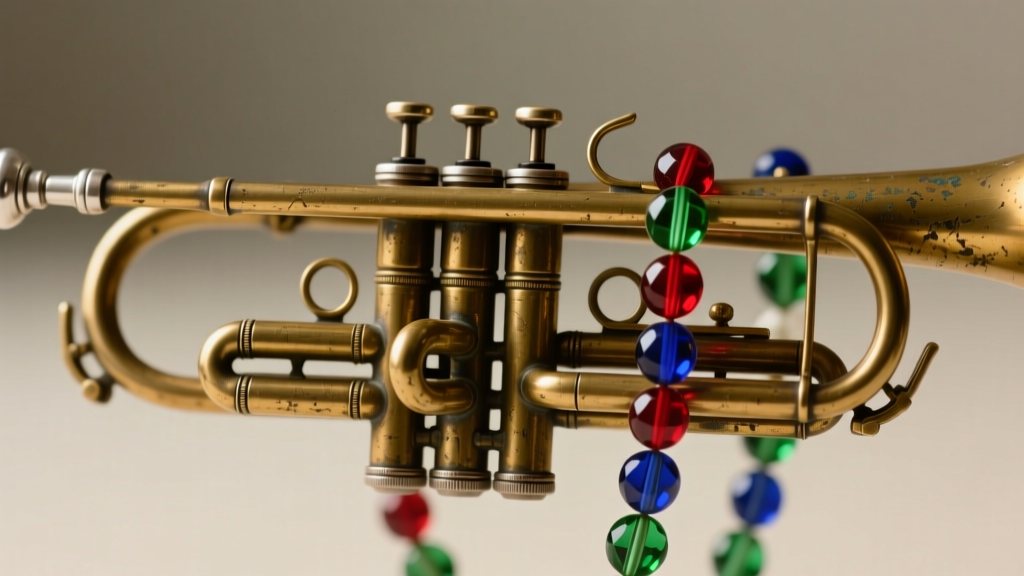
If your necklace features a cylindrical push-pull clasp that operates like a trombone slide, you likely have a piece from the 1920s to 1940s. These were typically made of base metals plated in silver or gold. Look for a dark, uneven patina and a slightly loose tension in the sliding mechanism, which is normal for antique hardware. Never attempt to polish this patina away, as it proves the age of the metal.
Barrel and Filigree Clasps (1950s-1970s)
Mid-century Murano necklaces frequently utilized screw-together barrel clasps or stamped filigree box clasps. Barrel clasps should have deep, sharp threading. If the threading is stripped or feels like soft pot metal, the clasp may be a later replacement. Original 1950s filigree clasps often feature intricate floral stamping that matches the aesthetic of the millefiori beads themselves.
Safe Cleaning and Re-Stringing Techniques
Vintage glass is highly susceptible to thermal shock and chemical degradation. Never place a vintage millefiori necklace in an ultrasonic cleaner. The high-frequency vibrations will exploit microscopic surface fractures (crizzling), causing the glass matrix to shatter or the murrine to pop out of the bead.
The Cleaning Protocol
Use a solution of distilled water and a single drop of pH-neutral dish soap. Gently wipe each bead with a microfiber cloth. Avoid getting water near the drill holes, as moisture trapped inside can degrade the stringing material and cause internal clouding over time.
Re-Stringing for Longevity
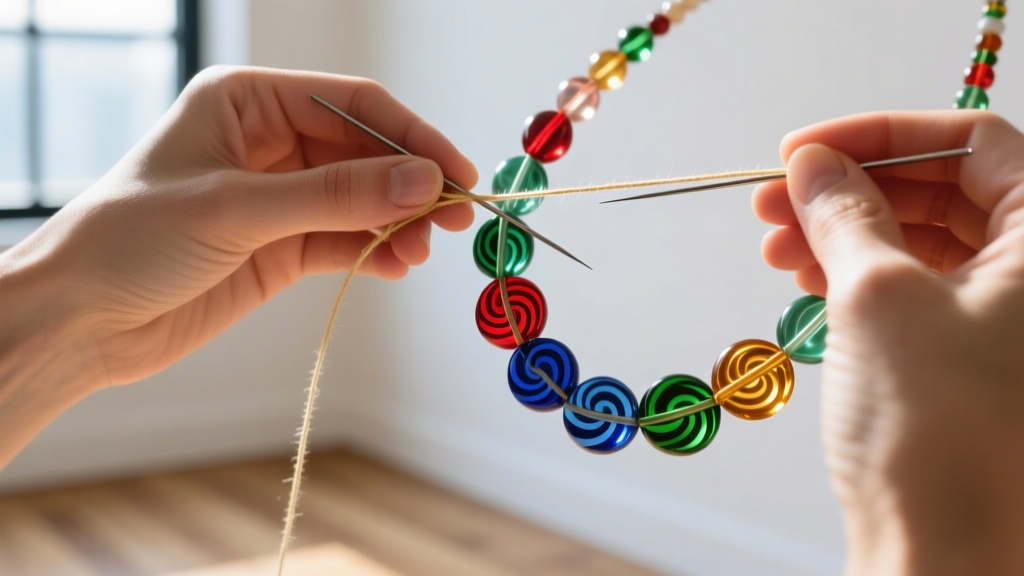
If the necklace is sagging, kinked, or shows signs of fraying at the clasp, it must be re-strung immediately to prevent a catastrophic break. Because millefiori beads are heavy and have sharp, unpolished inner drill holes, standard silk thread will eventually snap.
- For Beads with Large Holes (>1.5mm): Use a 49-strand, 0.018-inch stainless steel micro-wire (such as Soft Flex). Finish with sterling silver crimp beads and a wire guardian at the clasp to prevent metal-on-glass friction.
- For Beads with Small Holes (<1mm): Use Size FF or FFF nylon silk thread. You must knot between every single bead using a micro-knotting tool. This not only protects the glass from grinding against adjacent beads but ensures that if the thread breaks, you only lose one bead rather than the entire strand.
Market Valuation: What to Pay in 2026
The market for vintage glass jewelry has matured, with buyers increasingly demanding provenance and original hardware. Here is a realistic pricing guide for the current market:
- 1920s-1940s Rosetta & Murrine ($400 - $1,200+): Pieces featuring complex, multi-layered star canes, original trombone clasps, and heavy, large-format beads. High auction value.
- 1950s-1970s Mid-Century Statement Pieces ($150 - $450): Bold, chunky bead necklaces with vibrant floral canes, often featuring original barrel clasps. Highly wearable and popular for modern layering.
- 1980s-Present 'Murano-Style' Imitations ($20 - $60): Mass-produced beads (often from Asia) with molded patterns rather than true sliced canes. Sold in tourist shops; holds virtually no collector value.
By applying these structural and material evaluations, you can confidently navigate estate sales, auctions, and vintage markets, ensuring that the millefiori piece you acquire is a genuine artifact of glassmaking history.


