Expert Guide: Choosing a Gold Butterfly Necklace With Diamonds
Master the technical details of buying a gold butterfly necklace with diamonds. Learn about karat purity, diamond melee grading, and casting quality.

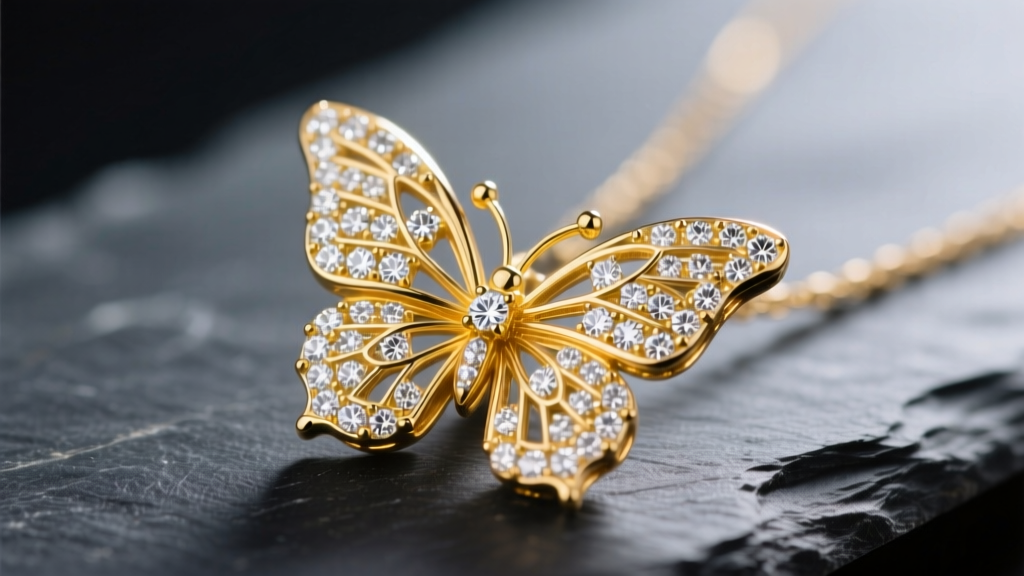
A high-end gold butterfly necklace with diamonds is far more than a whimsical fashion accessory; it is a complex micro-sculpture that demands rigorous metallurgical and gemological engineering. When evaluating fine jewelry featuring organic, asymmetrical motifs like butterflies, the structural integrity of the piece is just as critical as its aesthetic brilliance. Delicate wing tips, sweeping antennae, and the intricate pavé settings required to mimic the natural patterns of a butterfly’s wings introduce unique failure points that mass-produced jewelry often ignores. In this expert deep dive, we dissect the technical specifications, alloy compositions, and diamond grading metrics you must scrutinize before investing in a luxury butterfly pendant.
The Metallurgy of the Motif: Gold Alloys and Casting Techniques
The foundation of any enduring fine jewelry piece lies in its alloy composition. Pure 24-karat gold is entirely unsuitable for a diamond-set butterfly pendant due to its extreme malleability. The industry standard bifurcates into two primary categories: 18-karat (75% pure gold) and 14-karat (58.3% pure gold). While 18k gold offers a richer, warmer saturation—particularly in yellow and rose gold variants—it possesses a lower Vickers hardness score. For a butterfly motif, the antennae and the distal edges of the lower wings are highly susceptible to bending and deformation if crafted in 18k gold without internal structural reinforcement.
Conversely, 14k gold, alloyed with precise ratios of copper, silver, and zinc, provides superior tensile strength. This makes it the metallurgical preference for intricate, protruding elements like butterfly antennae. According to the World Gold Council, the specific alloy mix not only dictates hardness but also the final hue. A 14k white gold butterfly necklace will require rhodium plating to achieve a stark, silvery finish, which will eventually wear off at the high-friction points of the wing joints, revealing the faint yellowish undertone of the raw alloy beneath.
Manufacturing methodology also plays a pivotal role. High-end jewelers utilize lost-wax casting to achieve the three-dimensional, organic curves of a butterfly’s wings. However, poor casting techniques can result in microscopic porosity—tiny air pockets trapped within the gold. When examining the underside of the pendant with a 10x triplet loupe, the metal should appear completely dense and smooth. Any pitting or dull, grayish spots indicate porosity, which severely compromises the structural integrity of the prongs holding the diamonds.
Diamond Melee: Grading the Pavé and Prong Settings
The brilliance of a gold butterfly necklace with diamonds relies almost entirely on 'melee'—the industry term for small diamonds typically ranging from 0.01 to 0.18 carats. The cut quality of these miniature stones is the most frequently compromised element in commercial jewelry. Melee diamonds are generally cut in two styles: 'single cut' (featuring 17 or 18 facets) and 'full cut' (featuring the standard 57 or 58 facets of a larger brilliant-cut diamond).
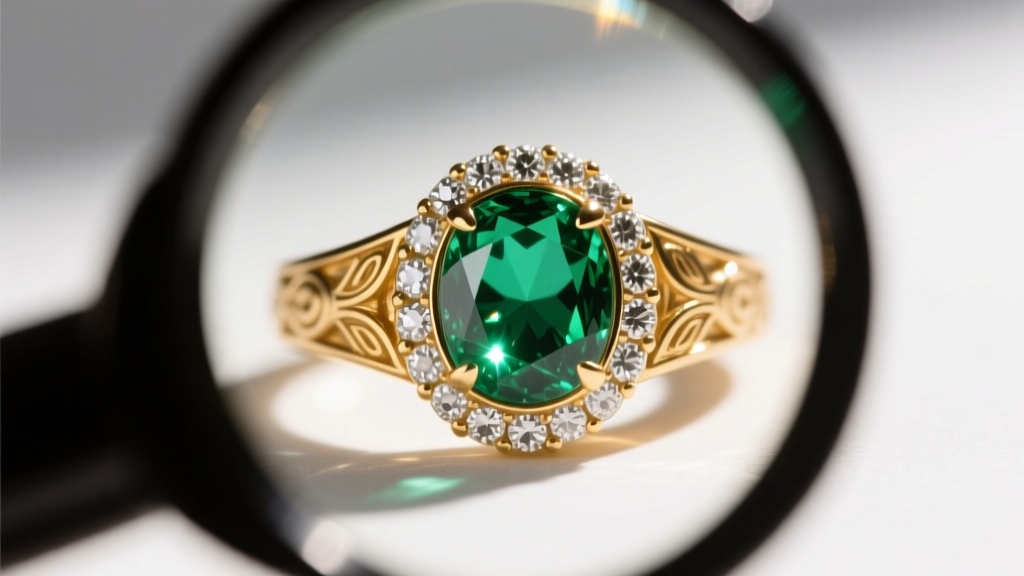
For a luxury pendant, you must demand full-cut melee. Single-cut diamonds lack the complex facet geometry required to refract light dynamically, often resulting in a flat, 'glassy' appearance that fails to capture the iridescent essence of a butterfly's wing. The Gemological Institute of America (GIA) notes that while color and clarity are important, cut is the primary driver of light performance in melee stones. Opt for G-H color grades to ensure the stones appear colorless against the gold setting, and VS-SI clarity, as inclusions in stones this small are rarely visible to the naked eye but can compromise durability if located near the girdle.
The setting technique is equally vital. True pavé (from the French word for 'paved') involves setting the diamonds closely together, held in place by small beads of gold raised from the base metal. Micro-prong settings are also common for butterfly wings, allowing more light to enter the stone from the sides. However, micro-prongs are incredibly delicate. Run a silk cloth over the surface of the pendant; if the fabric snags, the prongs are poorly finished and will eventually tear your clothing and lose their stones. Never purchase a high-end diamond butterfly pendant if the stones are secured with epoxy or glue—a regrettable shortcut used in lower-tier manufacturing to compensate for poorly drilled setting holes.
Chain Architecture and Bail Articulation
A butterfly pendant should not hang rigidly like a static medallion; it requires dynamic movement to mimic the fluttering of wings. This is achieved through the bail—the loop that connects the pendant to the chain. Expert jewelers often employ a 'hidden bail' or an articulated hinge mechanism on the back of the butterfly’s thorax. This allows the pendant to articulate independently of the chain, catching the light from multiple angles as the wearer moves.
The chain itself must be calibrated to the exact weight of the pendant. A heavily diamond-encrusted 18k gold butterfly can easily weigh between 4 and 8 grams. Pairing this with a delicate 0.8mm chain will result in premature stretching and eventual failure of the chain links. A 1.2mm to 1.5mm solid box chain or a woven wheat chain provides the optimal balance of visual delicacy and structural load-bearing capacity. Ensure the jump ring connecting the bail to the chain is laser-welded or soldered completely shut; open jump rings will inevitably pull apart under the pendulum stress of a swinging pendant.
Technical Specification Matrix: What to Demand
When consulting with a bespoke jeweler or evaluating a luxury retailer's inventory, use this technical matrix to verify the quality of the gold butterfly necklace with diamonds. Compromising on the 'Red Flag' metrics will result in a piece that degrades rapidly under daily wear.
| Component | Ideal Specification | Acceptable Compromise | Critical Red Flag |
|---|---|---|---|
| Gold Purity | 14k (58.3%) for structural wings | 18k (75%) with reinforced thorax | 22k or 24k (too soft for prongs) |
| Diamond Melee | Full Cut (57-58 facets), G-H Color | Single Cut (17-18 facets), I-J Color | Glass, CZ, or epoxy-glued stones |
| Setting Style | Bead Pavé or Micro-Prong | Channel setting for wing borders | Snagging prongs or visible glue |
| Chain Gauge | 1.2mm - 1.5mm Solid Box/Wheat | 1.0mm Solid Rope chain | Hollow-core chains under 1.0mm |
| Casting Quality | Dense, polished under-gallery | Minor tool marks on the back | Visible porosity or pitting |
Long-Term Maintenance and Prong Wear Diagnostics
Owning a fine diamond butterfly necklace requires a disciplined approach to maintenance. The intricate topography of a butterfly’s wings creates numerous crevices where lotions, sebum, and environmental dust accumulate, severely dulling the diamonds' refractive properties. While ultrasonic cleaners are highly effective at dislodging this debris, they pose a catastrophic risk to micro-pavé settings. The high-frequency vibrations can easily shake loose diamonds that are held by microscopic gold beads, especially if the prongs have experienced minor wear.
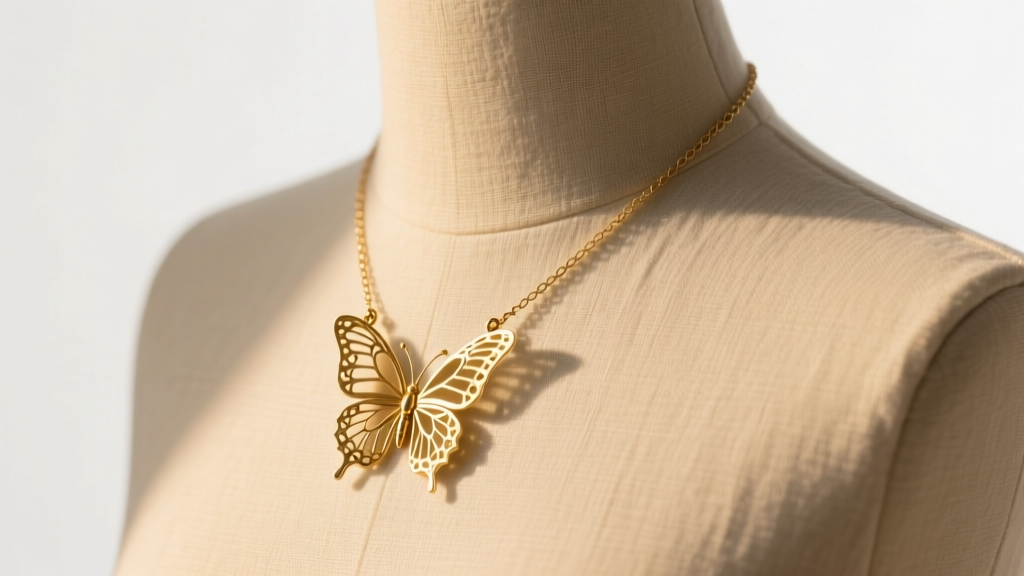
Instead, utilize a specialized steam cleaner or a soft-bristled baby toothbrush with a mild, ammonia-free degreasing solution. For white gold variants, anticipate the need for rhodium replating every 18 to 24 months, depending on the wearer's skin pH and friction exposure. During annual professional inspections, request that the jeweler check the 'wing symmetry' under magnification. Over time, the differential stress placed on the left and right wings can cause the central gold bridge (the thorax) to warp microscopically, altering the alignment of the diamond pavé and affecting the overall light return of the piece. By understanding these intricate technical details, you elevate your purchase from a simple transaction to an investment in masterful horological-grade jewelry engineering.
'The true mark of a master jeweler is not found in the size of the center stone, but in the flawless execution of the smallest, most hidden details of the melee settings.' — Master Bench Jeweler Adage


