Evry Jewels Charm Necklace Troubleshooting & Repair Guide
Is your Evry Jewels charm necklace tarnished or tangled? Discover expert troubleshooting tips, repair hacks, and plating care to restore your piece.

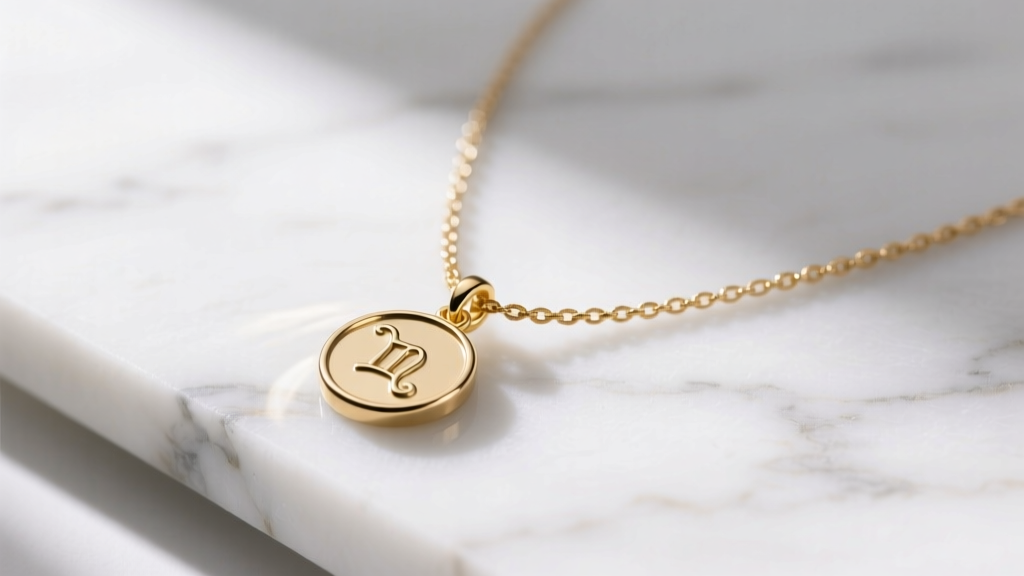
The Anatomy of an Evry Jewels Charm Necklace
Evry Jewels has captured the personalized jewelry market by offering highly customizable, dainty pieces that resonate with modern layering trends. Whether you are wearing a zodiac sign, an initial, or a birthstone, an evry jewels charm necklace is designed to be a delicate, everyday staple. However, the very characteristics that make these necklaces beautiful—their ultra-fine chains and lightweight charms—also make them susceptible to specific mechanical and chemical failures.
Dainty chains typically range from 0.8mm to 1.2mm in width. While they offer an elegant, barely-there aesthetic, they lack the structural mass of heavier ropes or cuban links, making them prone to tangling, kinking, and jump ring separation. Furthermore, the metallurgy of demi-fine jewelry requires specific care to prevent premature plating wear. In this comprehensive troubleshooting guide, we will diagnose the most common issues affecting your necklace and provide expert-level, actionable solutions to restore and protect your jewelry.
Troubleshooting Chain Tangling and Knotting
The most frequent complaint regarding any dainty chain is tangling. Cable chains, which consist of uniform oval links, are particularly notorious for catching on themselves and forming micro-knots that seem impossible to undo. This happens because the open spaces within the links are large enough for adjacent links to slip through during movement or storage.
The Cornstarch Friction-Reduction Method
When a knot tightens, the metal-on-metal friction locks it in place. Do not pull the chain, as this will permanently deform the delicate links. Instead, lay the necklace flat on a hard, dark surface. Apply a small pinch of cornstarch or talc-free baby powder directly to the knot. The powder acts as a dry lubricant, reducing friction. Using two fine sewing needles, gently work the center link of the knot loose. The powder allows the metal to glide, undoing the knot without stressing the structural integrity of the 0.9mm wire.
Choosing the Right Chain Style for Prevention
If you are constantly battling tangles, consider the physics of the chain weave. Box chains, constructed from square, interlocking links, lay flat and have significantly less open space, making them mathematically less prone to tangling than traditional cable chains. When purchasing a replacement or a new evry jewels charm necklace, opting for a box or wheat chain can save you hours of frustration.
Combating Plating Wear, Tarnish, and Skin Discoloration
Understanding the base metal of your necklace is critical for troubleshooting discoloration. According to the Federal Trade Commission Jewelry Guides, terms like 'gold-plated' and 'gold vermeil' dictate the thickness of the gold layer and the base metal used beneath it.
| Material Grade | Base Metal | Plating Thickness | Tarnish Risk | Expected Lifespan (Daily Wear) |
|---|---|---|---|---|
| 18K Gold Vermeil | Sterling Silver (925) | 2.5+ microns | Low | 2-5 Years |
| Gold-Plated Brass | Brass (Copper/Zinc) | 0.5 - 1.0 microns | High | 6-18 Months |
| Solid Sterling Silver | Silver (925) | N/A (Solid) | Medium (Oxidation) | Lifetime (with polishing) |
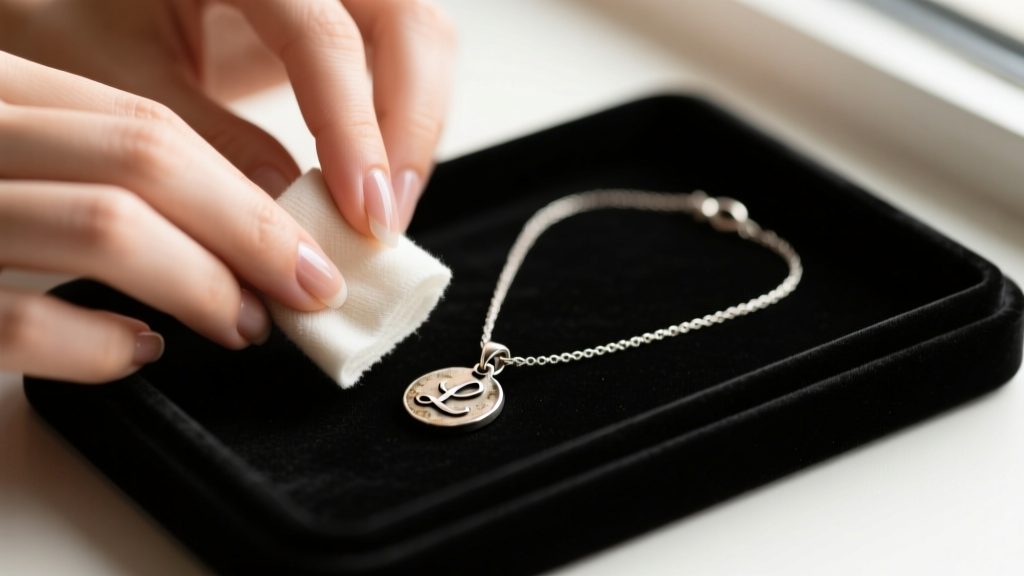
Why Your Skin Turns Green
If your gold-plated brass necklace leaves a green or black mark on your chest, it is not an allergic reaction; it is a chemical one. Brass is an alloy of copper and zinc. When the ultra-thin gold plating (often less than 1.0 microns) wears away at the clasp or bail, the exposed copper reacts with the natural acids and salts in your sweat (which typically has a pH between 4.5 and 7.0). This creates copper chloride, a green compound that transfers to the skin.
The Safe Cleaning Protocol
Never use chemical dip polishes (like Tarn-X) or ultrasonic cleaners on plated jewelry. These aggressive methods will strip the remaining gold layer instantly. Instead, create a mild bath using lukewarm water and a few drops of pH-neutral dish soap. Soak the necklace for three minutes, then gently agitate the charm with a baby-soft toothbrush. Rinse thoroughly and pat dry with a microfiber cloth. For solid sterling silver pieces, use a specialized silver polishing cloth infused with anti-tarnish compounds to remove oxidation without scratching the metal.
Fixing Stubborn Lobster Clasps and Separated Jump Rings
The hardware connecting your chain is under constant mechanical stress. A standard 10mm lobster clasp contains a tiny internal spring that can fail, and the 4mm jump rings connecting the clasp to the chain can pull apart.
Reshaping a Separated Jump Ring
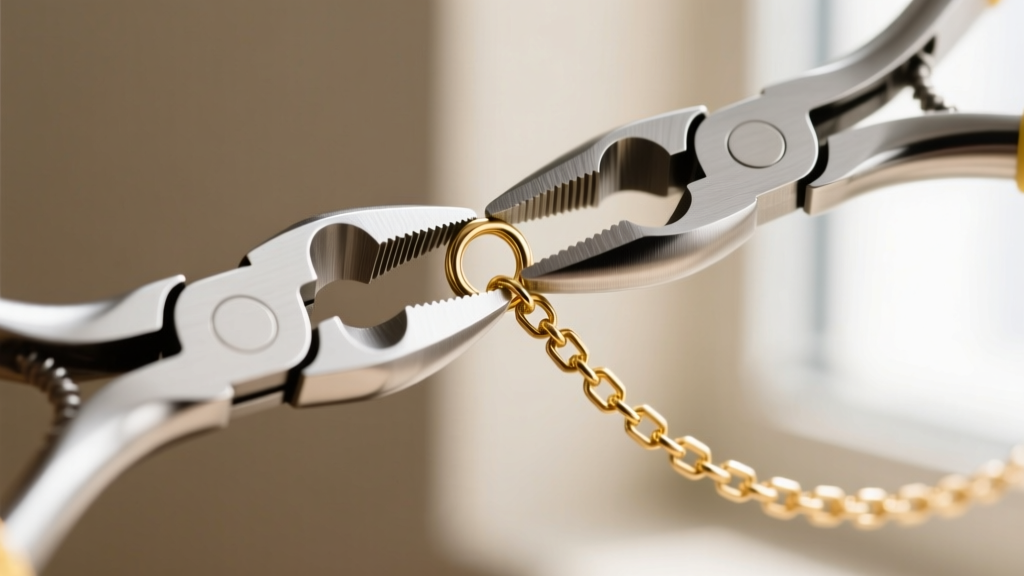
If the gap in your jump ring has widened and the chain slipped off, do not simply squeeze the sides together like a pair of scissors. This distorts the circular shape and weakens the metal's temper. According to master jewelers at Rio Grande Jewelry Tutorials, you must use two pairs of chain-nose pliers. Grip the jump ring on either side of the split. Twist one hand toward you and the other away from you to open it laterally. Once the chain is back inside, twist the ends back together until you feel a slight 'click' and the ends are perfectly flush. This maintains the structural circle and prevents future snags.
Lubricating a Sticky Clasp
If your lobster clasp feels stiff or fails to snap shut, debris or dried lotion is likely clogging the microscopic hinge. Dip a cotton swab in isopropyl alcohol and clean the hinge crevice. Once dry, apply a microscopic drop of synthetic watch oil or sewing machine oil to the hinge mechanism. Work the lever back and forth to distribute the lubricant, then wipe away any excess to prevent it from attracting dust.
Addressing Charm Bail and Soldering Failures
The bail is the small loop at the top of your zodiac or initial charm that threads onto the chain. Because the charm swings freely, the bail experiences high shear stress. If the bail snaps off the charm, the repair method depends on the charm's material and detailing.
If your charm features delicate cubic zirconia stones or intricate enamel work, traditional torch soldering is too risky; the heat will shatter the stones or melt the enamel. In these cases, a professional jeweler must use a laser welder. Laser welding uses a highly focused beam of light to fuse metal in a fraction of a second, leaving the surrounding areas completely cool and undamaged. If the charm is solid metal with deep engravings, a jeweler can use a low-temperature silver solder to reattach a new sterling silver bail, followed by careful re-plating to match the original finish.
Your Preventative Maintenance Protocol
Troubleshooting is only half the battle; preventing mechanical and chemical damage is the hallmark of a seasoned jewelry collector. Implement these three non-negotiable rules to extend the life of your evry jewels charm necklace:
- The 'Last On, First Off' Rule: Always put your necklace on after applying perfumes, lotions, and hairsprays. The alcohol and volatile organic compounds (VOCs) in cosmetics rapidly degrade gold plating and dull gemstones. Remove it first when undressing to avoid snagging it on fabrics.
- Climate-Controlled Storage: Do not leave your necklace on the bathroom counter. The high humidity and temperature fluctuations accelerate the oxidation of base metals. Store the necklace flat in an airtight polyethylene bag with a 3M anti-tarnish strip, which absorbs ambient sulfur compounds.
- Shower and Swim Restrictions: Chlorine in swimming pools and hot tubs is highly corrosive to both sterling silver and brass base metals. It can cause microscopic pitting and permanently weaken the structural links of your chain. Always remove your jewelry before submerging it in treated water.
By understanding the specific metallurgy and mechanical vulnerabilities of dainty jewelry, you can effectively troubleshoot common issues and ensure your personalized pieces remain in pristine condition for years to come. For more insights on jewelry care and metal composition, refer to the educational resources provided by the Gemological Institute of America (GIA).


