Metallurgy & Motifs: The Expert Berserker Necklace Guide
Explore the metallurgy, historical motifs, and chain weaves of the berserker necklace. An expert guide to materials, gauges, and Norse craftsmanship.

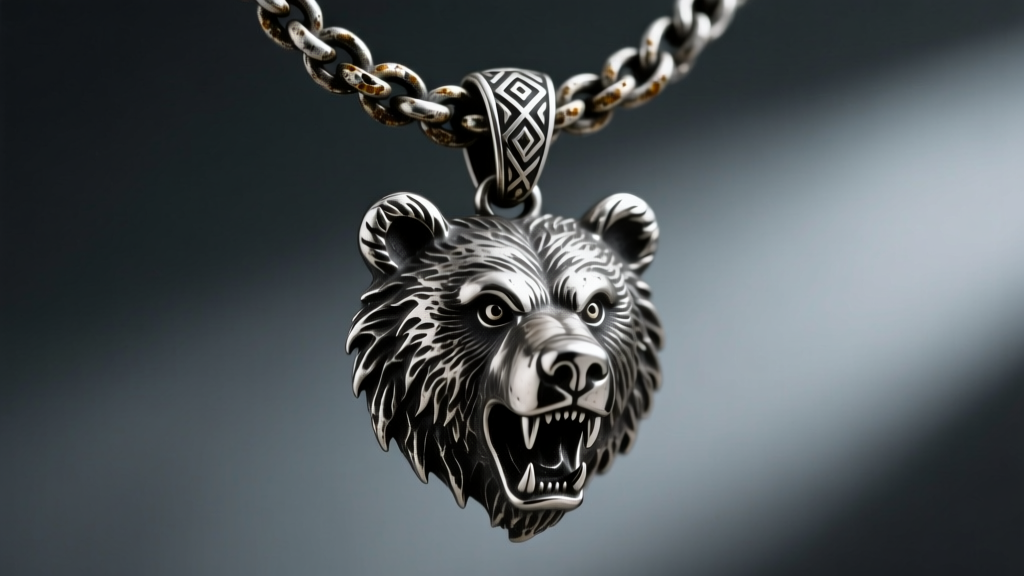
The Anatomy of a True Berserker Necklace
When collectors and historians discuss Norse jewelry, the term "Viking necklace" is often used as a broad catch-all. However, a true berserker necklace occupies a highly specific niche within this category. The berserkers (or berserkir, meaning "bear-shirts") and their wolf-skinned counterparts, the úlfhéðnar, were elite shapeshifting warriors of the Viking Age. Jewelry designed to honor or channel these figures relies on distinct, aggressive motifs and rugged metallurgy that standard Mjolnir (Thor's hammer) pendants simply do not capture.
According to artifacts preserved by the National Museum of Denmark, warrior-class adornments were heavily tied to animal totems and battle readiness. A genuine berserker necklace prioritizes raw, unpolished textures, heavy weight, and iconography that reflects the untamed fury of the bear and the wolf. In 2026, modern artisan jewelers are moving away from mass-produced, lightweight zinc alloys, returning instead to historically grounded lost-wax casting techniques and robust chain weaves that can support substantial pendant weights.
Pendant Motifs: Bear, Wolf, and Battle
The defining characteristic of a berserker necklace is its pendant. While general Norse jewelry might feature compasses (Vegvisir) or ravens, the berserker motif strictly utilizes:
- The Snarling Bear Head: Representing the berserkir, often cast with exaggerated canines and deep-set, oxidized eyes.
- Wolf Pelts and Claws: Honoring the úlfhéðnar, frequently incorporating actual ethically sourced wolf or bear claws capped in silver or bronze.
- The Bearded Axe (Skeggøx): A primary weapon of the Viking infantry, symbolizing martial prowess and the cleaving of enemy shield walls.
- Runic Inscriptions: Specifically the Tiwaz rune (associated with Tyr, war, and justice) or the Thurisaz rune (representing a thorn or giant, used for aggressive defense).
Metallurgy and Material Grades
The structural integrity and visual aging of a berserker necklace depend entirely on its metallurgical composition. Because these pieces are meant to look rugged and battle-worn, the choice of metal dictates how the piece will oxidize and interact with the wearer's skin chemistry over time.
| Material | Alloy / Grade | Patina Profile | Weight Factor | Price Range |
|---|---|---|---|---|
| Sterling Silver | 925 (92.5% Ag) | Deep black oxidation | Heavy | $120 - $350 |
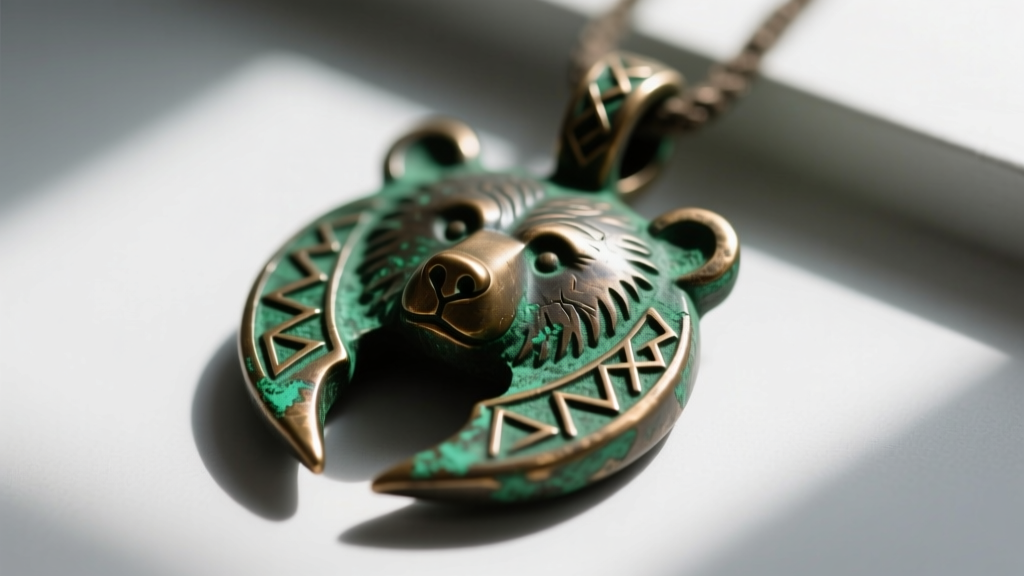
| Cast Bronze | CuSn8 (Phosphor Bronze) | Green/Brown verdigris | Very Heavy | $60 - $180 |
| Stainless Steel | 316L (Marine Grade) | None (stays polished) | Medium | $30 - $90 |
| Damascus Steel | Pattern-Welded Carbon | Rust-prone (requires oil) | Heavy | $150 - $400 |
For historical purists, CuSn8 Bronze is the superior choice. As noted in the British Museum Collection archives, high-status Viking warriors frequently utilized bronze and silver for their personal adornments. Bronze develops a rich, earthy verdigris that perfectly mimics the aesthetic of an artifact pulled from the soil. However, wearers with high skin acidity must be aware that bronze can leave a harmless green tint on the chest, which can be mitigated by applying a micro-crystalline wax sealant to the back of the pendant.
Chain Weaves and Gauge Specifications
A heavy bronze bear head pendant weighing 45 grams will instantly destroy a standard 2mm cable chain. The chain on a berserker necklace must be engineered for high tensile strength and historical aesthetics. The gauge (thickness) of the wire used to create the chain links is just as critical as the overall width of the chain.
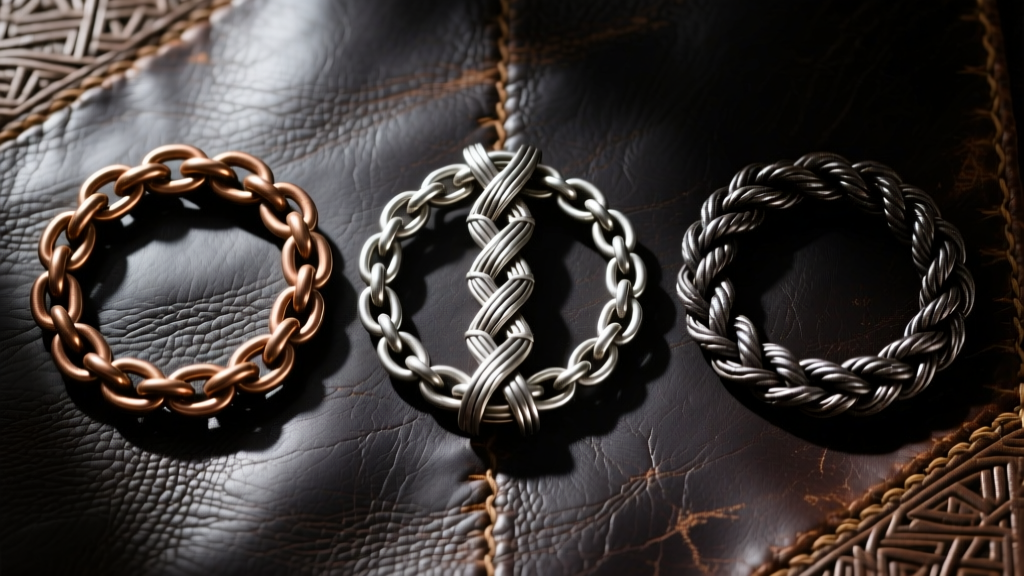
Byzantine vs. Foxtail vs. Rope
When selecting the chain for your berserker necklace, you must evaluate the weave structure:
- Byzantine (King's Braid): An intricate, interlocking weave that lays flat against the sternum. It offers a highly historical, armor-like appearance. Expert Spec: Ensure the wire gauge is at least 1.2mm (16-gauge) to prevent the links from collapsing under the pendant's weight.
- Foxtail: Created by weaving V-shaped links in a continuous spiral. This is the strongest chain for heavy pendants because the friction between the links distributes tension evenly. A 5mm Foxtail chain can easily support a 100g solid silver axe head.
- Rope Chain: While classic, twisted rope chains have a major drawback for body hair: the spiral grooves can pull chest hair. If you opt for a rope chain, choose a diamond-cut, soldered version with a width no less than 4mm.
Patina, Maintenance, and Wearability
The rugged appeal of a berserker necklace relies on high-contrast oxidation. Artisans achieve this by submerging the silver or bronze in a liver of sulfur solution, turning the entire piece pitch black before polishing only the high-relief areas (like the teeth of a bear or the edge of an axe). This leaves the recesses dark, highlighting the intricate runic carvings.
"Never use commercial silver dips or ultrasonic cleaners on a deliberately oxidized berserker pendant. These chemical baths will strip the liver of sulfur from the deep crevices, ruining the artisan's contrast work and leaving the piece looking flat and sterile."
To maintain the piece, simply wash it with mild dish soap and a soft-bristled toothbrush. If the high points become too tarnished, a gentle rub with a dry polishing cloth will restore the metallic shine without disturbing the darkened recesses. For bronze pieces, a periodic application of Renaissance Wax will seal the metal and prevent excessive verdigris buildup on the skin.
Sizing and Clasp Mechanics
The final, often overlooked technical detail of a berserker necklace is the clasp mechanism and overall length. Heavy pendants (30g and above) generate significant kinetic momentum when the wearer moves. A weak clasp will snap, or worse, the jump ring connecting the pendant to the chain will pull apart.
The Failure Points of Heavy Chains
Standard lobster clasps are entirely unsuited for chains thicker than 4mm. The internal spring mechanism in a lobster clasp cannot withstand the lateral shear force of a swinging 6mm Byzantine chain. Instead, expert jewelers utilize Toggle (T-Bar) Clasps. A heavy, cast-bronze T-bar slipping through a thick D-ring is not only historically evocative but mechanically superior; the heavier the chain pulls, the tighter the T-bar locks against the ring.
Furthermore, the jump ring attaching the pendant to the chain must be soldered closed or be a minimum of 1.6mm (14-gauge) wire thickness. An unsoldered, thin split ring will eventually warp open under the pendulum effect of a heavy bear claw, resulting in the loss of the pendant. When sizing, a 22-inch to 24-inch length is optimal for a berserker necklace, allowing the heavy pendant to rest securely on the lower sternum rather than bouncing uncomfortably against the collarbone.
By prioritizing historically accurate motifs, selecting the correct metallurgical alloy, and ensuring the chain gauge and clasp mechanics are rated for heavy loads, you secure a berserker necklace that is not merely a costume accessory, but a durable, heirloom-grade piece of wearable armor.


