How to Wear Two Necklaces Without Them Tangling: Style Guide
Learn how to wear two necklaces without them tangling using expert spacing techniques, chain weight analysis, and clasp modifications.

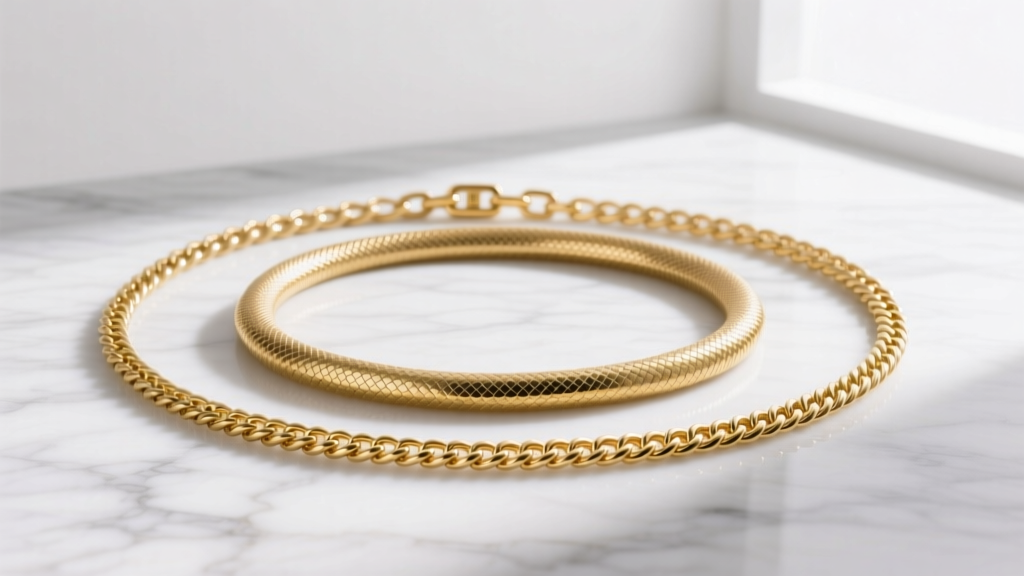
Mastering the art of necklace layering is a hallmark of sophisticated personal style, yet the persistent issue of knotted chains remains a universal frustration. Understanding how to wear two necklaces without them tangling requires moving beyond basic aesthetics and diving into the physics of metallurgical friction, weight distribution, and chain link geometry. In this comprehensive style and trend analysis, we deconstruct the mechanics of layering to provide you with a foolproof, data-driven framework for flawless necklace stacking.
The Physics of Necklace Tangling: Why Chains Knot
Tangling is not a random occurrence; it is a predictable result of friction and kinetic energy. When two metal chains rest against the collarbone, body heat and movement create a micro-environment of static and friction. According to the Gemological Institute of America (GIA), different metal alloys possess varying surface drag coefficients. For instance, highly polished 18k yellow gold is naturally more slippery due to its higher gold content and softer finish, whereas oxidized sterling silver or textured white gold creates higher surface friction, acting like microscopic velcro when rubbed against a finer chain.
Furthermore, the geometry of the chain link dictates its "tangle risk." A delicate cable chain (typically 0.9mm to 1.2mm in gauge) features open, oval links that easily slip into the microscopic gaps of a box chain or the grooves of a rope chain. When you understand that tangling is essentially a mechanical locking mechanism, you can begin to select chains that physically cannot interlock.
The Golden Rule of Spacing: Length and Weight Differentials
The most common mistake in layering is pairing two chains of similar lengths and weights. To definitively solve how to wear two necklaces without them tangling, you must enforce strict differentials in both length and mass.
The Two-Inch Minimum Gap
For two necklaces to lay flat and remain independent, there must be a minimum vertical drop of two inches between the bottom of the top chain and the top of the bottom chain. If you are wearing a 16-inch choker-style chain, your second chain must be at least 18 inches. This spatial separation ensures that the natural swing radius of each pendant or chain link does not intersect during normal movement.
The 1:2 Weight Ratio
Weight anchors a necklace. If your top chain is a 5-gram delicate cable chain, your bottom chain should be a heavier 10-gram to 15-gram curb or Figaro chain. The heavier bottom chain acts as a pendulum anchor, resisting the kinetic energy that causes lighter chains to flip and knot. Blue Nile's jewelry care guidelines emphasize that matching the structural integrity of your jewelry to its intended wear-pattern prevents both tangling and premature clasp failure.

Chain Link Profiles: Which Textures Play Well Together?
Not all chains are created equal. The physical profile of the links determines how they interact. Below is a structural analysis of popular chain types and their layering compatibility.
| Chain Type | Surface Profile | Friction Level | Best Paired With | Tangle Risk |
|---|---|---|---|---|
| Cable Chain | Open oval links | High (gaps catch) | Snake or Herringbone | High if paired with Rope/Box |
| Snake Chain | Smooth, flush plates | Very Low | Cable or Beaded | Low (acts as a friction slide) |
| Curb Chain | Flat, interlocking | Medium | Delicate Cable or Lariat | Medium (heavy weight anchors) |
| Box Chain | Square, geometric | High (sharp edges) | Thick Cord or Choker | Very High (acts as a grater) |
| Rope Chain | Twisted, spiral | Extreme | Solo wear only | Extreme (catches everything) |
Expert Synthesis: The ultimate anti-tangle pairing is a smooth, flush-surface chain (like a 1.5mm Snake or Herringbone) on top, paired with a heavy, flat-link chain (like a 3.0mm Curb) on the bottom. The smooth top chain will simply glide over the flat surface of the bottom chain without finding any mechanical gaps to snag into.
Hardware Hacks: Clasps, Sliders, and Connectors
If your existing collection lacks the proper length differentials, you can engineer a tangle-free experience using specialized hardware modifications.
- Layering Clasps: These specialized findings feature a single lobster claw that splits into two distinct drop rings, often separated by a rigid 1-inch to 2-inch metal bar. This physically locks the spatial relationship between the two chains, making tangling mathematically impossible.
- Silicone O-Rings: For a DIY approach, threading a microscopic, jewelry-grade silicone O-ring onto the bottom chain before clasping it creates a soft, high-friction bumper. If the top chain slides down, it hits the silicone barrier rather than sliding directly into the bottom chain's links.
- Magnetic Interlocks: Neodymium magnetic clasps add a localized weight of about 2 to 3 grams at the nape of the neck. This extra posterior weight pulls the chains taut against the skin, reducing the anterior slack where tangling typically initiates.
2026 Trend Report: Asymmetrical and Mixed-Metal Layering
As we navigate the style landscape of 2026, the trend has shifted away from symmetrical, identical-metal stacking toward intentional asymmetry and mixed metallurgy. According to recent industry analyses featured in Vogue, the modern approach to layering relies heavily on combining rigid structures with fluid chains.
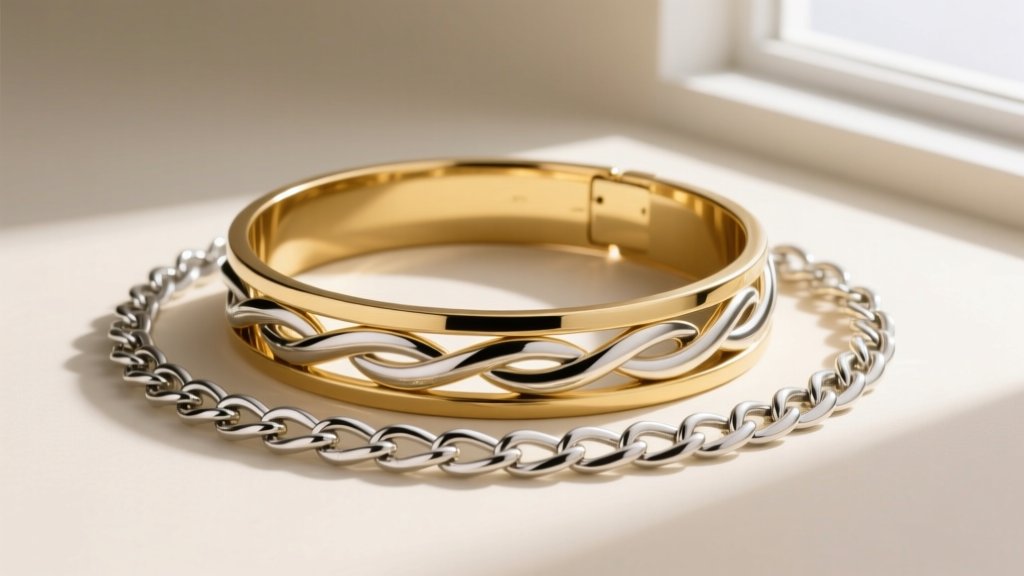
The most prominent 2026 trend solving the tangling issue is the "Collar and Lariat" technique. By anchoring the neck with a rigid, 14k gold tubular torque or collar (which cannot bend or knot), and allowing a highly fluid, 22-inch oxidized silver lariat chain to hang loosely beneath it, designers are creating striking visual contrast while completely eliminating the physical possibility of the two pieces intertwining. The rigid collar acts as a physical shield, keeping the fluid chain pushed outward and away from the collarbone's friction zones.
Troubleshooting Common Layering Failures
Even with perfect chain selection, environmental factors can disrupt your layering. Here is how to troubleshoot the most common real-world failures:
1. The Static Cling Effect
In low-humidity environments, or when wearing synthetic fabrics like polyester or nylon blouses, static electricity will cause lightweight chains to cling to each other and your clothing. The Fix: Lightly mist your clothing (never the jewelry) with an anti-static spray, or rub a microscopic amount of jojoba oil on your collarbone to create a natural, non-tarnishing moisture barrier that dissipates static charge.
2. The Pendant Flip
When a lightweight chain carries a heavy, front-facing pendant, the weight distribution causes the chain to twist, eventually wrapping around the secondary necklace. The Fix: Upgrade the pendant's bail. Replacing a standard jump ring with a weighted, European-style slider bail lowers the pendant's center of gravity, forcing it to hang perfectly plumb and preventing the chain from torsion-twisting.
3. Hair and Lotion Snags
Residue from lotions, perfumes, and hairsprays creates a tacky surface film on metal, exponentially increasing the friction coefficient between two chains. The Fix: Adopt a strict "last on, first off" jewelry protocol. Apply all aerosols and lotions at least 10 minutes before putting on your layered necklaces, and wipe both chains with a microfiber polishing cloth immediately upon taking them off to remove invisible lipid buildup.
Final Thoughts on Flawless Layering
Learning how to wear two necklaces without them tangling is ultimately an exercise in spatial awareness and material science. By respecting the two-inch drop rule, leveraging the 1:2 weight ratio, and intelligently pairing smooth surface profiles with heavier anchor chains, you can transform a frustrating knot into a masterclass of curated personal style. Whether you are utilizing specialized layering hardware or embracing the rigid-fluid trends of 2026, the key to effortless elegance lies in the meticulous details of your jewelry's engineering.


