Best Eyeglass Necklace Holder: The Ultimate Buying Guide
Discover how to choose the perfect eyeglass necklace holder. Learn about grip materials, chain weights, and sizing for readers and sunglasses.

The Evolution of Eyewear Retention: Beyond the Beaded Chain
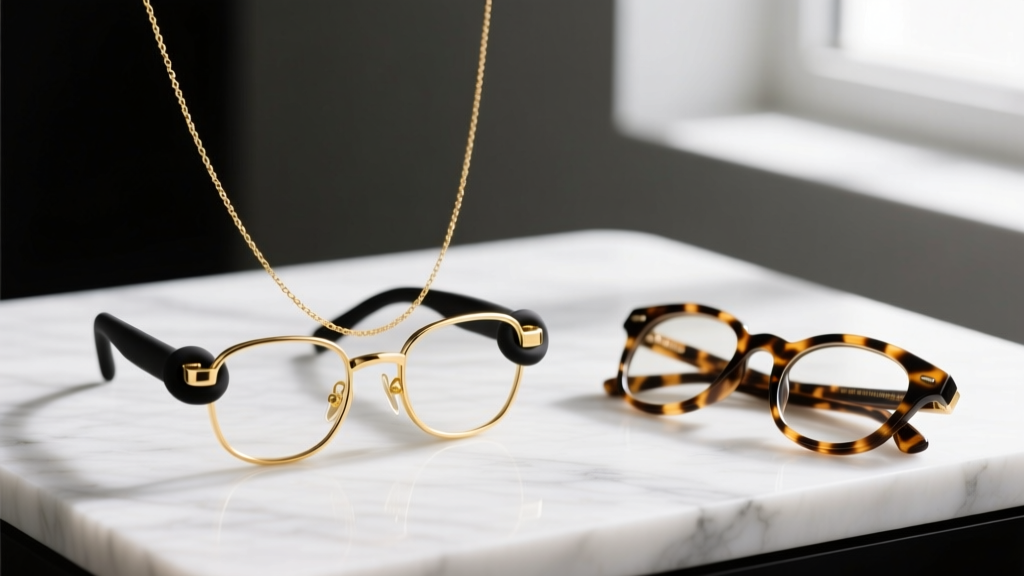
The eyeglass necklace holder has undergone a massive design renaissance. Once relegated to the realm of purely utilitarian, bulky beaded chains, the modern 2026 market offers sophisticated, minimalist, and highly engineered retention systems. Whether you are securing lightweight titanium reading glasses or heavy, oversized acetate sunglasses, choosing the right lanyard requires an understanding of material science, weight distribution, and friction mechanics. This comprehensive buying guide breaks down exactly what to look for to ensure your eyewear stays secure, comfortable, and stylish.
Why Standard Jewelry Chains Fail as Eyewear Holders
A common mistake consumers make is attempting to retrofit a standard pendant chain with generic rubber loops. This inevitably leads to the 'pendulum effect' and eventual slippage. Standard jewelry chains lack the necessary tensile width to distribute the dynamic weight of moving eyewear. When you bend over, a thin 1mm chain acts as a fulcrum, creating high G-force on the connector rings. Furthermore, standard jewelry clasps (like spring rings) are not designed for the repetitive, one-handed stress of removing sunglasses, leading to premature clasp fatigue and catastrophic failure.
Anatomy of a High-Quality Eyeglass Necklace Holder
To evaluate any eyeglass lanyard, you must deconstruct it into three critical components. Each part must be optimized for the specific type of glasses you intend to carry.
- The Suspension System (Chain/Cord): Dictates drape, weight distribution, and skin compatibility.
- The Connector Hardware: The junction between the chain and the loop. Must feature welded jump rings to prevent prying.
- The Temple Grip (Loop): The most vital component. Must balance high-friction retention with zero abrasion to your eyewear frames.
Material Matrix: Choosing Your Suspension System
The material of the necklace dictates both the aesthetic and the functional lifespan of the holder. Below is a comparative analysis of the most prevalent materials used in premium eyeglass holders today.
| Material | Best For | Weight Capacity | Skin Sensitivity | Estimated Lifespan |
|---|---|---|---|---|
| 316L Surgical Steel | Heavy sunglasses, daily wear | High (60g+) | Hypoallergenic | 5+ Years |
| 14k Gold-Filled Wire | Office environments, readers | Medium (up to 40g) | Hypoallergenic | 3-5 Years |
| Vegetable-Tanned Leather | Casual, outdoor, aviators | Medium-High (50g) | Excellent | 2-4 Years |
| Waxed Cotton / Paracord | Sports, active lifestyles | Very High (70g+) | Good (if dye-fast) | 1-2 Years |
Note on Metal Allergies: According to the Mayo Clinic, nickel allergy is one of the most common causes of allergic contact dermatitis. Always verify that metal chains are explicitly labeled as nickel-free or 316L surgical grade, especially if the chain will rest against your chest during high-perspiration activities.
The Critical Component: Temple Grips and Loops
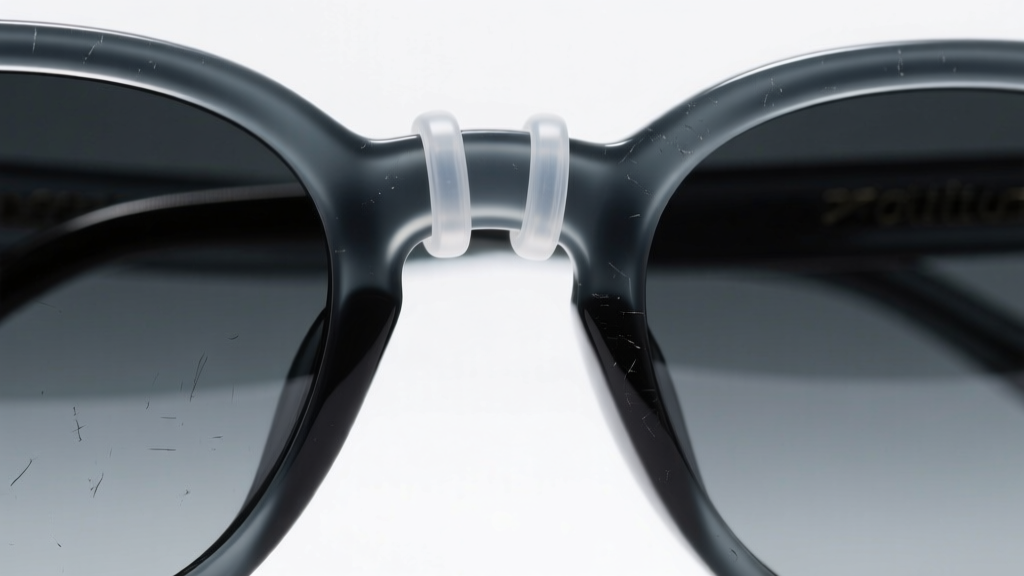
The grip mechanism is where 90% of budget eyeglass holders fail. You will generally encounter three types of loops on the market:
1. Medical-Grade Silicone (The Gold Standard)
Premium holders use silicone rated at Shore 40A on the durometer scale. This specific hardness provides an optimal coefficient of friction against both polished acetate and matte metal temple arms. Unlike cheap plastics, medical-grade silicone will not degrade, yellow, or become brittle when exposed to the UV radiation and heat that sunglasses routinely endure. The American Academy of Ophthalmology emphasizes protecting eyewear investments; harsh, rigid plastic loops can cause micro-abrasions on expensive frame coatings, whereas soft silicone preserves the finish.
2. Adjustable Bungee / Elastic Cords
These feature a tiny silicone-lined toggle that tightens around the temple arm. While versatile for fitting multiple pairs of glasses, the elastic core loses its memory and tension over time, usually requiring replacement every 8 to 12 months. They are best reserved for sports-specific retention rather than daily fashion wear.
3. Rigid PVC / Vinyl Loops
Found almost exclusively in sub-$10 multipacks. PVC lacks the necessary elastomeric memory to grip thin wire frames securely and will inevitably crack when exposed to the oils from your skin and the heat of a parked car. Avoid these entirely if you are securing valuable eyewear.

Sizing, Length, and the 'Drop' Metric
The length of your eyeglass necklace holder dramatically affects both comfort and utility. The industry standard is 26 inches, but this is not a one-size-fits-all metric. You must calculate the 'drop'—the distance from the nape of your neck to where the glasses will rest on your chest.
- 24 to 26 Inches (High Drop): Ideal for lightweight reading glasses and small wireframes. Keeps the glasses high on the chest, preventing them from swinging into tables when you lean forward.
- 28 to 30 Inches (Medium Drop): The sweet spot for standard prescription glasses and medium-sized sunglasses. Allows enough slack to comfortably pull the glasses up to your eyes without unclasping the necklace.
- 32+ Inches (Low Drop): Necessary for oversized, heavy fashion sunglasses. A longer chain reduces the pendulum swing radius, keeping heavy frames resting safely against your mid-torso rather than bouncing against your collarbones.
Temple Arm Compatibility: Before purchasing, measure the width of your glasses' temple arms. Wireframes can be as thin as 2mm, while thick bio-acetate fashion frames can exceed 12mm. Ensure the product specifications list an inner loop diameter that accommodates your specific frames. Many premium brands now offer 'universal taper' loops that feature a wide mouth and a narrow neck, securely gripping both 3mm and 10mm arms without slipping.
Clasp Mechanics: Security vs. Convenience
How you take your glasses on and off dictates the clasp you need. Magnetic clasps (using N52 neodymium magnets) offer incredible one-handed convenience, simply snapping together at the front of the neck. However, if your sunglasses weigh over 45 grams, the dynamic force of walking or bending can exceed the magnet's shear strength, causing the chain to pop open. For heavy eyewear, insist on a high-quality lobster claw clasp or a seamless barrel-screw clasp at the nape of the neck, prioritizing security over quick-release convenience.
Price Tiers and What to Expect in 2026
Budget ($5 - $15): Basic beaded chains, alloy metals with high nickel content, and rigid PVC loops. Expect a lifespan of 3 to 6 months before loop failure or metal tarnishing occurs.
Mid-Range ($18 - $45): The best value category. Features 316L stainless steel or gold-plated brass, paired with genuine Shore 40A silicone loops and welded jump rings. Brands in this tier often include interchangeable loops for different frame sizes.
Luxury / Artisan ($50 - $150+): Handcrafted leather, solid 14k gold-filled wire, or architectural minimalist metals. These function as legitimate jewelry pieces first and eyewear holders second, often featuring proprietary hidden-tension grips that are entirely invisible when the glasses are being worn on the face.
Care and Maintenance Protocols
To maximize the lifespan of your eyeglass necklace holder, implement a simple maintenance routine. Silicone loops accumulate facial oils and sunscreen, which can degrade the material over time. Wipe the loops weekly with a microfiber cloth dampened with isopropyl alcohol. For metal chains, avoid spraying perfume or hairspray directly onto the neck, as the alcohol and propellants can strip anti-tarnish coatings. If you opt for a leather cord, condition it bi-annually with a light beeswax-based leather balm to prevent drying and snapping at the connector crimps.


