Festoon Necklace Buying Guide: What to Look For & How to Style
Discover how to choose the perfect festoon necklace. Our buying guide covers chain gauges, material grades, pricing, and neckline styling.

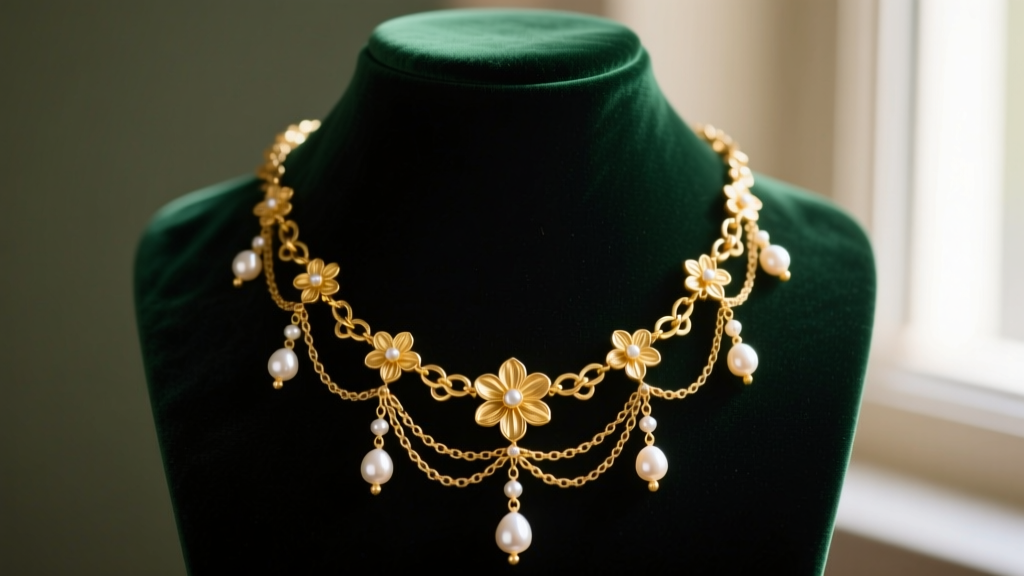
What Exactly is a Festoon Necklace?
A festoon necklace is defined by its signature draped elements—chains, beads, or gemstones suspended between two or more anchor points to create a swag or garland effect. Unlike a standard pendant necklace that hangs in a single continuous arc, a true festoon features interconnected drapes that frame the collarbone. The style traces its roots back to the Edwardian era's 'garland style' (guirlande), where jewelers used platinum and diamonds to mimic draped fabric and ribbons. Today, the festoon remains a staple in both vintage collections and modern bohemian jewelry design, offering a romantic, multi-dimensional silhouette that simple chains cannot replicate.
When shopping for a festoon, it is crucial to understand that the structural integrity of the piece relies entirely on weight distribution and connection points. A poorly constructed festoon will sag, kink, or snag, ruining the elegant drape it was designed to showcase. This guide breaks down the exact specifications, material grades, and structural details you need to evaluate before making a purchase in the 2026 market.
The Anatomy of a Quality Festoon
The defining feature of a festoon is the 'swag'—the draped section between the main chain's anchor points. The quality of a festoon is determined by the gauge of the wire and the security of the jump rings used to connect these swags.
Gauge Sizes and Wire Thickness
The main chain of a festoon typically ranges from 16-gauge to 18-gauge (approx. 1.2mm to 1.0mm) to support the weight of the drapes without stretching. The draped swags themselves are usually lighter, ranging from 20-gauge to 22-gauge (approx. 0.8mm to 0.6mm). If a swag is made from a chain heavier than 18-gauge, it will not drape fluidly; instead, it will look stiff and angular. Conversely, if the main anchor chain is thinner than 20-gauge, the added weight of the swags will cause the necklace to warp and break over time.
Soldered vs. Unsoldered Jump Rings
This is the most critical failure point in festoon necklaces. The jump rings connecting the draped swags to the main chain must be soldered (fused shut with heat and metal). Unsoldered jump rings rely on tension to stay closed. Because the swags of a festoon swing and pull in multiple directions, unsoldered rings will eventually warp open, causing the drape to detach or catch on clothing. Always inspect the connection points with a jeweler's loupe or request macro photos from the seller before buying.
Material Grades & Pricing Tiers
Festoon necklaces require a significant amount of chain and intricate metalwork, meaning the material choice heavily impacts both the price and the longevity of the piece. According to the Gemological Institute of America (GIA), understanding the purity and alloy composition of precious metals is essential for predicting how a piece will wear over time.
| Material Grade | Purity / Composition | 2026 Price Range | Durability & Best Use |
|---|---|---|---|
| Costume / Base Metal | Brass or Zinc alloy, gold-plated | $30 - $85 | Low. Prone to tarnish and skin discoloration. Best for occasional costume wear. |
| Sterling Silver | 92.5% Silver, 7.5% Copper | $120 - $350 | Medium. Will tarnish and requires polishing. Excellent for everyday bohemian styles. |
| Gold Vermeil | Sterling Silver base with thick 14k/18k gold plating (min 2.5 microns) | $150 - $450 | Medium-High. Durable if kept dry. The silver core provides structural strength for heavy swags. |
| Solid 14k Gold | 58.5% Gold alloyed with silver/copper | $800 - $2,500 | High. Tarnish-resistant, hypoallergenic, and strong enough to hold heavy gemstone drapes. |
| Antique Platinum | 90-95% Platinum (Edwardian era) | $3,000 - $15,000+ | Exceptional. Highly durable, holds intricate filigree and diamond swags securely. |
Matching Necklines to the Drape
Because a festoon necklace occupies a wide horizontal and vertical space on the décolletage, pairing it with the right neckline is essential to avoid a cluttered look.
- Sweetheart Necklines: The curved dip of a sweetheart neckline perfectly mirrors the swag of a festoon. Choose a piece where the lowest drape sits exactly one inch above the fabric's edge.
- Deep V-Necks: Opt for a 'Y-style' festoon where a central vertical drop extends from the center of the swag, elongating the torso and following the line of the V-neck.
- Scoop Necks: A multi-layered, delicate chain festoon works beautifully here, filling the negative space without overwhelming the collarbone.
- Avoid High Collars and Halter Tops: Festoons require bare skin or a low-cut fabric to display the drape. High collars will cause the delicate swags to snag and tangle.
Common Failure Points & Inspection Checklist
When evaluating a festoon necklace, whether buying vintage or contemporary, run through this physical inspection checklist to ensure you are getting a piece that will last.
"The most common mistake buyers make with draped jewelry is ignoring the clasp-to-weight ratio. A heavy multi-swag festoon secured by a tiny 5mm spring ring clasp is a recipe for a lost necklace."
- The Clasp Test: Ensure the clasp is proportional. A festoon weighing over 15 grams requires a sturdy lobster clasp or a secure magnetic clasp with a safety chain. Avoid small spring-ring clasps.
- The Kink Check: Lay the necklace flat on a table. The swags should fall into natural, relaxed arcs. If the chains show rigid bends or kinks, the metal has been stressed and is prone to snapping.
- The Snag Test: Run the necklace gently over a piece of silk or fine lace. If the jump rings or gemstone settings catch the fabric, the piece needs to be filed and polished by a jeweler before wear.
- Stone Setting Security: If the swags feature bezel-set or prong-set stones, check that the settings are not caught on the chain links. Friction between the chain and the stone setting will eventually wear through the metal.
Sourcing: Vintage vs. Contemporary
The Victoria and Albert Museum notes that the Edwardian era (1901-1910) was the golden age of the festoon, utilizing platinum and old-cut diamonds to create lightweight, lace-like swags. If you are hunting for authentic antique festoons, reputable auction houses and specialized vintage platforms like 1stDibs are your best resources, though you must budget for potential restoration costs, such as re-soldering weakened jump rings.
For contemporary pieces, look for independent jewelers who specialize in hand-assembled chainmaille or custom wire-wrapping. Mass-produced festoons often cut corners by using glued links or unsoldered rings to speed up manufacturing. Always ask the artisan or retailer specifically: 'Are the anchor jump rings on the swags soldered shut?' A knowledgeable jeweler will confirm their construction methods, ensuring your festoon necklace remains a timeless, wearable work of art for years to come.


