2026 First Communion Cross Necklace Gift Guide & Tips
Find the perfect first communion cross necklace with our 2026 gift guide. Explore safe metals, ideal chain lengths, and timeless styles for this milestone.


The Significance of the First Communion Cross
Selecting a first communion cross necklace is one of the most meaningful jewelry purchases a parent, godparent, or grandparent can make. The First Holy Communion, typically celebrated when a child is between 7 and 9 years old, marks a profound spiritual milestone in the Catholic faith. The cross pendant serves not just as an accessory, but as a tangible, lifelong reminder of this sacrament. However, buying jewelry for young children requires navigating a minefield of sizing challenges, metal allergies, and fragile hardware. This comprehensive 2026 guide cuts through the marketing fluff to provide you with exact specifications, material grades, and structural requirements to ensure your gift is safe, durable, and cherished for decades.
Sizing & Fit: Chain Lengths for 7 to 9-Year-Olds
The most common mistake buyers make is guessing the chain length. A necklace that is too tight will feel restrictive and irritate the child, while one that is too long risks catching on playground equipment or furniture. For children receiving their First Communion, the neck circumference typically ranges from 11 to 13 inches. Therefore, the industry gold standard for a first communion cross necklace is a 14-inch chain with a 2-inch extender. This allows the pendant to rest perfectly at the collarbone and provides room for growth over the next few years.
| Child's Age | Average Neck Size | Recommended Chain Length | Extender Requirement |
|---|---|---|---|
| 6 - 7 Years | 10.5 - 11.5 inches | 13 inches | 2-inch extender mandatory |
| 7 - 9 Years (Standard) | 11.5 - 12.5 inches | 14 inches | 2-inch extender mandatory |
| 10 - 12 Years | 12.5 - 14 inches | 16 inches | 2-inch extender optional |
Material Deep-Dive: Hypoallergenic & Tarnish-Resistant Metals
Children's skin is highly reactive, and contact dermatitis is a genuine risk with cheap jewelry alloys. According to the American Academy of Dermatology, nickel allergy is the most common cause of allergic contact dermatitis, affecting up to 36% of women and a significant portion of children. When choosing the metal for a first communion cross necklace, you must prioritize biocompatibility and structural integrity.
Solid 14K Gold vs. 18K Gold
While 18K gold (75% pure gold) is prized in high-end adult jewelry for its rich color, it is too soft for an active 8-year-old. On the Vickers hardness scale, 18K gold sits around 120 HV, making it prone to bending and scratching. Solid 14K gold (58.5% pure gold, alloyed with silver, copper, and zinc) boasts a hardness of roughly 135-140 HV. This added durability is crucial for withstanding the daily wear and tear of a child's lifestyle. Furthermore, the Gemological Institute of America (GIA) notes that 14K gold alloys are generally more resistant to corrosion and tarnishing than higher-karat alternatives. Always ensure the piece is stamped "14K" or "585".
Sterling Silver & The Rhodium Solution
Sterling silver (stamped "925") is a beautiful, budget-friendly alternative to gold. However, raw sterling silver contains 7.5% copper, which oxidizes and tarnishes when exposed to moisture and skin acids. To solve this, premium jewelers apply a rhodium plating over the sterling silver. Rhodium is a platinum-group metal that provides a brilliant, white-gold-like finish and creates an impermeable barrier against tarnish and skin irritation. If you opt for silver, explicitly look for "rhodium-plated sterling silver" in the product specifications.
Hardware & Safety: Clasps and Jump Rings
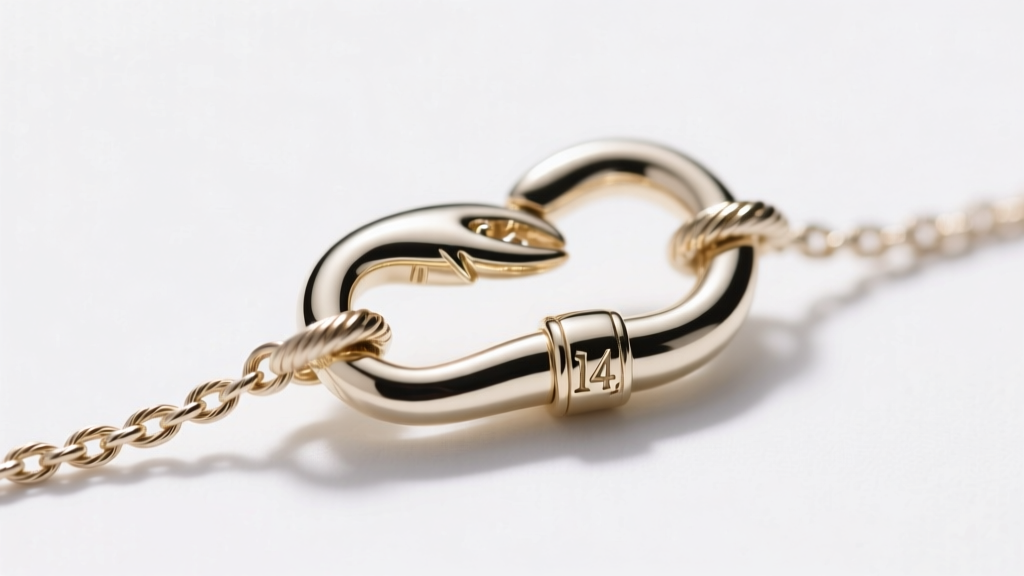
The structural failure points of any necklace are the clasp and the jump ring (the tiny loop connecting the pendant to the chain). Ignoring these details will result in a lost cross within a month.
- The Clasp: Avoid spring-ring clasps. They rely on a microscopic internal spring that fails easily, and they are incredibly frustrating for a 7-year-old to operate with small motor skills. Always choose a lobster claw clasp. It is mechanically superior, locks securely, and is easier for small hands to pinch open.
- The Jump Ring: This is the most critical safety feature. The jump ring holding the cross pendant must be soldered closed. If it is merely bent shut, a slight tug on the cross will pull the chain right through the microscopic gap, resulting in a lost pendant. Verify with the jeweler that the jump ring is laser-soldered.
- The Chain Style: Avoid box chains and snake chains. These styles are notorious for kinking, trapping fine hair, and snapping under minimal tension. Opt for a cable chain or a rope chain (1mm to 1.5mm thickness), which offer excellent tensile strength and flexibility.
Pro-Tip: Before gifting, perform the "fingernail test" on the jump ring. If you can see a seam or catch your fingernail in a gap, the ring is not soldered and the pendant is at risk of falling off.
Cross Styles & Pendant Dimensions
Scale is everything when designing jewelry for children. A pendant that looks elegant on an adult will look like a heavy medallion on a 4-foot-tall child. The ideal dimensions for a first communion cross pendant are between 12mm and 18mm (approx. 1/2 to 3/4 inch) in height, excluding the bail (the loop at the top). The weight should remain under 2.5 grams to prevent the delicate 14-inch chain from stretching.
Traditional & Meaningful Designs
- The Latin Cross: The most classic and universally recognized symbol of the faith. A simple, high-polish or matte-finish Latin cross in 14K yellow or white gold remains the most popular choice for 2026.
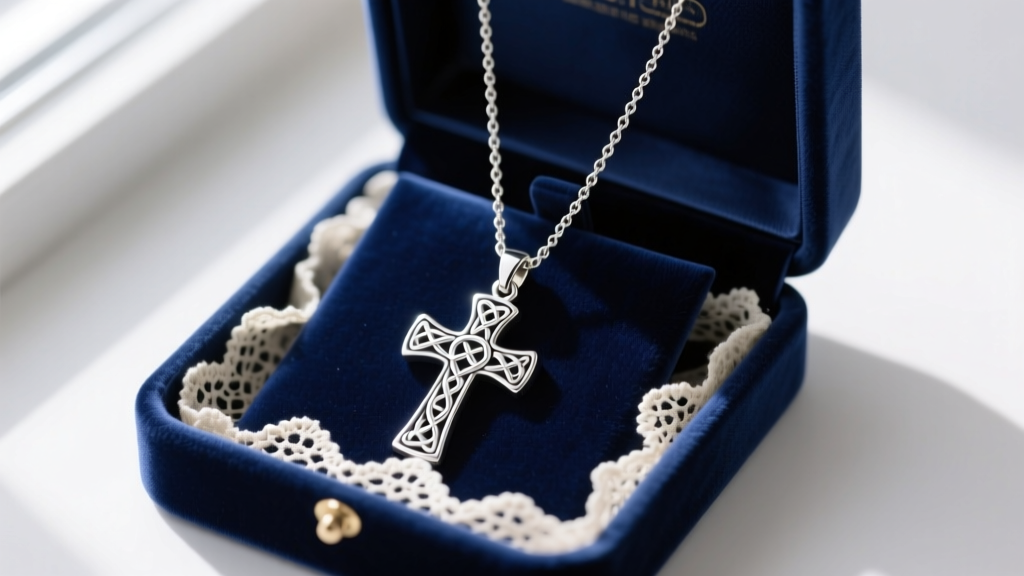
- The Celtic Cross: Featuring the iconic ring (nimbus) intersecting the crossbars, this style is deeply meaningful for families of Irish or Scottish heritage, representing eternity and the unending love of God.
- The Miraculous Medal Cross: A hybrid design where the cross incorporates the oval shape of the Miraculous Medal, often featuring a small enamel detail or a tiny cubic zirconia in the center for a subtle touch of light.
2026 Pricing Tiers & Brand Recommendations
Understanding the market landscape will help you budget appropriately and avoid overpaying for branded markup. Below is a breakdown of what you should expect to pay for high-quality, safe materials in the current market.
| Material Tier | Expected Price Range (2026) | Best For | Longevity |
|---|---|---|---|
| Rhodium-Plated 925 Sterling Silver | $45 - $95 | Godparents, Family Friends | 5-10 Years (requires occasional re-plating) |
| Solid 14K Yellow or White Gold | $220 - $450 | Parents, Grandparents | Lifetime (heirloom quality) |
| Solid 14K Gold with Diamond Accent | $350 - $650+ | Grandparents (Premium Gift) | Lifetime (requires prong checks) |
Note: Avoid "gold-plated" or "gold-filled" brass or copper bases for children's sacramental jewelry. The base metals frequently contain nickel and will rapidly oxidize, turning the child's skin green and causing allergic reactions.
Care Instructions for Young Wearers
To ensure the necklace survives childhood and transitions into adulthood, establish a few simple care rules with the child. Instruct them to remove the necklace before swimming (chlorine severely degrades gold alloys and strips rhodium plating) and before bathing (soap scum builds up in the chain links, dulling the metal). Store the necklace in a small, airtight anti-tarnish pouch when not in use, and gently wipe the cross with a microfiber cloth once a month to remove skin oils and fingerprints. By prioritizing correct sizing, hypoallergenic metals, and soldered hardware, your first communion cross necklace gift will serve as a beautiful, enduring testament to a sacred day.


