Your First Zirconia Diamond Necklace: A Beginner's Buying Guide
Discover everything you need to know before buying your first zirconia diamond necklace. Learn about CZ grades, settings, and how to spot quality.

What Exactly is a Zirconia Diamond Necklace?
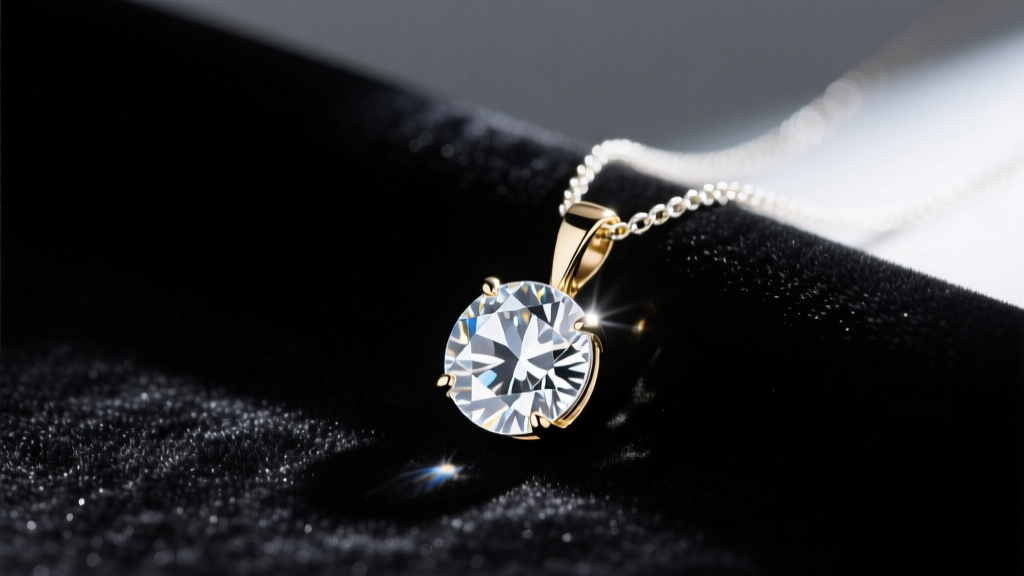
When you begin shopping for accessible luxury jewelry, you will inevitably encounter the term "zirconia diamond necklace." As a beginner, it is crucial to understand that this is a marketing colloquialism rather than a strict gemological classification. In the jewelry industry, this term almost exclusively refers to a necklace featuring Cubic Zirconia (CZ), a synthesized crystalline material made of zirconium dioxide (ZrO2).
Do not confuse Cubic Zirconia with natural Zircon. Natural Zircon is a distinct mineral (zirconium silicate) that is mined from the earth and possesses different optical properties. Cubic Zirconia, on the other hand, is lab-created. According to the Gemological Institute of America (GIA), CZ is produced by melting zirconium oxide with a stabilizer like yttrium or calcium at extreme temperatures, resulting in a flawless, optically brilliant stone that serves as the world's most popular diamond simulant.
The Science of the Sparkle: Refractive Index and Dispersion
To truly understand what you are buying, you need to look at the physics of how a zirconia diamond necklace interacts with light. The visual difference between a high-quality CZ and a natural diamond comes down to two metrics: Refractive Index (RI) and Dispersion.
- Refractive Index (Brilliance): A natural diamond has an RI of 2.42, while CZ sits slightly lower at 2.15 to 2.18. This means a diamond will reflect slightly more white light back to the eye, giving it a sharper, more icy brilliance.
- Dispersion (Fire): This is where CZ actually outshines a diamond. Dispersion measures how well a stone splits white light into rainbow colors. Diamond's dispersion is 0.044, whereas CZ boasts a higher dispersion of 0.058. Consequently, a zirconia diamond necklace will exhibit noticeably more colorful "rainbow flashes" than a real diamond, which is often the easiest visual giveaway for a trained eye.
Decoding the 5A Grading System
Unlike natural diamonds, which are graded by independent laboratories like the GIA or AGS using the 4Cs, Cubic Zirconia is graded by manufacturers using an "A" scale. When shopping for your first zirconia diamond necklace, you will see terms like 3A, 4A, and 5A (sometimes written as AAAAA).
Pro Tip: Always look for 5A (or AAAAA) graded stones. These represent the absolute top tier of machine-cut CZ, offering perfect symmetry, flawless clarity, and a color grade equivalent to a D or E in natural diamonds. Anything below 3A will look cloudy, poorly faceted, and distinctly "costume-like."
Base Metals: The Real Determinant of Longevity
The stone in your zirconia diamond necklace is highly durable, but the metal holding it dictates the piece's actual lifespan. Many beginners make the mistake of focusing entirely on the pendant while ignoring the chain and setting. Here is a breakdown of the most common base metals used in CZ jewelry.
| Metal Type | Composition | Pros | Cons | Expected Lifespan |
|---|---|---|---|---|
| Sterling Silver | 92.5% Silver, 7.5% Copper | Hypoallergenic, holds value, easy to polish | Tarnishes over time, soft metal can bend | 5-10+ Years |
| Gold Vermeil | Sterling silver base with thick 14k/18k gold plating | Luxurious look, affordable, nickel-free | Plating wears off after 1-2 years of daily wear | 2-4 Years |
| Solid 14k Gold | 58.3% Gold alloyed with zinc/silver/copper | Never tarnishes, extremely durable, waterproof | Significantly higher upfront cost | Lifetime |
| Brass/Copper | Copper and zinc alloy | Very cheap, lightweight | Causes green skin, high allergy risk, degrades fast | 6-12 Months |
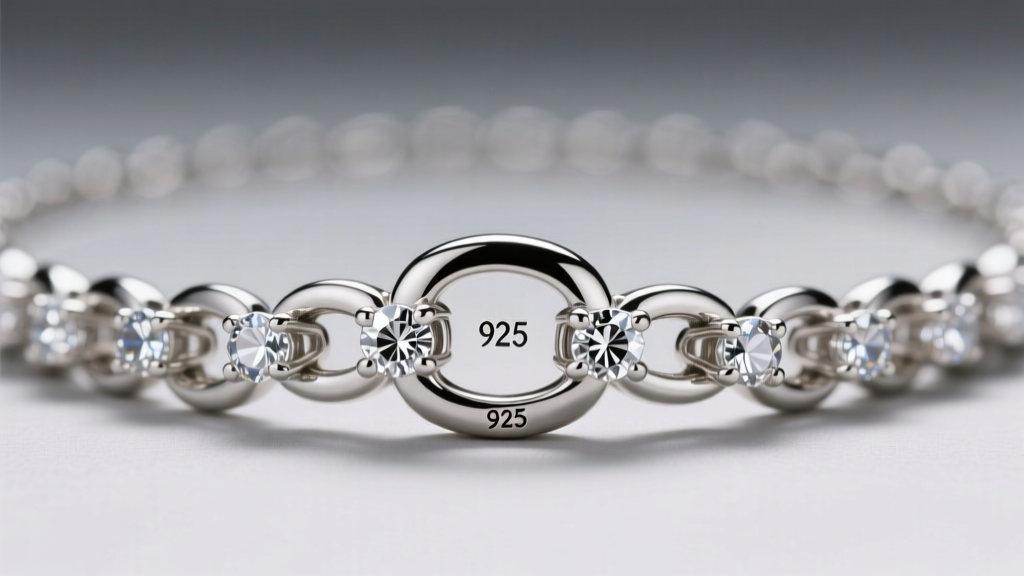
For a beginner's everyday necklace, Sterling Silver (stamped 925) is the undisputed best value. It provides a secure setting for the prongs and won't cause contact dermatitis, provided you maintain it properly.
Prong Settings vs. Friction Settings: A Critical Distinction
How is the CZ stone actually held in the pendant? This is a massive factor in the longevity of your zirconia diamond necklace.
Prong Settings
In a prong setting, tiny metal claws are bent over the girdle (the edge) of the stone to hold it in place. This allows maximum light to enter the stone from all angles, enhancing brilliance. More importantly, if a stone falls out, a jeweler can easily reset it or replace the CZ.
Friction and Glue Settings
Cheaper necklaces use friction settings where the stone is pressed into a metal cup and secured with industrial jewelry adhesive. While this creates a smooth, snag-free profile, it is a major failure point. Over time, exposure to hot water, lotions, and body heat degrades the glue, causing the stone to pop out and get lost. Always inspect the pendant closely before purchasing; if you cannot see metal prongs overlapping the edge of the stone, put it back on the shelf.
Common Failure Modes (And How to Avoid Them)
Even the best 5A cubic zirconia is not invincible. Understanding how these necklaces fail will help you protect your investment.
- Clouding (The Oleophilic Effect): CZ is highly oleophilic, meaning it attracts and holds onto oils from your skin, hair products, and lotions much faster than a natural diamond. This oil buildup creates a filmy, cloudy appearance that dulls the sparkle.
- Chipping and Abrasion: On the Mohs scale of mineral hardness, diamond is a 10, while CZ is an 8.0 to 8.5. While this makes CZ harder than quartz (7.0) and safe from everyday dust scratches, CZ is significantly more brittle than diamond. A hard knock against a granite countertop can easily chip the girdle or culet of a CZ stone.
- Prong Wear: If your necklace is set in sterling silver, remember that silver is a soft metal. Over years of daily wear, the prongs can thin out and pull back, releasing the stone.
Realistic Pricing Framework
One of the most common traps for beginners is overpaying for a zirconia diamond necklace due to clever branding. Because the material cost of CZ is pennies on the dollar compared to mined diamonds, you are primarily paying for the metal weight, the craftsmanship of the cut, and the brand markup. Use this framework to ensure you are paying a fair market price:
- $30 - $80: Standard 5A CZ set in 925 Sterling Silver. This is the sweet spot for high-quality, everyday fashion jewelry.
- $120 - $250: 5A CZ set in heavy Gold Vermeil or solid 10k/14k gold with a lightweight chain. You are paying for the precious metal content here.
- $300 - $600: Solid 14k or 18k gold chains with substantial pendant weights, featuring precision-cut, branded CZ stones (such as Swarovski Zirconia).
- Red Flag Pricing ($1,000+): If a brand is charging over a thousand dollars for a CZ necklace without incorporating other genuine gemstones or massive solid gold weight, you are paying purely for a logo. Walk away.
The Ultimate Maintenance Routine
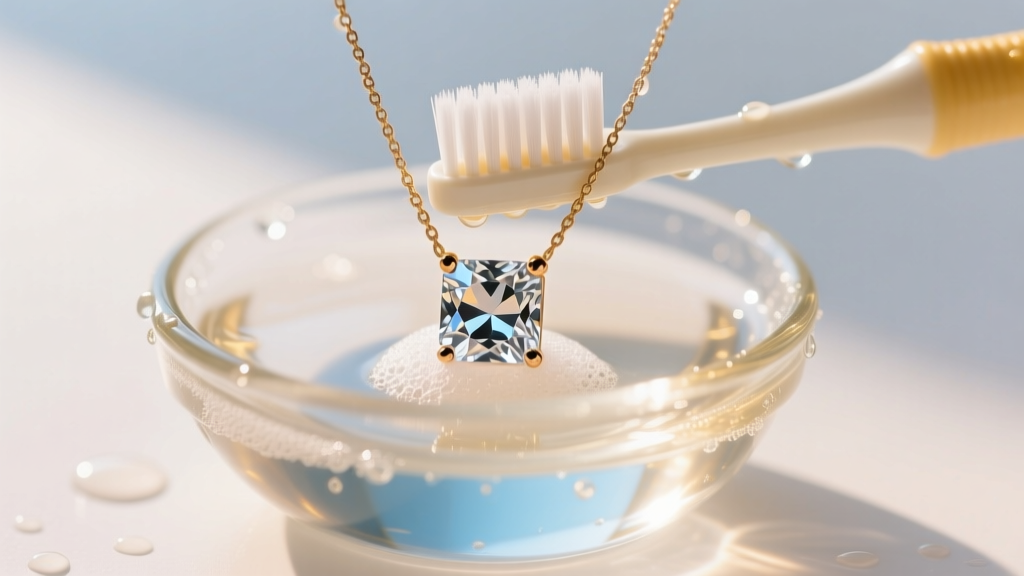
To keep your zirconia diamond necklace looking like it just came out of the display case, you need a consistent cleaning routine. Because CZ attracts oils so aggressively, a quick weekly clean is mandatory for daily wearers.
- Prepare a Degreasing Bath: Fill a small glass bowl with warm (not hot) water and add three drops of mild, lotion-free dish soap (like Dawn). The degreasing agents in dish soap are specifically designed to break down the oils that cause CZ clouding.
- Soak and Agitate: Drop the necklace into the bowl and let it soak for 10 to 15 minutes. Gently swish the water to dislodge surface debris.
- The Soft Brush Technique: Use a clean, ultra-soft baby toothbrush to gently scrub the back of the stone (the pavilion). This is where the majority of skin oils and dead skin cells accumulate, blocking light return.
- Rinse and Dry: Rinse thoroughly under warm running water. Pat dry with a lint-free microfiber cloth. Never use tissue paper or paper towels, as the wood fibers can leave microscopic scratches on the metal and leave lint trapped in the prongs.
Warning: Never put a zirconia diamond necklace in an ultrasonic jewelry cleaner unless you are 100% certain it uses a prong setting. The high-frequency vibrations will instantly shatter the adhesive in glue-set stones, ruining the piece.
Final Verdict: Is CZ Right for You?
A zirconia diamond necklace is an exceptional choice for beginners looking to achieve a high-end, luxurious aesthetic without the financial anxiety associated with natural diamonds. By insisting on 5A graded stones, choosing secure prong settings, and opting for a 925 sterling silver or solid gold base, you can secure a beautiful, sparkling piece that will confidently elevate your wardrobe for years to come.


