Fish Charm Necklace Metals: Silver, Gold & Titanium Guide
Compare the best metals for your fish charm necklace. We analyze sterling silver, 14k gold, and titanium for durability, water resistance, and style.

The Oceanic Element: Why Material Matters for Fish Charms
A fish charm necklace is more than just a nod to marine life or astrological Pisces symbolism; it is a dynamic piece of jewelry that often features intricate scales, flowing fins, and detailed texturing. Because these designs rely heavily on surface details and are frequently worn by ocean lovers who may expose them to saltwater, humidity, and sweat, the metallurgical properties of your chosen charm are paramount. Selecting the wrong alloy can lead to rapid tarnishing, loss of detail, or structural failure at the bail.
In this comprehensive material guide, we break down the exact properties, hardness ratings, and failure modes of the most popular metals used in aquatic jewelry. Whether you are investing in a solid gold koi or a lightweight titanium salmon, understanding these material science fundamentals will ensure your pendant retains its luster and structural integrity for decades.
Sterling Silver (925): The Classic Aquatic Choice
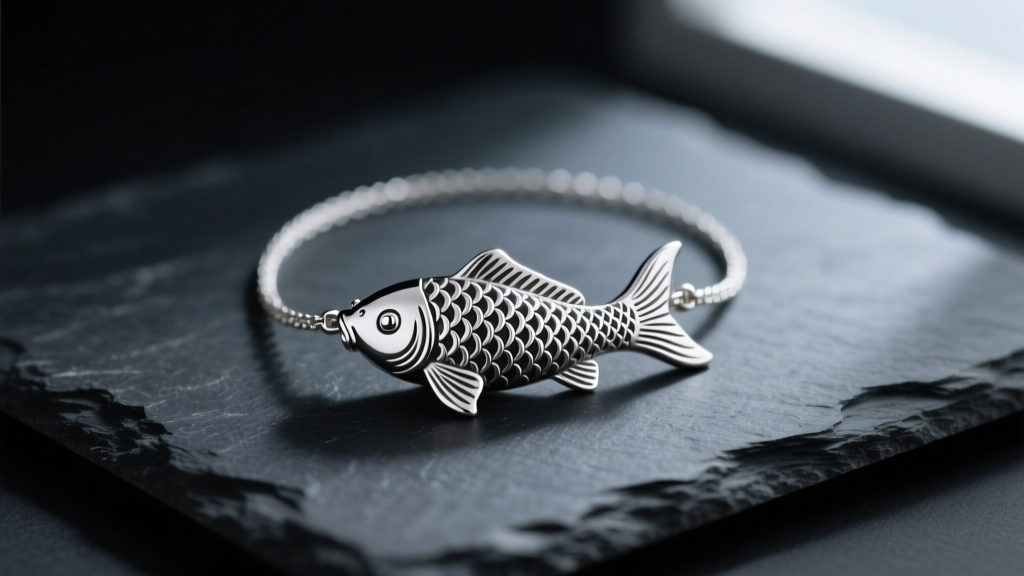
Sterling silver remains the most popular metal for fish pendants due to its brilliant white luster, which beautifully mimics the shimmering scales of a fresh catch. However, pure silver (999) is too soft for detailed jewelry, which is why the industry standard is 925 sterling silver—comprising 92.5% silver and 7.5% copper.
The Tarnish Factor and Rhodium Plating
The copper alloy is the Achilles' heel of sterling silver. When exposed to sulfur compounds in the air, or the high salinity of ocean water, the copper reacts and forms a dark layer of tarnish. For a fish charm with deeply engraved scales, polishing out tarnish without eroding the fine details is notoriously difficult. To combat this, high-end manufacturers apply a rhodium flash. A standard rhodium plating thickness for a high-wear pendant is between 0.2 and 0.5 microns. This creates a temporary, highly reflective barrier that resists oxidation, though it will eventually wear away at the high-friction points of the bail over 12 to 24 months of daily wear.
Pricing and Value
Expect to pay between $45 and $150 for a well-crafted, solid sterling silver fish charm necklace. Avoid silver-plated brass alternatives, as the base metal will eventually show through the high-contact edges of the fins, leading to irreversible green oxidation.
Solid Gold (14k vs. 18k): Premium Durability and Luster
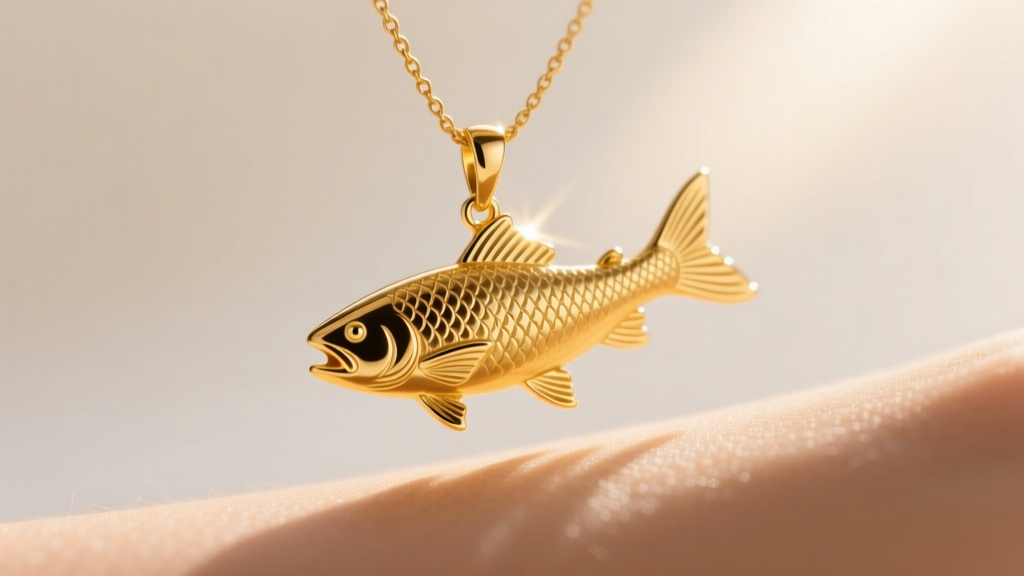
For heirloom-quality fish charm necklaces, solid gold is the undisputed champion. Gold is highly inert, meaning it will not react with saltwater, chlorinated pool water, or human sweat. However, the karat weight drastically alters the physical properties of the charm.
14k Gold: The Pragmatic Standard
Comprising 58.5% pure gold and 41.5% alloy metals (typically copper, zinc, and silver), 14k gold offers superior structural rigidity. According to Rio Grande's metal hardness chart, 14k yellow gold has a Vickers hardness (HV) of approximately 140. This makes it highly resistant to scratching and ideal for fish charms with protruding elements, such as delicate tail fins or diamond-set eyes, as the prongs will remain secure under daily stress. Pricing for a 14k gold fish pendant typically ranges from $350 to $900, depending on weight and gemstone accents.
18k Gold: The Rich, Softer Alternative
With 75% pure gold, 18k gold boasts a noticeably richer, deeper yellow hue that perfectly captures the golden tones of a koi or a seahorse. However, its Vickers hardness drops to roughly 125 HV. While still perfectly suitable for a necklace, an 18k gold charm with thin, extended fins is more susceptible to bending if caught on clothing. As noted by the Gemological Institute of America (GIA), the higher pure gold content also makes 18k gold hypoallergenic, eliminating the risk of nickel allergies that can sometimes occur with lower-karat white gold alloys.
Titanium and Surgical Steel: The Hypoallergenic Alternatives
For those seeking modern, ultra-durable, and budget-friendly options, titanium has emerged as a favorite in contemporary aquatic jewelry design.
Grade 2 vs. Grade 5 Titanium
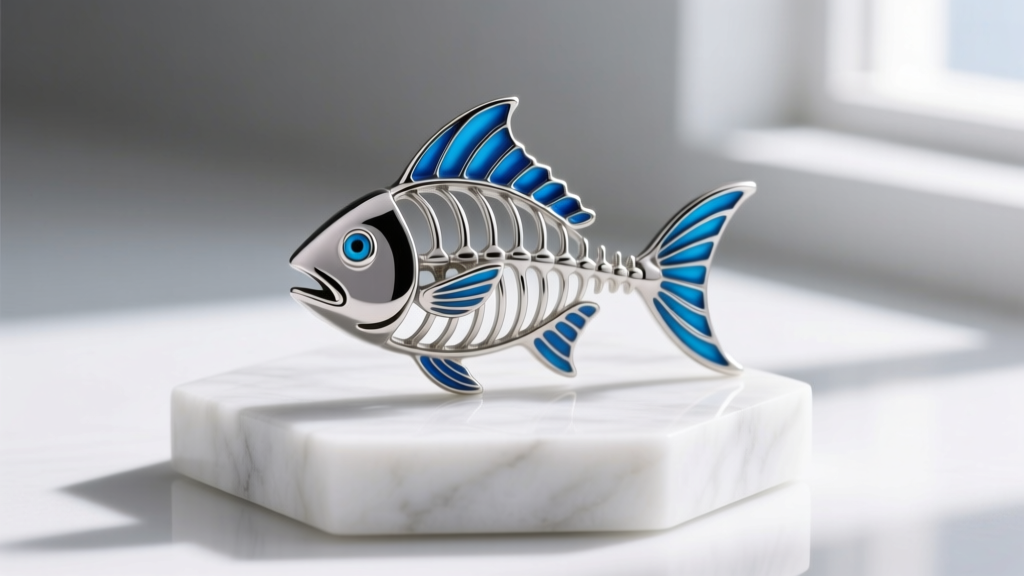
Most commercial titanium jewelry is crafted from Grade 2 (commercially pure) titanium. It is exceptionally lightweight, making it the perfect choice for oversized fish skeleton charms or large manta ray pendants that would otherwise pull uncomfortably on a delicate chain. Grade 5 titanium (Ti-6Al-4V), an alloy containing aluminum and vanadium, is significantly harder and can be polished to a mirror finish, though it is more difficult to cast into intricate scale patterns. Furthermore, titanium can be anodized using electrical voltage to create vibrant, permanent colors—such as deep oceanic blues and purples—without the use of chemical dyes or enamels.
Enamel and Resin Accents: Adding Color to the Scales
Many fish charms incorporate color to mimic tropical species or calico koi patterns. The method of color application drastically affects the pendant's lifespan.
- Vitreous Enamel: Kiln-fired glass powder fused to the metal at over 1400°F. It is highly durable, UV-resistant, and will never yellow. However, it is brittle; dropping a vitreous enamel fish charm on a tile floor will likely shatter the colored scales.
- Cold Enamel (Epoxy Resin):strong> A two-part resin poured into metal recesses. While cheaper and more impact-resistant, cold enamel is prone to UV yellowing over 3 to 5 years and can degrade when exposed to harsh chemicals like chlorine or acetone.
Material Comparison Matrix
Use the table below to compare the physical properties of common fish charm necklace materials at a glance.
| Material | Vickers Hardness (HV) | Water/Salt Resistance | Avg. Price Range | Best Charm Style |
|---|---|---|---|---|
| 925 Sterling Silver | 65 - 80 | Moderate (Tarnishes) | $45 - $150 | Intricate, flat-engraved koi |
| 14k Yellow Gold | ~140 | Excellent | $350 - $900 | 3D sculpted charms with gems |
| 18k Yellow Gold | ~125 | Excellent | $600 - $1,500+ | Smooth, rounded dolphin/whale |
| Grade 2 Titanium | ~180 | Exceptional | $60 - $180 | Large, lightweight skeletons |
| 316L Surgical Steel | ~220 | Excellent | $25 - $80 | Industrial, minimalist fishhooks |
Chain Pairing and Clasp Mechanics
The most beautiful fish pendant will be lost if paired with an inadequate chain. The bail (the loop connecting the charm to the chain) dictates your chain thickness. Most fish charms feature a bail with an inner diameter of 3mm to 5mm.
Optimal Chain Gauges and Styles
For a balanced look, pair your charm with a 1.2mm to 1.5mm cable, box, or rope chain. A rope chain is particularly effective for aquatic themes, as its twisted links mimic the texture of a nautical rope. Ensure the jump ring connecting the charm to the chain is at least 16-gauge (1.2mm thick) and is soldered shut. An unsoldered jump ring will eventually pull apart under the pendulum-like swinging motion of a heavy fish charm, resulting in loss.
Clasp Security
Avoid standard spring ring clasps for pendants weighing over 5 grams. The internal spring mechanism is prone to failure when subjected to the constant kinetic pull of a heavy charm. Instead, opt for a solid 10mm or 12mm lobster clasp, which features a stronger internal tension spring and a wider opening to accommodate the chain and jump ring securely.
Care and Maintenance for Aquatic Themes
To preserve the intricate details of your fish charm necklace, tailor your cleaning method to the specific material. For sterling silver and gold without gemstones, a mild solution of warm water and phosphate-free dish soap, agitated with a soft-bristled baby toothbrush, will safely remove sebum and lotion from deep scale engravings.
Crucial Warning: Never place a fish charm featuring cold enamel, resin, or porous gemstones (like pearls or turquoise, often used for inlaid eyes) into an ultrasonic cleaner. The high-frequency cavitation bubbles generated by ultrasonic machines will aggressively strip cold enamel from the metal recesses and fracture porous stones, permanently ruining the aesthetic of the pendant. Stick to gentle, manual cleaning for mixed-material aquatic jewelry.