Black Sabbath Cross Necklace Troubleshooting: Tarnish & Fixes
Is your Black Sabbath cross necklace turning green or snapping? Learn expert troubleshooting for tarnish, chain breakage, and skin allergies.


The Anatomy of a Failing Rock Merch Necklace
Rock and roll memorabilia is a cornerstone of alternative fashion, but wearing a black sabbath cross necklace daily often leads to a familiar set of frustrations: green skin, snapped chains, and faded gothic details. Whether you are sporting the classic 1970s inverted cross, the winged cross from the Paranoid era, or a custom metalworker’s tribute, the physical realities of heavy pendants and cheap tour-merch metallurgy will eventually catch up with you. As a jewelry specialist, I see countless vintage and modern rock pendants fail not because of design flaws, but due to a fundamental mismatch between the pendant's weight and the structural integrity of its chain and base metal.
Troubleshooting these issues requires moving beyond basic jewelry wipes and understanding the exact material grades, tensile strengths, and chemical reactions at play. Below is a comprehensive, expert-level guide to diagnosing and permanently fixing the most common failures associated with heavy metal iconography jewelry.
Troubleshooting Tarnish and the "Green Skin" Effect
The most frequent complaint regarding band merchandise is contact dermatitis and the infamous green or black staining on the sternum. This is rarely an issue with the black enamel or paint used for the antiqued finish; rather, it is a metallurgical failure of the base alloy.
Identifying the Base Metal and Oxidation
Official tour merch and licensed dropshipped replicas are predominantly manufactured using die-cast zinc alloy (often referred to as pot metal) or brass. To achieve the dark, brooding aesthetic of a black sabbath cross necklace, manufacturers plate the base metal with a micro-thin layer of black nickel or copper, followed by an antiquing solution like liver of sulfur. Once that microscopic plating wears away from friction against your shirt, the underlying copper or zinc reacts with your skin's natural acids and sweat, creating copper chloride—a green salt that stains the skin and causes severe itching.
According to the Mayo Clinic, nickel and cobalt alloys commonly found in cheap cast jewelry are leading triggers for allergic contact dermatitis. If your neck is itching, the electroplating has failed.
The Fix: Sealing and Upgrading
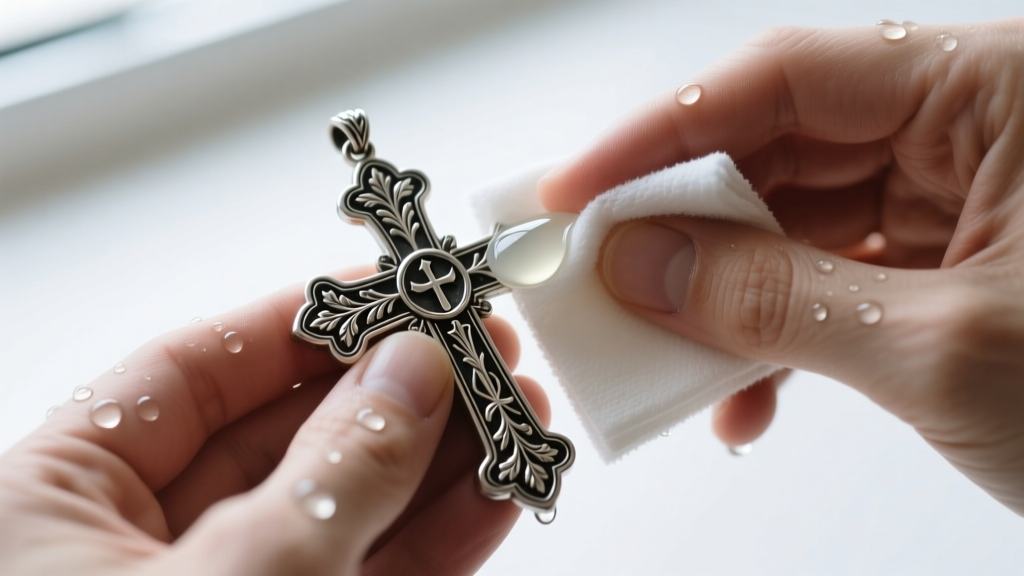
You cannot reverse the wear on a zinc-alloy pendant, but you can halt the reaction. Clean the back of the pendant with isopropyl alcohol to remove skin oils, then apply two thin coats of clear polyurethane sealant or a specialized jewelry shield like JewelSkin. Allow 24 hours to cure. For a permanent solution, you must upgrade the pendant material entirely. When commissioning or buying a premium replacement, look for the following material grades:
| Material Grade | Tarnish Resistance | Allergy Risk | Typical Price Range | Best For |
|---|---|---|---|---|
| Zinc Alloy (Pot Metal) | Very Low (Fails in months) | High (Nickel/Copper) | $15 - $30 | Occasional wear, display |
| 316L Surgical Steel | Excellent (Will not turn green) | Extremely Low | $45 - $85 | Daily wear, showering |
| .925 Sterling Silver | Moderate (Develops patina) | Low (If nickel-free) | $130 - $280 | Heirloom quality, detail |
| Solid Titanium (Grade 5) | Absolute (Inert) | Zero | $150 - $350 | Extreme durability, swimming |
Solving Chain Breakage and Clasp Failures
A genuine die-cast or solid steel Sabbath cross is dense. A standard 1.5-inch pendant can easily weigh between 25 and 45 grams. When you add the dynamic shock of walking, bending over, or the pendant catching on a leather jacket, the tensile stress on the chain's weakest link multiplies exponentially.
Why Your Spring Ring Clasp is Snapping
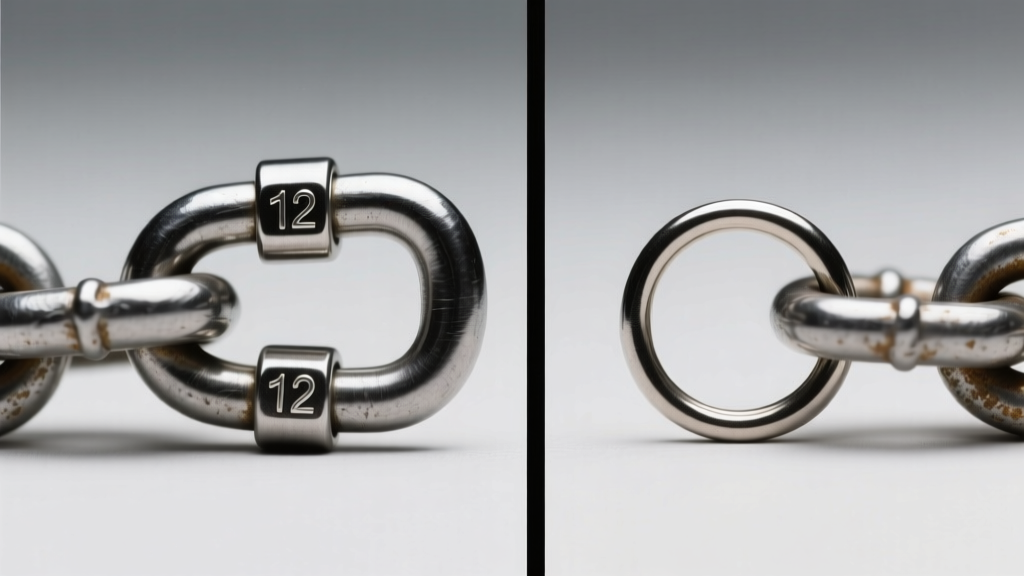
Most stock chains included with band merch utilize a 5mm or 7mm spring ring clasp attached via a 20-gauge (0.8mm) unsoldered jump ring. Under a sudden 5lb dynamic load, a 20-gauge jump ring will pull apart, or the internal spring mechanism of the clasp will fail, dropping your pendant onto concrete.
The Fix: Rebuilding the Suspension System
To properly support a heavy black sabbath cross necklace, you must rebuild the chain and clasp system using structural jewelry components:
- The Chain: Discard the 1.5mm cable chain. Upgrade to a 3.5mm to 5.0mm solid Wheat chain or a 4mm Cuban link. Wheat chains offer superior tensile strength due to their interlocking, multi-directional link structure, which distributes the pendant's weight evenly.
- The Clasp: Replace the spring ring with a minimum 12mm or 15mm Lobster Claw clasp. Lobster clasps feature a solid internal spring and a thicker outer casing that resists lateral crushing.
- The Jump Rings: Ensure the jump rings connecting the clasp to the chain are at least 14-gauge (1.6mm thick) and, crucially, soldered closed. If you cannot find soldered rings, use heavy-duty split rings (keyring style) which are mechanically impossible to pull apart under human-wearable tension.
Authenticating and Restoring Enamel Details
The stark contrast of the black sabbath cross necklace relies heavily on the black enamel or epoxy resin inlaid into the raised metal borders. Over time, UV exposure, skin oils, and improper cleaning cause this fill to crack, turn milky, or fall out entirely.
Identifying Bootlegs vs. Premium Castings
According to the Federal Trade Commission Jewelry Guides, precious metals must be accurately stamped. If your pendant claims to be silver but lacks a ".925" or "Sterling" hallmark, it is likely plated brass. Furthermore, as noted by the Gemological Institute of America (GIA), authentic sterling silver will exhibit a specific thermal conductivity and acoustic ring that cheap zinc alloys completely lack. Bootleg pendants often feature blurred edges on the gothic typography and shallow enamel channels, making restoration nearly impossible.
The Fix: Enamel Infill Restoration
If the metal is sound but the black detailing is gone, you can restore it using a technique borrowed from horology and custom knife making:
- Remove the pendant from the chain and clean it thoroughly with a brass brush and dish soap to remove all grease.
- Using a toothpick, carefully apply a high-quality black enamel model paint (like Tamiya or Testors) or a two-part black epoxy resin directly into the recessed channels.
- Allow it to overfill slightly, then let it cure for 24 hours.
- Wrap a flat wooden block in 1000-grit wet sandpaper and gently sand the surface of the pendant flat. The abrasive will remove the excess black paint from the raised metal edges, leaving the recessed channels perfectly filled with crisp, dark contrast.
- Polish the raised metal edges with a jeweler's rouge cloth to restore the shine.
Preventative Maintenance Routine
Once you have upgraded the chain, sealed the base metal, and restored the enamel, maintaining your black sabbath cross necklace requires a specific routine. Never use ultrasonic cleaners or chemical silver dips (like Tarn-X) on antiqued or enameled rock jewelry. The high-frequency vibrations will shatter the epoxy infill, and the harsh thiourea chemicals in silver dips will strip the intentional black oxidation from the crevices, leaving the pendant looking flat and artificially shiny.
Instead, wash the piece monthly in warm water with a few drops of Dawn dish soap, using a soft-bristled baby toothbrush to clear dead skin and lint from the intricate gothic filigree. Dry it immediately with a microfiber cloth. By respecting the metallurgy and structural physics of heavy pendants, your jewelry will survive decades of daily wear, outlasting the very tour shirts it was meant to accessorize.


