Troubleshooting a Choker Ruby Necklace: Fit, Clasps, and Care
Struggling with a tight fit, broken clasp, or dull stones? Learn expert troubleshooting for your choker ruby necklace to restore comfort and brilliance.

The Anatomy of a Ruby Choker: Where Things Go Wrong
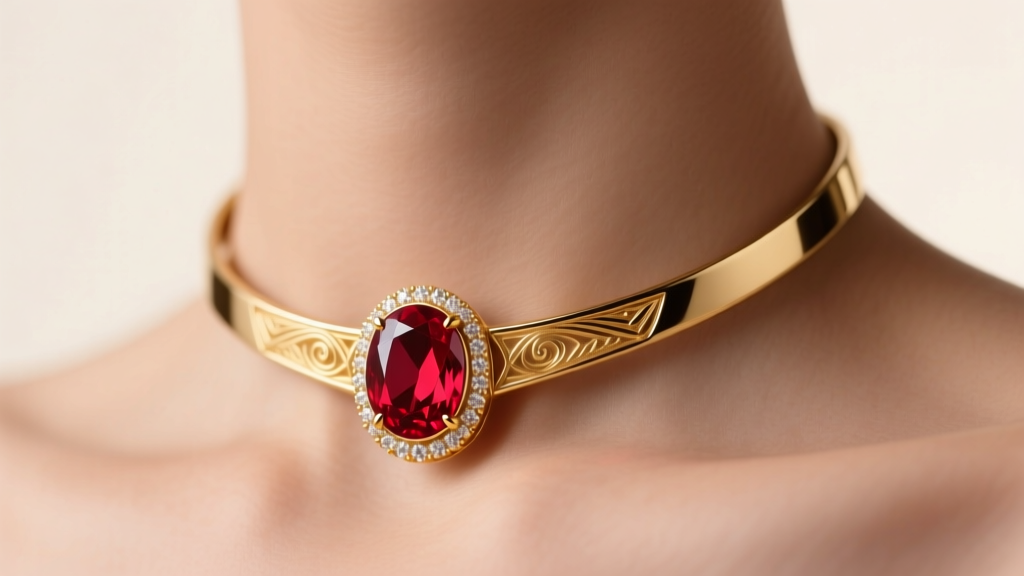
A well-crafted choker ruby necklace is a statement piece that draws the eye directly to the collarbone. However, because chokers sit flush against the skin and move dynamically with your neck, they are uniquely prone to specific mechanical and environmental failures. Unlike longer pendants that hang freely, a choker endures constant friction, exposure to cosmetic chemicals, and tension on its hardware. Whether you are dealing with a suffocatingly tight fit, a clasp that refuses to stay closed, or a gemstone that has mysteriously lost its luster, troubleshooting requires a methodical approach. In this guide, we break down the exact failure modes of ruby chokers and provide actionable, jeweler-approved solutions to restore your piece to its original glory.
Troubleshooting Fit: The 14-to-16 Inch Dilemma
The most common complaint regarding any choker is fit. Standard chokers range from 14 to 16 inches, but human neck circumference is not static. Factors such as seasonal water retention, thyroid fluctuations, and even daily sodium intake can cause your neck to swell by up to 0.5 inches throughout the day. A 15-inch choker that feels perfect at 9 AM might feel like a garrote by 5 PM.
Actionable Fit Adjustments
- The Extender Chain Method: Avoid cheap, plated extender chains that will tarnish against your pulse points. Have a jeweler solder a 2-inch, 14k or 18k gold cable chain (matching your choker's metal) to the existing clasp. A 1.5mm to 2.0mm cable chain provides enough strength without adding visual bulk.
- Jump Ring Addition: If your choker features a link design (like a Figaro or curb chain), a jeweler can seamlessly add two or three custom-sized jump rings to the end of the chain, giving you micro-adjustability in 5mm increments.
- Silicone Adjusters (Use with Caution): While clear silicone necklace tighteners are a popular quick-fix, they trap sweat and dead skin cells against the neck. If you must use them, remove them nightly and wash them with antibacterial soap to prevent contact dermatitis.
Clasp Failures and Metal Allergy Fixes
The clasp is the weakest mechanical link on a choker ruby necklace. Because chokers are under constant lateral tension, the hardware undergoes more stress than a standard 18-inch chain.
Why Your Lobster Clasp Keeps Popping Open
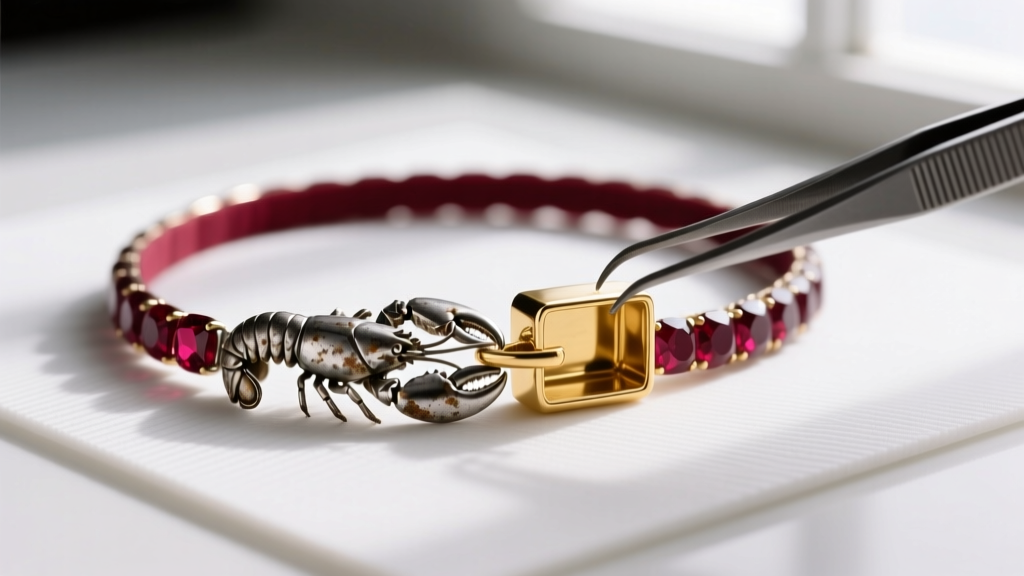
Standard lobster clasps rely on a tiny internal spring, usually made of beryllium copper or stainless steel. When exposed to the acidic pH of human sweat, perfume, or hairspray, this spring can corrode or lose its tension. Furthermore, the lever on a lobster clasp can be accidentally depressed by high shirt collars or scarves.
| Clasp Type | Tension Resistance | Common Failure Mode | Best For |
|---|---|---|---|
| Lobster Claw | Low | Internal spring corrosion; accidental lever depression | Lightweight, delicate chains under 5 grams |
| Box Clasp with Safety | High | Tongue metal fatigue after years of bending | Heavy ruby pendants and wide metal chokers |
| Toggle (T-Bar) | Medium | T-bar slipping through the ring if chain is too short | Adjustable, looser-fit 16-inch chokers |
| Magnetic | Very Low | Neodymium magnet detachment from glue failure | Strictly decorative, low-tension wear |
The Fix: Upgrade to a box clasp with a figure-8 safety catch. The safety wire acts as a secondary fail-safe; even if the primary tongue slips out of the box due to lateral pulling, the figure-8 loop hooked over the button will keep the choker ruby necklace securely on your neck.
Diagnosing Contact Dermatitis
If you are experiencing a green or red rash exactly where the clasp touches your nape, you are likely reacting to nickel. Many white gold clasps are rhodium-plated, but the underlying solder used to attach the jump rings often contains nickel or cadmium. Switching to a hypoallergenic 14k yellow gold or platinum clasp, and ensuring the jeweler uses laser welding (which requires less solder) instead of torch soldering, will eliminate the allergic reaction.
Diagnosing Dull or Discoloring Rubies
Rubies are a variety of corundum, ranking at a 9 on the Mohs hardness scale. However, hardness (scratch resistance) is not the same as toughness (resistance to breaking). The way your ruby was treated prior to being set in your choker dictates how it will survive daily wear.
The Lead-Glass Filled Ruby Trap
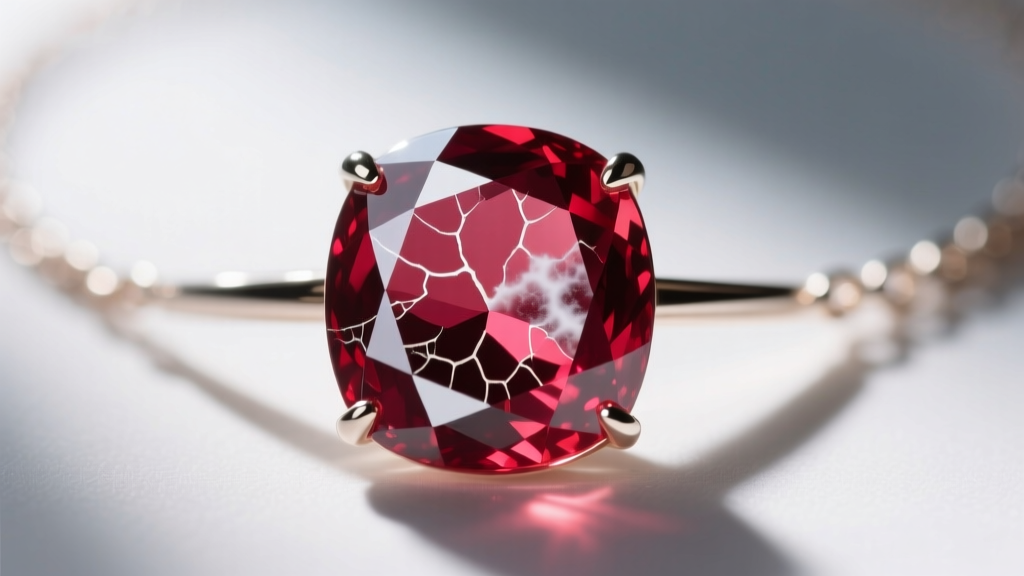
According to the Gemological Institute of America (GIA), a massive percentage of affordable ruby jewelry on the market features composite, lead-glass filled rubies. These are heavily fractured, low-grade corundum stones that have been infused with high-lead glass to improve transparency and color.
The Problem: Glass-filled rubies are notoriously unstable. The glass matrix has a Mohs hardness of only 5 to 6, and it is highly susceptible to chemical degradation. If your choker ruby necklace is exposed to lemon juice, vinegar, or harsh household cleaners, the glass will leach out, leaving the stone cloudy, pitted, and structurally compromised. Furthermore, placing a glass-filled ruby in an ultrasonic cleaner will almost certainly shatter the stone due to high-frequency vibrations interacting with the glass-filled fissures.
Safe Cleaning Protocols by Ruby Type
- Natural Heated Rubies: Safe for ultrasonic cleaners (unless they have surface-reaching fractures). Clean with warm water, mild dish soap, and a soft baby toothbrush. The Jewellers of America recommends avoiding steam cleaners if the stone has been fracture-filled with resin.
- Lab-Grown Rubies (Verneuil or Flux): Chemically identical to natural rubies and generally free of inclusions. These are exceptionally tough and can be safely cleaned in ultrasonic machines, making them ideal for chokers that require frequent degreasing from skin oils.
- Glass-Filled/Composite Rubies: NEVER use ultrasonic, steam, or chemical cleaners. Wipe gently with a damp, lint-free microfiber cloth. Avoid all contact with acids and perfumes.
Chain Tangling and Metal Fatigue
Chokers are notorious for twisting and kinking, especially if they feature omega chains or herringbone weaves. Because these chains lie flat against the skin, any torsion causes the links to fold over on themselves. Once a herringbone chain kinks, the structural integrity of that specific link is permanently compromised, leading to eventual snapping.
Prevention and Repair
If you prefer a flat, reflective metal choker, opt for a flat-curb or flat-Figaro chain rather than herringbone. These interlocking link styles resist torsion. If your omega or herringbone choker has already kinked, do not attempt to pull it straight with your fingers. A jeweler must use specialized flat-nose pliers to gently roll the kinked section over a steel mandrel, realigning the links without stressing the adjacent joints.
Your Step-by-Step Restoration Checklist
Before taking your choker ruby necklace to a professional or attempting DIY maintenance, run through this diagnostic checklist:
- Inspect the Stone: Use a 10x jeweler's loupe. Look for a web-like pattern of blue or green flashes inside the stone (a telltale sign of lead-glass filling). Adjust your cleaning method accordingly.
- Test the Clasp Tension: Open and close the clasp 10 times. If the lever feels spongy or fails to snap back with an audible click, the internal spring is dead. Replace the hardware.
- Check the Jump Rings: Pull gently on the jump rings connecting the clasp to the chain. If the gap in the ring opens even slightly, the choker is at risk of dropping. Have them soldered shut.
- Measure the Fit: Wrap a soft tailor's tape measure around your neck at the exact height the choker sits. Add 0.5 inches for comfort. If the choker is shorter than this measurement, commission a precious metal extender chain.
By understanding the mechanical stresses and material vulnerabilities specific to close-fitting neckwear, you can ensure your choker remains a comfortable, secure, and brilliant staple in your jewelry wardrobe for decades to come.


