Chris Cornell Fork Necklace: Troubleshooting DIY Bends & Repairs
Learn how to craft, repair, and maintain a Chris Cornell fork necklace. Troubleshoot metal fatigue, chain matching, and silver tarnish with expert tips.

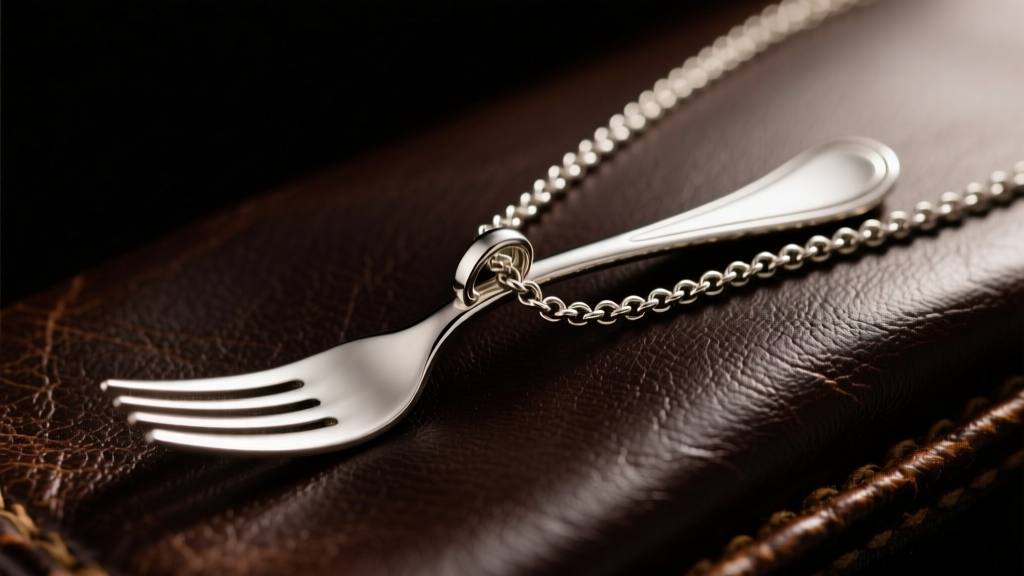
The grunge era left an indelible mark on fashion, and few accessories capture its raw, anti-establishment ethos quite like the iconic chris cornell fork necklace. Worn by the late Soundgarden and Audioslave frontman, the bent silver fork pendant remains a holy grail for rock jewelry enthusiasts. However, as the 2026 grunge revival drives up the prices of authentic vintage pieces, many fans are attempting to recreate or repair their own DIY versions. Unfortunately, bending silverware is not as simple as applying brute force with a pair of pliers. Without proper metallurgical knowledge, DIY attempts often result in snapped tines, broken chains, and rapid tarnishing.
This guide dives deep into the problem-solving mechanics of crafting, repairing, and maintaining a bent fork pendant, ensuring your tribute piece is as durable as it is stylish.
The Metal Fatigue Problem: Why DIY Forks Snap
The most common failure point when recreating a chris cornell fork necklace is metal fatigue. Most people reach into their kitchen drawer and grab a modern stainless steel fork. Modern flatware is typically stamped from 18/8 or 18/10 stainless steel, an alloy designed to resist bending. When you attempt to bend stainless steel cold (at room temperature), the metal undergoes rapid work hardening. The crystalline structure of the steel locks up, creating micro-fractures along the bend radius. Within days of wearing it, the tension from the chain and the movement of your body will cause the fork to snap cleanly at the neck.
The Solution: Sourcing and Annealing Sterling Silver
To achieve the fluid, organic bend seen on Cornell’s original piece without structural failure, you must use 925 sterling silver flatware. Vintage sterling silver forks from the mid-20th century are ideal because they possess a higher copper content (7.5%), which allows for better malleability when treated correctly. However, even sterling silver will work-harden if bent repeatedly.
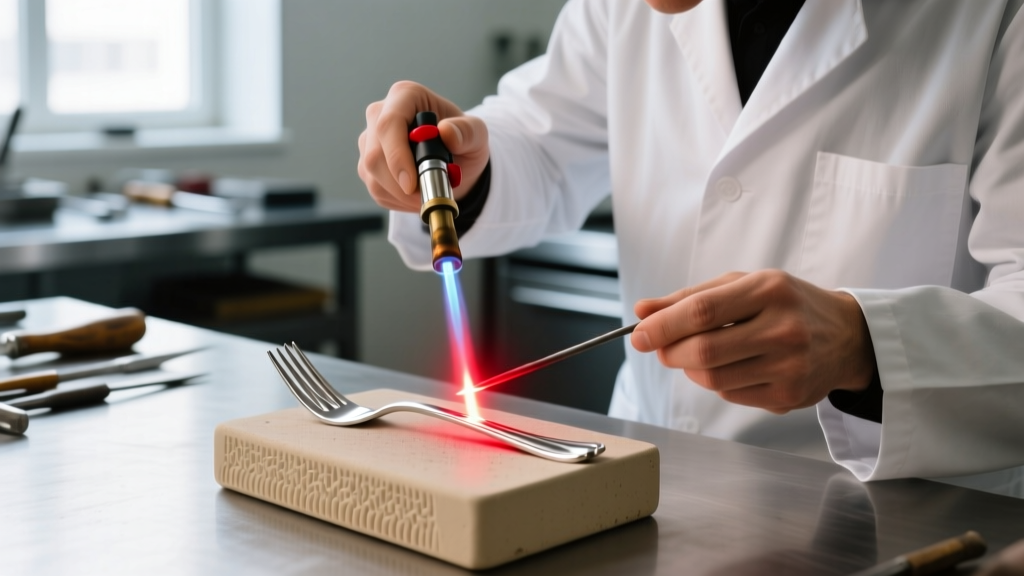
The crucial troubleshooting step is annealing. According to metallurgical guidelines from jewelry supply authorities like Rio Grande, annealing relieves the internal stresses in the metal. Here is the exact process:
- Place the sterling silver fork on a heat-resistant ceramic soldering block.
- Using a butane or acetylene torch, heat the neck and handle of the fork evenly until the metal glows a dull cherry red (approximately 1,100°F or 593°C).
- Immediately quench the fork in a bowl of room-temperature water.
- Pickle the fork in a warm citric acid or sodium bisulfate solution to remove the firescale (oxidation) caused by the copper in the alloy.
Once annealed and quenched, the silver's molecular structure is relaxed. You can now bend the handle into a dramatic 'U' or 'S' shape using nylon-jaw pliers to prevent marring the silver, and it will not snap.
Troubleshooting the Bail: How to Attach the Chain
Once the fork is bent, the next major hurdle is attaching it to a chain. Drilling a hole through the handle of a thick silver fork to thread a jump ring is a frequent point of failure. If the drill bit wanders or the hole is placed too close to the edge, the silver will tear under the weight of the pendant.
Expert Tip: Never use a standard high-speed steel (HSS) drill bit on work-hardened silver or steel. Always use a cobalt split-point drill bit with cutting oil to prevent the bit from catching and tearing the metal.
If you want to avoid drilling altogether, consider these two structural alternatives:
- Soldered Sterling Jump Ring: Use a 14-gauge (1.6mm thick) sterling silver jump ring. Wrap it around the top of the fork handle and solder it closed using hard silver solder. This creates a permanent, load-bearing bail that will never pull apart.
- Wire Wrapping: For a more rustic, DIY aesthetic that matches the grunge vibe, use 20-gauge dead-soft sterling silver wire. Wrap the wire tightly around the top of the handle 5 to 6 times, creating a custom loop at the top. This distributes the weight across a wider surface area of the fork.
Chain Selection: Solving the Weight Imbalance
A standard vintage sterling silver dinner fork weighs between 45 and 65 grams. This is exceptionally heavy for a pendant. The most common troubleshooting issue we see is enthusiasts threading a heavy silver fork onto a delicate 1.5mm cable chain. The result? The chain's jump ring deforms, or the links snap at the clasp within a week.
To properly support a chris cornell fork necklace, you must match the chain's tensile strength to the pendant's mass. Below is a structural compatibility chart for heavy pendants:
| Chain Style | Recommended Thickness | Weight Capacity | Suitability for Fork Pendant |
|---|---|---|---|
| Cable / Rolo Chain | 1.5mm - 2.0mm | Up to 15 grams | Poor (High risk of snapping) |
| Figaro Chain | 3.5mm - 4.5mm | Up to 80 grams | Excellent (Classic grunge aesthetic) |
| Cuban Link Chain | 4.0mm - 6.0mm | Up to 120 grams | Superior (Best weight distribution) |
| Box Chain | 2.5mm - 3.0mm | Up to 40 grams | Fair (Edges can pinch skin under heavy load) |
For the most authentic 90s rock look, opt for an oxidized 4mm Figaro chain. The alternating long and short links provide excellent structural integrity while complementing the distressed nature of the bent fork.
Tarnish and Corrosion: Maintenance Fixes
Sterling silver is prone to tarnishing, a chemical reaction where the copper in the 925 alloy reacts with sulfur compounds in the air and on your skin to form silver sulfide (the black layer on the metal). Because a fork necklace rests directly against the chest—a high-sweat, high-friction area—tarnish builds up rapidly, especially in the crevices of the bend.
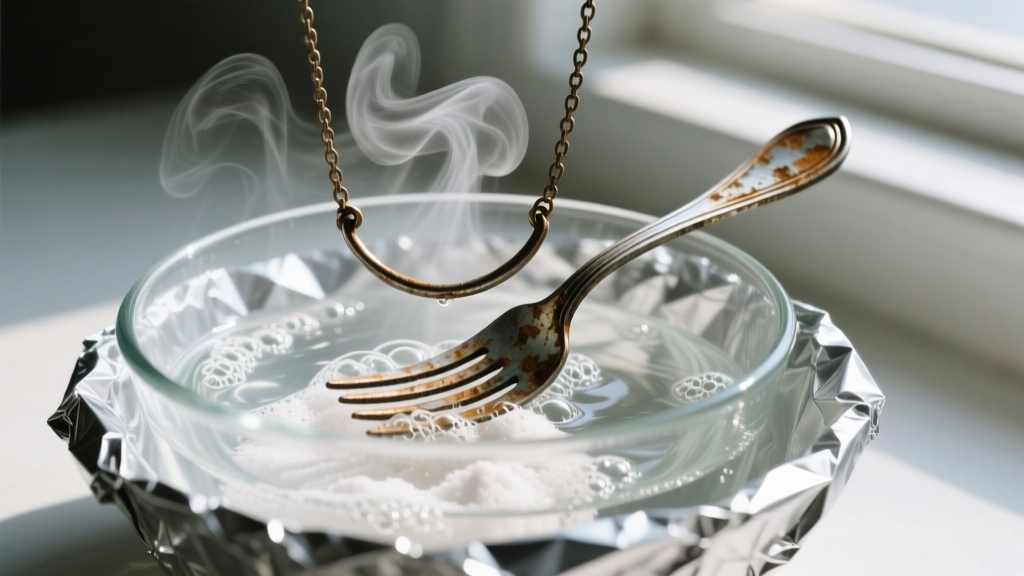
Avoid commercial silver polishes, as they are mildly abrasive and will strip away the intentional oxidation (antiquing) that gives the fork its vintage, gritty character. Instead, use an electrochemical reduction method recommended by The Silver Institute to reverse the tarnish without removing any base metal:
- Line a glass bowl with aluminum foil, shiny side up.
- Place the tarnished fork necklace on the foil, ensuring the silver touches the aluminum.
- Sprinkle two tablespoons of baking soda over the pendant.
- Pour boiling water into the bowl. The resulting chemical reaction transfers the sulfur from the silver to the aluminum foil, instantly lifting the black tarnish.
- Rinse with distilled water and dry thoroughly with a microfiber cloth.
Final Thoughts on Grunge-Era Jewelry Revival
Recreating or repairing a chris cornell fork necklace is more than a simple DIY craft; it is an exercise in basic metallurgy and structural jewelry design. By understanding the limits of work-hardened metals, properly annealing your sterling silver, selecting a heavy-duty chain, and utilizing non-abrasive cleaning methods, you can ensure your pendant survives the rigors of daily wear. Whether you are paying tribute to a rock legend or simply embracing the raw, unpolished aesthetic of grunge jewelry, taking the time to troubleshoot these common structural flaws will result in a piece that lasts a lifetime.


