Sandy Liang Necklace Repair: Fixing Clasps, Tarnish & Ribbons
Learn how to troubleshoot and repair your Sandy Liang necklace. Expert fixes for tarnished brass, broken delicate clasps, and frayed silk ribbons.

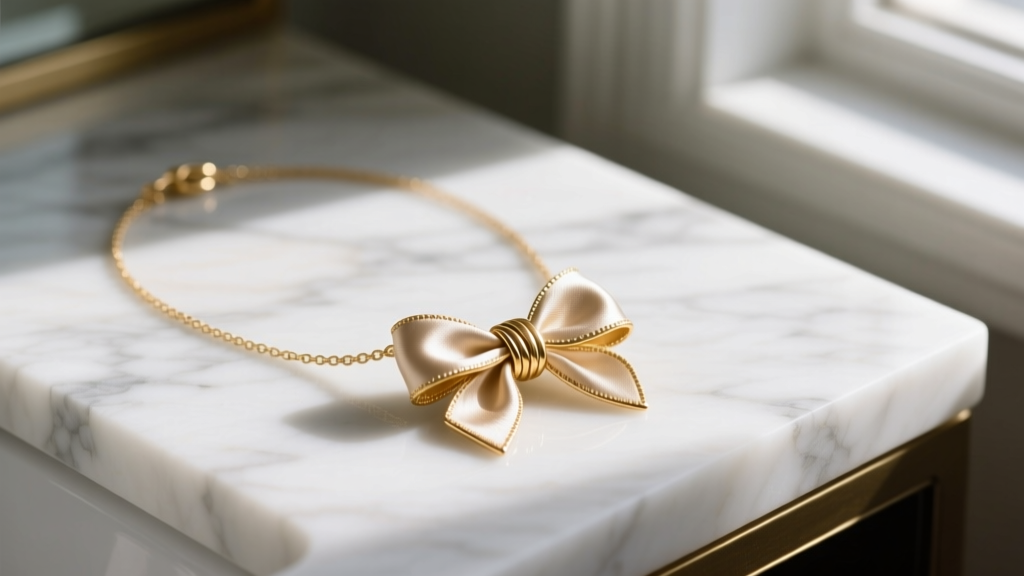
The Anatomy of Contemporary Fashion Jewelry
As the balletcore and coquette aesthetics continue to dominate the fashion landscape in 2026, the signature Sandy Liang necklace remains a highly coveted wardrobe staple. Known for whimsical motifs, delicate chains, silk ribbons, and freshwater pearls, these pieces capture a distinct downtown-meets-dance-studio vibe. However, the reality of contemporary fashion jewelry is that it requires meticulous care and occasional troubleshooting. Unlike solid 14k or 18k gold pieces, most fashion necklaces are constructed from brass base metals with a thin micron layer of gold or rhodium plating. Understanding the exact material composition of your jewelry is the first step in effective problem solving.
A typical gold-plated fashion necklace features a brass alloy (usually 67% copper and 33% zinc) plated with 0.3 to 0.5 microns of 14k gold. While beautiful, this plating is susceptible to wear, and the underlying brass is highly reactive to the sulfur and moisture present in human sweat and urban environments. When troubleshooting a damaged piece, you must approach repairs with an understanding of these material limitations to avoid stripping the plating or snapping delicate components.
Troubleshooting Tarnish and Oxidation
The most common issue owners face is the sudden appearance of dark, brassy, or greenish spots along the chain or pendant bail. This is not a defect; it is a chemical reaction. When the 0.5-micron gold layer wears thin from friction against the collarbone, the exposed copper in the brass base reacts with oxygen and sulfur to form copper oxide and copper sulfide.
Safe Cleaning Methods for Plated Brass
Never use commercial silver dips, ultrasonic cleaners, or abrasive polishing pastes on a plated Sandy Liang necklace. These harsh chemicals will strip the remaining gold microns instantly, leaving you with a dull, raw brass chain. Instead, use a specialized, non-abrasive microfiber jewelry cloth. For stubborn oxidation around the clasp or jump rings, create a mild solution of warm distilled water and a single drop of phosphate-free dish soap. Submerge the chain for no more than three minutes, gently agitate with a baby-soft toothbrush, and pat dry immediately with a lint-free cloth. According to the GIA Gold Guide, keeping plated jewelry completely dry after cleaning is paramount to halting the oxidation process.
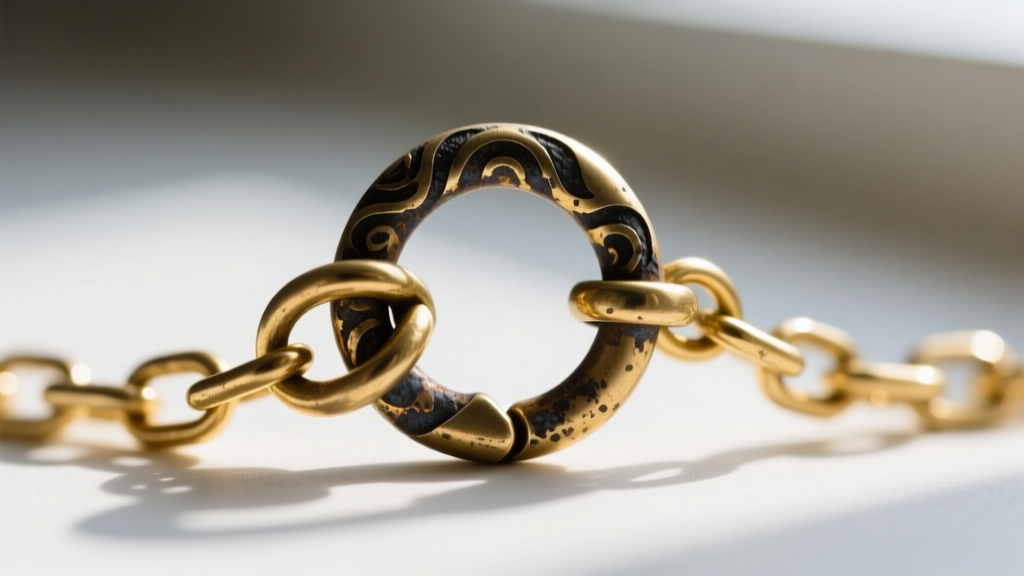
Fixing Delicate Clasps and Jump Rings
Fashion necklaces typically utilize 5mm spring ring clasps or 10mm lobster clasps to maintain a dainty profile. The failure point is rarely the clasp itself, but rather the unsoldered 20-gauge or 22-gauge brass jump rings that connect the clasp to the chain. Because unsoldered jump rings have a microscopic slit, lateral pulling (such as taking the necklace off by tugging the chain rather than the clasp) will warp the ring into an oval shape, causing it to slip off.
The Proper Technique for Jump Ring Repair
If your jump ring has gaped open, do not simply squeeze it shut from the sides. This will pinch the metal and weaken the structural integrity. Instead, use two pairs of smooth-jawed chain-nose pliers (never use serrated teeth pliers, as they will permanently scar the soft brass plating). Grip the jump ring on either side of the split, and use a twisting motion—pushing one side toward you and pulling the other away—to open it. To close it, twist it back until you hear and feel a microscopic "click" as the two ends meet perfectly flush.
| Component | Common Failure Mode | DIY Solution | Estimated Cost |
|---|---|---|---|
| 5mm Spring Ring | Internal spring fatigue or lever snap | Replace with a new 14k gold-filled 5mm clasp | $2 - $5 |
| 22g Jump Ring | Lateral pulling causing a gap | Close using the twist method with smooth pliers | $0 (Free) |
| Silk Organza Bow | Frayed edges from daily friction | Apply a micro-drop of liquid fray sealant | $4 - $8 |
| Gold Plating | Wear-through exposing raw brass base | Professional electrolytic re-plating service | $45 - $85 |
Restoring Frayed Silk Ribbons and Bow Details
The integration of textiles, particularly silk organza and polyester grosgrain ribbons, is a hallmark of the coquette aesthetic. However, silk organza is notoriously prone to fraying at the cut edges, especially where it rubs against the skin or the metal bail of the pendant.
Sealing Frayed Edges Without Damage
If the edges of your ribbon bow are beginning to unravel, avoid using standard superglue, which will dry hard, yellow, and create a brittle crust that can snap the delicate silk fibers. Instead, invest in a professional liquid fray sealant (such as Dritz Fray Check). Using a toothpick, apply a microscopic bead of the sealant exactly along the fraying edge. Allow it to cure for 24 hours in a low-humidity environment. The sealant will wick into the woven threads via capillary action, binding them together while remaining flexible. For polyester-blend ribbons, a very careful, split-second pass with a micro-torch or lighter flame can melt the synthetic fibers to seal them, but this carries a high risk of scorching and should only be attempted on practice scraps first.

Freshwater Pearl Maintenance and Re-stringing
Many contemporary necklaces feature small, irregular freshwater pearls woven into the chain or integrated into the pendant structure. Pearls are organic gemstones composed of nacre (calcium carbonate), making them highly porous and vulnerable to acids, perfumes, and cosmetics. The Gemological Institute of America (GIA) strongly advises against exposing pearls to harsh chemicals, as acids can literally dissolve the nacre layer, leaving the pearl dull and pitted.
When to Re-string
If your pearl necklace is strung on a silk or nylon thread rather than a metal chain, inspect the thread annually. If you can slide a pearl more than a millimeter along the thread, or if the thread appears stretched, discolored, or fuzzy, it is failing. Moisture and skin oils degrade organic threads rapidly. To troubleshoot this before a catastrophic snap occurs, have the piece professionally re-strung using synthetic, non-stretch beading wire (like 0.012-inch diameter Beadalon) with French wire (gimp) at the clasp ends to prevent the metal from sawing through the thread.
Building a DIY Jewelry Repair Toolkit
To effectively maintain your fashion jewelry collection at home, you need the right tools. Investing in a few high-quality, precision instruments will save your delicate pieces from accidental destruction during troubleshooting.
- Smooth-Jawed Chain-Nose Pliers: Essential for gripping jump rings and clasp levers without leaving tool marks on soft brass or gold plating.
- Flush Cutters: For cleanly snipping beading wire or damaged chain links without pinching the metal.
- Brass Wire Brush (Ultra-Fine): Only to be used on raw, un-plated brass components to remove heavy oxidation; never use on gold-plated surfaces.
- Anti-Tarnish Storage Strips: 3M anti-tarnish strips absorb airborne sulfur and hydrogen sulfide, extending the life of your plating by months when stored in an airtight ziplock bag.
Preventative Care for Longevity
The best troubleshooting method is prevention. Always adhere to the "last on, first off" rule: your Sandy Liang necklace should be the final item you put on after applying lotions, perfumes, and hairspray, and the very first item you remove when you return home. Store the piece flat in its original pouch or an airtight container with a silica gel packet to control ambient humidity. By understanding the material science behind plated brass, delicate mechanics, and organic textiles, you can keep your favorite contemporary pieces looking pristine for years to come.


