Troubleshooting Cloudy and Chipped Morganite Necklaces
Is your morganite necklace looking cloudy or chipped? Learn expert troubleshooting tips to clean, protect, and restore your peach-pink gemstone jewelry.

The Unique Gemological Vulnerabilities of Morganite
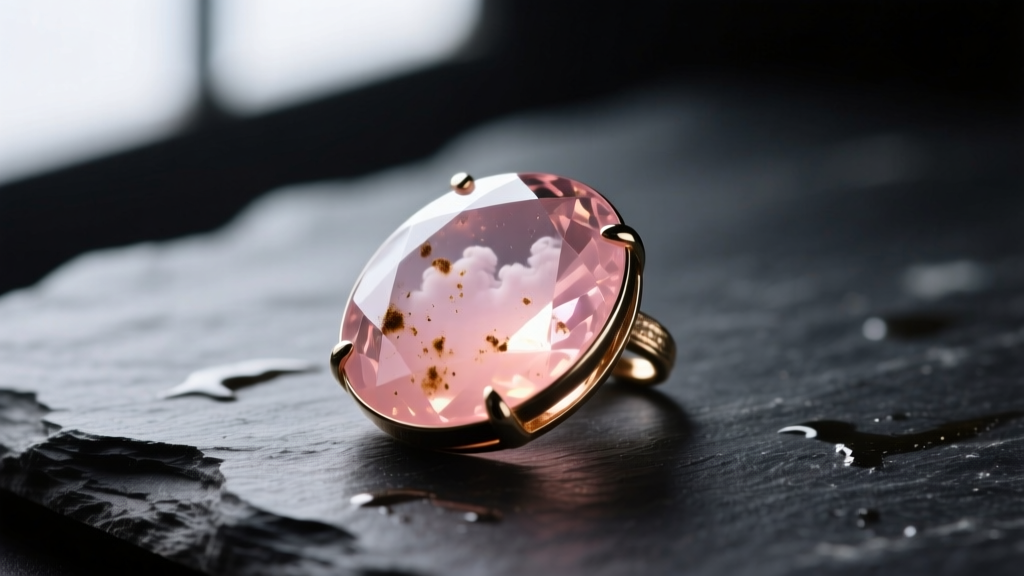
Morganite necklaces have surged in popularity as a romantic, peach-pink alternative to traditional diamonds. However, as a variety of the mineral beryl, morganite presents a specific set of gemological challenges that catch many jewelry owners off guard. With a Mohs hardness rating of 7.5 to 8, morganite is durable enough for daily wear, but it possesses distinct basal cleavage and inherent brittleness. This means that while it resists scratching reasonably well, it is highly susceptible to chipping upon hard impact.
Furthermore, morganite has a relatively low refractive index (RI of 1.58 to 1.60) compared to diamonds (2.42) or sapphires (1.76). This optical property dictates that morganite relies heavily on precision faceting and absolute surface cleanliness to reflect light. When exposed to daily skin oils, cosmetics, and hard water, the stone's light return is immediately compromised, leading to the most common complaint among owners: a sudden, muddy cloudiness. According to the Gemological Institute of America (GIA), understanding these structural and optical traits is the first step in troubleshooting and preserving your gemstone.
Problem 1: The "Cloudy" or "Muddy" Morganite Syndrome
If your once-brilliant peach pendant now looks like a dull piece of sea glass, the issue is almost certainly surface contamination rather than internal degradation. Because of its lower refractive index, morganite does not have the optical "fire" to pierce through layers of sebum, lotion, and soap scum. The grease fills the microscopic surface abrasions and pavilion facets, trapping light and killing the stone's brilliance.
Troubleshooting the Cloudiness
Many owners mistakenly reach for commercial jewelry dips or ultrasonic cleaners. Stop immediately. Natural beryl frequently contains liquid inclusions and internal fractures. The high-frequency vibrations of an ultrasonic cleaner can cause these inclusions to expand, leading to catastrophic internal shattering. Furthermore, harsh chemical dips can strip the polish from the gold setting and degrade the rhodium plating on white gold mounts.
The Safe Restoration Protocol
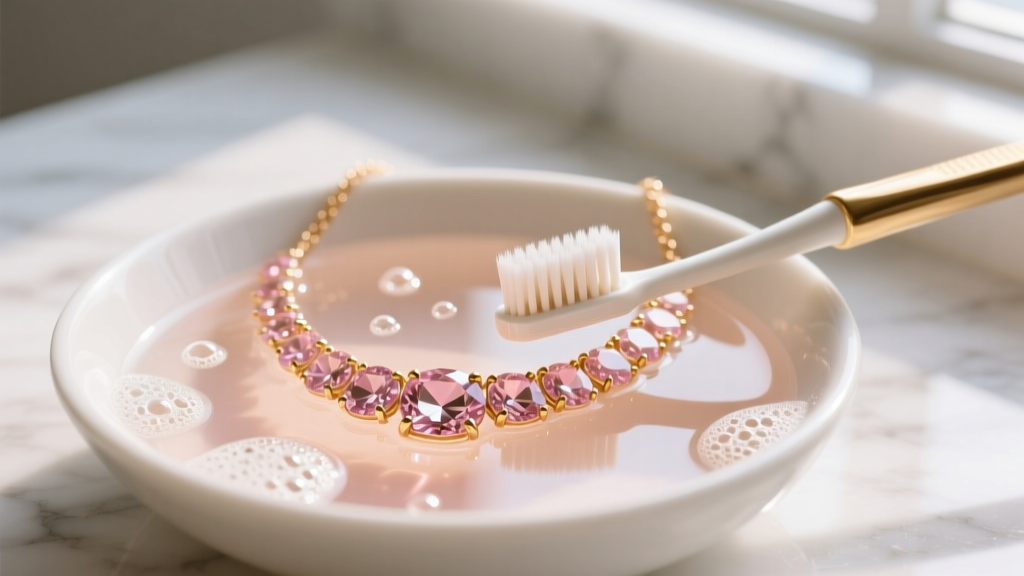
- Prepare a Degreasing Bath: Mix lukewarm water (never hot, to avoid thermal shock) with a few drops of ammonia-free, mild dish soap (like original Dawn). Avoid soaps with added moisturizers, as they leave a film.
- Soak Briefly: Submerge the morganite necklace for exactly 5 to 10 minutes. This softens the hardened sebum and cosmetic buildup around the prongs and the culet (the bottom point of the stone).
- Targeted Agitation: Using an ultra-soft baby toothbrush, gently sweep the bristles across the pavilion (the underside of the stone). The pavilion gathers 80% of the grease that causes cloudiness. Do not scrub the table (top) aggressively, as accumulated dust particles (which may contain quartz, Mohs 7) can cause micro-scratches.
- The Distilled Rinse: Rinse the necklace under distilled or filtered water. Tap water contains calcium and magnesium deposits that will dry as hard water spots, instantly recreating the cloudy effect you just tried to fix.
- Air Dry or Microfiber Pat: Blow the stone dry with a clean, oil-free compressed air canister, or pat gently with a lint-free microfiber cloth. Never use tissue paper, which contains wood fibers that can snag on the prongs.
Problem 2: Chipped Edges and Girdle Abrasion
To maximize the yield of the rough crystal and enhance the saturation of the peach color, lapidaries frequently cut morganite into large emerald, radiant, or elongated cushion shapes. While visually stunning, these shapes feature sharp, pointed corners that act as structural weak points. If a morganite necklace is dropped on a tile floor or struck against a steering wheel, the kinetic energy transfers directly to these corners, resulting in chips or "girdle abrasion" (a fuzzy, white wear mark around the edge of the stone).
Evaluating Your Setting's Failure Points
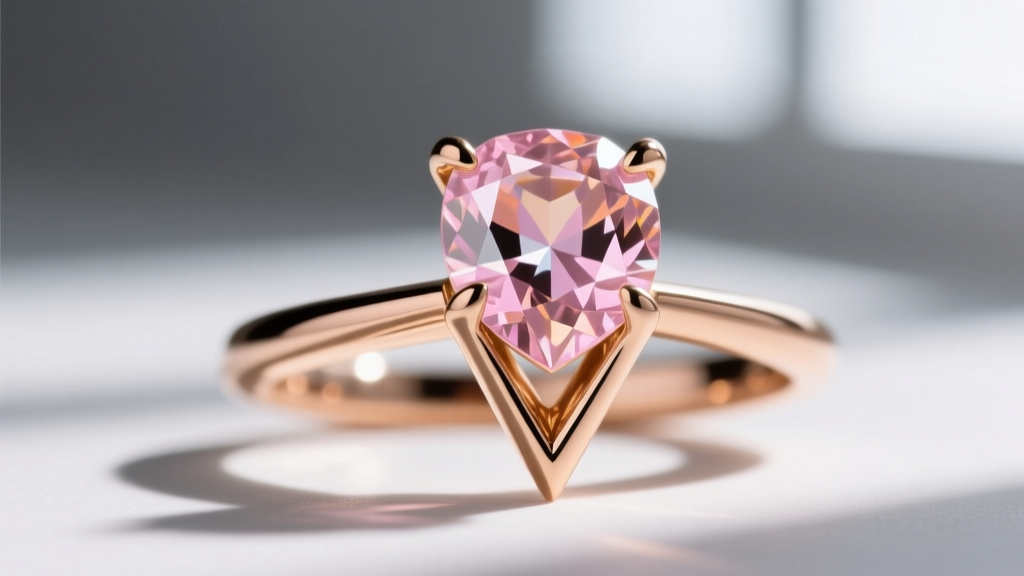
If you notice a chip or feel a snag on your clothing, inspect the setting immediately. Standard round prongs are fundamentally inadequate for securing the sharp corners of emerald-cut morganite stones over 2.00 carats. Over time, the metal fatigues, lifts away from the girdle, and leaves the corner entirely exposed to impact.
The V-Prong and Bezel Solutions
To troubleshoot and prevent further chipping, take the necklace to a master jeweler for a setting modification. Request V-prongs for any cornered gemstone. A V-prong caps the sharp 90-degree angle with a folded piece of metal, absorbing the impact energy and dispersing it along the girdle rather than letting it fracture the crystal lattice. For highly active individuals, a partial bezel or a halo setting offers superior protection, as the surrounding melee diamonds or metal rim take the brunt of any physical strikes. According to the GIA's care and cleaning guidelines, regular prong inspection every six months is non-negotiable for beryl-family gems worn as daily pendants.
Problem 3: Color Fading and "Muddy" Tones
A less common but deeply frustrating issue is the perceived "fading" or muddying of the morganite's color over time. It is vital to understand the gemological reality of morganite treatments. The vast majority of commercial morganite is heat-treated to remove yellow or brown undertones, resulting in the pure, stable peach-pink hues consumers desire. This heat treatment is permanent and will not fade with sunlight exposure.
However, some lower-grade stones are subjected to surface coatings or fracture-filling with colored resins to artificially boost saturation. If your stone is turning brown or losing its pink vitality, it may be a coated stone degrading, or a naturally pale stone that was heavily reliant on the warm, yellow-toned lighting of the jewelry store where it was purchased. True color fading in untreated, heat-only morganite is virtually impossible under normal environmental conditions. If you suspect coating degradation, the stone must be sent to a gemological laboratory for spectroscopic analysis; no at-home cleaning will restore a failing artificial coating.
Morganite Troubleshooting & Decision Matrix
Use the following diagnostic table to quickly identify your necklace's issue and apply the correct gemological intervention.
| Symptom | Probable Cause | Immediate Action | Long-Term Prevention |
|---|---|---|---|
| Stone looks cloudy, dull, or yellowish | Sebum, lotion, and hard water buildup on pavilion facets | Degrease with mild dish soap, distilled water rinse, and compressed air dry | Remove necklace before applying skincare; clean weekly |
| Snagging on fabrics; visible white line on edge | Lifted prong exposing the girdle; early-stage girdle abrasion | Stop wearing immediately; place in a soft pouch | Have a jeweler tighten or replace prongs; upgrade to V-prongs |
| Sharp corner is missing or fractured | Kinetic impact on an unprotected emerald/radiant cut corner | Consult a lapidary to see if the stone can be re-cut and re-polished | Reset the stone with V-prongs or a protective halo setting |
| Pink color is turning brown or patchy | Degradation of artificial surface coating or fracture fill | Do not use chemicals; seek professional gemological appraisal | Always buy GIA/AGS certified stones to guarantee treatment disclosure |
Preventative Maintenance Checklist for 2026
As jewelry care standards evolve, maintaining a morganite necklace requires a proactive approach to both the gemstone and the metal chain. The bail (the loop connecting the pendant to the chain) is a major friction point. If you are using a delicate cable chain, the constant metal-on-metal friction will eventually wear through the bail, leading to a lost pendant.
- Chain Selection: Pair heavy morganite pendants (over 3 carats) with robust chains like a 1.5mm to 2.0mm box chain or a solid wheat chain. Avoid hollow rope chains, which crush easily and offer poor tensile support.
- Clasp Mechanics: Upgrade standard spring-ring clasps to a solid lobster clasp or a magnetic neodymium safety clasp. Spring rings frequently fail due to internal spring fatigue, resulting in the necklace slipping off unnoticed.
- Storage Protocol: Never store your morganite necklace loosely in a jewelry box where it can be struck by harder gems (diamonds, sapphires, topaz). Store it in an individual, anti-tarnish flannel pouch to prevent the rose gold or silver setting from oxidizing and transferring dark tarnish to the stone's girdle.
- Annual Professional Audit: Once a year, have a jeweler perform a microscopic prong inspection and a professional steam clean. The steam will safely blast out microscopic debris lodged between the stone and the gallery wire that your at-home toothbrush cannot reach.
By respecting the specific physical and optical properties of beryl, you can ensure your morganite necklace remains a brilliant, flawless statement piece for decades. Troubleshooting is not just about fixing damage; it is about understanding the science of your gemstone and adjusting your wear habits to accommodate its unique crystalline nature.


