Fixing a Diamond Daisy Necklace: Prong, Stone & Chain Repair
Learn how to troubleshoot and repair a diamond daisy necklace. Expert fixes for loose prongs, cloudy stones, and broken chains to restore your jewelry.

The Anatomy of a Diamond Daisy Necklace and Common Failures
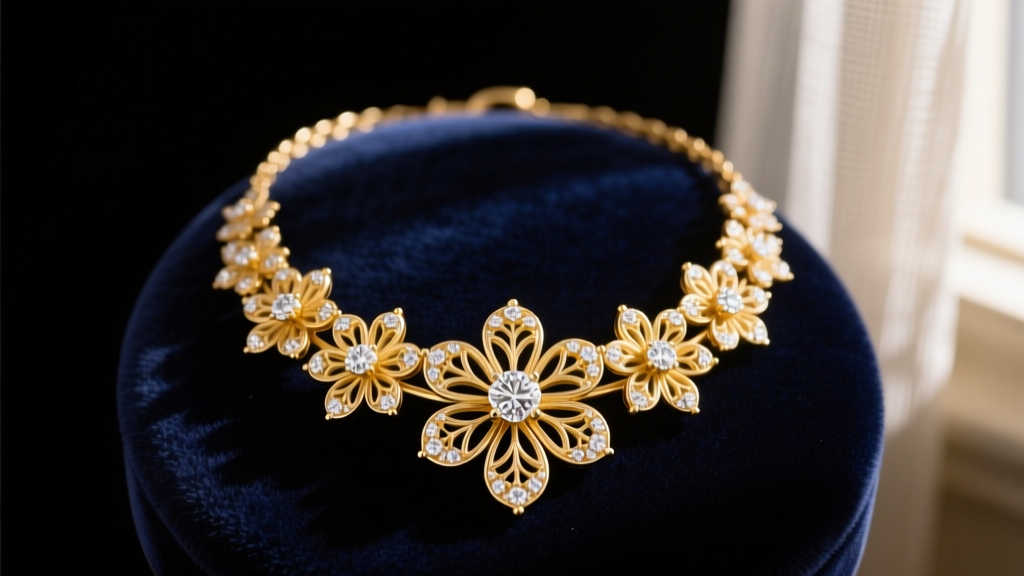
The diamond daisy necklace is a timeless motif, characterized by a central gemstone surrounded by a halo or cluster of smaller melee diamonds arranged to mimic the petals of a flower. Whether you own an Art Deco vintage piece or a modern 2026 iteration from a contemporary fine jeweler, the intricate geometry of the daisy setting makes it uniquely susceptible to specific types of wear. Because the 'petals' are often held in place by shared prongs or micro-pavé beads, a single impact can compromise multiple stones simultaneously. Troubleshooting a damaged diamond daisy necklace requires a methodical approach, moving from the chain and bail down to the gallery and individual prongs. In this guide, we break down the exact failure modes of floral cluster pendants and provide actionable repair frameworks to restore your jewelry to its original brilliance.
Diagnosing the Damage: A Bench Jeweler’s Checklist
Before attempting any cleaning or sending the piece off for repairs, you must accurately diagnose the structural integrity of the daisy setting. Use a 10x triplet loupe to inspect the pendant under bright, direct light. Look for the following specific failure points:
- Prong Thinning: Check the tips of the prongs holding the outer melee diamonds. If the metal is flattened or hook-shaped, the stone is at imminent risk of falling out.
- Gallery Clogging: Inspect the underside (gallery) of the daisy. A buildup of hardened lotions and dead skin cells can cause the diamonds to look cloudy and can actually exert outward pressure on the settings over time.
- Bail Wear: Examine the hidden bail or the jump ring connecting the pendant to the chain. Friction from the chain often saws through the soft gold or platinum of the bail loop.
- Stone Rattling: Gently tap the pendant with a wooden toothpick. If you hear a faint clicking sound, a melee diamond is loose in its seat, indicating a bent prong or a chipped stone girdle.
Prong and Setting Repairs: Securing the Petals
The most frequent issue with a diamond daisy necklace is prong wear. In a classic daisy cluster, the outer stones are frequently set with shared prongs—meaning one tiny bead of metal holds the edges of two adjacent diamonds. If a shared prong wears away, you risk losing two stones instead of one.
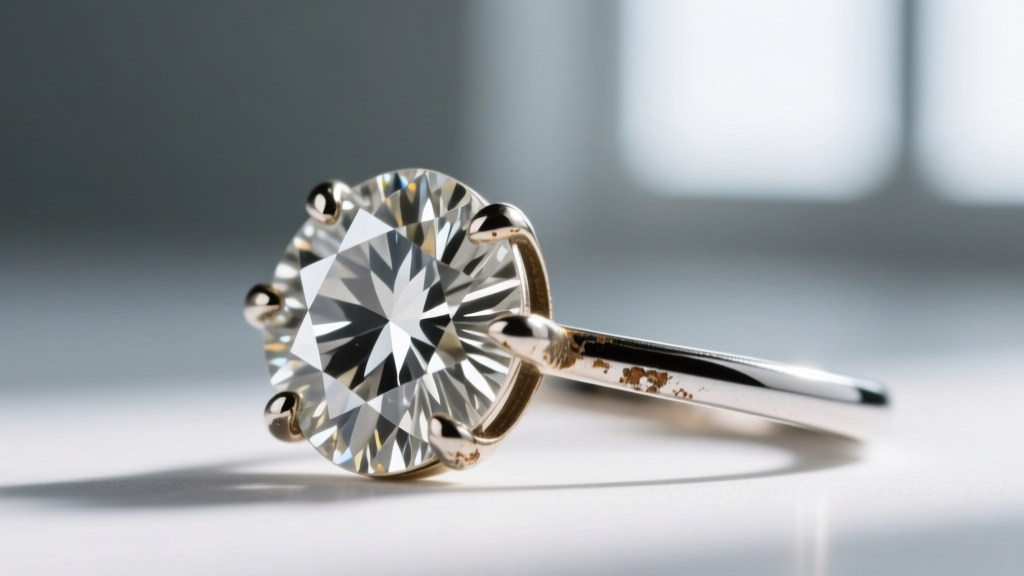
Retipping prongs on a delicate floral setting requires advanced bench skills. For 14k or 18k gold settings, a jeweler will typically use a laser welder to add new metal to the worn prong without exposing the surrounding diamonds to the extreme heat of a traditional torch, which can cause thermal shock or burn the stones if they are fracture-filled. As of 2026, professional prong retipping costs between $35 and $65 per prong, depending on the metal and the accessibility of the stone. If the entire daisy head is severely worn, a master jeweler might recommend 'rebuilding' the setting by casting a new daisy head and carefully transferring the original center stone, which usually ranges from $250 to $450 for the labor and metal weight.
Stone Replacement: Matching Melee Diamonds
If a petal stone has already been lost, replacing it is not as simple as dropping in any small diamond. Melee diamonds (stones under 0.15 carats) must be precisely matched in diameter, color, and clarity to maintain the optical symmetry of the daisy. According to the Gemological Institute of America (GIA), melee diamonds are sorted into strict millimeter sieves, and a variance of just 0.1mm can cause the stone to sit too high or fall through the gallery.
| Diameter (mm) | Approx. Carat Weight | Typical Cut Style | Replacement Cost (2026 Est.) |
|---|---|---|---|
| 1.0mm - 1.2mm | 0.005 - 0.008 ct | Single Cut (17 facets) | $15 - $30 |
| 1.3mm - 1.5mm | 0.01 - 0.015 ct | Full Cut (57 facets) | $25 - $50 |
| 1.6mm - 1.8mm | 0.02 - 0.025 ct | Full Cut (57 facets) | $40 - $75 |
| 1.9mm - 2.1mm | 0.03 - 0.04 ct | Full Cut (57 facets) | $60 - $110 |
When sourcing a replacement, your jeweler will use a 'single cut' melee for smaller petals (under 1.3mm) because the 57 facets of a 'full cut' diamond are too small to resolve to the human eye at that size, making single cuts appear brighter and more glassy. Always request that the jeweler matches the color grade of the existing petals, typically G-H for vintage pieces and D-F for modern luxury daisy necklaces.
Chain and Bail Troubleshooting
The connection point between the daisy pendant and the chain is a major structural vulnerability. Many daisy necklaces utilize a 'hidden bail'—a small loop soldered directly to the back of the floral gallery so the chain appears to pass magically behind the flower. Over years of wear, the chain acts like a microscopic saw, cutting through the bail loop or the jump ring.
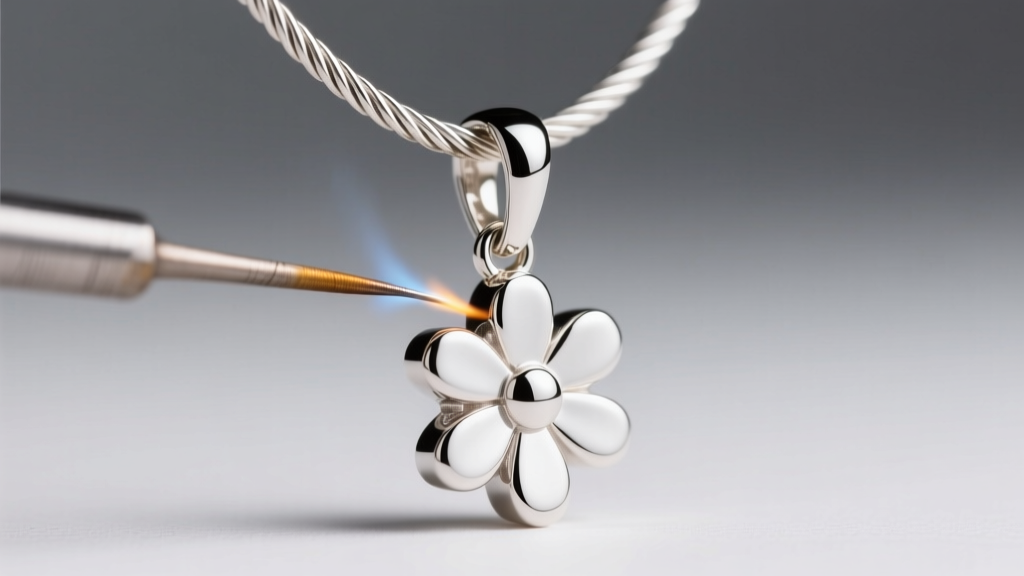
If the jump ring is thinning, it must be replaced with a heavier gauge wire (at least 0.40mm thick for durability) and properly soldered closed. Never rely on a jeweler who simply twists a jump ring closed with pliers; the gap will eventually pull apart, resulting in the loss of the pendant. If the hidden bail itself has snapped off the gallery, the repair requires laser soldering to reattach the bail without melting the delicate prongs on the front of the daisy. Expect to pay between $85 and $150 for a complex hidden bail reconstruction.
Cleaning and Restoring Luster Without Loosening Stones
A diamond daisy necklace loses its sparkle primarily due to the gallery trapping oils and cosmetics. However, you must be extremely cautious when cleaning a vintage or damaged cluster pendant. Never place a diamond daisy necklace in an ultrasonic cleaner if you suspect even one prong is loose. The high-frequency vibrations will easily shake a compromised melee diamond out of its setting, sending it to the bottom of the tank.
Expert Cleaning Protocol: Mix a few drops of ammonia-free dish soap (like Dawn) in warm distilled water. Use a baby-soft toothbrush to gently agitate the underside of the daisy gallery. Rinse with lukewarm water over a closed sink drain, and dry with a lint-free microfiber cloth. Avoid using compressed air to dry the setting, as the sudden temperature drop can stress older, fragile gold prongs.
When to Seek a Master Jeweler vs. DIY
While you can safely clean your necklace at home and perform basic visual inspections with a loupe, structural repairs on a diamond daisy necklace should never be attempted as a DIY project. The tolerances for melee settings are measured in fractions of a millimeter. Attempting to push a loose prong back over a stone with household tweezers will almost certainly scratch the gold, mar the diamond's table, or snap the brittle metal entirely. For complex restorations, always seek out a credentialed professional. Organizations like Jewelers of America maintain directories of certified master bench jewelers who possess the specific laser-welding equipment and microscope setups required to safely restore intricate floral diamond jewelry. By understanding the specific mechanics of your daisy setting, you can communicate effectively with your jeweler and ensure your necklace remains secure and brilliant for decades to come.


