Effy Evil Eye Necklace Troubleshooting: Repair & Care Guide
Learn how to troubleshoot, repair, and maintain your Effy evil eye necklace. Expert fixes for tangled chains, chipped enamel, and loose pavé diamonds.

Identifying Common Effy Evil Eye Necklace Issues
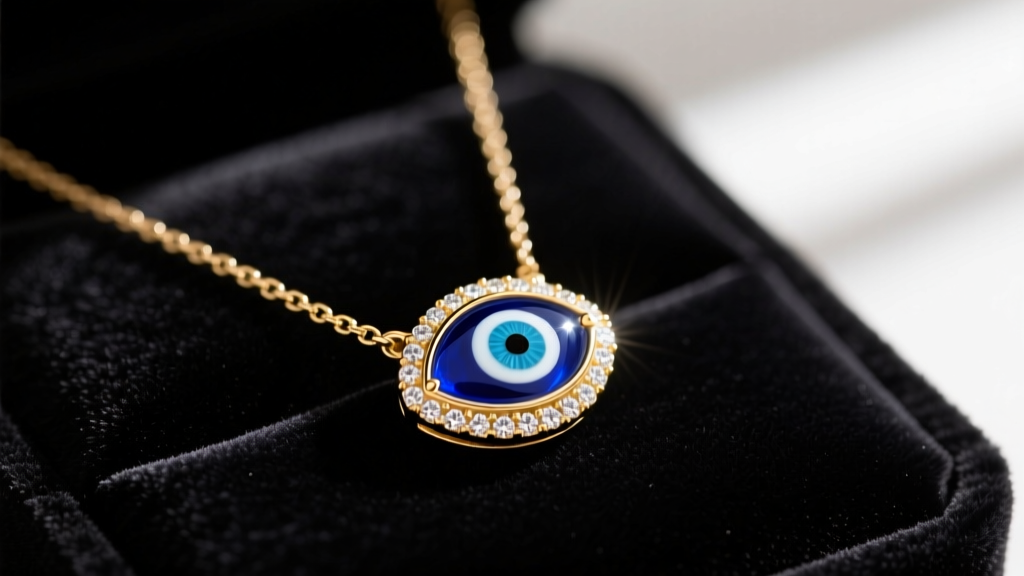
The Effy evil eye necklace is a staple in modern protective jewelry, celebrated for its intricate pavé diamond halos and striking enamel centers. However, the delicate construction required to achieve this elegant aesthetic often leads to specific structural vulnerabilities over time. Whether you own a classic 14k yellow gold piece or a white gold variant from their Hemata or Signature collections, daily wear introduces unique stress points. As of 2026, bench jewelers report a high volume of these specific pendants requiring intervention for chain kinking, micro-prong degradation, and cold enamel chipping.
To properly troubleshoot your jewelry, you must first understand its anatomy. Most Effy evil eye pendants feature a cast 14k gold body, a cold-poured epoxy enamel center (usually blue or black), and a halo of 1.0mm to 1.3mm melee diamonds set in cast micro-prongs. The pendant is typically suspended on a lightweight 0.8mm to 1.0mm box or cable chain. Each of these components has distinct failure modes that require specialized, non-destructive troubleshooting techniques.
Fixing the Delicate Chain and Clasp Mechanisms
The chains supplied with Effy pendants are designed for visual subtlety rather than heavy-duty tensile strength. The most frequent complaint is severe kinking in 0.9mm box chains, which occurs when the chain twists upon itself and is subsequently pulled tight.
Unkinking 0.9mm Box Chains Without Snapping
Never attempt to pull a kinked box chain apart with your fingers or tweezers; this will warp the square links permanently and weaken the solder joints. Instead, lay the necklace flat on a steel bench block. Using two polished agate burnishers or fine sewing needles, gently push the folded links outward from the center of the kink. Apply a microscopic drop of synthetic watch oil to the kinked joint to reduce friction while you massage the links back into their geometric alignment. If a link has already creased and thinned, it must be snipped and re-soldered by a professional using a laser welder to avoid melting the adjacent links.
Rescuing Stuck Lobster Clasps
The spring mechanisms inside Effy’s lightweight lobster clasps frequently become clogged with cosmetic powders, lotion residue, and dead skin cells, causing the lever to stick or fail to close completely.

- Do not use WD-40: Standard lubricants contain solvents that can degrade the epoxy enamel on the pendant if accidentally transferred.
- The Ultrasonic Method: Detach the pendant (to protect the enamel and diamonds from ultrasonic cavitation) and place only the chain and clasp in an ultrasonic cleaner with a mild ammonia-free jewelry solution for exactly three minutes.
- Pinpoint Lubrication: After drying, use a 0.5mm needle dipped in lightweight mineral oil to touch the clasp’s internal spring hinge. Work the lever back and forth to distribute the oil.
Restoring the Enamel Center and Pavé Diamonds
The striking center of the evil eye is typically made of cold enamel (an epoxy-based resin) rather than kiln-fired vitreous glass enamel. While cold enamel allows for vibrant, opaque colors, it is highly susceptible to chipping upon impact and degrading when exposed to harsh chemicals like chlorine or acetone.
Addressing Enamel Chips and Cloudiness
If your blue or black enamel center has chipped, do not attempt to fill it with standard nail polish, which will yellow and shrink over time. For minor surface scratches causing cloudiness, a jeweler can gently polish the resin using a micro-mesh pad (up to 12,000 grit) and a non-abrasive plastic polish. For deep chips, the pendant must be sent to a specialist who can carefully drill out the remaining compromised resin, re-pour a color-matched two-part jewelry epoxy, and cure it under UV light to ensure a glass-like finish that bonds to the gold bezel.
Troubleshooting Loose Pavé Diamonds
The diamond halo on an Effy evil eye necklace usually consists of 20 to 30 melee diamonds (approximately 0.005 to 0.01 carats each). These are held by cast micro-prongs that measure roughly 0.6mm in diameter. Cast prongs are inherently more porous and brittle than die-struck or hand-drawn wire prongs, making them prone to snapping if caught on knitwear.
According to the Gemological Institute of America (GIA), regular inspection of pavé settings is critical. Use a 10x jeweler's loupe to inspect the prongs every six months. If you notice a prong has flattened or pulled away from the diamond's girdle, stop wearing the necklace immediately. A bench jeweler can perform a "prong retip," using a laser welder to add a tiny bead of 14k gold wire to the worn prong, securing the stone without exposing the diamond to the extreme heat of a traditional jeweler's torch.
Material Specs: Factory vs. Aftermarket Repairs
Understanding the difference between Effy's original manufacturing specifications and professional aftermarket repair materials will help you make informed decisions when seeking maintenance.
| Component | Effy Factory Specification | Professional Bench Repair Standard |
|---|---|---|
| Chain Link | 0.9mm Cast/Soldered 14k Box Chain | Laser-welded 14k Jump Rings (1.2mm wire) |
| Enamel Type | Cold-Poured Epoxy Resin | UV-Cured Optical Jewelry Resin or Vitreous Enamel |
| Diamond Prongs | 0.6mm Cast Micro-Prongs | Laser-Welded 14k or 18k Gold Wire Prongs |
| Clasp Mechanism | Standard Cast Lobster Claw | Die-Strung Spring-Loaded Lobster Claw |
Verifying Authenticity and Hallmarks
Because the secondary market for Effy jewelry is vast, verifying the authenticity of your piece is a crucial troubleshooting step before investing in expensive repairs. Genuine Effy pieces are strictly hallmarked, but the placement can be notoriously difficult to find without magnification.
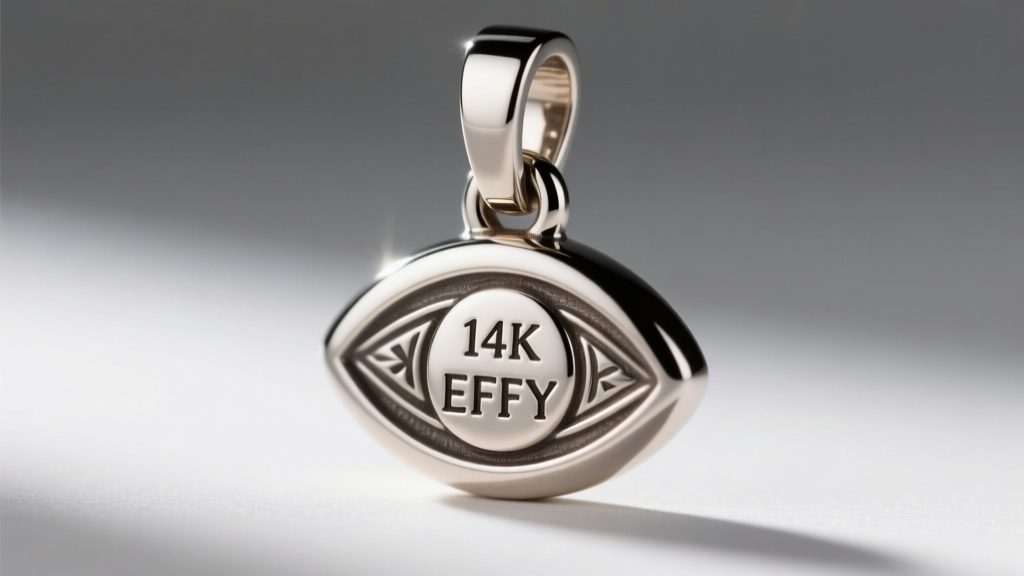
First, examine the clasp tag. You should see a crisp "14K" stamp alongside the "EFFY" trademark. If the necklace has been resized or the clasp replaced, the tag might be missing. In this case, inspect the pendant bail (the loop that connects the pendant to the chain). Effy frequently stamps the interior or the flat back-plate of the bail. The stamping should be deep, clean, and evenly spaced. If the hallmark appears blurry, shallow, or stamped over a porous texture, the piece may be a counterfeit cast from a mold of an original necklace. For definitive verification, consult a certified gemologist or use the Jewelers of America directory to locate an accredited appraiser.
Professional Repair Cost Guide (2026 Estimates)
When at-home troubleshooting fails, professional intervention is required. Pricing varies by region and the specific technology (e.g., laser welding vs. torch soldering) employed by the jeweler. Below are the current average bench fees for common Effy evil eye necklace repairs:
- Chain Soldering (Single Break): $45 – $75. Laser welding is highly recommended for 0.9mm box chains to prevent black oxidation marks and weak joints.
- Lobster Clasp Replacement: $60 – $95, including the cost of a higher-quality 14k die-struck clasp and labor.
- Pavé Diamond Replacement: $35 – $65 per stone. This includes sourcing a matching 1.0mm-1.3mm melee diamond (VS clarity, G-H color) and the laser retipping of the micro-prong.
- Enamel Restoration: $120 – $200. This is a specialized service, as the jeweler must carefully remove the old resin without scratching the surrounding diamond halo before pouring and curing the new color-matched epoxy.
By understanding the precise mechanics and materials of your Effy evil eye necklace, you can transition from reactive frustration to proactive maintenance, ensuring this symbolic piece of jewelry remains structurally sound and visually brilliant for decades.


