Troubleshooting Your Elisa Gold Pendant Necklace in Rose Quartz
Learn how to troubleshoot common issues with your Elisa gold pendant necklace in rose quartz, from stone cloudiness to chain tangling and clasp failures.

Introduction to Elisa Pendant Wear and Tear
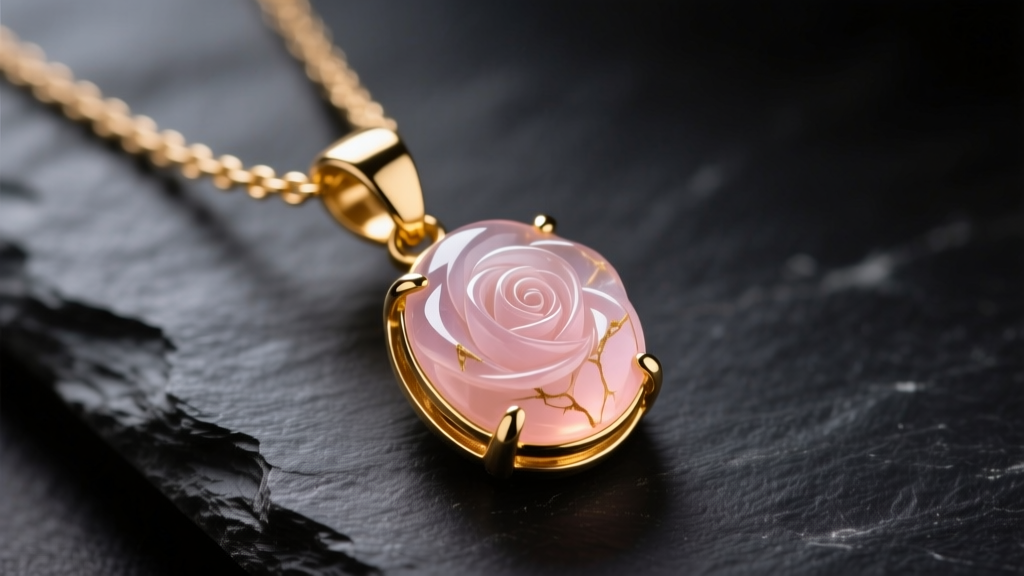
The Elisa gold pendant necklace in rose quartz is a beloved staple in many jewelry collections, prized for its soft blush hues and elegant gold setting. However, daily wear exposes both the delicate gemstone and the precious metal to environmental stressors, friction, and chemical interactions. By 2026, jewelry care has evolved beyond simple wiping with a cloth; it now requires a nuanced understanding of material science. Whether you are dealing with a suddenly cloudy cabochon, a stiff clasp, or a thinning chain, identifying the root cause is the first step toward restoration. This comprehensive troubleshooting guide addresses the most frequent mechanical and aesthetic failures specific to rose quartz and gold pairings, providing actionable, expert-level solutions to extend the lifespan of your necklace.
Diagnosing Rose Quartz Cloudiness and Surface Damage
Rose quartz is a macrocrystalline variety of silicon dioxide (SiO2) with a Mohs hardness rating of 7. While this makes it relatively scratch-resistant compared to softer stones like opal or pearl, it is still highly susceptible to surface degradation from everyday cosmetics, hard water deposits, and improper cleaning techniques. If your Elisa pendant has lost its signature translucency and appears milky or dull, the issue is rarely internal fracturing and almost always a buildup of microscopic debris or chemical etching.
The Mohs Scale and Inclusion Vulnerabilities
Natural rose quartz frequently contains microscopic fluid inclusions and rutile needles, which are responsible for its unique color and occasional asterism (the star effect). Many owners mistakenly use ultrasonic cleaners to restore brilliance. According to the Gemological Institute of America (GIA), ultrasonic waves cause cavitation—rapid formation and collapse of microscopic bubbles. This localized thermal shock can expand fluid inclusions within the rose quartz, leading to internal fracturing or a permanent cloudy appearance. Never subject your Elisa pendant to ultrasonic or steam cleaning.
Safe Cleaning Protocols for Opaque Stones
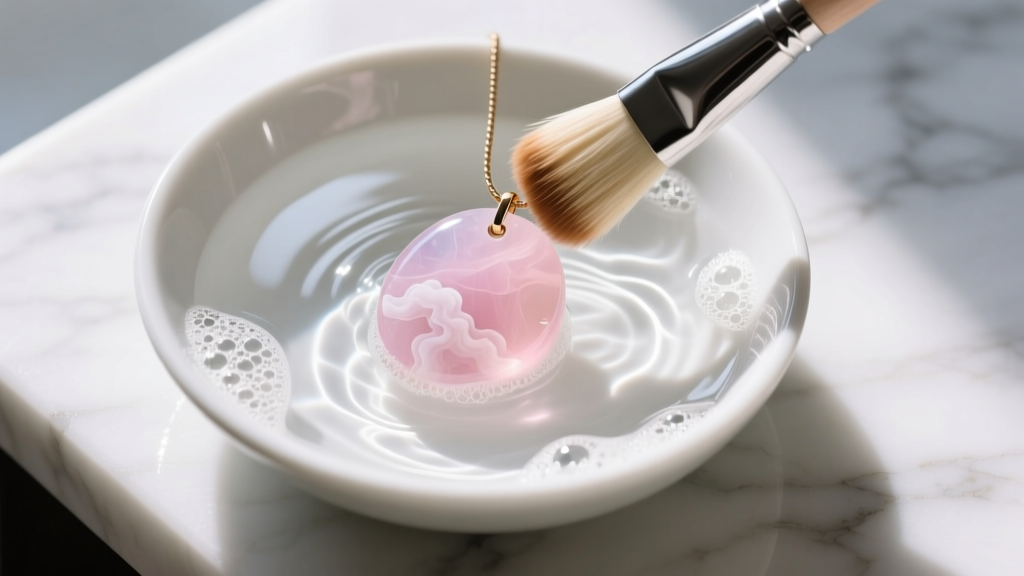
To safely restore the luster of a cloudy rose quartz pendant, you must dissolve the sebum and cosmetic buildup without attacking the stone's polish. Follow this precise protocol:
- The Solution: Mix 1 cup of distilled water (avoid tap water, as dissolved minerals leave calcium spots) with 1/4 teaspoon of mild, lotion-free dish soap.
- The Soak: Submerge only the pendant and lower chain for exactly 3 to 5 minutes. Prolonged soaking can weaken the adhesive if the stone is bezel-set with epoxy.
- The Agitation: Use a baby toothbrush with extra-soft bristles. Gently brush the pavilion (the back of the stone) where skin oils accumulate. Do not apply heavy pressure to the gold prongs or bezel.
- The Rinse and Dry: Rinse under a gentle stream of lukewarm distilled water and pat dry with a lint-free microfiber cloth. Air drying will leave water spots.
Addressing Gold Chain and Bail Friction Issues
The hardware of your Elisa necklace—specifically the chain and the bail (the loop that connects the pendant to the chain)—endures constant kinetic friction. Over time, this leads to metal fatigue, tangling, and in some cases, severe thinning of the gold.
Vermeil vs. Solid Gold Degradation
First, verify the metallurgical composition of your necklace. If your Elisa pendant is crafted in gold vermeil (a sterling silver base plated with a minimum of 2.5 microns of gold), exposure to acidic sweat, chlorine, and sulfur-heavy environments will rapidly degrade the plating, revealing the dark silver beneath. Solid 14k or 18k gold, however, does not tarnish in the traditional sense but can develop a dull patina from microscopic scratches. If your chain feels rough or 'gritty' when pulled through your fingers, it is likely clogged with dead skin cells and lotion. A 10-minute soak in the distilled water and dish soap solution mentioned above, followed by a gentle brushing of the individual chain links, will restore the chain's fluid drape.
Bail Wear and Tear
The bail is the highest-friction point on any pendant necklace. A standard Elisa pendant features a solid or soldered loop bail. If you notice the bail becoming thin or developing a sharp groove, it is suffering from abrasive wear against the chain. To mitigate this, ensure your chain gauge is appropriately matched to the bail's inner diameter. A chain that is too thick will act like a saw against the gold bail. For most Elisa pendants, a 0.8mm to 1.0mm cable or rope chain provides the optimal balance of strength and friction reduction.
Troubleshooting Diagnostic Chart
Use the following diagnostic table to quickly identify and resolve common issues specific to your rose quartz and gold necklace.
| Symptom | Probable Cause | Expert Solution |
|---|---|---|
| Stone appears milky or cloudy | Sebum/cosmetic buildup on the pavilion or hard water spots | Clean with distilled water and mild soap; avoid ultrasonic cleaners entirely. |
| Gold chain feels stiff or rigid | Accumulation of dead skin and lotion inside the chain links | Soak for 5 minutes and gently agitate with a soft-bristled brush. |
| Pendant does not lay flat | Bail is bent or chain gauge is too thick for the bail opening | Have a jeweler reshape the bail or downgrade to a 0.9mm cable chain. |
| Clasp is difficult to open | Internal spring mechanism clogged with debris or misaligned | Apply a microscopic drop of sewing machine oil to the hinge; work the lever. |
| Chain constantly tangles | Electrostatic attraction or using a chain style prone to knotting | Switch to a rope or box chain; store hanging or laid flat, never piled. |
Resolving Clasp and Jump Ring Failures
The clasp assembly is the most frequent point of catastrophic failure on delicate gold necklaces. The Elisa necklace typically utilizes either a spring ring or a lobster claw clasp, connected to the chain via a jump ring.
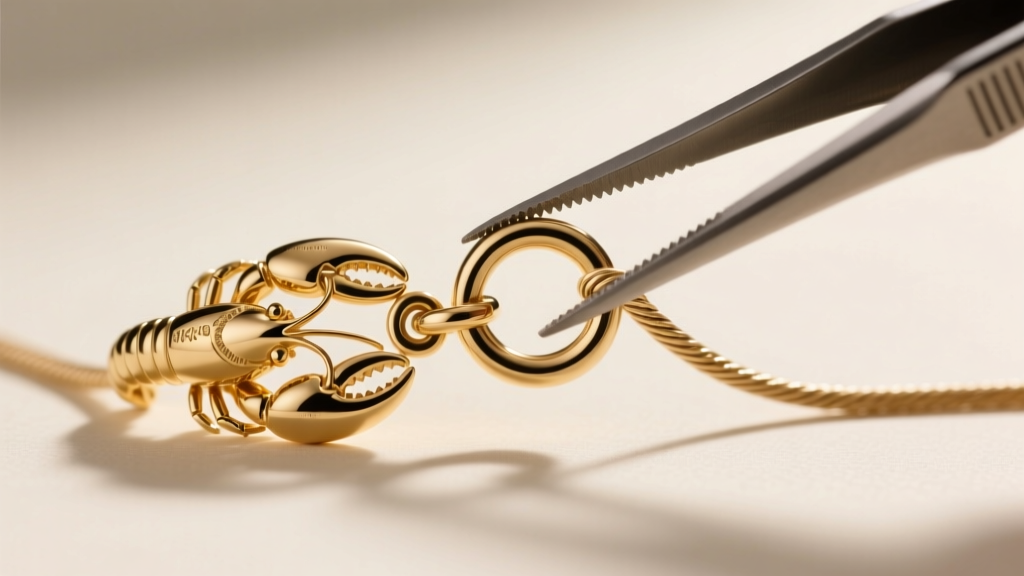
If your jump ring is constantly pulling apart, it is likely a standard split ring that has been stretched. According to Jewelers of America, the structural integrity of a necklace relies heavily on the gauge of the jump ring relative to the weight of the pendant. For a medium-weight rose quartz pendant, the connecting jump ring should be a minimum of 20-gauge wire thickness with a 4mm outer diameter. If your current jump ring is thinner (e.g., 22-gauge or 24-gauge), it will easily deform when snagged on clothing.
Pro-Tip: Upgrade your standard split jump ring to a soldered jump ring or a heavy-duty oval split ring. Soldered rings have no gap, completely eliminating the risk of the chain slipping through or the ring pulling open under tension.
If your lobster clasp lever feels loose or fails to snap back into the closed position, the internal tension spring has likely failed or become clogged. Do not attempt to pry the clasp open with a needle, as this will permanently bend the internal mechanism. Instead, use a can of compressed air to blow out microscopic lint from the clasp hinge, followed by a tiny drop of lightweight synthetic oil applied with a toothpick. If the mechanism remains sluggish, the clasp must be replaced by a professional jeweler.
Long-Term Storage and Preventative Maintenance
Troubleshooting is only half the battle; preventative care ensures your Elisa gold pendant necklace in rose quartz remains pristine for decades. Rose quartz is sensitive to prolonged exposure to direct, intense ultraviolet light, which can cause the pink color to fade or turn grayish over time. Always store your necklace in a dark, climate-controlled environment.
Furthermore, never store your gold and rose quartz necklace in a communal jewelry box where it can rub against harder gemstones like diamonds, sapphires, or topaz (Mohs 8-10), which will easily scratch the quartz surface. Utilize an individual anti-tarnish flannel pouch or a dedicated compartment lined with untreated felt. If you live in a high-humidity environment, place a small silica gel packet inside your jewelry box to control ambient moisture, which accelerates the oxidation of any alloy metals present in 14k or 18k gold. By implementing these targeted troubleshooting and maintenance protocols, you can preserve the structural integrity and aesthetic brilliance of your necklace for years to come.


