What Is a Pearl Necklace Dirty Film and How to Restore It
Learn what is a pearl necklace dirty film caused by, from body oils to cosmetics. Discover expert troubleshooting steps to safely restore your pearls' luster.

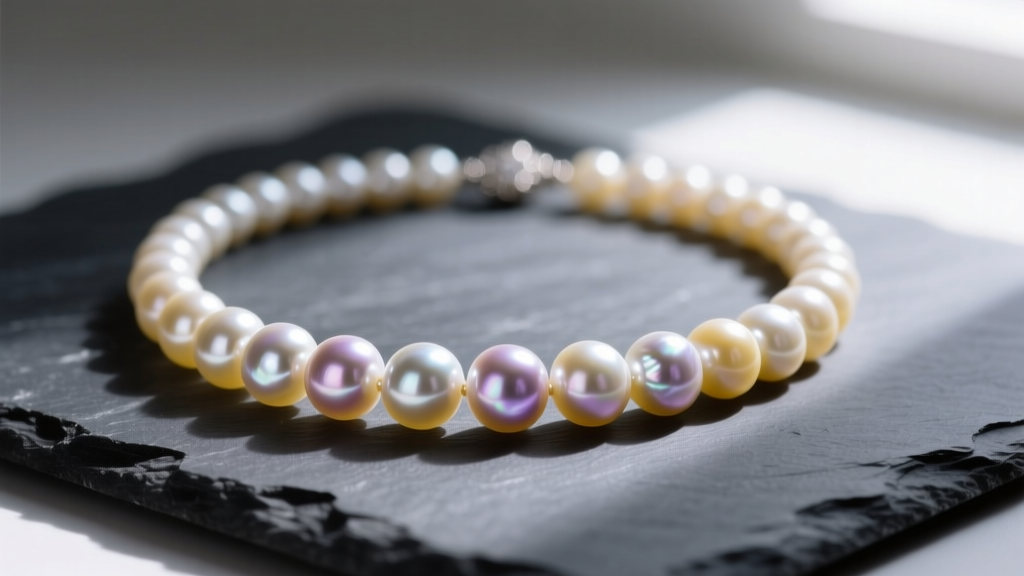
Pearls are unique among gemstones. Unlike diamonds or sapphires that are mined from the earth and cut to reveal their brilliance, pearls are organic creations born from living mollusks. This biological origin gives them their signature orient and luster, but it also makes them exceptionally vulnerable to environmental contaminants. When owners notice their once-radiant strands looking cloudy, matte, or yellowed, a common troubleshooting question arises. In fact, many people search the exact phrase 'what is a pearl necklace dirty' when they notice their gems losing their characteristic glow. The 'dirty film' that accumulates on pearls is not just surface dust; it is a complex chemical interaction between the pearl's organic matrix and everyday substances.
In this comprehensive troubleshooting guide, we will break down the exact composition of this film, explain why standard cleaning methods can permanently destroy your jewelry, and provide a professional, step-by-step protocol to safely restore your pearls' original luster.
The Anatomy of Pearl Nacre and Why It Attracts Grime
To understand how to clean a pearl, you must first understand its microscopic structure. Nacre, the material that forms a pearl, is a composite of aragonite (a crystalline form of calcium carbonate) and conchiolin (an organic protein that acts as a glue). This brick-and-mortar structure is what creates the optical phenomenon known as luster, as light refracts through the overlapping aragonite platelets.
However, this structure has inherent vulnerabilities:
- Low Hardness: Pearls rank between 2.5 and 3.0 on the Mohs scale of mineral hardness. For context, a copper penny is about a 3.5. This means the nacre can be easily scratched by dust or improper polishing cloths.
- High Porosity: The conchiolin matrix is highly porous. It acts like a microscopic sponge, readily absorbing oils, acids, and chemicals from the environment.
- Acid Sensitivity: Calcium carbonate is highly reactive to acids. It begins to dissolve at any pH level below 7.0.
According to the Gemological Institute of America (GIA), the organic nature of pearls means they require a completely different maintenance protocol than faceted gemstones. The dirty film you see is often the result of the conchiolin absorbing substances that alter its light-reflecting properties.
Diagnosing the Grime: What Is the Film Made Of?
When troubleshooting your jewelry, you must identify the exact contaminants causing the dullness. The 'dirty film' is rarely just one substance; it is usually a compounded layer of the following elements:
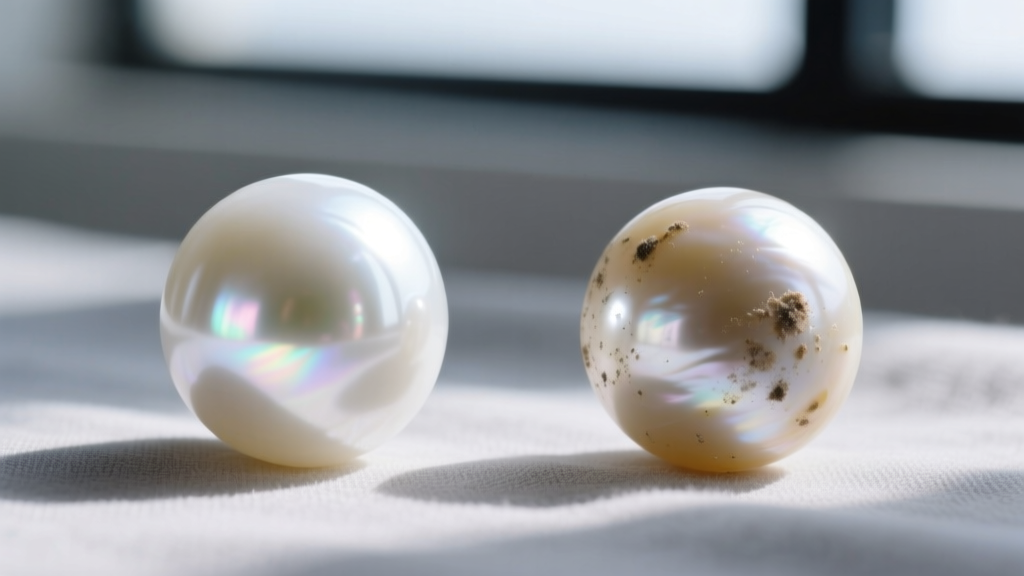
1. Sebum and Dead Skin Cells
Human skin naturally produces sebum (oil) to maintain hydration. The pH of human sweat ranges from 4.5 to 7.0, making it slightly acidic. When a pearl necklace rests against the décolletage, the porous nacre absorbs this acidic oil. Over time, the sebum oxidizes, turning yellowish and creating a matte, waxy barrier that blocks light from entering the aragonite layers.
2. Cosmetic and Fragrance Residue
Hairsprays, foundations, and lotions contain silicones, polymers, and emulsifiers. When these aerosolize and settle on a pearl, they form a microscopic plastic-like shell. Perfumes are particularly destructive; the high alcohol content dehydrates the conchiolin, causing the nacre to become brittle and crack, while the essential oils leave a sticky residue that traps airborne dust.
3. Environmental Pollutants
Sulfur compounds in the air, chlorine from tap water, and household cleaning agents can chemically react with the calcium carbonate, leading to irreversible etching that looks like a permanent white, chalky film.
The Danger Zone: Cleaning Methods That Destroy Nacre
The most critical step in troubleshooting pearl maintenance is knowing what not to do. Many well-intentioned owners ruin their heirloom pieces by applying cleaning methods meant for harder gems. Avoid these catastrophic mistakes:
- Ultrasonic Cleaners: The high-frequency cavitation bubbles generated by ultrasonic machines will literally vibrate the nacre off the pearl's nucleus, leaving you with a dull, pitted bead.
- Steam Cleaners: Sudden thermal shock can cause the organic conchiolin layers to expand and contract rapidly, resulting in deep, irreparable structural cracks.
- Ammonia and Bleach: These highly alkaline and caustic chemicals will dissolve the calcium carbonate and destroy the pearl's surface entirely.
- Commercial Silver Dips: Jewelry dips designed to remove tarnish from silver chains are highly acidic and will etch pearls on contact.
Step-by-Step Troubleshooting Guide to Restoring Luster
If your pearls have accumulated a film of sebum and cosmetics, you can safely remove it using a gentle, non-invasive approach. Follow this professional protocol recommended by the Jewelers of America.
Step 1: The Dry Microfiber Wipe
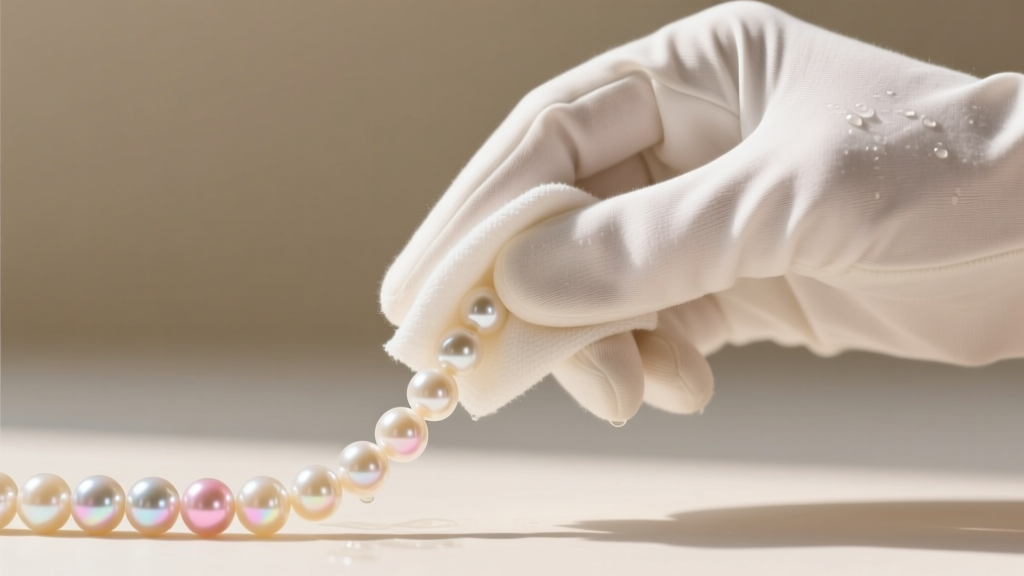
Before introducing any moisture, gently wipe each pearl individually with a clean, dry, lint-free microfiber cloth. This removes loose, abrasive dust particles (like silica) that could scratch the nacre during the wet washing phase. Never use paper towels or tissues, as wood pulp fibers can cause micro-scratches.
Step 2: The Mild Surfactant Wash
Mix a few drops of pH-neutral liquid Castile soap or a dedicated, pearl-safe jewelry cleaner into a bowl of distilled water. Do not use tap water, as the chlorine and fluoride can react with the nacre. Dip a soft, untreated cotton cloth into the solution, wring it out until it is only slightly damp, and gently wipe each pearl one by one.
Step 3: Targeted Grime Removal
For stubborn cosmetic buildup near the drill holes, use a soft, clean makeup brush (like a goat-hair blending brush) dipped in the soapy solution to gently agitate the grime. Never use a toothbrush, even a 'soft' one, as the bristles are still too stiff and will scratch the surface.
Step 4: The Rinse and Dry
Wipe the pearls with a cloth dampened only with pure distilled water to remove any soap residue. Lay the necklace completely flat on a dry, absorbent towel. Never hang a wet pearl necklace. The water will weaken the silk thread, and the weight of the wet pearls will cause the silk to stretch permanently, leading to unsightly gaps between the beads.
Preventative Maintenance and Storage Protocols
Troubleshooting is only half the battle; preventing the dirty film from forming in the first place is the hallmark of expert jewelry care.
- The 'Last On, First Off' Rule: Pearls should be the very last thing you put on after applying makeup, perfume, and hairspray, and the very first thing you take off when you return home.
- Proper Storage: Store pearls in a soft cotton pouch or a lined jewelry box. Never store them in sealed plastic bags (like PVC or Ziploc). Plastic emits trace chemicals over time and traps moisture, which can cause the conchiolin to degrade and the pearls to turn brown.
- Hydration: Pearls need a slight amount of ambient moisture to prevent cracking. Wearing them regularly allows them to absorb the natural, safe humidity from the air and your skin.
- Professional Restringing: If you wear your pearl necklace frequently, have it professionally restrung on Grade A silk thread with French wire (gimp) protection at the clasp every 1 to 2 years. The silk absorbs sweat and rots from the inside out, often snapping without warning.
Quick Reference: Pearl Contaminants and Solutions
Use the table below to quickly diagnose and treat specific types of pearl contamination.
| Contaminant Type | Visual Symptoms | Safe Removal Method | Prevention Strategy |
|---|---|---|---|
| Sebum & Sweat | Yellowish tint, loss of orient, waxy feel | Damp microfiber with distilled water | Wipe immediately after wearing |
| Hairspray / Polymers | Sticky, uneven dull patches, dust accumulation | pH-neutral Castile soap solution | Apply aerosols before putting on pearls |
| Perfume Alcohol | Chalky white spots, micro-cracking, dehydration | Irreversible (requires professional polishing) | Spray perfume on pulse points, not neck |
| Hard Water / Chlorine | Etched surface, cloudy white haze | Irreversible chemical damage | Never swim or shower wearing pearls |
By understanding the delicate biological composition of your pearls and adhering to these strict troubleshooting and cleaning protocols, you can ensure that your necklace retains its breathtaking luster for generations. Remember that when it comes to organic gemstones, gentle consistency always triumphs over harsh, aggressive cleaning methods.


