Bible Scripture Necklace Troubleshooting: Fix Fading & Breakage
Is your bible scripture necklace fading or breaking? Discover expert troubleshooting tips to restore engravings, fix chains, and prevent tarnish.

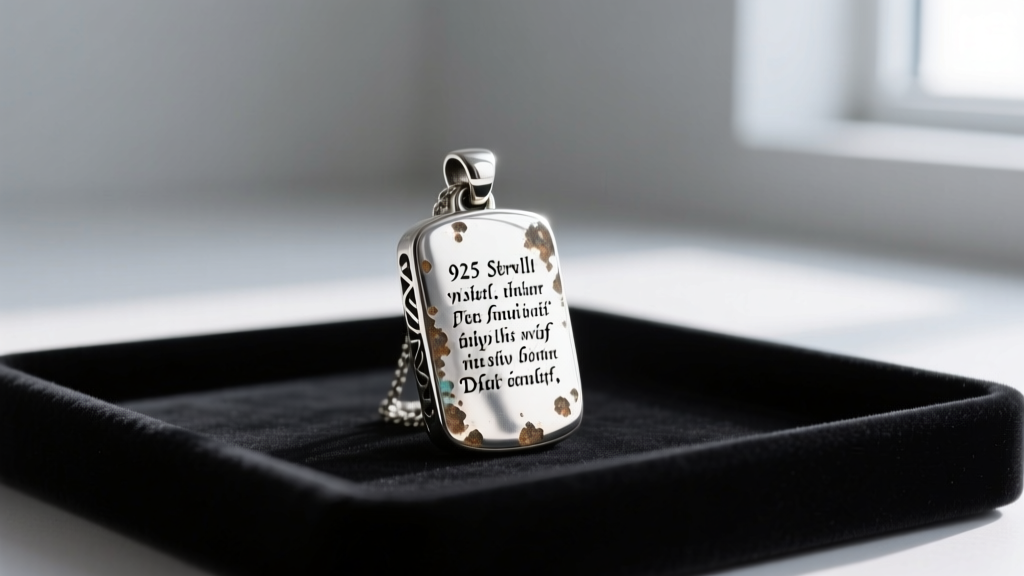
A bible scripture necklace is far more than a simple fashion accessory; it is a deeply personal anchor, a daily reminder of faith, and often a cherished gift marking a significant spiritual milestone. However, because these pieces are typically worn close to the skin every single day, they are subjected to relentless environmental and mechanical stress. From the friction of clothing to the corrosive nature of human sweat, the physical degradation of a scripture pendant can be heartbreaking. When the sacred text becomes illegible or the chain snaps unexpectedly, it requires immediate, specialized intervention.
In this comprehensive troubleshooting guide, we move beyond generic jewelry care advice. We will diagnose the specific failure modes of scripture necklaces—ranging from shallow laser engraving wear to jump ring fatigue—and provide actionable, metallurgically sound solutions to restore and protect your piece for decades to come.
The #1 Problem: Illegible or Fading Scripture Engravings
The most common complaint among owners of scripture necklaces is the gradual fading of the engraved text. This is rarely a defect in the metal itself, but rather a failure of the engraving technique used during manufacturing.
Understanding Engraving Depths and Failure Modes
Mass-produced scripture pendants often utilize surface-level laser annealing or shallow laser marking. This process merely oxidizes the top 0.01mm of the metal to create contrast. Within six to twelve months of daily wear, friction from shirts and skin oils will polish this microscopic layer away, leaving the verse completely invisible.
Conversely, high-quality scripture necklaces employ deep rotary engraving or mechanical stamping, which cuts into the metal to a depth of 0.15mm to 0.30mm. If your text is fading, the first troubleshooting step is to run your fingernail lightly over the letters. If you cannot feel a distinct physical groove, the engraving is purely superficial and has been worn away.
How to Restore Faded Scripture Text
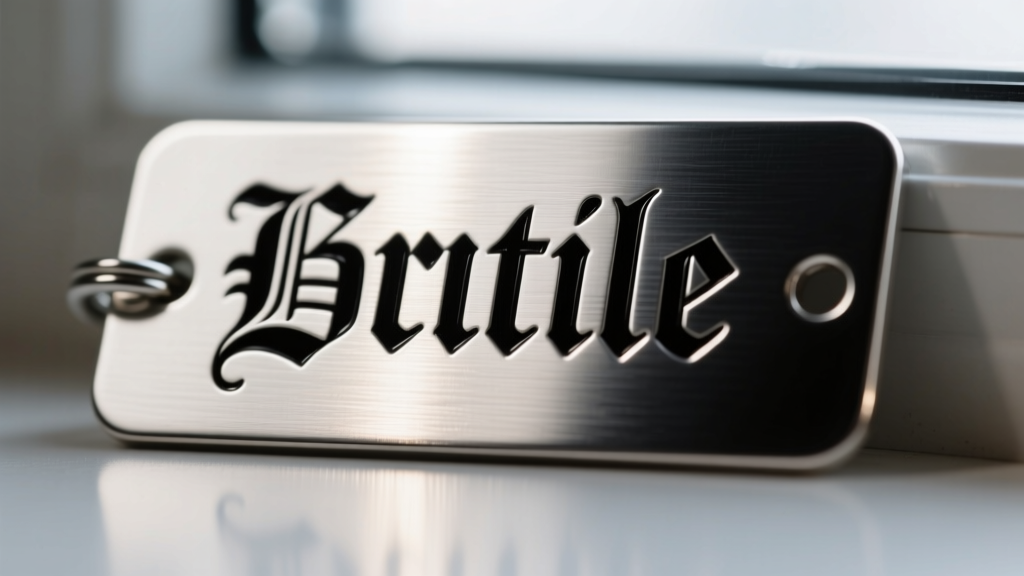
If your necklace features deep grooves but the text has lost its contrast (appearing shiny and blending into the background metal), you can restore the legibility at home using a technique called antiquing or enameling.
- For 925 Sterling Silver: Use a diluted Liver of Sulfur (potassium sulfide) solution. Apply it carefully with a fine-tipped brush directly into the letter grooves. The chemical will rapidly oxidize the silver inside the cuts, turning it black. Once dry, gently polish the flat surface of the pendant with a microfiber cloth, leaving the dark oxidation trapped inside the scripture text.
- For 316L Stainless Steel or Gold: Liver of sulfur will not react with stainless steel or gold. Instead, purchase a bottle of black jeweler's enamel paint or a specialized metal infill pen. Carefully trace the letters, allow the enamel to cure for 24 hours, and then wipe away the excess from the surface using a cloth lightly dampened with isopropyl alcohol.
Chain Breakage and Clasp Failures: A Structural Analysis
Scripture pendants, particularly those shaped as rectangular bars or heavy crosses, possess a high center of gravity. When paired with an inadequate chain, the continuous pendulum effect creates severe metal fatigue at the weakest link: the jump ring connecting the clasp to the chain, or the bail loop on the pendant itself.
The Pendant-to-Chain Weight Ratio
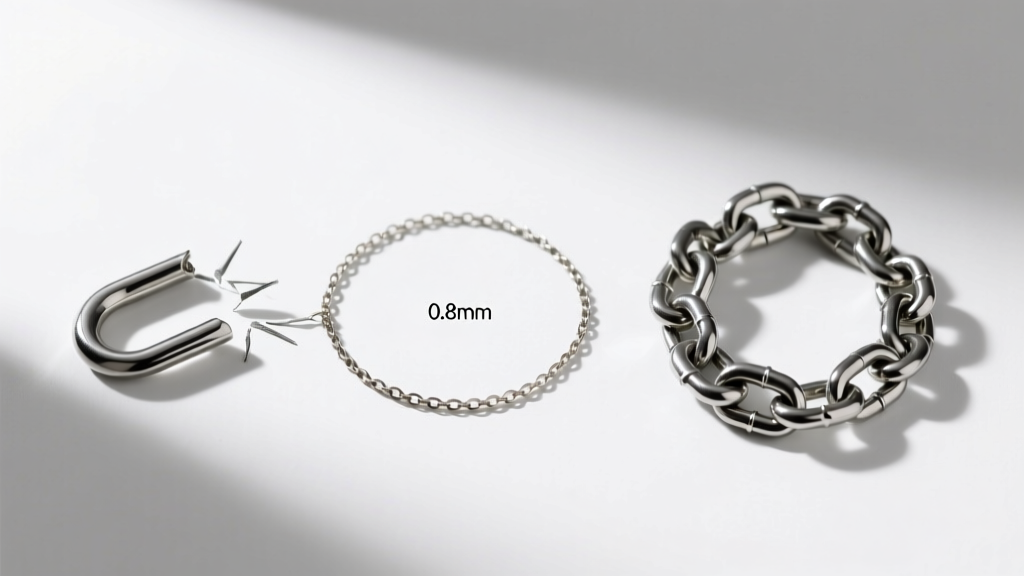
A fundamental rule in jewelry mechanics is that the chain's tensile strength must comfortably exceed the dynamic weight of the pendant. A heavy 12-gram scripture bar will easily snap a standard 0.8mm (20-gauge) cable chain within weeks of active wear.
| Chain Style | Recommended Gauge (Thickness) | Max Pendant Weight Capacity | Breakage Risk Level |
|---|---|---|---|
| Standard Cable | 1.2mm (18 Gauge) | Up to 8 grams | Medium |
| Curb Chain | 1.5mm (16 Gauge) | Up to 15 grams | Low |
| Box Chain | 1.2mm (18 Gauge) | Up to 10 grams | Low |
| Rope Chain | 1.5mm (16 Gauge) | Up to 20 grams | Very Low |
Troubleshooting a Snapped Chain or Faulty Clasp
If your chain breaks at the jump ring (the small circular ring holding the clasp), the issue is usually a failure to properly close the ring during manufacturing. Jump rings must be closed using two pairs of flat-nose pliers, twisting the ends laterally past each other to create tension, rather than simply pushing them together. If your lobster clasp feels stiff or fails to snap shut, a drop of microscopic synthetic watch oil on the internal spring mechanism will usually resolve the issue. Never use WD-40, as it attracts abrasive dust that will permanently jam the clasp.
Tarnish, Corrosion, and the Ultrasonic Cleaner Danger
According to the Gemological Institute of America (GIA), sterling silver tarnishes when the copper alloyed within the 925 mixture reacts with sulfur compounds in the air and human sweat, forming silver sulfide. Because scripture necklaces rest against the chest—an area prone to perspiration—tarnish buildup is inevitable for raw silver pieces.
The Ultrasonic Cleaning Mistake
Many well-meaning owners attempt to clean their tarnished bible scripture necklaces using ultrasonic jewelry cleaners. This is a critical error for engraved pieces. The high-frequency cavitation bubbles generated by ultrasonic machines are highly effective at stripping away dirt, but they will also violently strip away the black enamel, oxidation, or paint filling your scripture engravings, leaving you with a clean but entirely illegible pendant.
Expert Insight: Always clean engraved scripture pendants using a mild, phosphate-free dish soap and a soft baby toothbrush. Avoid silver dip solutions, as they contain harsh thiourea chemicals that can cause micro-pitting on the metal surface over time, further degrading shallow engravings.
Material Selection for High-Acidity Skin
If you find that your sterling silver scripture necklace turns black within days of wearing it, your skin likely has a naturally low (acidic) pH, or you are using skincare products containing sulfur or alpha-hydroxy acids. In this scenario, troubleshooting requires a material swap. Upgrading to a 316L Surgical Stainless Steel scripture necklace is the ultimate solution. 316L steel contains molybdenum, which provides exceptional resistance to chloride corrosion from sweat, ensuring the metal remains bright and the text legible without requiring weekly polishing.
Preventative Care Framework for Daily Wear
To ensure your bible scripture necklace survives decades of daily wear, adopt the following preventative maintenance framework recommended by the Jewelers of America:
- The 'Last On, First Off' Rule: Your necklace should be the last item you put on after applying perfumes, lotions, and hairsprays, and the first item you remove before showering or swimming. Chlorine in pools is particularly aggressive and can cause stress-corrosion cracking in silver and gold alloys.
- Nighttime Removal: Sleeping in a chain necklace subjects the links to hours of twisting and crushing against the mattress, accelerating metal fatigue and causing kinks in delicate box or rope chains.
- Proper Storage: Store the necklace hanging vertically or laid perfectly flat in an anti-tarnish cloth pouch. Tossing it into a jewelry box where the pendant can scratch against other metals will degrade the surface polish and obscure the scripture text.
When to Seek Professional Jewelry Repair
While polishing, enamel restoration, and jump ring adjustments can be handled at home, certain failures require a professional bench jeweler. If a 316L stainless steel chain snaps in the middle of a link, traditional silver or gold soldering torches will not work; stainless steel requires specialized laser welding to fuse the metal without leaving a brittle, discolored scar. Similarly, if the bail (the loop connecting the pendant to the chain) has worn completely through due to friction, a jeweler can solder a new, heavier sterling silver or gold-filled bail to the pendant, ensuring your cherished scripture remains secure for years to come.


