Troubleshooting a Fading Black and White Shell Necklace
Is your black and white shell necklace fading or cracking? Learn expert troubleshooting tips to clean, restring, and restore genuine shell jewelry.

The Material Science of Black and White Shell Jewelry
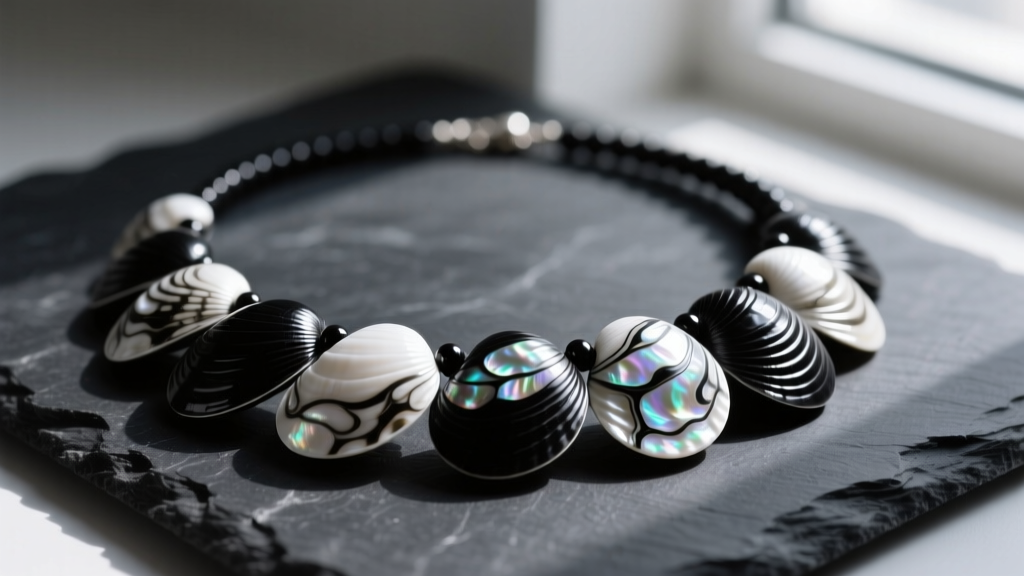
A striking black and white shell necklace is a staple of organic jewelry design, offering a bold, high-contrast aesthetic that synthetic materials simply cannot replicate. Whether your piece features naturally banded Cypraea tigris (tiger cowrie), carved Pinctada margaritifera (black-lipped oyster), or a geometric inlay of white Mother of Pearl (MOP) and black onyx, shell is fundamentally a biomineral composite. It consists of microscopic aragonite (calcium carbonate) platelets bound together by conchiolin, an organic protein.
Because of this unique biological makeup, shell sits at a mere 2.5 to 4.5 on the Mohs hardness scale. This makes it highly susceptible to environmental degradation, acidic corrosion, and mechanical stress. When a black and white shell necklace begins to lose its luster, chalk, or crack, it is rarely a random occurrence. It is a predictable chemical or structural failure. According to the Gemological Institute of America (GIA), organic gems require highly specific care protocols that differ vastly from crystalline stones like quartz or sapphire. Below, we break down the exact failure modes of shell necklaces and provide actionable, professional-grade troubleshooting solutions.
Diagnostic Troubleshooting: Identifying the Failure Mode
Before applying any cleaning or repair method, you must accurately diagnose the specific degradation your necklace is experiencing. Misdiagnosing a structural flaw as a surface stain can lead to catastrophic bead failure.
Problem 1: Surface Chalking and Loss of Luster
The Symptom: The bright white or deep black nacreous layers appear dull, powdery, or opaque, lacking their original mirror-like reflection.
The Root Cause: Calcium carbonate is highly reactive to acids. Human sweat has a pH ranging from 4.5 to 7.0, and prolonged skin contact allows lactic and uric acids to microscopically etch the aragonite platelets. Furthermore, exposure to chlorinated pool water or acidic cosmetics dissolves the surface conchiolin, leaving behind a chalky calcium residue.
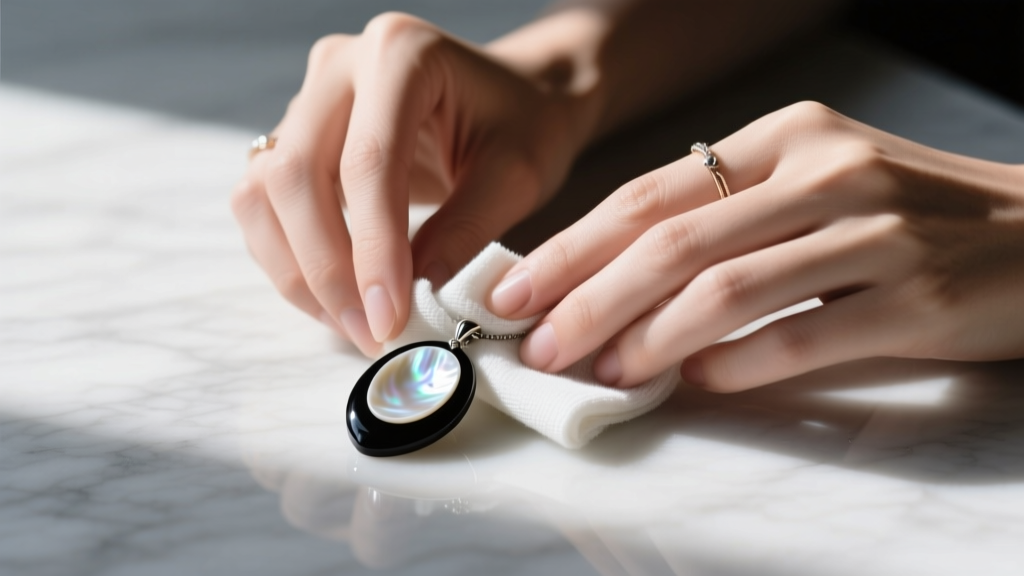
The Fix: Never use ultrasonic cleaners or commercial jewelry dips. Instead, use a slightly damp, lint-free microfiber cloth to gently buff the surface. For severe chalking, apply a single drop of pharmaceutical-grade mineral oil to the cloth and buff in small circles. The oil temporarily fills the microscopic etch pits, restoring optical clarity and luster without altering the shell's chemistry. Avoid organic oils like olive or jojoba, which can oxidize and turn rancid over time, trapping yellow pigments in the shell's porous edges.
Problem 2: Micro-Fractures Around the Drill Holes
The Symptom: Hairline cracks radiating from the center hole of the shell beads, often accompanied by a 'clicking' sound when the necklace moves.
The Root Cause: This is a mechanical failure caused by improper stringing materials. If your black and white shell necklace was strung on rigid beading wire (like stainless steel or memory wire) without adequate buffering, the metal wire acts as a saw against the soft interior of the drill hole. Over time, the friction and tension slice through the shell from the inside out.
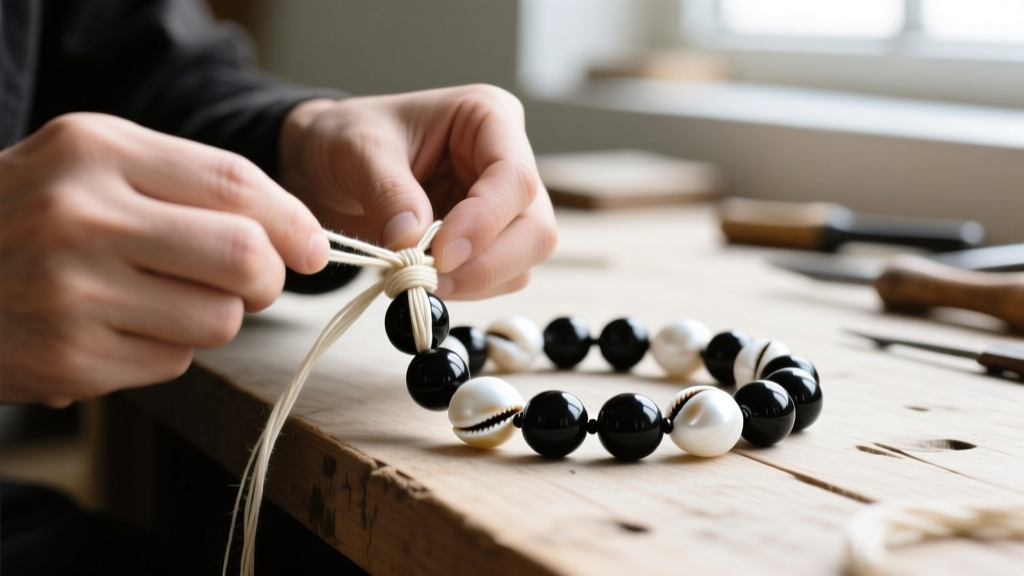
The Fix: Immediate restringing is mandatory to prevent bead loss. Transition from wire to a flexible, knotted cord. According to Fire Mountain Gems jewelry-making resources, Size FF nylon thread or Griffin Size 2 (100% silk) are the industry standards for shell beads with 1mm to 1.5mm drill holes. Silk provides a soft, compressible buffer that absorbs kinetic shock and prevents the beads from grinding against one another.
Problem 3: Hardware Tarnish Staining the Shell
The Symptom: Dark, muddy smudges appear on the white shell beads adjacent to the metal clasp or spacer beads.
The Root Cause: If your necklace utilizes sterling silver (925) hardware, the silver reacts with sulfur in the air to form silver sulfide (tarnish). Because the edges of carved shell beads are highly porous, this black oxidation rubs off the metal and permanently stains the white nacre.
The Fix: To remove existing stains, create a mild paste of baking soda and distilled water. Using a soft-bristled baby toothbrush, gently work the paste into the stained pores. Rinse immediately with distilled water (never tap water, which contains chlorine and fluoride). To prevent recurrence, upgrade your hardware to 14k gold, platinum, or titanium, or install small silicone or Teflon spacer washers between the silver clasp and the shell beads to create a physical barrier.
The Shell Restoration Matrix: What to Use and What to Avoid
When troubleshooting a fading black and white shell necklace, using the wrong chemical agent can strip the nacre entirely. Refer to this decision matrix before applying any substance to your jewelry.
| Cleaning Agent | Chemical Composition | Effect on Shell Nacre | Verdict |
|---|---|---|---|
| Ultrasonic Cleaners | High-frequency cavitation | Shatters aragonite layers; causes delamination | AVOID |
| Commercial Silver Dip | Thiourea / Sulfuric acid | Dissolves calcium carbonate instantly | AVOID |
| Isopropyl Alcohol | C2H6O | Dehydrates conchiolin; causes dyed shells to bleed | AVOID |
| Distilled Water | H2O (Neutral pH 7) | Safe for surface rinsing; removes acidic sweat | SAFE |
| Mineral Oil | Alkane hydrocarbons | Fills micro-etches; restores optical luster safely | RECOMMENDED |
| Mild Castile Soap | Potassium oleate | Safe for heavy grime removal when highly diluted | SAFE |
Troubleshooting Dyed vs. Genuine Black Shell
Not all black and white shell necklaces are created equal. While white nacre is abundant, deep, uniform black shell is rarer and often subject to artificial enhancement. Some manufacturers dye porous white freshwater shells to mimic the expensive black-lipped oyster. If your necklace is suddenly 'bleeding' black dye onto your skin or clothing, you are dealing with a surface-dyed bead.
The Acetone Test: To confirm if your black shell is natural or dyed, dip a cotton swab in a tiny amount of pure acetone (nail polish remover). Rub it discreetly on the edge of a black bead near the drill hole. If the swab turns black, the shell is dyed. Note: Acetone will damage the shell's finish, so only perform this test if you are willing to sacrifice a single bead for authentication.
Stabilizing Dyed Shells: If your necklace is dyed and fading, you cannot restore the original color with polish. Instead, you must seal it. Jewelers use a micro-crystalline wax (like Renaissance Wax) to seal the pores of dyed organic gems. Apply a thin coat with a soft brush, let it cure for 10 minutes, and buff gently. This locks the remaining dye in place and provides a barrier against skin oils.
Advanced Restringing: The French Wire Technique
If your troubleshooting reveals that the stringing material is failing, simply re-threading the beads is insufficient. The area where the shell meets the metal clasp experiences the highest degree of friction and bending stress. According to the American Gem Society (AGS), proper finishing techniques are critical for the longevity of organic gem strands.
To solve clasp abrasion, utilize French wire (gimp). This is a microscopic, hollow coil of fine silver or gold wire. You thread the silk or nylon cord through the inside of the French wire coil before attaching it to the clasp ring. The metal coil acts as a flexible, protective sleeve, ensuring the shell bead never touches the hard metal clasp, and preventing the cord from fraying and snapping at the connection point.
'The lifespan of a shell necklace is determined not by the beads themselves, but by the engineering of the stringing. A properly knotted silk strand with French wire protection will outlast a wire-strung shell necklace by decades.' — Master Bench Jeweler
Preventative Maintenance for Long-Term Preservation
Once you have cleaned, stabilized, and restrung your black and white shell necklace, implementing a strict storage protocol will prevent future troubleshooting sessions.
- The 'Last On, First Off' Rule: Always put your shell necklace on after applying perfumes, hairsprays, and lotions, and take it off first when undressing to avoid snagging and chemical exposure.
- Hydration Control: Shell requires a minimal amount of ambient humidity to prevent the conchiolin from drying out and cracking. Store the necklace in a breathable cotton pouch, not an airtight plastic bag or a safety deposit box with desiccant packets.
- Thermal Shock Prevention: Never wear shell jewelry in hot tubs or saunas. Rapid temperature fluctuations cause the aragonite and conchiolin to expand and contract at different rates, leading to internal delamination.
By understanding the biological and chemical realities of your black and white shell necklace, you can move beyond guesswork and apply precise, effective solutions to keep your organic jewelry vibrant and structurally sound for a lifetime.


