Restore and Fix Your Fading Gold Plated Name Necklace
Is your custom jewelry losing its shine? Learn expert troubleshooting steps to clean, restore, and protect your fading gold plated name necklace.

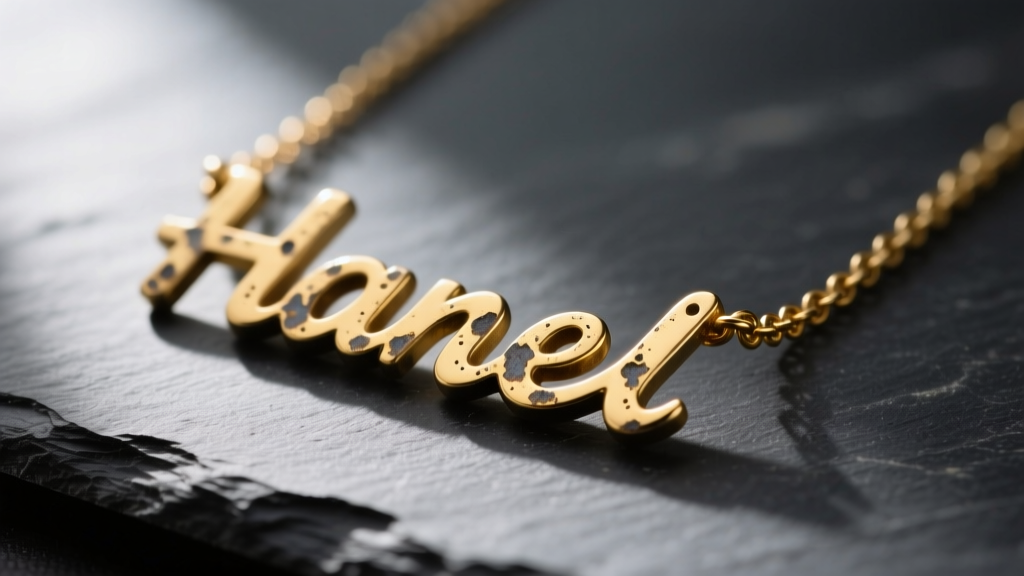
Custom nameplate jewelry holds immense sentimental value, often commemorating a loved one, a child, or a personal milestone. However, few things are more frustrating than watching your favorite piece lose its luster. A fading gold plated name necklace is a common heartbreak for jewelry lovers, but it is rarely a permanent death sentence for the piece. Understanding the metallurgy behind your jewelry is the first step toward effective restoration. As of 2026, while plating technologies have improved significantly, the fundamental chemistry of gold overlays remains susceptible to environmental wear, friction, and chemical reactions. This comprehensive troubleshooting guide will help you diagnose the exact cause of your necklace's deterioration and provide actionable, professional-grade solutions to bring it back to life.
The Anatomy of Plating Failure: Why Your Necklace is Fading
To effectively troubleshoot a tarnished or fading piece, you must first understand how it was manufactured. Gold plating is an electrolytic process where a microscopic layer of gold is bonded to a base metal. According to the Federal Trade Commission Jewelry Guides, the durability of this layer is measured in microns. 'Flash plating,' commonly found in fast-fashion jewelry, applies a mere 0.175 microns of gold—barely enough to cover the microscopic pores of the base metal. In contrast, Heavy Gold Electroplate (HGE) requires a minimum of 2.5 microns. When your gold plated name necklace begins to fade, you are witnessing the physical wearing away of this micron layer, exposing the reactive base metal beneath to oxygen, moisture, and the natural acids in your skin.
Identifying Your Base Metal
The base metal dictates both the failure mode and the restoration strategy. Most affordable nameplates are cast from brass (an alloy of copper and zinc) or stainless steel (316L). Premium pieces often use sterling silver (925) as the foundation. Brass is highly reactive; when the gold layer wears thin, the copper in the brass reacts with the sulfur and chloride in human sweat to form copper sulfide, resulting in aggressive black or green tarnish. Stainless steel is inert and will not turn your skin green, but its hardness makes it difficult for gold to adhere to long-term without a specialized nickel or palladium strike layer. Sterling silver is the ideal base metal, as it is hypoallergenic and bonds beautifully with gold, though it commands a higher initial price point.
Step-by-Step Troubleshooting Guide for Tarnish and Wear
Before you consider throwing away a dull or discolored piece, run through these specific diagnostic scenarios and their corresponding professional fixes.
Problem 1: The Dreaded Green Skin (Copper Oxidation)
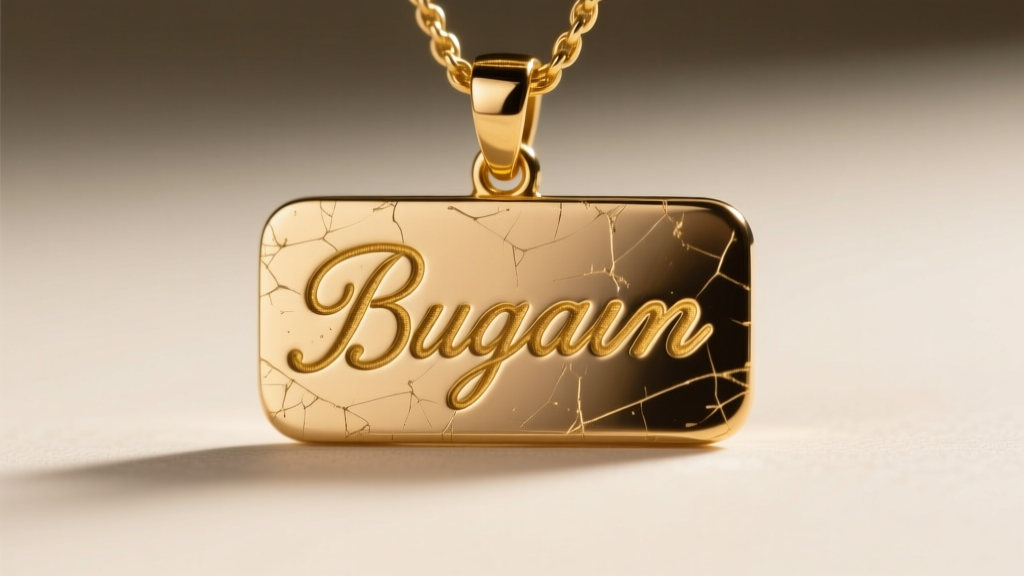
If the back of your nameplate or the chain is leaving a green or black mark on your chest, the gold barrier has been compromised, and the copper-rich base metal is oxidizing against your skin's pH. The Fix: For a temporary, at-home solution, clean the back of the pendant thoroughly with isopropyl alcohol and apply a thin coat of clear, hypoallergenic nail polish or a specialized jewelry shielding polymer like JewelerSkin. This creates a physical barrier between the reactive metal and your skin. For a permanent fix, the piece must be professionally polished and replated.
Problem 2: Cloudy Cursive Loops and Dull Lettering
Name necklaces feature intricate cursive loops and tight corners that act as traps for sebum (skin oils), dead keratin cells, and cosmetic lotions. This buildup creates a cloudy, matte film that mimics fading. The Fix: Create a lukewarm bath of distilled water and a few drops of mild, phosphate-free dish surfactant (like Dawn). Submerge the necklace for exactly three minutes. Using an extra-soft baby toothbrush, gently agitate the bristles inside the cursive loops. Crucial Warning: Never use ultrasonic jewelry cleaners on plated items. Ultrasonic waves create microscopic cavitation bubbles that implode with enough force to literally blast thin gold flash plating right off the base metal.
Problem 3: Chain Breakage at the Solder Points
Custom nameplates carry significant weight relative to the delicate cable or box chains they are strung on. The stress concentrates at the O-rings or jump rings connecting the plate to the chain, leading to metal fatigue and snapping. The Fix: Do not attempt to bend the metal back into place with standard pliers, as this will crack the gold plating. Take the piece to a local bench jeweler who can use a laser welder to fuse the jump ring shut without applying heat that could scorch the gold overlay.
When to Replate: Cost and Material Analysis
If your gold plated name necklace has worn down to the bare base metal, cleaning will not restore its color. Replating (or 'dip plating') is a viable option, but its economic viability depends on the underlying metal and the sentimental value of the piece. According to technical guidelines from master jewelry suppliers like Rio Grande, proper replating requires stripping the old layer, polishing the base, applying a barrier layer, and then electroplating the new gold.
| Base Metal | Avg. Replating Cost (2026) | Durability Post-Replate | Expert Recommendation |
|---|---|---|---|
| Sterling Silver (925) | $45 - $85 | High (2-5 years) | Highly recommended; excellent gold adhesion. |
| Brass / Copper Alloy | $35 - $60 | Low to Medium (6-18 months) | Only replate if the piece has high sentimental value. |
| Stainless Steel (316L) | $50 - $90 | Medium (1-2 years) | Difficult to plate; requires specialized cyanide-free baths. |
Preventative Maintenance: Extending the Lifespan
Once you have restored your necklace, implementing a strict maintenance protocol is essential to preserve the micron layer. The Gemological Institute of America (GIA) frequently notes that environmental factors are the primary accelerators of jewelry degradation.
- The 'Last On, First Off' Rule: Always put your name necklace on after applying perfumes, hairsprays, and lotions. The alcohols and volatile organic compounds (VOCs) in cosmetics can chemically degrade the alloy metals mixed into the gold plating.
- Friction Management: Avoid wearing your nameplate during high-impact activities or while wearing rough textiles like wool or sequins, which act like micro-sandpaper against the gold surface.
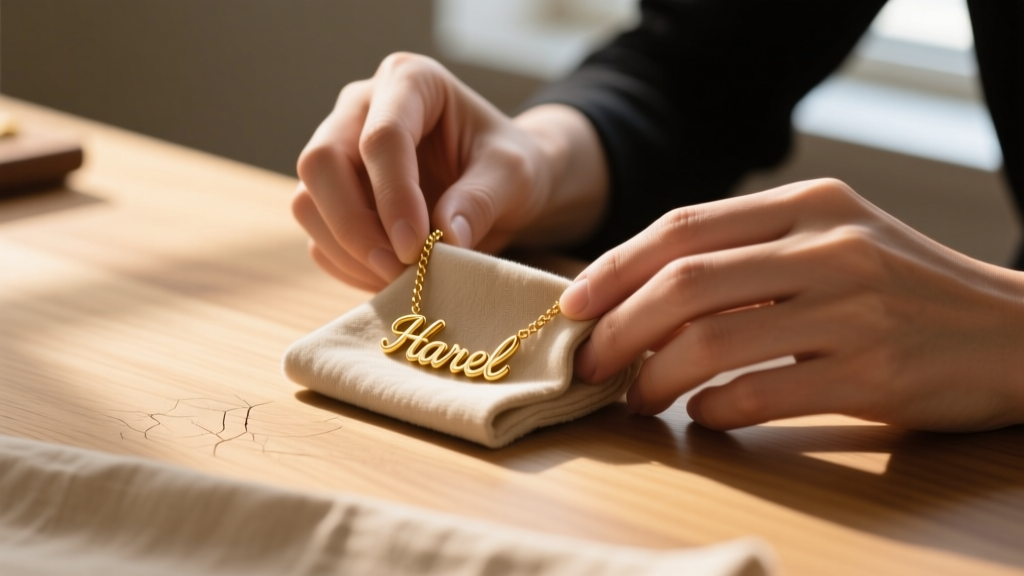
- Proper Storage: Do not toss the necklace into a communal jewelry box where it can tangle and scratch. Store it flat in an anti-tarnish cloth pouch infused with activated carbon to absorb ambient sulfur and moisture.
"The longevity of a gold plated name necklace isn't just about the thickness of the gold; it's about the integrity of the barrier layer beneath it. If a manufacturer skipped the palladium or rhodium strike layer to save pennies, the copper will migrate to the surface and tarnish the gold from the inside out, no matter how careful you are." — Master Bench Jeweler
Final Thoughts on Custom Jewelry Care
A fading gold plated name necklace is a solvable problem, not a lost cause. By accurately diagnosing whether you are dealing with surface sebum buildup, chemical copper oxidation, or physical micron wear, you can apply the correct restorative technique. Whether you opt for a gentle at-home surfactant cleaning, a protective polymer barrier, or a professional electroplating service, your custom nameplate can continue to tell your unique story for years to come. Treat your jewelry with the chemical respect it demands, and it will reward you with enduring brilliance.


