Troubleshooting Your Napoleon Necklace: Fit, Clasps & Care
Is your heavy Napoleon necklace constantly flipping or breaking its clasp? Learn expert troubleshooting for fit, weight distribution, and skin care.

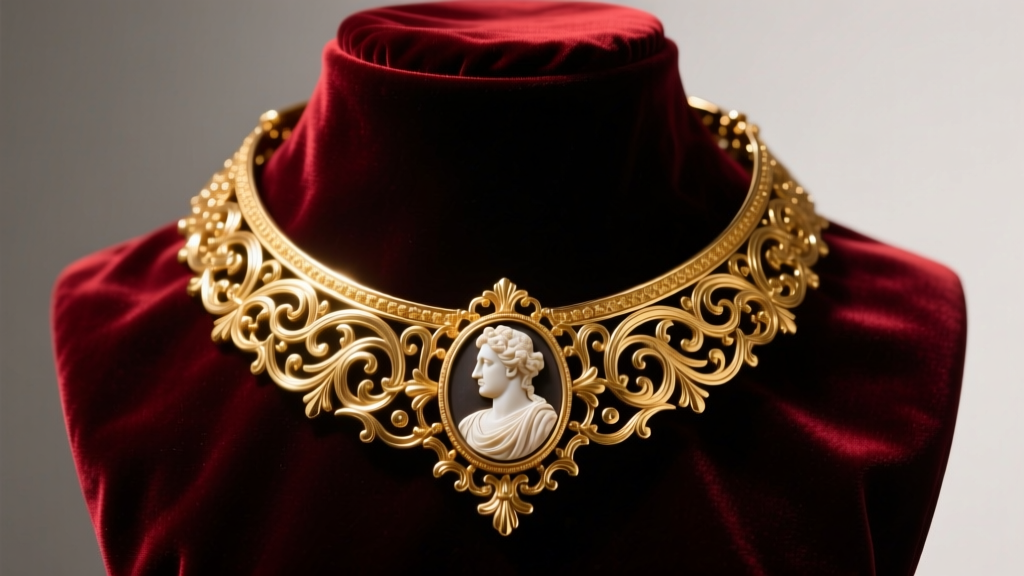
The Napoleon necklace—a striking, wide-collared statement piece inspired by the Neoclassical and Empire eras—remains a pinnacle of high-impact jewelry design. Whether it features a rigid metal bib, intricate multi-strand beadwork, or a heavy central cameo, this silhouette commands attention. However, the very architecture that makes the Napoleon necklace so visually commanding also makes it notoriously difficult to wear. The wide frontal profile and high center of gravity create a unique set of mechanical and ergonomic challenges.
As a jewelry specialist, I frequently see vintage and contemporary Empire-style collars relegated to jewelry boxes because they flip upside down, snap their clasps, or cause severe skin irritation. In this comprehensive troubleshooting guide, we will dismantle the physics of the Napoleon collar and provide actionable, bench-level solutions to restore your statement piece to wearable perfection.
The Anatomy of the Napoleon Necklace Problem
To troubleshoot effectively, we must first understand the structural imbalance inherent in this design. A traditional Napoleon necklace features a wide, ornate front section (the 'bib' or collar plate) that rests flush against the collarbone and lower throat. The back, however, is typically a much thinner chain or a simple strand of beads that wraps around the nape of the neck.
This creates a severe anterior weight bias. The front of the necklace can easily weigh between 40 and 80 grams, while the back chain and clasp assembly might weigh less than 5 grams. When you move, lean forward, or even just turn your head, gravity and kinetic energy pull the heavy front downward and outward, causing the lightweight back to slide upward. This results in the dreaded 'collar flip,' where the clasp migrates to the front of your throat and the necklace twists uncomfortably.
Issue 1: The Dreaded Collar Flip (and How to Counterweight It)
The most common complaint regarding any wide collar or Napoleon necklace is its tendency to migrate. You cannot simply tighten the chain to fix this; a tighter chain will only accelerate the flipping motion and cause a choking hazard. The solution lies in counterweighting.
Calculating the Counterweight Ratio
To anchor a heavy frontal bib, you must introduce mass at the exact center of the nape. The industry standard for stabilizing heavy collars is the 1:3 Counterweight Ratio. This means the weight at the back of the neck must be at least one-third the weight of the front-facing element.
- Front Bib Weight: 45 grams
- Required Nape Counterweight: Minimum 15 grams
- Hardware Required: A solid, lead-free brass or sterling silver counterweight charm, or a custom-cast metal slide.
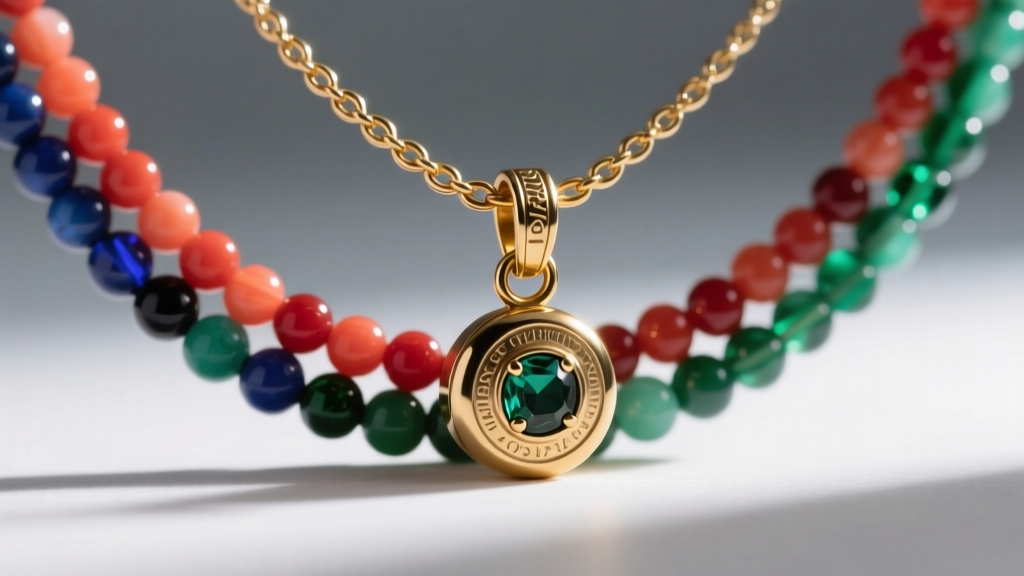
Crucial Installation Note: Never attach a heavy counterweight using a standard split ring or a thin, unsoldered jump ring. The shear force will warp the metal over time. You must use a 12-gauge or 14-gauge solid soldered jump ring (minimum 6mm inner diameter) to connect the counterweight to the back chain. This ensures the ring remains perfectly circular and will not pull apart under dynamic movement.
Issue 2: Clasp Failure Under Tension
Because the front of a Napoleon necklace is heavy, the clasp at the nape is subjected to continuous lateral shear force and sudden kinetic snaps when the wearer moves. Standard 12mm lobster clasps or spring-ring clasps are entirely inadequate for this application. The internal steel springs in these clasps fatigue rapidly under constant tension, leading to sudden unfastening and the loss of the jewelry.
Clasp Tension Ratings and Upgrades
Upgrading your clasp is not just a matter of convenience; it is a critical security measure. Below is a breakdown of clasp types and their suitability for heavy Empire-style collars.
| Clasp Type | Max Safe Tension | Best For | Primary Failure Mode |
|---|---|---|---|
| Standard Spring Ring (12mm) | ~150g | Lightweight pendants | Spring fatigue, gap opening |
| Lobster Claw (15mm) | ~300g | Medium chains | Lever snapping under shear |
| Multi-Strand Tube Clasp | ~1.5kg | Heavy Napoleon bibs | Rare (friction-lock failure) |
| Neodymium Magnetic Slide | ~2.0kg | Rigid metal collars | Magnet degradation over time |
For a multi-strand or heavy beaded Napoleon necklace, the multi-strand tube clasp is the gold standard. It distributes the tension across a wide surface area and utilizes a secure friction-lock or bayonet mechanism. If you are dealing with a solid metal rigid collar, a high-grade neodymium magnetic slide clasp encased in 316L surgical steel or 14k gold provides the easiest application while maintaining a massive holding force.

Issue 3: Skin Irritation and the 'Choke' Effect
Wide collars sit flush against the skin, trapping heat, sweat, and friction. This creates a micro-environment that accelerates galvanic corrosion in base metals and triggers contact dermatitis. Furthermore, the rigid nature of some Napoleon necklaces can cause a 'choke' effect when the neck naturally expands during swallowing or breathing.
Solving Contact Dermatitis
Many vintage Napoleon necklaces are crafted from gold-plated brass or nickel-silver alloys. When sweat (which is mildly acidic and high in salt) is trapped beneath a wide metal band, it breaks down the plating and exposes the nickel beneath. According to the Mayo Clinic, nickel is one of the most common triggers for allergic contact dermatitis, resulting in severe redness and blistering.
The Expert Fix: Do not rely on clear nail polish, which degrades within hours against skin oils. Instead, apply a nano-ceramic jewelry sealant like Eurotool ProtectaClear or a Parylene conformal coating to the interior skin-facing surface of the collar. Apply two thin coats, allowing 24 hours of cure time between layers. This creates an invisible, hypoallergenic barrier that is impervious to sweat and friction.
The 'Two-Finger + Swallow' Sizing Test
To prevent the choke effect, proper sizing is non-negotiable. When fitting a rigid or semi-rigid Napoleon collar, use the following framework:
- Fasten the necklace at its base setting.
- Slide two fingers flat against your skin, between the collar and the side of your neck.
- While keeping your fingers in place, swallow hard and tilt your head back 45 degrees.
- If the metal presses painfully into your thyroid cartilage or restricts the swallow, you must add a 1-inch (2.5cm) extender chain. The neck circumference can expand by up to 1.5cm during normal movement and swallowing.
Wardrobe Snagging: Protecting Delicate Fabrics
The Neoclassical motifs that define the Napoleon necklace—such as intricate filigree, prong-set cameos, and repoussé metalwork—are notorious for catching on silk, lace, and fine knits. A single snag can ruin a garment and bend delicate antique prongs.
Before wearing your collar with delicate textiles, perform the 'Silk Test.' Lay a piece of scrap silk or a fine microfiber cloth over your hand and gently drag the interior and edges of the necklace across it. If it catches, you have two options:
- Micro-Filing: Use a 600-grit sanding pad or a jeweler's polishing cloth to gently buff down any sharp burrs on the back of the metalwork.
- Renaissance Wax: Apply a micro-layer of Renaissance Wax to the back of the filigree elements. Buff it dry. This fills microscopic pores and creates a slick, frictionless surface that allows the metal to glide over delicate fabrics without catching.
Summary Checklist for Wearing Heavy Collars
To ensure your Napoleon necklace remains secure, comfortable, and pristine, run through this pre-wear checklist:
- Verify Counterweight: Ensure the nape weight is at least 33% of the frontal bib weight.
- Inspect the Clasp: Confirm you are using a tube, bayonet, or heavy-duty magnetic clasp, not a standard spring ring.
- Check the Coating: Reapply nano-ceramic sealant to the interior band every 6 to 12 months, depending on wear frequency.
- Perform the Swallow Test: Ensure adequate clearance for neck expansion to avoid the choke effect.
- Run the Silk Test: Buff and wax the reverse side of any ornate metalwork to prevent textile snags.
'A Napoleon collar is an exercise in architectural jewelry. When it fails, it is rarely a flaw in the aesthetic design, but rather a failure to respect the physics of weight distribution and human biomechanics. Fix the mechanics, and the beauty of the piece will finally shine as intended.' — Master Bench Jeweler
For more in-depth guides on maintaining antique and high-end statement jewelry, consult the Gemological Institute of America's (GIA) jewelry care resources. By addressing these structural vulnerabilities, you can transform your Napoleon necklace from a frustrating jewelry box resident into your most reliable and stunning statement piece.


