Anthony Joshua Necklace: Fixing Heavy Boxing Chain Links
Troubleshoot common issues with heavy boxing chains like the Anthony Joshua necklace. Learn to fix clasps, stretched links, and sweat tarnish.

The Physics of the Heavyweight Chain
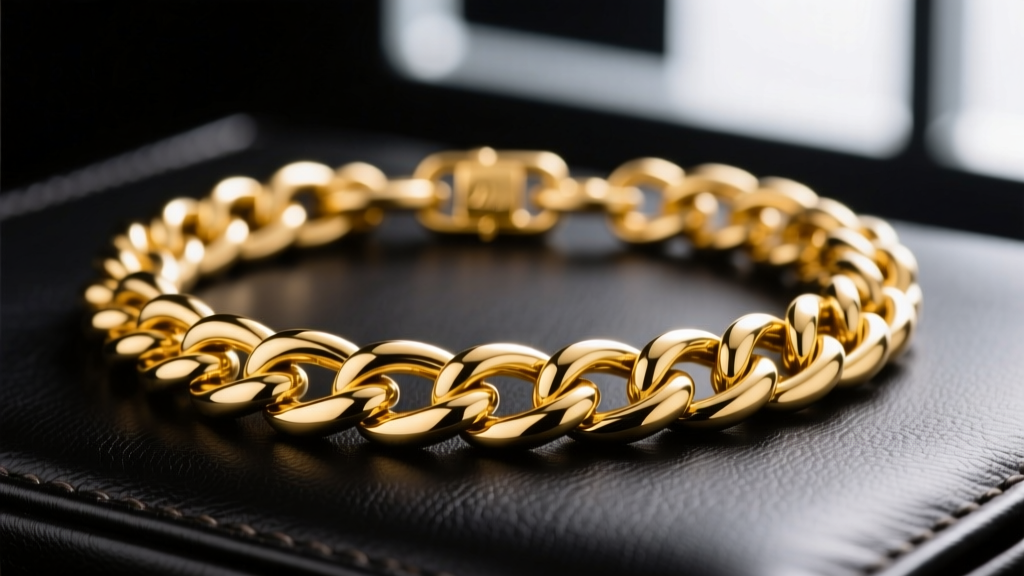
When fans and athletes seek out an Anthony Joshua necklace style, they are typically looking for massive, statement-making Cuban link or multi-strand rope chains. These heavyweight boxing chains are iconic, often measuring between 18mm and 30mm in width and weighing anywhere from 150 grams to over 400 grams. However, replicating this bold aesthetic introduces severe structural challenges that standard jewelry is simply not engineered to handle.
The primary issue with chains exceeding 100 grams is the sheer gravitational and kinetic stress placed on the weakest points of the assembly: the clasp, the jump rings, and the individual link solders. When a boxer moves, the chain swings, creating momentum that multiplies the static weight. A 250-gram chain can exert over 500 grams of dynamic force on the clasp during a sudden stop or snag. If your heavyweight chain is failing, stretching, or tarnishing rapidly, the problem lies in the mismatch between traditional jewelry manufacturing and the extreme physics of sports-grade statement pieces.
Troubleshooting Clasp Failure (The 200g Problem)
The most frequent point of catastrophic failure on any heavy boxing chain is the clasp. Standard lobster clasps and spring rings are rated for a maximum static load of about 30 to 50 grams. When subjected to the weight of an Anthony Joshua-style chain, the internal spring mechanism fatigues, or the lever bends outward, resulting in a lost chain.
Upgrading to High-Load Clasps
To solve this, you must retrofit the chain with a clasp designed for industrial or heavy-load applications. There are two primary solutions for chains over 150 grams:
- Tongue and Groove Box Clasp with Figure-8 Safeties: This is the industry standard for heavy Cuban links. The tongue clicks securely into a grooved box, and dual figure-8 wire safety catches hinge over the sides of the clasp, preventing the tongue from sliding out even if the main latch is bumped.
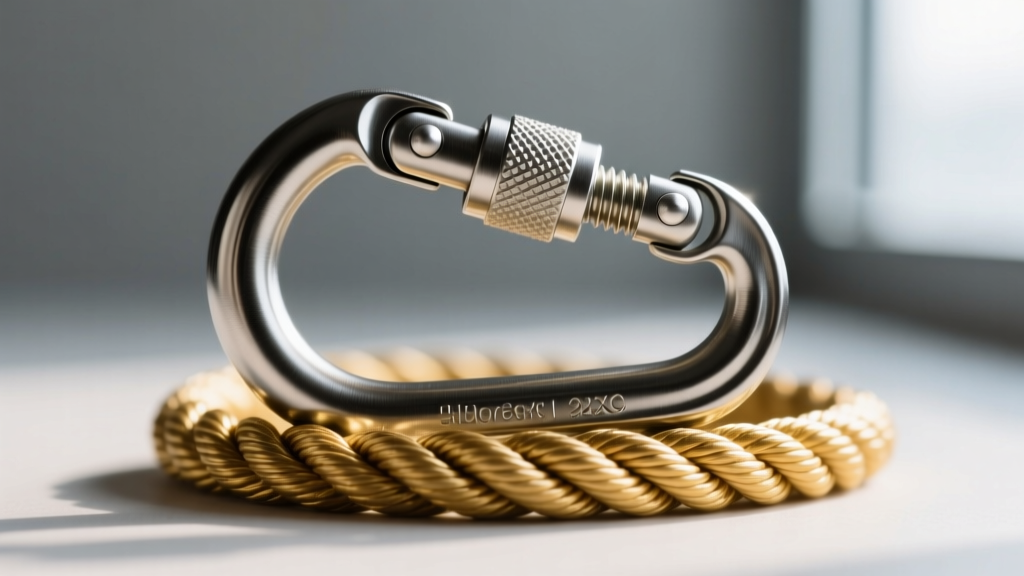
- Locking Carabiner Clasps: For a more utilitarian or modern look, a stainless steel or titanium locking carabiner (often used in climbing or heavy marine rigging) provides an unbreakable seal. The screw-lock gate ensures the chain cannot detach under any dynamic load.
Clasp Weight Capacity Comparison
| Clasp Type | Max Static Weight | Dynamic Failure Mode | Recommended For |
|---|---|---|---|
| Standard Lobster | 40g | Lever bending / Spring fatigue | Chains under 12mm |
| Oval Trigger Clasp | 60g | Jump ring deformation | Chains under 14mm |
| Box Clasp (Single Safety) | 120g | Tongue compression | Chains 14mm - 18mm |
| Box Clasp (Dual Figure-8) | 300g+ | Rare (Wear on tongue groove) | Heavyweight Cuban Links |
| Locking Carabiner (Titanium) | 500g+ | Thread stripping (if forced) | Training / Active Wear |
Source: Hardware specifications adapted from Rio Grande Jewelry Findings and heavy-load jewelry manufacturing standards.
Fixing Stretched Cuban and Rope Links
Another major troubleshooting issue with the Anthony Joshua necklace aesthetic is link stretching. This is particularly prevalent in 18k and 22k gold chains. According to the Gemological Institute of America (GIA), higher karat gold contains a higher percentage of pure gold, which is inherently soft and malleable. An 18k gold chain is 75% pure gold; under the constant 200g+ downward pull of gravity, the bottom links (near the clasp and the center of the chest) will slowly elongate over time.
Identifying and Repairing Micro-Fractures
If your chain feels longer than when you bought it, or if it drapes differently, the links have stretched. Inspect the chain under a 10x jeweler's loupe. Look for gaps in the solder seams where the links close.
The Fix: Do not attempt to squeeze the links back into shape with pliers, as this will work-harden the gold and cause it to snap. Instead, take the chain to a master jeweler who utilizes laser welding. Unlike traditional torch soldering, which requires heating a large area and can melt the intricate patterns of a Cuban link, laser welding uses a concentrated beam to fuse micro-fractures and reinforce the link seams without damaging the surrounding metal. For severe stretching, the jeweler may need to remove the deformed links and reattach the chain to maintain structural integrity.
Combating Sweat, Tarnish, and Metal Allergies
Boxing chains are often worn during training, travel, and high-stress environments where perspiration is heavy. Human sweat is mildly acidic and contains salts and urea. When this mixes with the copper and zinc alloys found in 10k and 14k gold, it triggers a rapid oxidation reaction, resulting in a dark, tarnished chain and sometimes green or black discoloration on the skin.
The Ultrasonic Cleaning Protocol
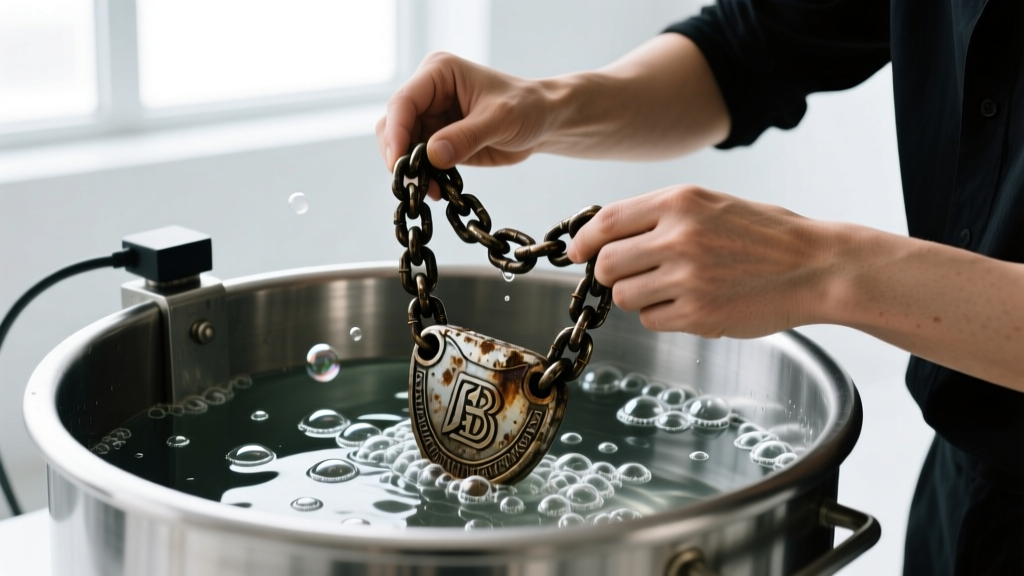
Polishing cloths are insufficient for the deep crevices of a diamond-cut Cuban or rope chain. To properly troubleshoot severe sweat tarnish, follow this professional protocol recommended by Jewelers of America:
- Pre-Soak: Submerge the chain in a warm bath of distilled water and a few drops of mild, phosphate-free dish soap for 15 minutes to loosen surface salts.
- Ultrasonic Cavitation: Place the chain in an ultrasonic cleaner filled with an ammonia-based jewelry solution. The high-frequency sound waves create microscopic vacuum bubbles that implode against the metal, blasting tarnish and dead skin cells out of the tight link gaps.
- Rinse and Dry: Rinse thoroughly with distilled water and dry immediately with a microfiber cloth or a low-heat hair dryer to prevent water spots.
Expert Troubleshooting Tip: If you have a white gold boxing chain, sweat and friction will quickly wear away the rhodium plating, exposing the yellowish underlying alloy. To maintain the bright, icy white finish associated with heavyweight champions, have the chain professionally rhodium-plated every 12 to 18 months.
Retrofitting Your Chain: A Step-by-Step Guide
If you already own a heavy chain that is failing, you don't necessarily need to replace it. You can retrofit it for heavy-duty use. Here is the exact workflow to bulletproof your chain:
- Step 1: Remove the Jump Rings. Have a jeweler cut off the standard, thin wire jump rings at both ends of the chain. These are primary failure points.
- Step 2: Solder End-Caps or Heavy O-Rings. Replace the jump rings with solid, soldered 'O' rings or specialized end-caps that distribute the tension across a wider surface area of the terminal links.
- Step 3: Install a Box Clasp. Attach a dual-safety box clasp using a heavy-gauge steel wire to ensure the clasp mechanism is perfectly aligned with the chain's drape.
- Step 4: Link Reinforcement. Request a 'drag test' where the jeweler inspects every 10th link for solder weakness, applying a micro-bead of laser solder to any suspicious seams.
By addressing the physics of weight, upgrading the hardware, and implementing a rigorous cleaning schedule, you can ensure your heavyweight chain remains as resilient and commanding as the champions who popularized the style.


