How to Restore a Faded Kurt Geiger Necklace Gold Finish
Learn how to troubleshoot, clean, and restore your Kurt Geiger necklace gold finish. Expert fixes for fading, tarnish, and broken clasps.

The Metallurgy Behind Your Kurt Geiger Necklace Gold Finish
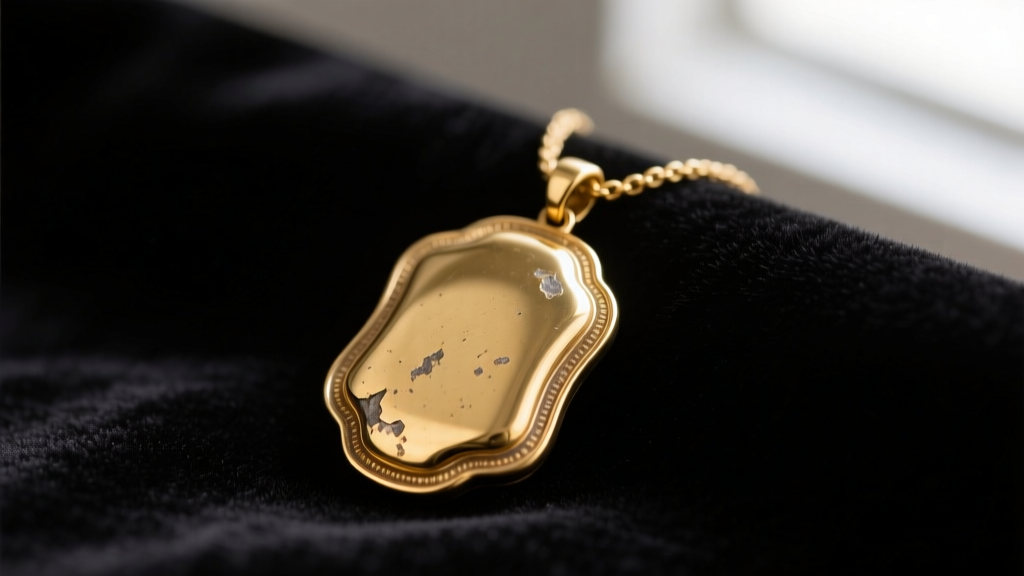
To effectively troubleshoot jewelry damage, you must first understand the materials at play. The signature Kurt Geiger necklace gold aesthetic relies heavily on high-polish brass or zinc-alloy base metals coated with a layer of gold. Unlike solid 14k or 18k gold jewelry, fashion and bridge jewelry typically utilize flash plating or electroplating. According to the Gemological Institute of America (GIA), standard gold plating is usually less than 0.5 microns thick, while heavy gold electroplate must be at least 2.5 microns. Most high-street fashion pieces fall into the flash-plated category, meaning the gold layer is microscopically thin. When this layer is compromised by friction, acidic sweat, or harsh chemicals, the underlying brass (an alloy of copper and zinc) is exposed, leading to rapid oxidation, fading, and skin discoloration. Understanding this metallurgical reality is the first step in applying the correct restorative techniques without causing further irreversible damage to the piece.
Troubleshooting Fading and Exposed Base Metal
The most common complaint regarding plated fashion jewelry is the gradual wearing away of the gold tone, particularly on the back of pendants or the links of the chain that rest against the collarbone. A critical mistake many owners make is attempting to 'buff out' the faded spots with jewelry polishing cloths. Polishing cloths are embedded with micro-abrasives designed to remove tarnish from solid metals; using them on a 0.5-micron gold plate will instantly strip the remaining gold away, leaving you with raw brass. If your necklace is fading, you have two primary avenues for restoration. For a temporary, at-home fix, you can use a gold-tinted micro-crystalline wax (such as Rub 'N Buff) applied with a microfiber swab to color-match the exposed brass, sealing it with a clear jewelry sealant. For a permanent, professional restoration, you must take the piece to a bench jeweler who offers electroplating services. The jeweler will strip the remaining plating, polish the raw brass base, and submerge the necklace in a potassium gold cyanide solution, depositing a fresh, even layer of 18k or 24k gold via an electrical current. This process typically costs between $45 and $85 depending on the chain's surface area.
Solving the 'Green Skin' and Allergy Problem
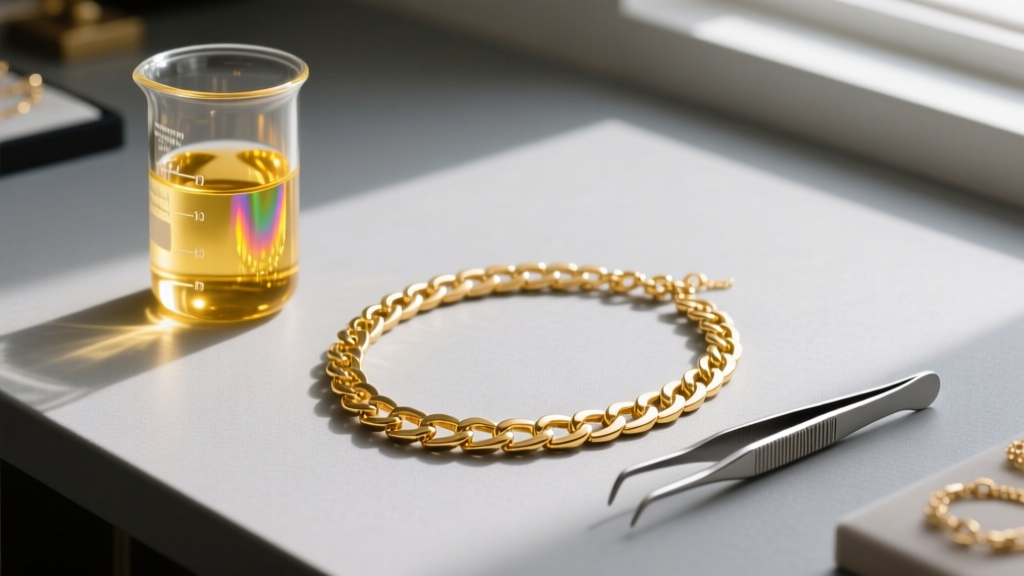
If your necklace is leaving a green or black ring on your skin, this is not a sign of 'fake' gold, but rather a predictable chemical reaction. The underlying brass contains copper. When copper reacts with the natural acids (pH levels typically ranging from 4.5 to 6.0) and salts in human sweat, it produces copper chloride, which manifests as a green residue on the skin. Furthermore, if the base alloy contains trace amounts of nickel to increase hardness, it can trigger contact dermatitis in sensitive individuals. To troubleshoot this without giving up the necklace, you must create an impermeable barrier between the metal and your skin. Avoid using standard clear nail polish, as it yellows, chips, and can react poorly with certain zinc alloys. Instead, apply a specialized nano-ceramic jewelry sealant or a museum-grade microcrystalline wax like Renaissance Wax. Apply a thin coat to the back of the pendant and the inner curve of the chain links using a soft brush, let it cure for 24 hours, and reapply every three months with regular wear.
Safe Cleaning Methods for Tarnished Gold-Tone Brass
When the gold plating is intact but the piece has accumulated oils, lotions, and environmental pollutants, it can appear dull or develop dark, tarnished spots at the crevices. The Federal Trade Commission (FTC) guidelines on jewelry care emphasize that plated items require vastly different chemical environments than solid metals. Below is a troubleshooting matrix for common cleaning agents and their effects on gold-plated brass:
| Cleaning Agent | Chemical Property | Effect on Gold Plating | Verdict |
|---|---|---|---|
| Baking Soda Paste | Mildly Alkaline / Abrasive | Strips flash plating via friction | AVOID |
| Ultrasonic Cleaner | Cavitation / High Frequency | Causes micro-fractures in thin plating | AVOID |
| Dish Soap (pH Neutral) | Surfactant / Non-Abrasive | Lifts oils without degrading the gold layer | SAFE |
| Jewelry Dip (Ammonia) | Highly Alkaline / Solvent | Dissolves the bonding agent under the gold | AVOID |
| Distilled Water & Soft Brush | Neutral / Mechanical | Safe for dislodging debris from chain links | SAFE |
To properly clean the necklace, mix three drops of pH-neutral dish soap (like Dawn) into a bowl of lukewarm distilled water. Submerge the necklace for exactly three minutes—no longer, to prevent water from seeping into the clasp spring mechanism. Gently agitate with a baby-soft toothbrush, rinse under a slow stream of distilled water, and immediately pat dry with a lint-free microfiber cloth. Never air-dry plated jewelry, as hard water spots will etch into the microscopic pores of the gold finish.
Hardware Failures: Fixing Clasps and Jump Rings
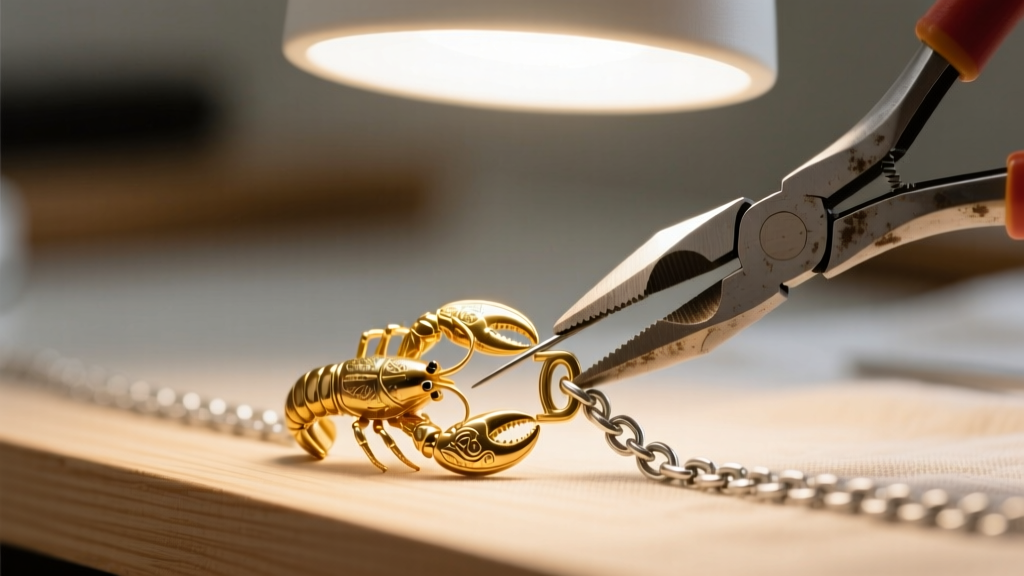
The hardware on fashion necklaces is often mass-produced, leading to specific mechanical failure points. The most frequent issue is a lobster clasp that fails to snap shut or feels 'mushy.' This occurs when the internal steel spring degrades or becomes clogged with skin oils and lint. Do not attempt to pry the clasp open with a knife, as the zinc-alloy housing will snap. Instead, use a can of compressed air to blow out the crevice of the lever. If the spring is simply dry, apply a microscopic amount of dry graphite powder (not liquid WD-40, which attracts dust) into the lever gap using a toothpick. Work the lever back and forth until the tension returns. If the jump ring connecting the clasp to the chain has pulled apart, do not simply squeeze it shut flat; this weakens the metal's structural memory. Use two pairs of flat-nose jewelry pliers to twist the jump ring open laterally (like opening a door), reposition the chain link, and twist it closed laterally until the ends perfectly align and 'click' together.
Preventative Maintenance for Fashion Gold Jewelry
Troubleshooting is ultimately about mitigating damage that has already occurred. To preserve the structural and aesthetic integrity of your gold-plated pieces, implement the following strict storage and wear protocols:
- The 'Last On, First Off' Rule: Always put your necklace on after applying perfumes, hairsprays, and lotions, and remove it immediately upon returning home. Alcohol and emulsifiers are highly corrosive to flash plating.
- Isolate Your Chains: Store the necklace in an individual, anti-tarnish flannel pouch. Storing multiple chains together in a communal jewelry box causes micro-scratches as the harder brass links grind against one another, accelerating the wear of the gold surface.
- Control the Humidity: Keep silica gel desiccant packets inside your jewelry storage drawers. High ambient humidity accelerates the oxidation of the underlying brass, which can cause 'sub-surface tarnish' that pushes up against the gold plating, creating a mottled, dark appearance that cannot be polished away.
By respecting the material limitations of gold-plated fashion jewelry and utilizing these targeted troubleshooting techniques, you can significantly extend the lifespan, brilliance, and wearability of your favorite statement pieces.


