Fixing the Main Character in the Necklace: Stop Pendants Flipping
Is your statement pendant constantly flipping upside down? Learn expert jewelry troubleshooting to fix bail sizing, chain wear, and pendant balance.

In modern styling, your focal pendant is undeniably the main character in the necklace arrangement, drawing the eye and setting the tone for your entire outfit. Whether you are wearing a vintage locket, a custom-cast brass talisman, or a heavy gemstone drop, this centerpiece demands attention. However, there is a universal frustration among jewelry lovers: the dreaded pendant flip. You look down, and your beautifully crafted focal piece is showing its raw, unpolished back. Worse still, heavy statement pieces often slide off-center, tangle in delicate links, or silently saw through their own bails due to metal-on-metal friction.
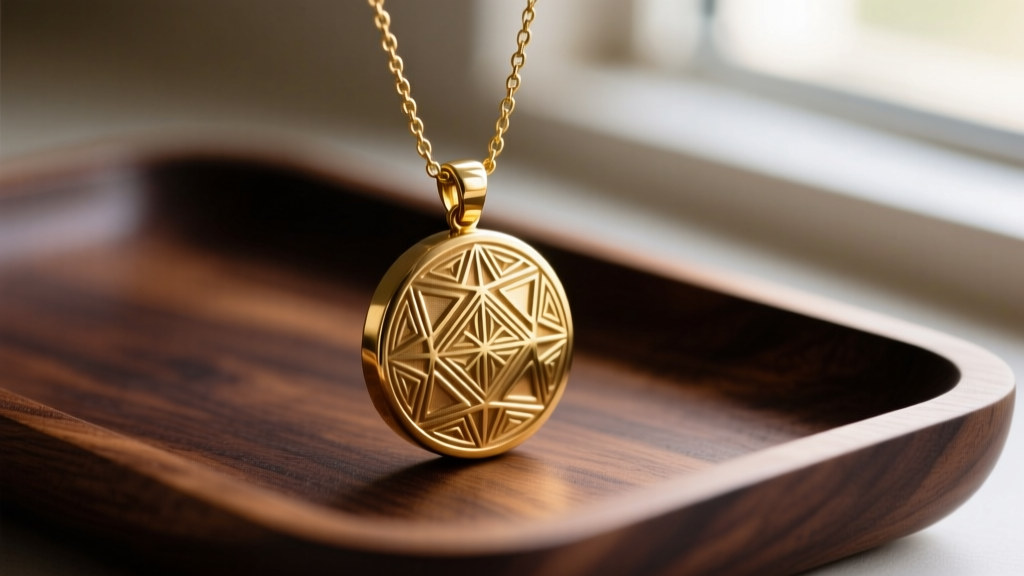
Troubleshooting these structural flaws requires moving beyond basic styling advice and diving into the physics of jewelry design, metallurgy, and component matching. In this comprehensive 2026 guide, we will dissect why your favorite pendants misbehave and provide actionable, bench-level solutions to keep your necklace's main character perfectly centered, upright, and secure.
The Physics of Pendant Flipping (And Why It Happens)
When a pendant flips upside down, it is rarely a defect in the chain; it is almost always an issue with the center of mass relative to the bail hole. The bail is the loop that connects the pendant to the chain. If the bail is attached too low on the pendant body, or if the pendant is heavily bottom-weighted (like a teardrop or a long geometric dagger), gravity will force the piece to rotate until the heaviest point rests directly below the chain's tension line.
Top-Drilled Stones and Wire Wraps
Gemstones that are top-drilled and wrapped with wire are notorious for flipping. If the wire wrap does not create a distinct, elevated loop (a 'halo' or 'counter-loop') above the stone's center of gravity, the stone will constantly rotate. To fix a wire-wrapped pendant, use flush cutters to trim the existing wrap and add a secondary jump ring at the very top of the wrap, effectively raising the pivot point above the stone's mass.
The Snake Chain Problem
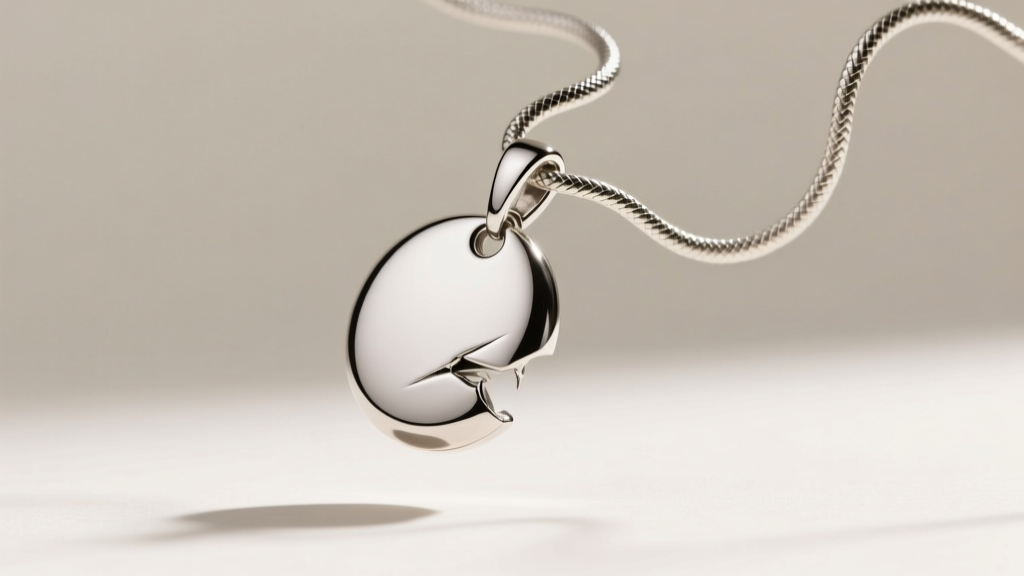
Snake chains are incredibly smooth, which makes them elegant but structurally problematic for heavy pendants. Because the chain lacks the textured friction of a rope or box chain, the bail slides freely to the lowest point of the neckline. Once off-center, the asymmetrical tension pulls the bail sideways, causing the pendant to twist and flip. If you must use a snake chain, opt for a 'European bail'—a wide, tubular bail that grips the smooth surface of the snake chain and distributes weight evenly across a 5mm to 8mm horizontal span.
Troubleshooting Guide: Matching Bail Sizes to Chain Gauges
A common mistake is forcing a thick chain through a delicate bail, or threading a heavy pendant onto a chain that is too thin. This mismatch not only causes flipping but accelerates metal fatigue. According to manufacturing standards from Rio Grande, the inner diameter (ID) of your bail must be at least 0.5mm to 1.0mm larger than the chain's thickness to allow the pendant to hang naturally without binding.
| Chain Gauge / Thickness | Recommended Bail Inner Diameter (ID) | Best Chain Weave for Heavy Pendants |
|---|---|---|
| 1.0mm - 1.2mm (approx. 18g) | 1.5mm to 2.5mm | Cable, Box, or Wheat |
| 1.5mm - 2.0mm (approx. 15g-12g) | 2.5mm to 3.5mm | Rope, Curb, or Figaro |
| 2.5mm+ (Heavy Statement) | 4.0mm+ or European Tube Bail | Omega, Box Chain, or Snake |
Stopping the Slider: Keep It Centered
If your bail is correctly sized but the pendant still slides to the left or right of your collarbone, you need mechanical stoppers. Silicone necklace spacers (often sold as 2mm O-beads or tension beads) can be threaded onto the chain on either side of the bail. Position them exactly 1.5 inches away from the center bail. These tiny, translucent beads grip the metal links just enough to prevent sliding without scratching the finish or altering the drape of the chain.
Preventing Metal-on-Metal Wear (The Silent Killer)
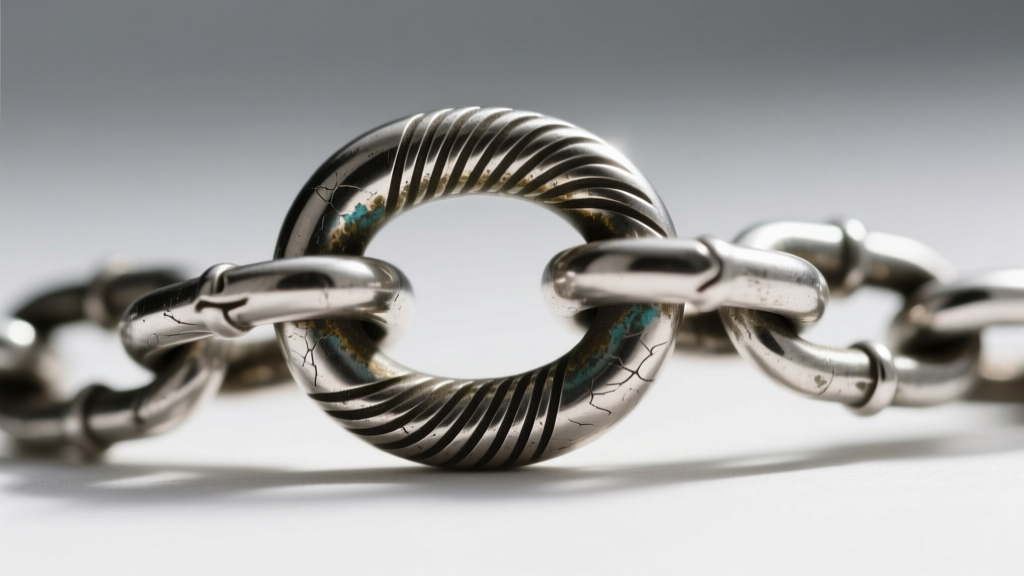
When the main character in the necklace is a heavy piece, the constant swinging creates severe friction at the connection point. Over time, this friction acts like a jeweler's file, sawing through the bail or the chain link. This is exacerbated when mixing metals of different hardness levels.
The Vickers Hardness (HV) scale measures a metal's resistance to deformation. For context, the Gemological Institute of America (GIA) and metallurgical data note that annealed sterling silver sits around 65 HV, while 14k yellow gold is roughly 140 HV. If you hang a heavy stainless steel pendant (approx. 155 HV) on a delicate sterling silver chain, the steel bail will slowly grind through the softer silver links.
The PTFE Tubing Hack
To prevent galvanic corrosion and friction wear without soldering or replacing components, use PTFE (Teflon) tubing. You can purchase 1mm inner-diameter PTFE micro-tubing online for a few dollars. Cut a 3mm sleeve and slide it over the chain link or the bail wire before closing the jump ring. This creates an invisible, frictionless barrier that stops metal-on-metal grinding and eliminates the annoying 'clinking' sound heavy pendants make against chains.
Advanced Fixes for Custom & Heavy Statement Pieces
For oversized, avant-garde, or vintage pieces that simply refuse to hang straight, standard bail swaps won't suffice. Here are three advanced troubleshooting techniques used by bench jewelers:
- The Counterweight Method: If a pendant is excessively front-heavy, attach a small, decorative metal bead (a 'counter-dangle') to the exact back-center of the chain, near the clasp. This shifts the overall center of gravity backward, forcing the front pendant to sit flat against the chest rather than flipping outward.
- Double-Bail Stabilization: For wide, horizontal pendants (like a compass or a large bar), a single central bail allows a pendulum effect. Soldering or gluing a second bail to the opposite side of the pendant, and threading the chain through both, completely locks the piece into a horizontal plane.
- UV Resin Bail Locking: If you have a pinch bail (the type with prongs that grip the top of a faceted stone) that keeps loosening and causing the stone to spin, place a microscopic drop of jewelry-grade UV resin at the base of the prongs and cure it with a 365nm UV lamp. This secures the stone without the permanence or heat risk of soldering or the mess of two-part epoxies.
Summary Checklist for Perfect Drape
Treating your focal pendant with the structural respect it deserves ensures it performs its role flawlessly. Before wearing your favorite piece, run through this quick bench checklist:
- Verify the bail ID is at least 0.5mm wider than the chain thickness.
- Check the Vickers hardness of both the bail and chain; use a PTFE sleeve if mixing hard and soft metals.
- Add silicone O-beads if the pendant slides on smooth weaves like snake or omega chains.
- Evaluate the center of mass; raise the bail loop or add a rear counterweight if the piece flips.
By mastering these troubleshooting techniques, you ensure that the main character in the necklace stays exactly where it belongs: front, center, and perfectly displayed.


