Mens Byzantine Necklace Troubleshooting: Kinks, Clasps, and Care
Is your mens byzantine necklace kinking or pulling hair? Learn expert troubleshooting for clasp failures, tarnish, and weave tension issues.

The Anatomy of a Byzantine Weave: Why Problems Occur
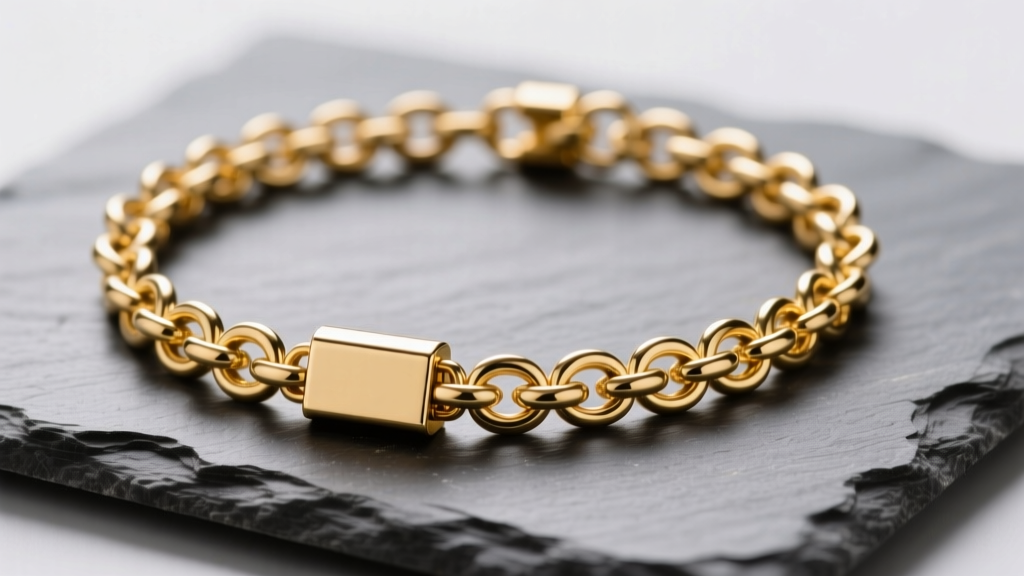
The mens byzantine necklace is a masterpiece of structural jewelry design, characterized by its dense, rope-like 4-in-1 interlocking jump ring pattern. However, the very geometry that gives the Byzantine chain its iconic, heavyweight drape also makes it uniquely susceptible to specific mechanical failures. Unlike simpler cable or curb chains, the Byzantine weave relies on precise Aspect Ratios (AR)—the mathematical relationship between the Inner Diameter (ID) of the jump ring and the Wire Diameter (WD). According to the Maille Artisans International Guild, a standard Byzantine weave requires an AR between 3.5 and 5.0. If a manufacturer deviates from this tolerance to save on metal weight, the chain becomes prone to severe kinking, structural collapse, and aggressive hair snagging. Understanding these mechanical tolerances is the first step in troubleshooting your chain.
Troubleshooting Common Byzantine Chain Failures
Issue 1: Hair Pulling and Snagging
Nothing ruins the experience of wearing a heavy chain faster than it tearing out chest or neck hair. This issue is almost entirely a byproduct of the manufacturing method used to create the jump rings. Mass-produced, machine-stamped chains use a shearing blade to cut the wire, leaving a 15-degree microscopic bevel on the edge of every single ring. This bevel acts like a tiny hook that catches body hair.
The Fix: If your chain is pulling hair, inspect the jump ring seams under a jeweler's loupe. If you see angled shear marks, the chain needs to be professionally tumbled in a rotary barrel with stainless steel shot and a mild burnishing compound for 4 to 6 hours. This cold-works the metal and peens the sharp edges flat. For your next purchase, strictly seek out 'saw-cut' or 'hand-fused' jump rings, which feature a 0-degree kerf and completely eliminate the snagging hazard.
Issue 2: Kinking and Weave Collapse
Because the Byzantine weave hinges on multiple intersecting planes, folding the necklace backward against its natural drape can cause the inner rings to wedge against one another, resulting in a stiff, visible kink. Pulling on a kinked Byzantine chain will permanently warp the jump rings, stretching them into ovals and ruining the weave's symmetry.
The Fix: Never pull a kink. Instead, lay the necklace flat on a high-friction rubber mat. Using a soft silicone spatula or your thumbs, gently massage the kinked section in a circular motion to encourage the rings to rotate back into their natural 4-in-1 alignment. For severe kinks in solid gold or silver, submerging the chain in warm (not boiling) water with a drop of dish soap provides the lubrication needed for the rings to slip back into place without metal-on-metal galling.
Issue 3: Clasp Slippage and Breakage
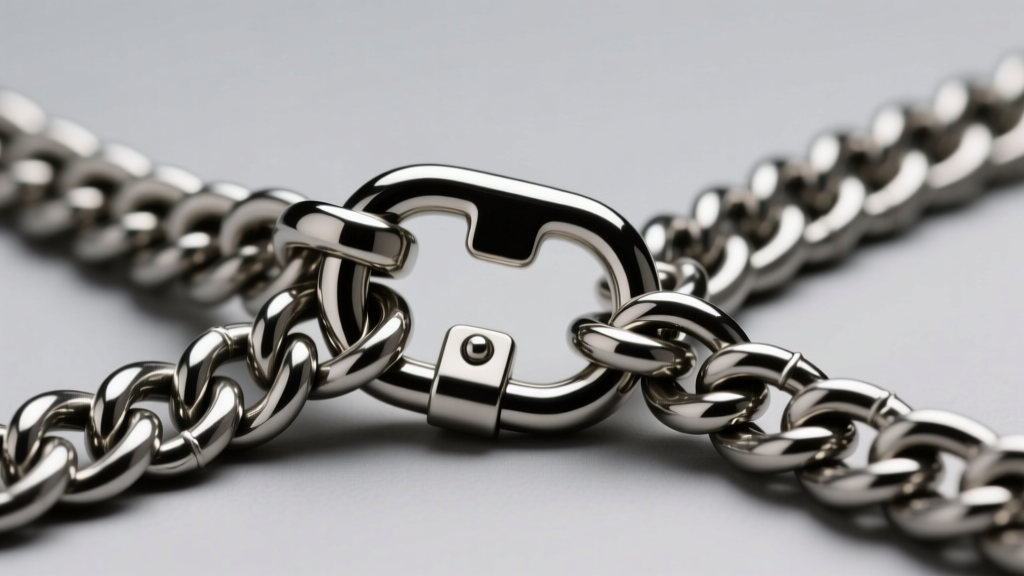
A common and catastrophic failure point is the clasp. Many jewelers mistakenly equip heavy 8mm to 12mm mens byzantine necklaces with standard lobster clasps to cut costs. A solid 925 sterling silver 10mm Byzantine chain can easily exceed 150 grams. While a lobster clasp might hold 15kg of static vertical weight, the lateral torque generated when the heavy chain swings and catches on clothing will easily snap the swivel pin or warp the spring-loaded lever.
The Fix: Upgrade to a box clasp (also known as a tongue-and-groove clasp) equipped with a figure-8 safety wire. The box clasp distributes shear force across the entire housing rather than relying on a tiny tension spring. For chains over 100 grams, ensure the box clasp is cast in a high-hardness alloy or forged from 316L stainless steel, as cast 925 silver clasps can bend under extreme torque.
Material and Gauge Matrix: Choosing the Right Hardware
When repairing or commissioning a custom mens byzantine necklace, matching the wire gauge to the metal's tensile strength is critical. Using a soft metal in a thin gauge will result in a chain that stretches and deforms within weeks.
| Metal Grade | Wire Gauge (WD) | Vickers Hardness (HV) | Best Use Case | Primary Vulnerability |
|---|---|---|---|---|
| 316L Stainless Steel | 16G - 14G | 150 - 190 HV | Heavy daily wear, shower/swim | Stiff drape, difficult to resize |
| 925 Sterling Silver | 14G - 12G | 60 - 90 HV | Statement pieces, occasional wear | Tarnish, jump ring stretching |
| 14k Yellow Gold | 16G - 14G | 120 - 150 HV | Luxury daily wear, heirloom | High cost, clasp wear over time |
| Titanium (Grade 5) | 14G - 12G | 340+ HV | Hypoallergenic, ultra-durable | Cannot be easily soldered/fused |
Advanced Cleaning: Removing Trapped Grime from Intricate Links
The dense, overlapping geometry of the Byzantine weave is a magnet for sebum, dead skin cells, and environmental dust. Over time, this grime packs into the interstitial spaces between the jump rings, turning into a hardened, dark paste that dulls the metal and causes the chain to feel stiff and abrasive against the skin. Standard polishing cloths are entirely useless here, as they cannot reach the inner surfaces of the rings.

The Ultrasonic Solution: The Gemological Institute of America (GIA) recommends ultrasonic cleaning for intricate metalwork, provided there are no porous gemstones attached. For a solid metal mens byzantine necklace, use an ultrasonic cleaner operating at 40kHz. Fill the tank with warm water and a specialized, ammonia-free jewelry cleaning concentrate. Run the cycle for exactly 3 minutes. The cavitation bubbles will implode inside the microscopic gaps of the weave, blasting out trapped debris without scratching the metal.
Warning for Oxidized Silver: If your silver Byzantine chain features intentional oxidation (blackened recesses for contrast), do not use an ultrasonic cleaner or chemical silver dips. The cavitation and chemicals will strip the patina, leaving you with a flat, uniformly bright chain. For oxidized chains, use a soft-bristled horsehair brush and a mild paste of baking soda and water, carefully scrubbing only the high points of the links.
Preventative Maintenance Checklist
To ensure your chain survives decades of wear, implement these specific maintenance protocols:
- The Roll Test: Once a month, lay the chain flat and gently roll it into a tight coil. If you feel resistance or hear clicking, a jump ring is misaligned or bent. Address it immediately before it compromises neighboring rings.
- Clasp Lubrication: Every six months, apply a microscopic drop of synthetic watch oil to the hinge pin of your box or lobster clasp to prevent internal corrosion and spring fatigue.
- Storage Geometry: Never store a Byzantine chain in a pile with other jewelry. The heavy links will crush softer pieces, and the chain itself can become tangled. Hang it vertically on a padded velvet hook to allow gravity to maintain the weave's natural alignment.
Conclusion
A mens byzantine necklace is an investment in structural artistry. By understanding the vital importance of Aspect Ratios, upgrading to torque-resistant box clasps, and utilizing ultrasonic cavitation for deep cleaning, you can eliminate the most common frustrations associated with this heavy chain style. Sourcing saw-cut jump rings and respecting the metal's specific hardness tolerances will transform your chain from a high-maintenance accessory into a lifelong, flawless staple of your wardrobe. For further technical specifications on jump ring sizing and alloy behaviors, consult resources like Rio Grande Jewelry Supply to ensure your hardware meets professional benchmarks.


