Necklace Bust Troubleshooting: Fix Display & Storage Issues
Solve common necklace bust problems. Learn expert fixes for slipping chains, acrylic glare, proportion mismatches, and silver tarnishing.

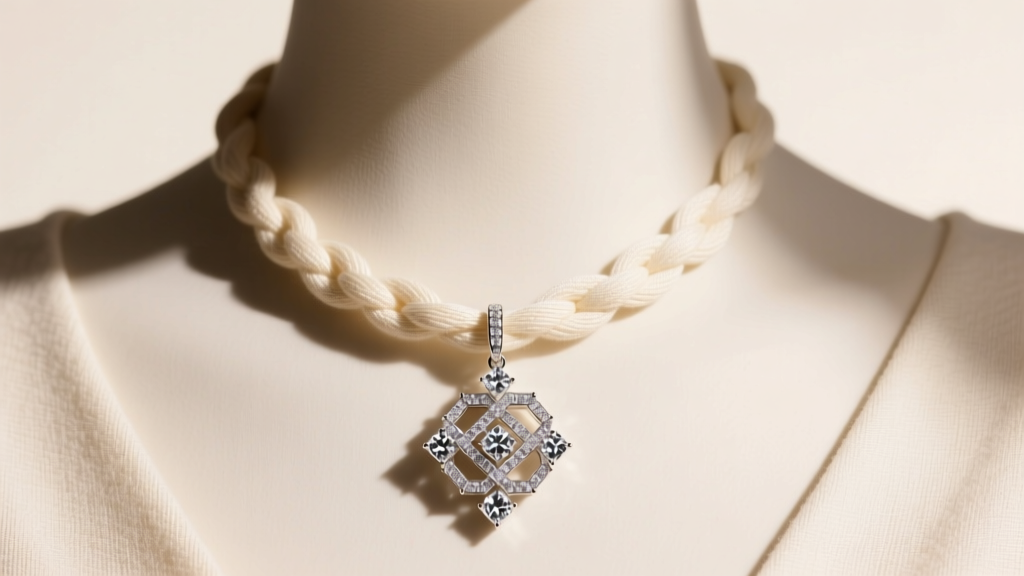
The Hidden Challenges of Jewelry Display
Whether you are a professional jeweler merchandising a retail case, a photographer shooting e-commerce campaigns, or a collector archiving vintage pieces, the necklace bust is an indispensable tool. However, off-the-shelf display forms frequently introduce a host of frustrating problems. Chains slip off sloped shoulders, pendants disappear into the bust's center seam, and cheap materials actively tarnish sterling silver. In this comprehensive troubleshooting guide, we break down the physics, chemistry, and optics of jewelry display to help you solve the most persistent necklace bust issues.
Why Your Necklaces Keep Slipping (And How to Fix It)
The most common complaint among jewelers is the 'slipping chain' syndrome. Highly polished metals—particularly 18k gold, platinum, and rhodium-plated sterling silver—have incredibly low coefficients of friction. When draped over a standard polyurethane (PU) or synthetic velvet bust, gravity inevitably pulls the chain toward the path of least resistance, usually resulting in the pendant sliding off-center or the clasp slipping down the back of the neck.
Troubleshooting Friction and Gravity
To combat this, you must artificially increase the surface friction without damaging the metal. Avoid using double-sided tape or adhesives, which leave residue that can degrade porous gemstones like turquoise or opals. Instead, employ these professional techniques:
- Micro-Silicone Strips: Apply a 1/8-inch wide strip of clear, museum-grade silicone gel to the bust's collarbone area. This creates an invisible high-friction barrier that grips smooth metal chains without scratching them.
- The 15-Degree Tilt: If your display allows, tilt the bust backward by exactly 12 to 15 degrees. This shifts the center of gravity, forcing the chain to settle securely into the clavicle hollow rather than sliding forward.
- Museum Wax: For heavy statement pieces that refuse to stay put, apply a micro-dot of Renaissance Wax or museum gel to the back of the pendant. This temporarily anchors the piece to the fabric without leaving permanent stains.
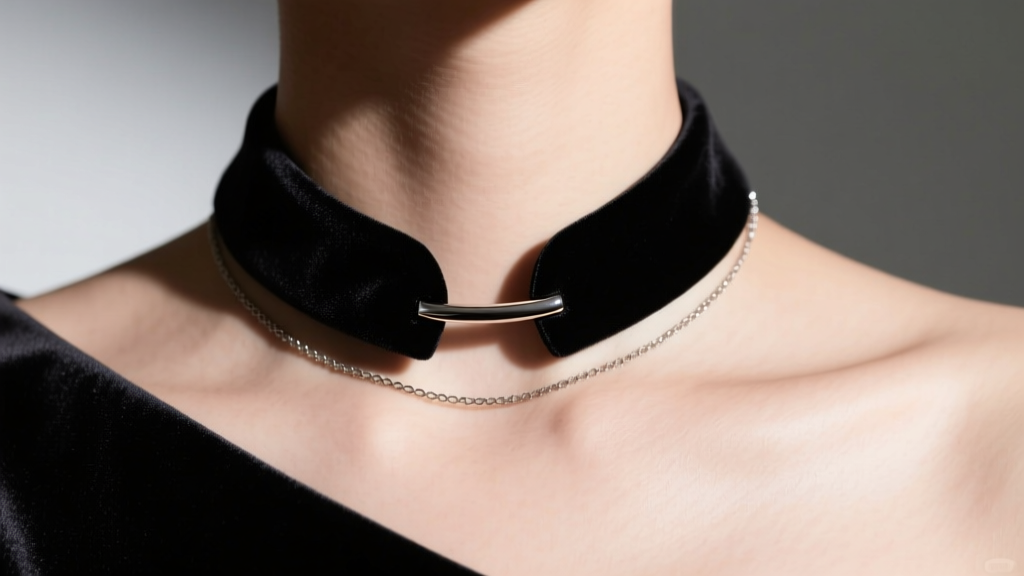
Proportion Problems: Matching Bust Size to Necklace Length
A frequent styling error is using a single, generic bust for all necklace lengths. A standard 15-inch bust is proportioned to mimic a petite human torso. If you attempt to display a 24-inch matinee necklace or a 32-inch opera chain on this form, the chain will drape off the bottom edge, creating an awkward 'floating' effect that ruins the visual line of the jewelry.
The Display Proportion Matrix
Use the following data table to select the correct bust dimensions based on the specific necklace length you are merchandising or photographing. According to display guidelines referenced by Rio Grande, matching the form to the chain length is critical for accurate scale representation.
| Bust Height | Neck Circumference | Ideal Necklace Length | Troubleshooting Note |
|---|---|---|---|
| 12" (Half-Bust) | 14" - 15" | Collar (12-13") & Choker (14-16") | Pendants will hit the center seam; use for chain-only displays. |
| 15" (Standard) | 16" - 17" | Princess (18") | Most versatile; pendants rest perfectly on the sternum. |
| 18" (Full Torso) | 18" - 20" | Matinee (20-24") | Required for layered looks; prevents chains from falling off the base. |
| 22" (Extended) | 20" - 22" | Opera (28-36") | Essential for long pearl strands; ensures the full drape is visible. |
Lighting & Glare: Troubleshooting Acrylic and Glass Busts
Clear acrylic (PMMA) and glass necklace busts are highly sought after for their modern, minimalist aesthetic. They allow the jewelry to appear as though it is floating, which is ideal for high-end editorial photography. However, these materials are notorious for creating severe specular highlights and internal reflections that can completely wash out the details of a diamond or gemstone pendant.
Implementing Cross-Polarization
If you are shooting e-commerce photos and battling glare on an acrylic bust, simply moving your lights will not solve the problem. You must use a technique called cross-polarization. Place a linear polarizing film over your primary light source, and attach a Circular Polarizer (CPL) filter to your camera lens. By rotating the lens filter 90 degrees relative to the light source film, you will entirely eliminate surface glare from the acrylic bust, revealing the true color and brilliance of the jewelry.
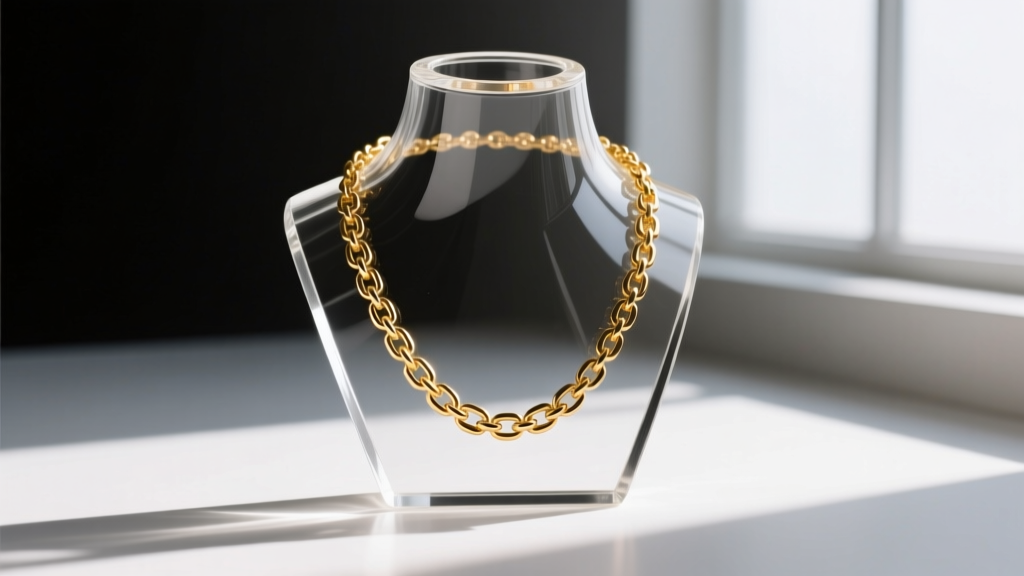
Material Degradation: The Hidden Cause of Silver Tarnishing
Perhaps the most destructive issue associated with low-quality necklace busts is chemical off-gassing. Many inexpensive busts are constructed using polyurethane (PU) foams, synthetic rubbers, or cheap PVC plastics. As these materials degrade, they release volatile organic compounds (VOCs), including sulfur dioxide and acidic vapors.
When sterling silver is stored or displayed on these busts for extended periods, the sulfur compounds react with the copper alloy in the silver, rapidly forming silver sulfide—a black, crusty tarnish that is difficult to remove without abrasive polishing. The American Institute for Conservation (AIC) strictly advises against using non-archival plastics and foams for long-term metal storage.
Archival-Grade Solutions
Expert Rule of Thumb: If a display form has a strong chemical odor when first unboxed, it is actively off-gassing. Never place raw sterling silver, copper, or porous pearls on unsealed synthetic foams.
To troubleshoot and prevent this, upgrade to busts wrapped in 100% cotton velvet, natural linen, or acid-free archival paper. If you must use existing PU busts for storage, seal the foam core with multiple coats of water-based polyurethane varnish or wrap the entire bust in an anti-tarnish silver cloth (such as Pacific Silvercloth) before draping your jewelry.
Sourcing Professional-Grade Display Forms
Investing in the correct necklace bust saves hours of troubleshooting in the long run. For retail environments, look for suppliers that offer 'jeweler-grade' forms, which feature reinforced internal armatures that won't snap under the weight of heavy gold chains. Brands like Stuller and Pacific Jewelry Displays offer specialized forms with removable neck inserts, allowing you to swap out a choker display for an opera-length torso without purchasing an entirely new unit. Expect to pay between $25 and $45 for a high-quality, linen-wrapped standard bust, while full-torso archival forms can range from $80 to $150. By prioritizing material integrity and precise proportions, your jewelry displays will remain secure, pristine, and visually flawless.


