Protecting a Pearl Necklace with Charms: Troubleshooting Guide
Learn how to protect, restring, and troubleshoot a pearl necklace with charms. Expert tips on preventing scratches, upgrading clasps, and avoiding tangles.

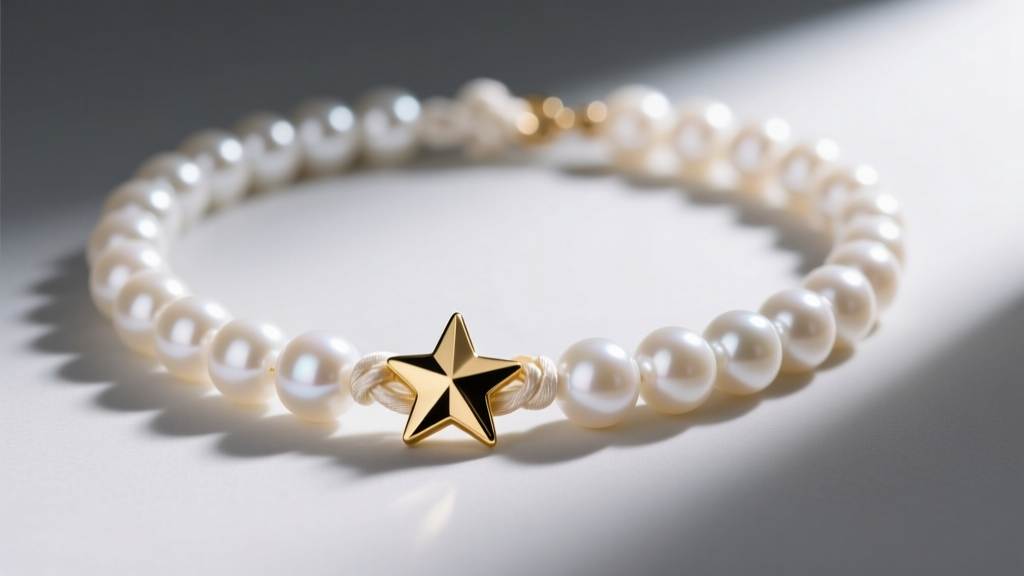
The Core Problem: Why Charms Damage Pearls
The trend of pairing a classic pearl necklace with charms has dominated jewelry styling, offering a personalized, modern twist on a traditional staple. However, from a gemological and structural perspective, mixing organic pearls with metal charms introduces significant mechanical risks. Pearls are remarkably soft, ranking between 2.5 and 4.5 on the Mohs hardness scale. By contrast, even relatively soft metals like 14k gold or sterling silver can feature microscopic burrs, sharp edges from casting sprues, or hardened alloy inclusions that act like tiny saws against the pearl's delicate nacre.
When a metal charm slides freely along a strand, it creates continuous friction. Over time, this friction wears away the conchiolin and calcium carbonate layers of the nacre, leading to dull spots, permanent scratching, and eventually, the exposure of the bead nucleus. Furthermore, the added weight and pendulum-like swinging motion of a charm place uneven tension on the stringing material, accelerating thread degradation and increasing the likelihood of a catastrophic strand failure.
Expert Insight: Never assume a smooth-looking gold charm is safe for bare pearl contact. Cast jewelry often retains microscopic roughness that will degrade Akoya nacre (which is typically only 0.3mm to 0.6mm thick) within months of daily wear.
Troubleshooting Common Structural Issues
Issue 1: Charm Scratching the Nacre
The Fix: Introduce a physical buffer between the metal and the organic gemstone. The most effective solution is using 1mm to 2mm clear silicone O-rings or micro-spacer beads. If your charm hangs from a jump ring, slide a tiny silicone buffer onto the ring before closing it. This creates a frictionless barrier that absorbs the kinetic energy of the swinging charm, preventing direct metal-to-nacre contact. For a more permanent solution, jewelers can apply a microscopic coating of clear, jewelry-grade UV resin to the back of the charm where it rests against the pearls.
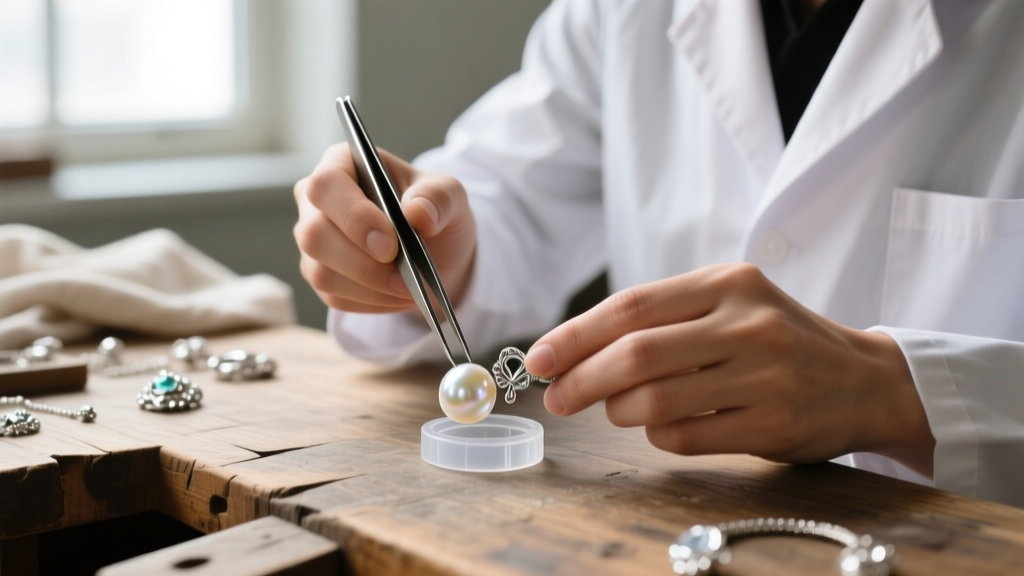
Issue 2: Silk Thread Fraying and Stretching
The Fix: Traditional pearl necklaces are strung on Griffin silk thread, which is beautiful but highly susceptible to stretching and fraying under the dynamic weight of a charm. If your charm weighs more than 5 grams, silk will stretch within six months, causing the knots to loosen and the pearls to gap. To solve this, have the necklace restrung using a modern synthetic alternative. Power Pro (a woven polyethylene thread) or Beadalon WildFire (a thermally fused polyethylene thread) offer zero stretch and immense tensile strength while remaining thin enough to pass through standard pearl drill holes (typically 0.8mm to 1.0mm).
Issue 3: Clasp Failure Under Charm Weight
The Fix: Standard spring-ring clasps are designed for lightweight, static loads and typically fail at around 2 to 3 pounds of tension. A heavy pendant or multiple charms create a pendulum effect that multiplies this force. Upgrade your clasp to a solid 14k gold lobster claw (minimum 10mm in length for adequate spring tension) or, ideally, a custom box clasp equipped with a figure-eight safety catch. This ensures that even if the primary mechanism is jolted open by a swinging charm, the safety wire will catch and prevent the loss of the strand.
Material Compatibility and Weight Limits
Not all pearls can handle the same charm weight or metal types. Refer to the troubleshooting matrix below to determine if your specific pearl necklace with charms is structurally sound, or if it requires immediate restringing and modification.
| Pearl Type | Nacre Thickness | Mohs Hardness | Max Charm Weight | Recommended Thread |
|---|---|---|---|---|
| Freshwater | Solid Nacre | 2.5 - 4.5 | 15 grams | Power Pro (Woven Poly) |
| Akoya | 0.3 - 0.6 mm | 2.5 - 4.0 | 8 grams | Griffin Silk Size F (if under 5g) |
| Tahitian | 0.8 - 2.0 mm | 2.5 - 4.5 | 20 grams | WildFire (Fused Poly) |
| South Sea | 2.0 - 4.0 mm | 2.5 - 4.0 | 25 grams | WildFire (Fused Poly) |
For comprehensive guidelines on organic gemstone preservation, the Gemological Institute of America (GIA) strongly advises against exposing pearls to harsh friction or chemical cleaners often found in mixed-metal jewelry maintenance.
Step-by-Step: Safely Attaching a Charm
If you are modifying an existing strand to accommodate a pendant, follow these precise steps to avoid damaging the drill holes or the stringing material:
- Inspect the Drill Hole: Ensure the pearl where the charm will rest has a smooth, well-finished drill hole. Rough holes will saw through synthetic threads just as easily as silk.
- Use a Floating Bail: Instead of threading the charm directly onto the necklace, attach a specialized 'floating bail' or a smooth, polished sterling silver tube bead. Thread the necklace through the tube, and hang the charm from the tube's external loop. This distributes the weight across a wider surface area.
- Twist, Don't Pull: When opening the jump ring that connects your charm to the bail, always use two pairs of flat-nose pliers to twist the ring laterally. Pulling the ring apart outward weakens the metal's structural integrity and creates a gap that will eventually catch and snap the stringing thread.
- Secure the Knot: If tying off a new thread, use a surgeon's knot and apply a microscopic drop of hypoallergenic jewelry adhesive (like G-S Hypo Cement) to seal it. Avoid cyanoacrylate (Super Glue), which becomes brittle and can crack the pearl from the inside.

Maintenance and Cleaning Protocols
Cleaning a pearl necklace with charms requires a bifurcated approach. You cannot simply drop the entire piece into an ultrasonic cleaner; the high-frequency vibrations will shatter the pearls and instantly loosen any adhesive used in the charm's gemstone settings. Similarly, steam cleaners will dehydrate the pearl, causing the nacre to craze and crack.
Instead, clean the metal charm separately using a soft polishing cloth and a mild, non-ammonia silver or gold dip if necessary. Ensure the charm is completely dry and rinsed before it touches the pearls. For the pearls themselves, follow the Mikimoto Pearl Care Guidelines by gently wiping them down with a damp, lint-free microfiber cloth after every wear to remove body oils and acidic sweat. Always lay the necklace flat to dry; hanging a wet pearl necklace with a heavy charm will cause the damp thread to stretch irreparably under the gravitational pull of the pendant.
Final Thoughts on Longevity
A pearl necklace with charms does not have to be a recipe for structural disaster. By understanding the mechanical vulnerabilities of organic gemstones and upgrading your stringing materials, clasps, and buffering techniques, you can safely enjoy this layered, personalized aesthetic. Regular inspections of the thread tension and the charm's bail every six months will ensure your piece remains both beautiful and structurally sound for decades.


