Pen Necklace Troubleshooting: Fix Ink, Scratches & Flips
Fix common pen necklace issues like dried ink, scratching nibs, and pendant flipping. Expert troubleshooting for functional and decorative pen pendants.

The Unique Challenges of Wearing a Pen Necklace
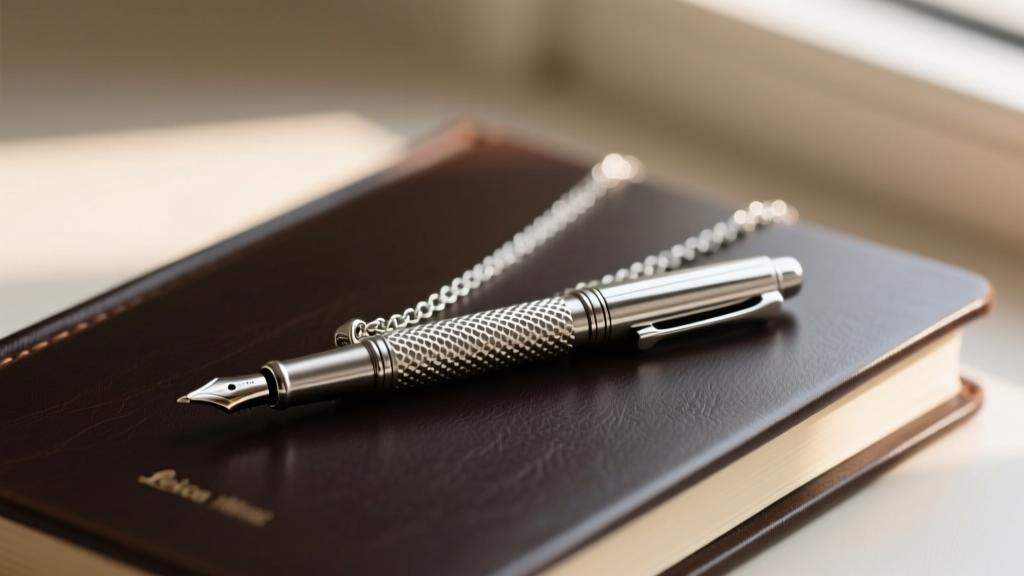
The pen necklace sits at a fascinating intersection of everyday carry (EDC) utility and personal adornment. Whether you are wearing a functional tactical pen pendant, a modified Fisher Space Pen barrel, or a decorative dip-pen nib on a chain, these pieces present unique mechanical and chemical challenges. Unlike standard geometric pendants, a pen is a long, asymmetrical cylinder filled with volatile inks and sharp extremities. When worn against the human body—which is constantly moving, sweating, and generating heat—standard jewelry rules no longer apply. This guide provides deep, actionable troubleshooting for the most common failure modes associated with pen necklaces, ensuring your piece remains both functional and visually balanced.
Troubleshooting Ink Flow and Clogging in Functional Pendants
The most frustrating issue with a functional pen necklace is discovering that the ink has dried out or leaked onto your shirt. This happens because standard pen refills rely on gravity and capillary action, both of which are disrupted when a pen is worn vertically against the chest.
The Capillary Action Problem
When a pen necklace hangs with the nib pointing downward, gravity continuously pulls ink into the tip. Over a few hours, this overwhelms the capillary barrier, resulting in leaks. Conversely, if the pen is worn nib-up, the ink retreats into the reservoir, allowing the exposed tip to dry out and clog. Standard rollerball and gel refills are particularly susceptible to this due to their low-viscosity inks.
Reviving and Upgrading Your Refill
To solve this, you must change the internal mechanics of the pendant. According to the engineering specs outlined by Fisher Space Pen, pressurized refills utilize a sealed cartridge charged with nitrogen gas at roughly 35 PSI. This forces the thixotropic ink out regardless of gravity or orientation, completely eliminating the nib-up drying issue. If your pen necklace accepts standard Parker-style or D1 refills, swap to a pressurized alternative. If your nib pendant is clogged with dried India ink, submerge only the metal nib in a 50/50 solution of distilled water and ammonia for exactly 12 hours to break down the shellac binders without corroding the steel.
Fixing Weight Distribution and Pendant Flipping
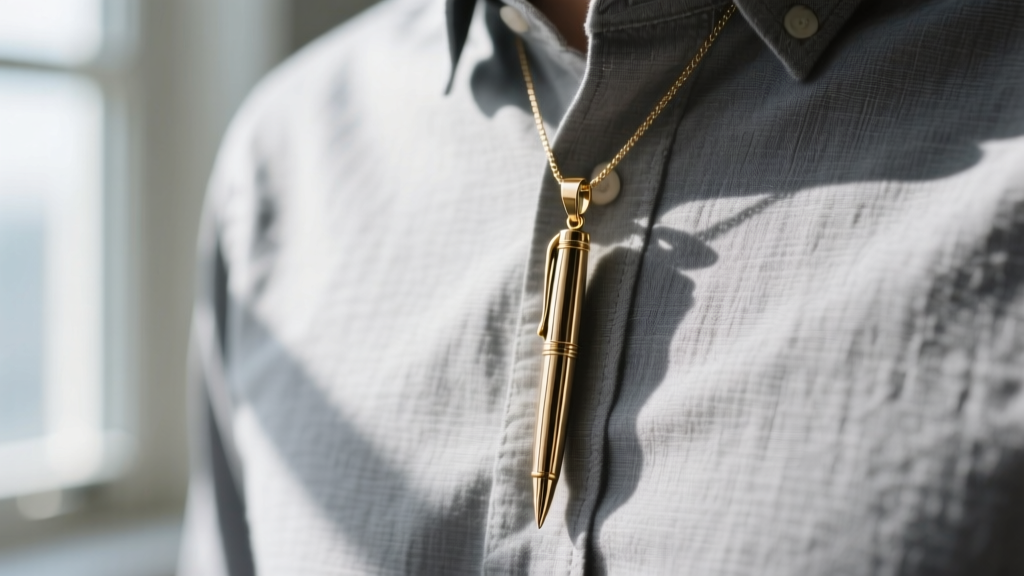
A pen necklace that constantly flips upside down, showing the back of the bail or twisting the chain, is suffering from poor center-of-gravity alignment. Because a pen barrel is essentially a lever, the placement of the jump ring (bail) dictates how it hangs.
The 4mm Offset Rule
If the bail is placed at the exact mathematical center of the pen barrel, the heavier end (usually the ink reservoir or the solid brass tail) will act as a pendulum and swing downward, flipping the pendant. To fix this, the bail must be offset. Measure the total length of the pen pendant. Find the exact center, then move the bail placement 3mm to 5mm toward the heavier end. This creates a counter-lever effect, forcing the lighter end to drop slightly and keeping the pendant perfectly vertical against your chest.
Chain Gauge and Anchoring
A chain that is too light will tangle around the pen clip. You need a chain with enough linear density to anchor the top of the pendant. Consult the matrix below to match your chain to your pendant weight:
| Pendant Weight | Ideal Chain Type | Minimum Gauge/Width | Tangle Risk |
|---|---|---|---|
| Under 15g (Minimalist Nibs) | Cable or Box Chain | 1.5mm - 2.0mm | Low |
| 15g - 35g (Standard EDC Pens) | Rope or Curb Chain | 2.5mm - 3.0mm | Medium |
| Over 35g (Tactical/Solid Brass) | Cuban Link or Figaro | 3.5mm - 5.0mm | High (if under 3.5mm) |
Preventing Nib Scratches and Clothing Snags
Decorative pen nibs and tactical pen tips are inherently sharp. A standard fountain pen nib has a tipping material (often an iridium-osmium alloy) that can easily scratch your skin or catch on knit fabrics. Tactical pen pendants often feature glass-breaker tips machined to a 60 HRC (Rockwell Hardness C scale), which will tear through cotton and wool.
Magnetic Caps vs. Silicone Sheaths
The most elegant solution for a functional pen necklace is a custom neodymium magnetic cap. By integrating an N52-grade neodymium magnet into the pen's tail and a corresponding steel disc in a smooth, domed cap, you create a secure closure that completely encloses the sharp nib when not in use. N52 magnets provide roughly 30% more pull force than standard N42 magnets, ensuring the cap won't dislodge during physical activity. For decorative dip-pen nibs where a magnetic cap isn't viable, use a high-durometer (Shore A 70) silicone sheath. Avoid soft silicone (Shore A 30), as the sharp nib will eventually pierce through it from the inside.
Combating Metal Corrosion from Ink and Skin Oils
Pen necklaces face a dual chemical assault: the acidic nature of human sweat and the corrosive properties of fountain pen inks. As detailed in metallurgical guides on Ganoksin, the jewelry industry must carefully select alloys that resist chloride and acid attacks.
Material Grades and Failure Modes
- Brass (CuZn): Highly popular for vintage-style pen pendants, but brass reacts with the lactic acid in sweat (pH 4.7 to 5.75) to create copper chloride, resulting in the dreaded green skin stain. Fix: Apply a micro-crystalline wax coating (like Renaissance Wax) every 30 days to seal the metal.
- 316L Stainless Steel: The 'L' stands for low carbon, but more importantly, 316L contains 2-3% molybdenum, which drastically increases resistance to chlorides and acidic inks. This is the minimum acceptable grade for a functional pen necklace that may be exposed to ink leaks.
- Grade 5 Titanium (Ti-6Al-4V): The ultimate material for EDC pen necklaces. It is completely biocompatible, impervious to ink corrosion, and 45% lighter than steel, which heavily reduces the pendulum flipping effect mentioned earlier.
Summary Checklist for Daily Wear
To ensure your pen necklace remains a reliable tool and a striking accessory, perform this quick troubleshooting audit:
- Check the Bail: Ensure the jump ring is offset by 3-5mm to prevent flipping.
- Verify the Refill: Upgrade to a pressurized cartridge to prevent vertical drying and leaking.
- Inspect the Tip: Ensure your magnetic cap or silicone sheath is fully seated to protect your clothing.
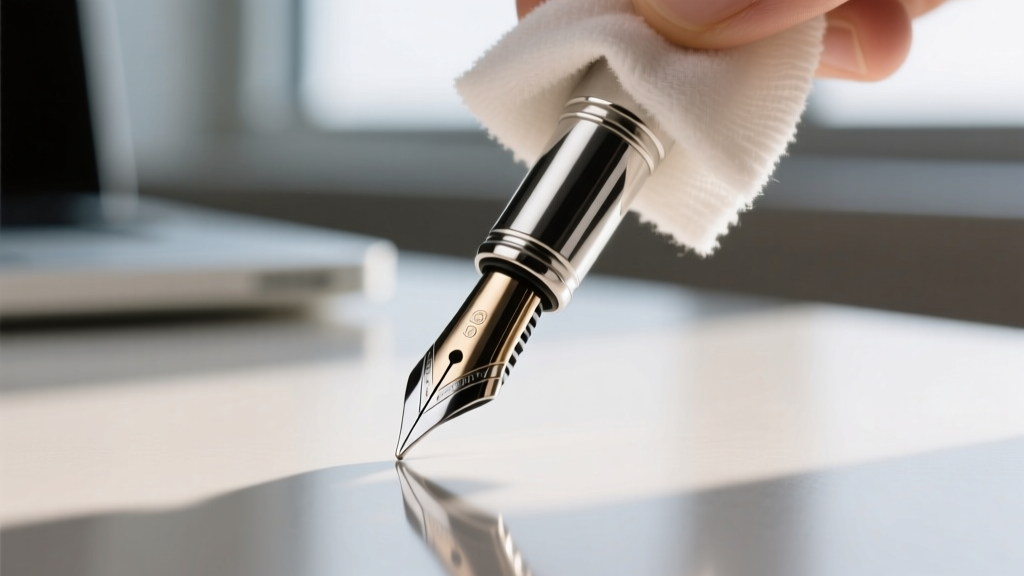
- Wipe the Barrel: Use a microfiber cloth to remove skin oils and acidic sweat after a day of wear, especially if your pendant is made of raw brass or copper.
By addressing these specific mechanical and chemical vulnerabilities, your pen necklace will transition from a frustrating novelty to a perfectly engineered, everyday wearable tool.


