How to Fix a Broken Puzzle Necklace: Expert Troubleshooting Guide
Is your puzzle necklace stuck, tangled, or broken? Discover expert troubleshooting steps to fix interlocking pendants, repair jump rings, and clean crevices.

The Anatomy of a Puzzle Necklace Failure
Puzzle necklaces—featuring interlocking jigsaw pieces, split hearts, or sliding mechanical components—are deeply sentimental but mechanically vulnerable. Unlike a simple solitaire pendant, a puzzle necklace relies on precise friction fits, moving tabs, and multiple connection points. When these necklaces fail, the issue rarely stems from the chain itself; instead, the failure points are almost always the interlocking channels, the bail, or the jump ring connecting the pendant to the chain.
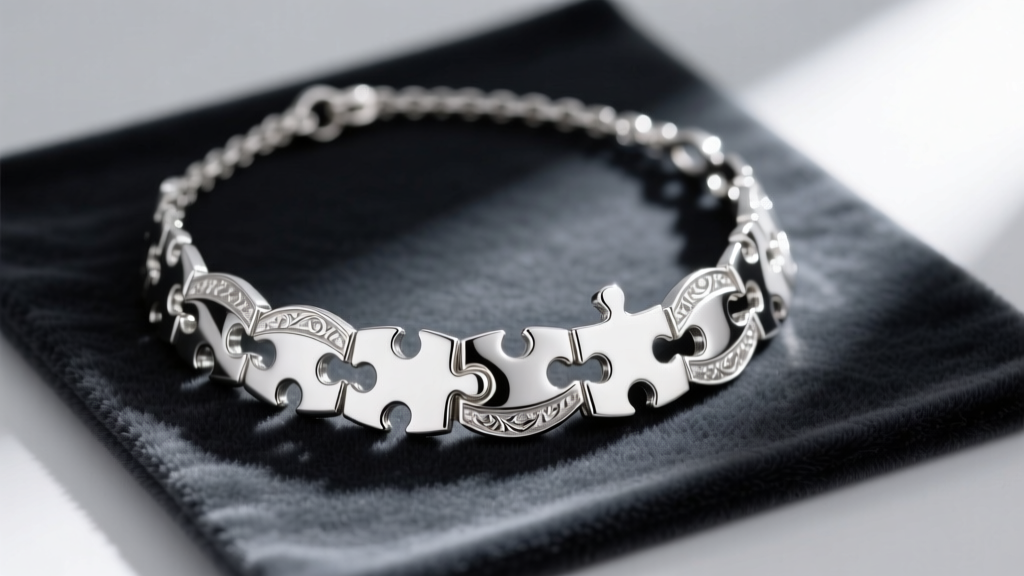
Understanding the metallurgy of your pendant is the first step in troubleshooting. Most puzzle pendants are cast from sterling silver, brass, or 10k/14k gold alloys. According to the Gemological Institute of America (GIA), the durability of these pieces depends heavily on their Vickers Hardness (HV). Annealed sterling silver sits around 60-70 HV, making it highly susceptible to bending if a puzzle tab is forced. Conversely, work-hardened silver or 14k gold (110-130 HV) resists bending but can become brittle and snap under sudden sheer stress. Before attempting any repair, you must identify whether the metal is soft and pliable or hard and brittle, as this dictates the tools and techniques you should use.
Troubleshooting Stuck or Jammed Interlocking Pieces
The most common complaint with puzzle necklaces is that the interlocking pieces become jammed and refuse to slide apart or fit back together. This is rarely a structural deformation; it is usually caused by a buildup of microscopic debris. Skin oils, lotions, cosmetics, and environmental dust combine to form a hardened, cement-like residue inside the narrow jigsaw grooves.
The Graphite Lubrication Method
Never use liquid lubricants like WD-40 or sewing machine oil on a puzzle necklace. Liquid oils attract more particulate matter, eventually turning into a thick sludge that will permanently lock the pieces. Instead, use powdered graphite. Graphite is a dry lubricant that reduces friction without leaving a sticky residue.
- Step 1: Obtain pure powdered graphite (available in lock lubricant sections).
- Step 2: Use a wooden toothpick or a soft cosmetic brush to gently work the graphite powder into the seams of the interlocking channels.
- Step 3: Gently wiggle the pieces laterally. Do not pull them vertically apart, as this can bend the internal tabs.
- Step 4: Once separated, wash the pendant in a mild alkaline solution to remove excess graphite and skin oils.
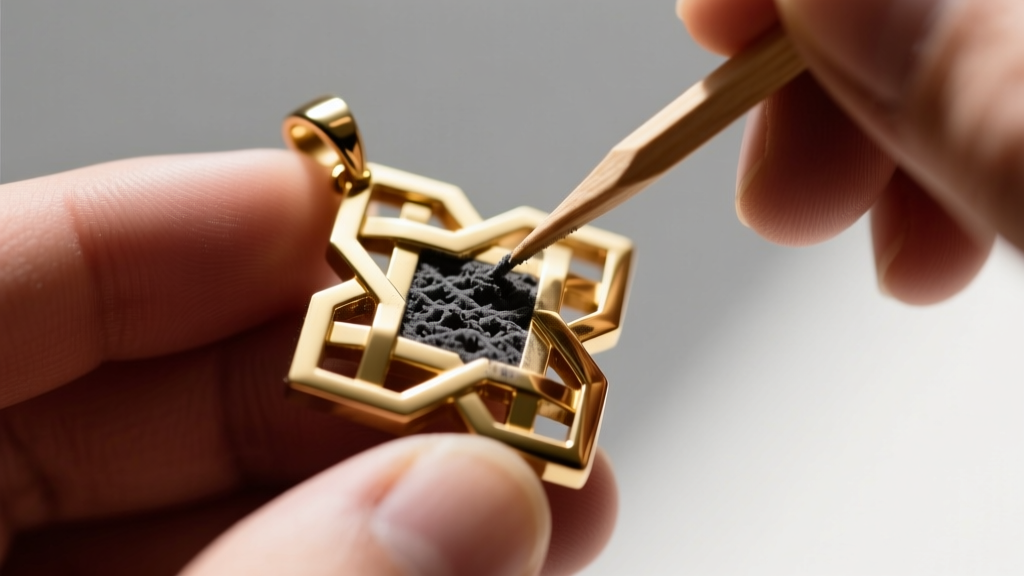
Using Ultrasonic Cavitation for Deep Jams
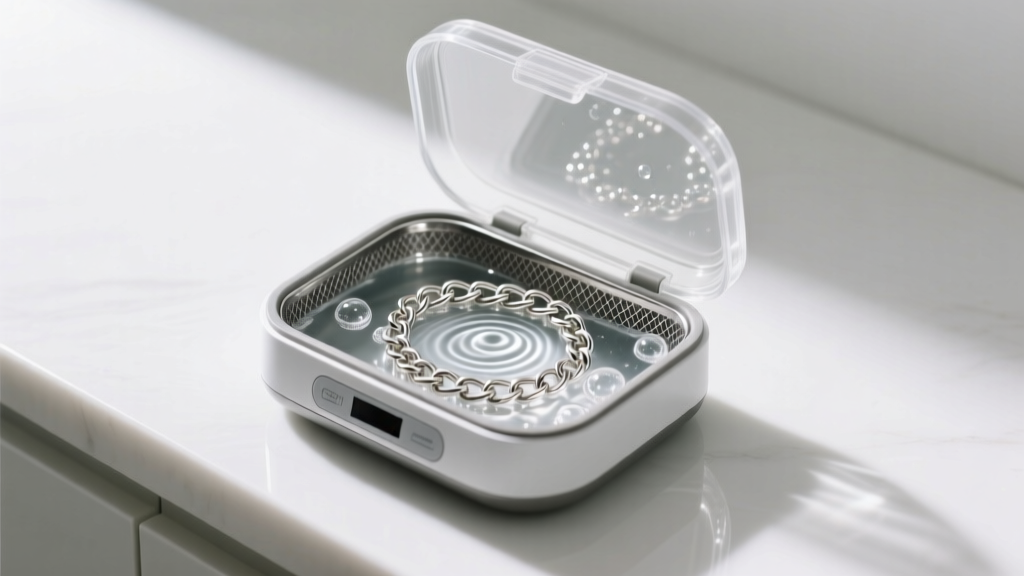
If graphite fails, the debris is likely calcified. An ultrasonic jewelry cleaner operating at 40-45 kHz can safely vibrate the debris loose through cavitation. Fill the tank with warm water and a few drops of mild dish soap (avoid harsh ammonia-based cleaners). Run the machine for 3-minute intervals. Warning: Do not use ultrasonic cleaners if your puzzle necklace features inlaid porous gemstones like turquoise, opal, or pearls, as the high-frequency vibrations can shatter them or strip their natural oils.
Realigning Bent Interlocking Tabs
If one puzzle piece slides in but catches halfway, you likely have a bent alignment tab. Puzzle pendants feature small protruding nubs that guide the pieces into a flush lock. Because these tabs are thin, dropping the necklace on a hard surface can easily warp them.
To fix this, you need a pair of nylon-jaw pliers and a rawhide mallet. Never use standard steel jewelry pliers, as the serrated teeth will gouge the soft precious metals, leaving permanent scratches. Place the bent pendant piece on a steel bench block. Using the rawhide mallet, gently tap the warped tab back into alignment. If the metal has become work-hardened and resists bending, a professional jeweler may need to locally anneal the tab using a micro-torch to soften the crystalline structure before reshaping it.
Repairing Broken Jump Rings and Bail Connections
The jump ring is the unsung hero of any necklace, and on a puzzle pendant, it is the most frequent point of catastrophic failure. Puzzle pendants are inherently heavy due to the overlapping layers of metal required for the interlocking mechanism. A standard solid brass or silver puzzle pendant can weigh between 8 and 15 grams. When worn, the dynamic movement of the wearer places immense sheer stress on the jump ring.
If your jump ring has pulled apart, simply squeezing it closed with pliers is a temporary fix that will fail again within weeks. You must upgrade the hardware based on the pendant's weight.
| Pendant Weight | Recommended Jump Ring Gauge | Recommended Inner Diameter (ID) | Required Closure Method |
|---|---|---|---|
| Under 5g | 20-Gauge (0.81mm) | 4.0mm - 5.0mm | Flush Cut & Pliers |
| 5g - 12g | 18-Gauge (1.02mm) | 5.0mm - 6.0mm | Soldered or Work-Hardened |
| Over 12g | 16-Gauge (1.29mm) | 6.0mm - 7.0mm | Laser Welded or Soldered |
For pendants over 5 grams, Jewelers of America recommends using soldered jump rings. If you are repairing this at home, use two pairs of flat-nose pliers to twist the jump ring open laterally (never pull the ends apart outward, which distorts the circle). Once closed, the seam must be silver-soldered to withstand the sheer weight of the puzzle pieces.
Deep Cleaning Tarnish in Complex Crevices
Interlocking puzzle necklaces are notorious for trapping tarnish in their deep, recessed channels. Standard polishing cloths cannot reach these areas, leaving the crevices black while the raised surfaces remain shiny.
The Electrolytic Reduction Method
Avoid commercial 'silver dip' liquids. According to the Silver Institute, many of these dips rely on thiourea, a toxic chemical that strips tarnish instantly but can cause micro-pitting and flash-tarnishing if not thoroughly neutralized. Instead, use an electrolytic reduction bath, which converts silver sulfide (tarnish) back into elemental silver without removing any base metal.
- Line a glass bowl with aluminum foil (shiny side up).
- Place the silver puzzle pendant on the foil, ensuring direct contact.
- Add 2 tablespoons of baking soda and 1 tablespoon of sea salt.
- Pour boiling water into the bowl. The chemical reaction will bubble and release a sulfur smell.
- Leave for 3-5 minutes, then remove with wooden tongs, rinse in distilled water, and dry with a microfiber cloth.
This method safely pulls tarnish out of the deepest jigsaw grooves without the need for abrasive scrubbing.
Preventative Maintenance: Chain Pairing and Storage
Finally, many puzzle necklace owners struggle with constant tangling. The protruding edges and sharp angles of puzzle pendants act like hooks, catching on the individual links of standard cable or rope chains. This not only causes frustrating knots but can also snap the chain over time.
To solve this, re-thread your puzzle pendant onto a box chain or a wheat chain. Box chains feature smooth, square links that lay flat and offer very few snag points for the pendant's edges to catch on. Furthermore, when storing the necklace, always fasten the clasp and lay it flat in a lined jewelry box. Hanging a heavy puzzle necklace on a standard jewelry tree allows gravity to pull the interlocking pieces downward, slowly warping the bail and stressing the jump ring over time.


