Fixing a Stuck or Broken Lobster Claw Clasp Necklace
Learn how to troubleshoot, clean, and repair a stuck lobster claw clasp necklace with expert jeweler techniques, tools, and prevention tips.

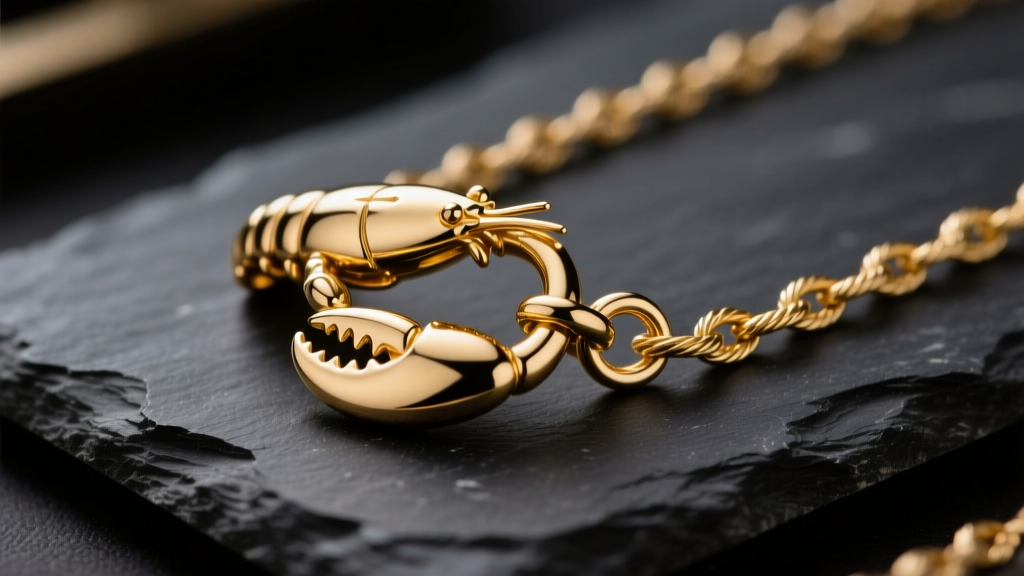
The Hidden Mechanics of Your Clasp
Before attempting any repairs on a malfunctioning lobster claw clasp necklace, it is crucial to understand the micro-mechanics at play. Despite its simple exterior, a standard 12mm lobster clasp is a marvel of miniature engineering. It consists of four primary components: the cast or stamped outer body, the movable trigger lever, the internal tension spring, and the retaining pin. The spring, typically crafted from 0.15mm to 0.20mm gauge stainless steel or spring-tempered brass, provides the kinetic force required to snap the trigger back into the closed position against the interior wall of the clasp body.
When you invest in fine jewelry, the clasp is often the first point of mechanical failure. According to the Rio Grande findings catalog, base-metal clasps plated with rhodium or gold are highly susceptible to internal corrosion, whereas solid 14k gold or platinum clasps suffer primarily from mechanical wear and spring fatigue. Understanding your clasp's metallurgy is the first step in effective troubleshooting.
Diagnosing the Failure: Why is it Stuck?
A lobster claw clasp necklace typically fails in one of three distinct ways. Identifying the exact failure mode will dictate your repair strategy:
- Trigger Track Obstruction: Daily wear introduces microscopic debris—dead skin cells, lotion residues, and cosmetic powders—into the narrow channel where the trigger slides. This creates friction that prevents the spring from fully extending.
- Spring Fatigue or Fracture: If the trigger feels 'mushy' or fails to snap back entirely, the internal tension spring has either lost its temper (hardness) or snapped. This is common in mass-market sterling silver clasps where the spring wire gauge is too thin for the weight of the chain.
- Deformed Trigger Lever: Applying lateral pressure when pulling the necklace off can bend the trigger lever. Even a 0.5mm bend will cause the lever to scrape against the interior housing, resulting in a permanently stuck clasp.
The Jeweler's Troubleshooting Protocol
Do not immediately reach for heavy-duty lubricants. Improper chemical application can ruin the patina of your chain or degrade porous gemstones attached to the pendant. Follow this systematic approach to restore your clasp's tension and movement.
Step 1: Ultrasonic or Chemical Degreasing
If the clasp is sticky but the spring still has tension, debris is the likely culprit. Submerge only the clasp (protecting any delicate pearls or opals on the chain) in a mild solution of warm water and a few drops of ammonia-free dish soap. Use a soft-bristled baby toothbrush to gently agitate the trigger track. For solid gold or platinum, a brief 30-second cycle in a jeweler's ultrasonic cleaner at 40kHz will dislodge microscopic grime without damaging the metal.
Step 2: Precision Lubrication
If cleaning does not restore the snap, the metal-on-metal friction requires lubrication. However, choosing the wrong lubricant is a common amateur mistake that attracts more dirt over time.
| Lubricant Type | Verdict | Jeweler's Notes |
|---|---|---|
| Synthetic Watch Oil (e.g., Moebius 9010) | Highly Recommended | Apply a microscopic drop via a fine needle. It resists drying and won't gum up the trigger track. |
| Dry Graphite Powder | Recommended | Excellent for base-metal clasps. Leaves no sticky residue, but can temporarily darken the metal crevices. |
| Silicone Spray | Use with Caution | Can degrade certain jewelry adhesives if used near glued settings. Avoid on pearl or turquoise strands. |
| WD-40 / Standard Penetrating Oil | NEVER USE | Leaves a heavy, sticky residue that attracts dust, eventually cementing the trigger in place permanently. |
Step 3: Mechanical Realignment
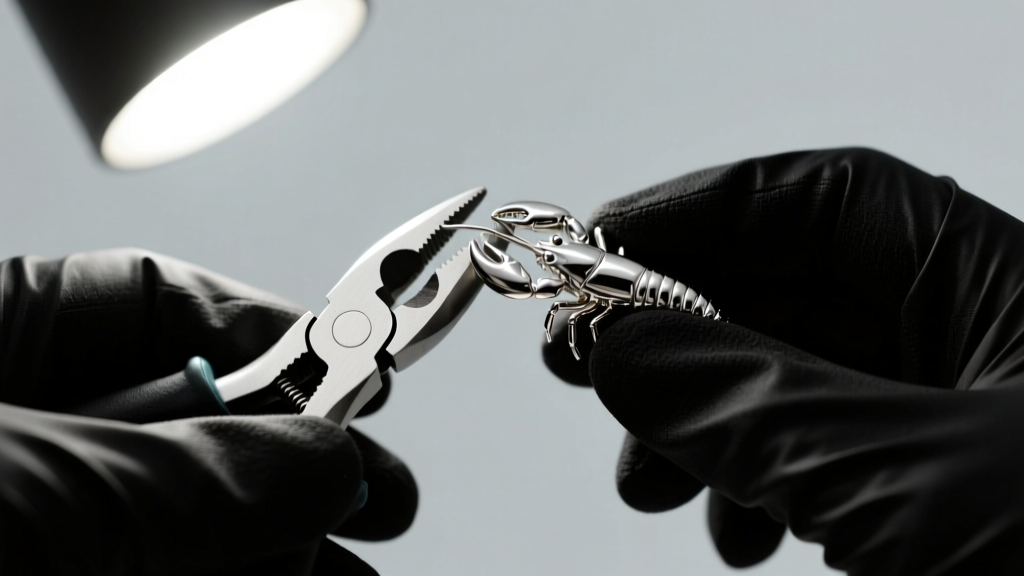
If the clasp is physically jammed, the trigger lever may be bent. Using a 10x jeweler's loupe, inspect the gap between the trigger and the housing. If the gap is uneven, use nylon-jaw flat-nose pliers to apply gentle, corrective pressure to the trigger. Never use steel pliers directly on the clasp, as the Vickers hardness of the steel jaws will easily mar the rhodium plating or scratch solid gold. The Fire Mountain Gems Jewelry Encyclopedia strongly recommends nylon-tipped tools for all finding adjustments to preserve the factory finish.
The Real Culprit: Jump Ring Fatigue
In 70% of cases where a wearer believes their lobster claw clasp necklace has 'broken open,' the failure actually lies in the jump ring attached to the opposite end of the chain. The jump ring is subjected to constant tensile stress. If it was manufactured using a simple butt-cut (where the two ends of the wire merely touch) rather than being soldered closed, it will inevitably pull apart over time.
The Fix: Inspect the jump ring. If you see a gap, use two pairs of flat-nose pliers to twist the ring open laterally (never pull it apart like a C-shape, which weakens the wire's temper). Close it tightly. For a permanent solution, take the necklace to a bench jeweler to have the jump ring laser-welded or silver-soldered shut. This costs between $15 and $30 and guarantees the chain will never slip through the clasp again.
When to Repair vs. Replace: A Cost-Benefit Analysis
Not every clasp is worth saving. The internal springs of inexpensive imported clasps are often sealed inside the cast body, making internal spring replacement impossible without destroying the housing. Use this framework to decide your next move:
- Repair: If the necklace features a heavy, solid 14k or 18k gold lobster clasp (weighing over 1.5 grams). These are modular, and a bench jeweler can easily drill out the retaining pin, replace the 0.20mm spring, and re-pin it for under $40.
- Replace: If the clasp is hollow-cast, heavily plated brass, or smaller than 9mm. The labor cost to repair a micro-clasp far exceeds the $3 to $8 cost of simply snipping it off and soldering on a new, higher-quality finding.
Upgrading for Longevity
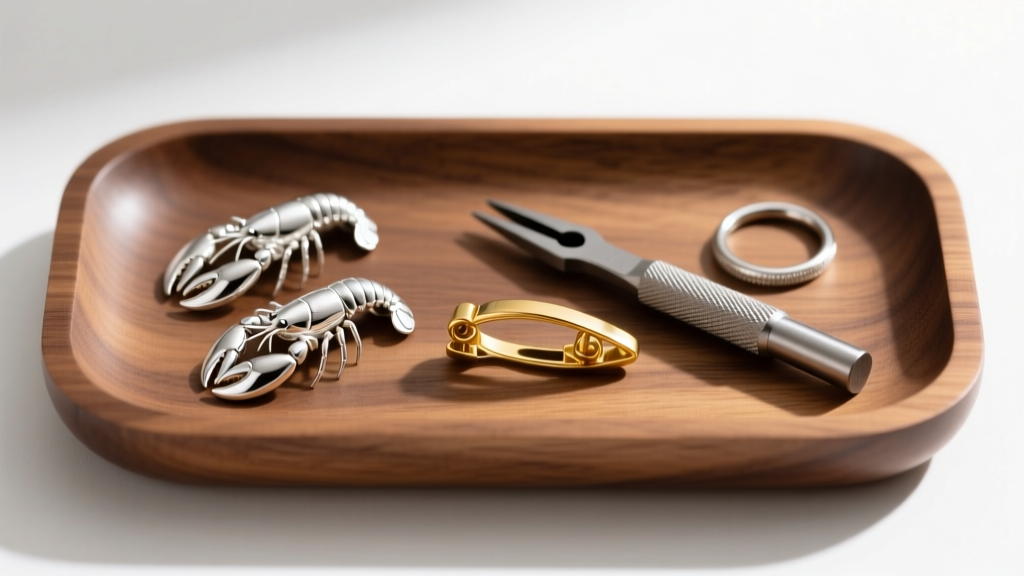
If you are replacing a faulty clasp, consider upgrading the mechanics entirely. Standard lobster claws are excellent for chains up to 2.5mm in width. However, if you are attaching a heavy pendant (over 15 grams), a standard 12mm clasp will suffer from premature trigger fatigue. Upgrade to a 15mm or 18mm heavy-duty lobster clasp, or pivot to a box clasp with a safety figure-eight, which distributes the tensile load across a locked tongue rather than relying on a single micro-spring.
By understanding the micro-mechanics, utilizing the correct solvents, and recognizing when a jump ring is the true point of failure, you can extend the life of your favorite necklaces by decades. Proper troubleshooting transforms a frustrating breakage into a simple, manageable bench repair.


