Troubleshooting a Stuck Transformers Necklace: Repair Guide
Is your transformers necklace stuck or failing to click? Learn expert troubleshooting steps to fix stiff hinges, weak magnets, and modular link issues.

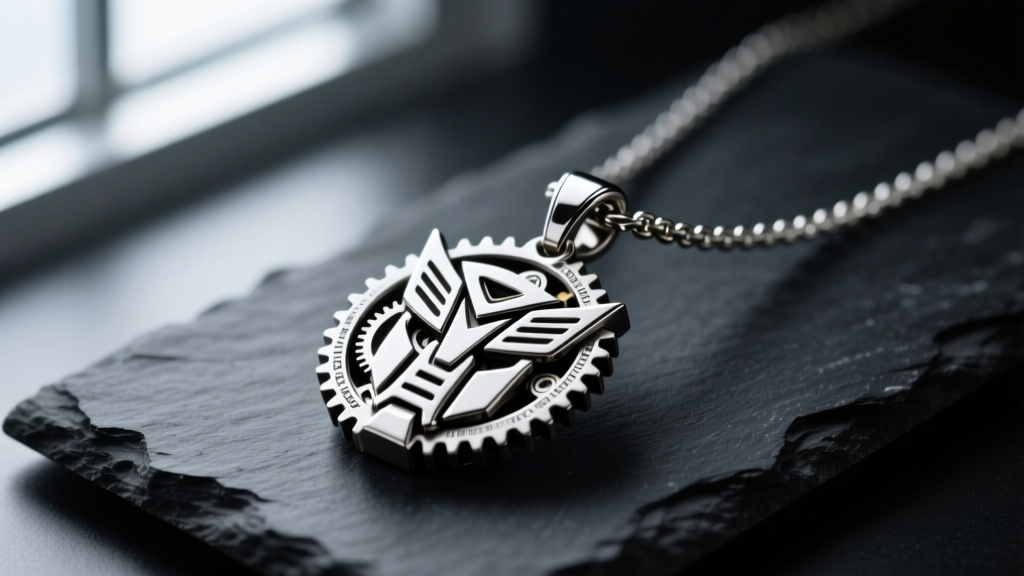
High-end kinetic and modular jewelry has redefined wearable art, but owning a mechanical transformers necklace comes with unique maintenance challenges. Unlike traditional chain necklaces or static pendants, a transformers necklace features moving parts, convertible modular links, micro-hinges, and magnetic clasps that allow the piece to shift from a long pendant to a choker, or reveal hidden mechanical compartments. When these intricate mechanisms fail, the piece becomes unwearable. This comprehensive troubleshooting guide applies horological repair techniques to jewelry, helping you diagnose and fix stuck hinges, failing micro-magnets, and seized modular connections without damaging premium materials like PVD-coated titanium or 316L surgical steel.
The Mechanics of Convertible & Kinetic Jewelry
To effectively troubleshoot a transformers necklace, you must first understand its internal architecture. Premium transforming jewelry relies on tolerances as tight as 0.05mm. The movement is typically driven by one of three systems:
- Friction-Fit Pivot Joints: Used in shape-shifting pendants, these rely on precise tension between a steel pin and a titanium sleeve.
- Neodymium Micro-Magnets: Often graded N42 to N52, these provide the satisfying "click" when converting a long chain into a layered choker.
- Rack and Pinion Gears: Found in kinetic lockets, these microscopic brass or steel gears slide panels open and closed.
Because these components are exposed to the elements, skin oils, and cosmetic dust, they are highly susceptible to environmental seizing. According to the Gemological Institute of America (GIA), the accumulation of microscopic debris in mechanical jewelry settings is the leading cause of structural failure and gemstone loss in kinetic pieces.
Common Failure Points in a Transformers Necklace
Before reaching for tools, identify the exact nature of the mechanical failure. Forcing a stuck joint will strip microscopic threads or snap tension pins, turning a simple cleaning job into a catastrophic structural repair.
Issue 1: Seized Micro-Hinges and Pivot Joints
If the articulated segments of your necklace refuse to fold or unfold smoothly, the pivot joints are likely seized. This is rarely a issue of bent metal; rather, it is a buildup of sebum, dead skin cells, and lotion residue that has hardened inside the 0.2mm clearance gaps of the hinge. Over time, this organic matter acts like cement.
The Fix: Do not use standard jewelry dips or ultrasonic cleaners if the piece contains non-waterproof kinetic grease. Instead, use a localized solvent approach. Apply a single drop of 99% isopropyl alcohol (IPA) or high-purity naphtha directly to the hinge seam using a micro-oiler. Allow it to penetrate for three minutes, then gently work the joint back and forth. Use a piece of Rodico jeweler's putty to pull the dissolved grime out of the seam. Repeat until the pivot moves freely under its own weight.
Issue 2: Failing Neodymium Micro-Magnets
Modular transformers necklaces often use magnets to secure converted configurations. If your necklace no longer holds its choker shape and the links slide apart, the magnetic pull has degraded. Neodymium magnets (NdFeB) are incredibly strong but highly sensitive to thermal shock and physical impacts. Exposing your necklace to hot water (above 80°C/176°F) or dropping it repeatedly can permanently demagnetize the N52 cores.
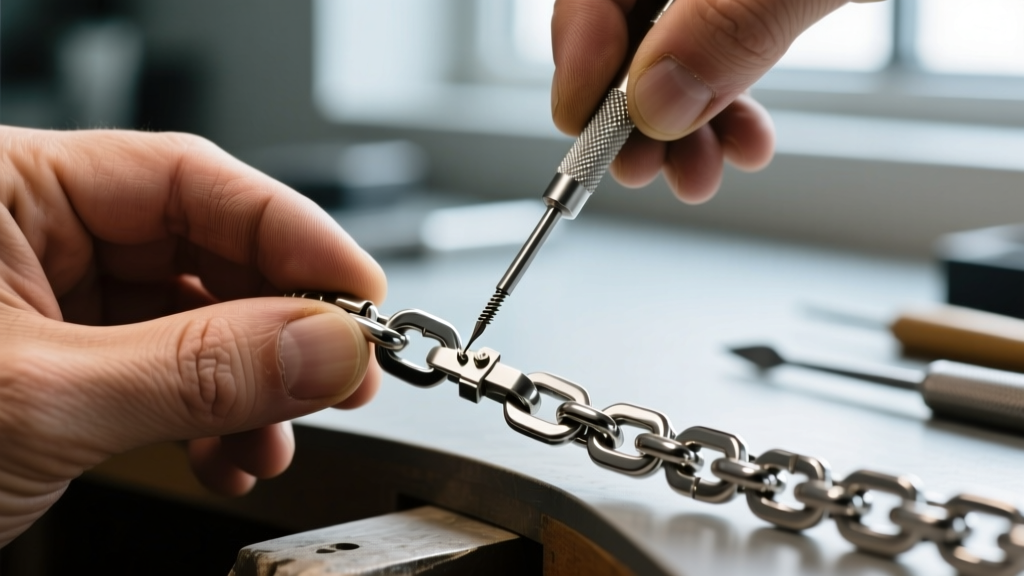
The Fix: Demagnetized cores cannot be recharged at home. You must extract and replace the magnet. Using a 0.5mm hollow-ground precision screwdriver, remove the friction-fit cap on the modular link. Extract the dead magnet using a brass tweezers (steel tweezers will scratch the housing). Clean the cavity with IPA, insert a replacement N52 neodymium disc of the exact same millimeter dimensions, and secure the cap. The Manufacturing Jewelers and Suppliers of America (MJSA) frequently highlights that sourcing exact-tolerance micro-magnets is critical for maintaining the structural integrity of modular jewelry.
Step-by-Step Troubleshooting & Repair Matrix
Use the following matrix to quickly diagnose your necklace's specific mechanical fault and select the appropriate repair protocol.
| Symptom | Probable Cause | DIY Repair Protocol | Required Tools |
|---|---|---|---|
| Stiff or grinding pivot joints | Hardened sebum and cosmetic dust in the hinge gap | Flush with 99% IPA, work the joint, extract debris with Rodico putty | Micro-oiler, 99% IPA, Rodico putty |
| Modular links fail to snap together | Demagnetized core or metal shavings on the magnet face | Wipe magnet face with tack cloth; if weak, replace N52 core | 0.5mm screwdriver, brass tweezers, tack cloth |
| Kinetic sliding panels stick | Dried factory lubricant or misaligned rack gear | Clean old grease with naphtha, re-lubricate with synthetic watch oil | Naphtha, Moebius 9010 oil, #5 Dumont tweezers |
| Chain binds at the conversion clasp | Burrs on the internal locking pin from repeated friction | Polish the locking pin with a micro-mesh pad to remove micro-burrs | Micro-mesh 8000 grit pad, loupe |
Material-Specific Maintenance: Mixed Metals & PVD Coatings
A major complication in repairing a transformers necklace is the presence of mixed materials. High-end pieces frequently combine Grade 5 Titanium, 316L Stainless Steel, and Physical Vapor Deposition (PVD) coatings. Standard silver polishes or abrasive ultrasonic cleaning can permanently ruin these finishes.
Cleaning PVD-Coated Titanium Modules
PVD coatings (often used to create black, rose gold, or gunmetal finishes on titanium) are incredibly hard but can be compromised by harsh chemicals like bleach, ammonia, or chlorine. If your black PVD titanium gears are covered in grime, never use a silver dip. Instead, use a mild solution of distilled water and a single drop of pH-neutral dish soap. Agitate gently with an extra-soft goat-hair detailing brush. Rinse with distilled water and dry immediately with compressed air to prevent water spots from forming in the microscopic gear teeth.
Lubricating Brass and Steel Gears
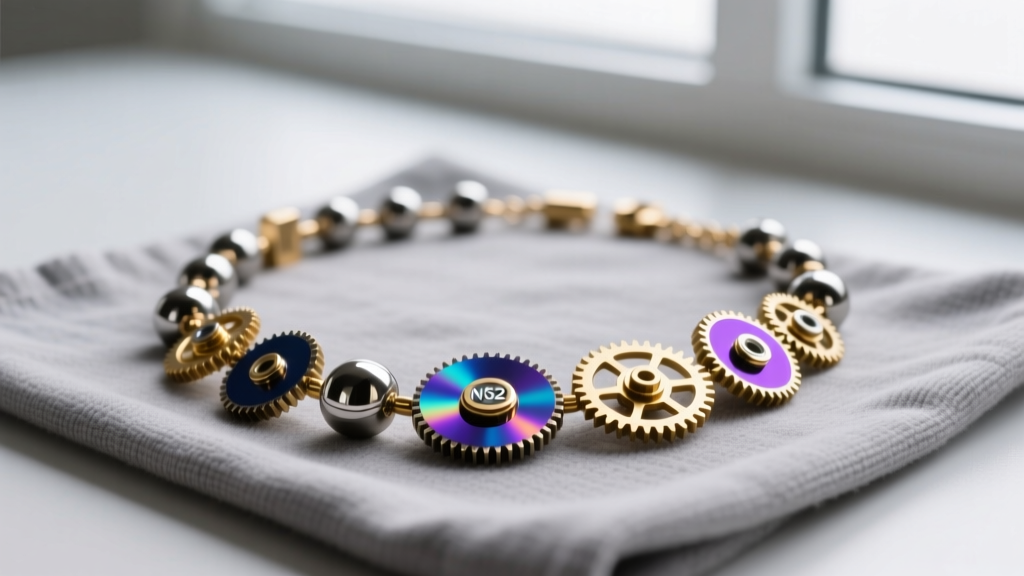
If your necklace features sliding kinetic panels, the internal gears require lubrication. A common and disastrous mistake is using household lubricants like WD-40 or silicone spray. These products contain volatile solvents that evaporate, leaving behind a sticky resin that attracts dust and ultimately seizes the gears completely. You must use a synthetic horological escapement oil, such as Moebius 9010. Apply an amount no larger than the head of a pin directly to the gear arbor using a fine oiler. Capillary action will draw the oil into the pivot jewel or brass sleeve.
When to Seek Professional Jeweler Intervention
While many maintenance tasks can be performed at home, certain failures require a master jeweler or a specialist in kinetic art jewelry. You should cease DIY attempts and seek professional help if:
- Stripped Friction Pins: If a pivot pin spins freely and will not back out, attempting to drill it out at home will likely gouge the titanium housing.
- Cracked Sapphire Crystal Windows: Many high-end transformers necklaces use sapphire crystal to protect the internal gears. Replacing these requires specialized UV-cured optical adhesives and pressure-testing equipment.
- Galvanic Corrosion: If you notice a green or white powdery substance forming where steel and aluminum modules meet, galvanic corrosion is eating the metal. A professional must disassemble the piece, treat the corrosion with a mild acid bath, and apply a dielectric barrier grease before reassembly.
Preventative Care for Modular Jewelry
Preventing mechanical failure is vastly superior to repairing it. To ensure your transformers necklace operates flawlessly for decades, implement the following preventative care routine:
- The Monthly Flush: Once a month, flush all pivot points and sliding tracks with 99% IPA to dissolve invisible skin oils before they can polymerize and harden.
- Cosmetic Sequencing: Always put your mechanical necklace on after applying perfumes, hairsprays, and lotions. The alcohol and aerosol propellants in cosmetics can strip essential lubricants from internal gears.
- Magnetic Isolation: When storing the necklace, keep it away from strong electronic fields, iPads, and magnetic purse clasps, which can interfere with the alignment of the internal micro-magnets over time.
- Tension Checks: Bi-annually, inspect the modular conversion clasps. If the locking pin shows visible scoring or micro-burrs under a 10x jeweler's loupe, lightly polish it with an 8000-grit micro-mesh pad to prevent it from shredding the interior of the receiving sleeve.
By treating your transformers necklace not just as an accessory, but as a piece of precision micro-engineering, you ensure that its shape-shifting capabilities remain as satisfying and flawless as the day it was machined.


