Stacking Necklaces Troubleshooting: Fix Tangling and Chain Breakage
Learn expert troubleshooting for stacking necklaces. Discover how to prevent tangling, fix chain breakage, and balance metal weights.

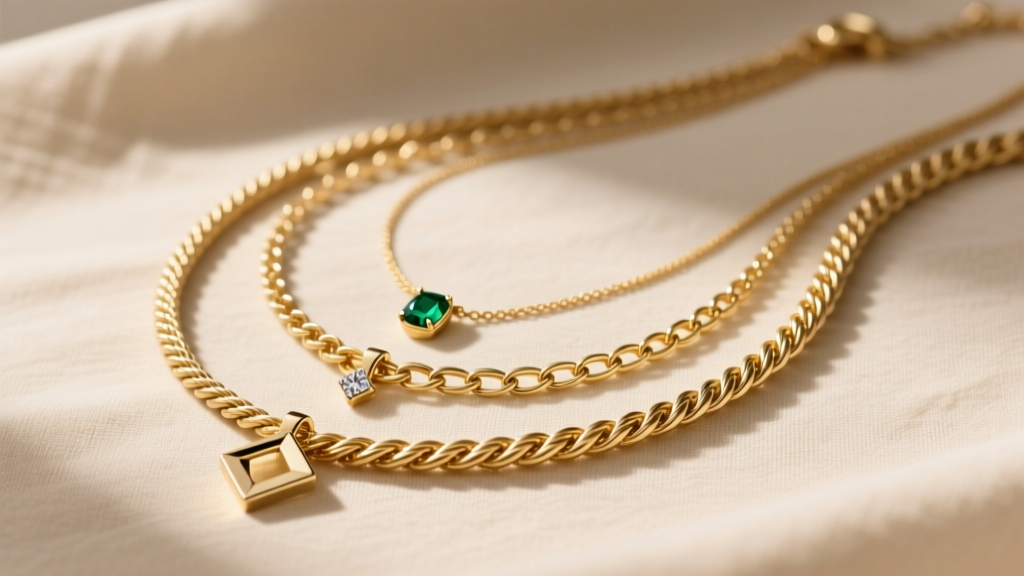
The art of stacking necklaces has evolved from a simple styling trend into a permanent fixture of modern jewelry wardrobes. However, the aesthetic appeal of layered chains often masks a host of mechanical and chemical frustrations. From micro-tangles that ruin delicate links to galvanic corrosion caused by mixed metals, the physics of wearing multiple necklaces simultaneously presents real-world challenges. This comprehensive troubleshooting guide addresses the structural failures of layered jewelry, providing actionable frameworks to protect your investments and maintain a flawless drape.
The Physics of Tangling: Why Your Chains Knot
Tangling is not a random occurrence; it is a predictable result of friction, surface area, and electrostatic charge. When you wear multiple chains, they act as independent kinetic systems. As you move, the chains slide against one another. If the coefficient of friction between two chain types is high, they will catch, twist, and eventually knot.
The primary culprit in most tangled stacks is the pairing of high-surface-area chains with smooth, continuous chains. For example, a rope chain features intricate, spiraled grooves that act like microscopic hooks. When paired with a smooth snake chain or a delicate box chain, the grooves of the rope chain will catch the edges of the box links, creating a ratcheting effect that tightens with every movement. Furthermore, synthetic fabrics (like polyester blouses) generate static electricity, which pulls lightweight chains (under 1.0mm gauge) together, exacerbating the knotting process.

Troubleshooting Matrix: Chain Link Compatibility
To eliminate tangling, you must engineer your stack based on link compatibility. The following matrix outlines how different chain profiles interact when layered. Always maintain a minimum length differential of 2 inches between layers to reduce the frequency of contact points.
| Chain Type | Surface Friction | Tangling Risk | Best Paired With | Avoid Pairing With |
|---|---|---|---|---|
| Cable (Standard) | Low-Medium | Moderate | Box, Figaro, Curb | Rope, Herringbone |
| Box | Low | Low | Cable, Bead, Snake | Thick Rope chains |
| Rope | High | Severe | Solitaire Pendants (Single wear) | Box, Snake, Cable |
| Snake | Medium (Hair catching) | High | Bead chains, Thick Curbs | Any delicate link chain |
| Figaro | Medium | Low-Moderate | Box, Cable (if gauge differs) | Similar gauge Figaros |
Solving the Weight Imbalance and Breakage Problem
A frequent failure point in stacking necklaces is structural fatigue caused by weight imbalances. When a heavier pendant is suspended on a delicate chain, the dynamic stress of walking or bending can exceed the chain's tensile strength. According to manufacturing standards outlined by Rio Grande, a standard 0.8mm sterling silver box chain has a breaking point of roughly 1.5 to 2 pounds under static load. However, dynamic stress (the whipping motion of a pendant swinging) can multiply that force by three or four times, leading to micro-fractures in the soldered links.
The 3-Tier Weight Distribution Framework
To prevent breakage and ensure the stack lays flat against the clavicle, apply this gauge-thickness framework:
- Layer 1 (14-16 inches): 0.8mm to 1.0mm gauge. Use lightweight chains like delicate cable or bead chains. Pendant weight should not exceed 2 grams.
- Layer 2 (18-20 inches): 1.2mm to 1.5mm gauge. Box or Wheat chains offer excellent tensile strength for medium pendants (up to 5 grams) without stretching.
- Layer 3 (22-24 inches): 2.0mm to 3.0mm gauge. Figaro, Curb, or Rope chains. These act as the structural anchor of the stack and can support heavy statement pendants (10+ grams) without warping.
Expert Tip: If you must hang a heavy pendant on a delicate chain, reinforce the clasp area. The weakest point of any chain is the jump ring connecting the clasp. Have a jeweler solder the jump ring shut or upgrade to a lobster clasp with a reinforced, soldered O-ring.
Metal Clashing and Galvanic Corrosion
Mixing metals is a staple of modern styling, but it introduces chemical risks. When you stack necklaces made of different base alloys—such as a sterling silver (925) chain layered with a copper-core gold vermeil chain—you create a makeshift battery. When perspiration (which contains salt and acts as an electrolyte) bridges the gap between the two metals, galvanic corrosion occurs. The less noble metal (copper or brass) acts as an anode and begins to oxidize rapidly, leading to green skin discoloration and the degradation of the chain's structural integrity.
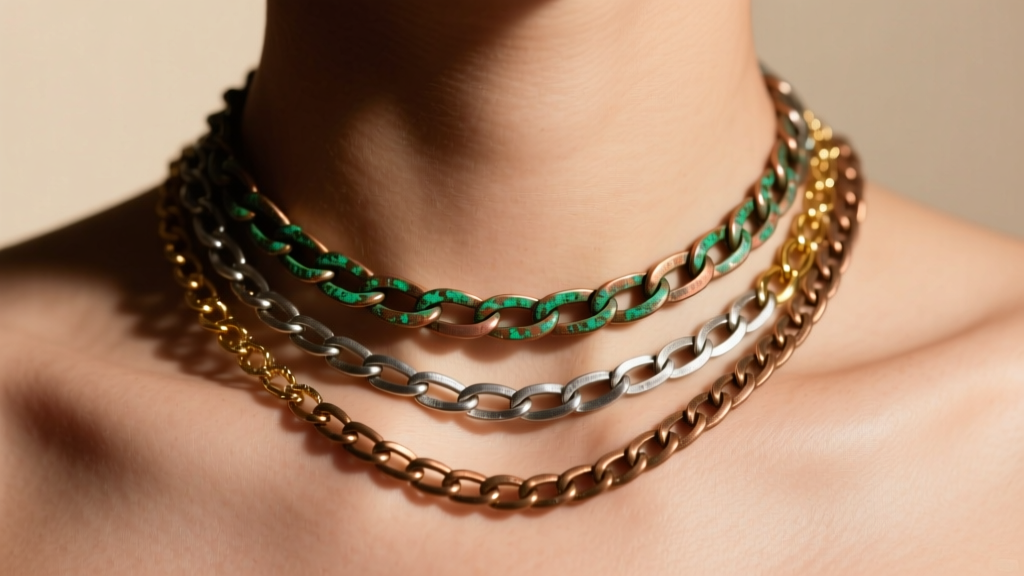
Troubleshooting Mixed Metal Stacks
To safely mix metals without triggering corrosion or aesthetic clashing, follow these protocols:
- The Barrier Method: Never allow reactive metals to physically touch the skin simultaneously. Use a higher-karat gold (14k or 18k) or platinum chain as the innermost layer (closest to the skin), as these are highly noble and resistant to sweat-induced oxidation.
- Coating Verification: Avoid stacking gold vermeil (which is sterling silver coated in gold) directly against raw brass or copper. Once the vermeil wears thin at the friction points, the exposed silver and copper will react aggressively.
- Tone Bridging: If mixing yellow gold and silver, introduce a transitional piece—such as a two-tone pendant or a chain with alternating metal links—to visually bridge the gap and distract from the contrasting undertones.
Hardware Solutions: Spacers and Multi-Strand Clasps
When physics and chemistry cannot be entirely mitigated by chain selection alone, hardware interventions are required. The most effective permanent solution for stacking necklaces is the use of multi-strand spacer clasps. These magnetic or lobster-claw mechanisms feature two or three integrated loops that lock your chains together at the nape of the neck.
By anchoring the chains at the clasp, you eliminate the rotational variance that causes tangling. High-quality magnetic spacer clasps (featuring N52 neodymium magnets encased in 14k gold or surgical steel) typically range from $35 to $85. They allow you to maintain a 2-inch drop difference while ensuring the chains remain perfectly parallel. For a more budget-friendly, temporary fix, jewelers often use microscopic silicone O-rings (costing less than $5 for a pack of 50) threaded onto the chains to act as friction bumpers, preventing the pendants from sliding into the center and colliding.
Emergency Detangling Protocol
Despite your best efforts, severe micro-knots can occur, particularly with 0.8mm box chains and snake chains. Pulling at a knot increases the tension, deforming the soft metal links and potentially snapping the solder points. Instead, utilize this professional detangling protocol:
- Isolate the Knot: Lay the stack flat on a non-porous, dark surface (like a glass or slate tray) to maximize contrast and visibility.
- Apply a Dry Lubricant: Generously dust the knot with cosmetic talcum powder or cornstarch. Do not use oil-based lubricants (like baby oil or WD-40), as they will attract dirt and degrade porous gemstones like pearls or turquoise that may be attached to the stack.
- Introduce the Needle: Using a size 9 or 10 beading needle (which is thinner than standard sewing needles), gently work the tip into the exact center of the knot. Do not pull; instead, use a micro-circular motion to widen the internal gap.
- Work Outward: Once the center link is loosened, use two needles to gently push the outer links away from the center. The talcum powder will reduce the friction, allowing the metal links to slide past one another without catching.
- Cleanse: After detangling, wash the necklaces in a mild solution of warm water and a few drops of phosphate-free dish soap to remove the powder, then dry thoroughly with a microfiber cloth to prevent water spots.
By understanding the mechanical and chemical interactions of your jewelry, you can transform stacking necklaces from a daily frustration into a seamless, enduring expression of personal style. Proper gauge selection, mindful metal pairing, and strategic hardware will ensure your layers remain pristine, untangled, and structurally sound for years to come.


