How to Repair a Tarnished Juicy Couture Butterfly Necklace
Learn how to repair, clean, and restore a tarnished Juicy Couture butterfly necklace. Expert tips on fixing broken chains, replacing rhinestones, and more.

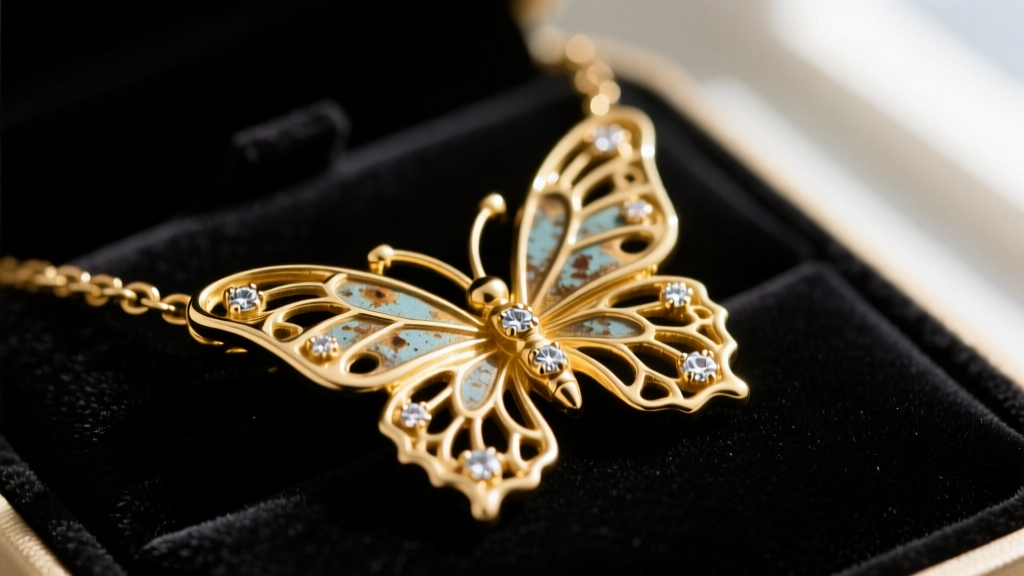
As the Y2K aesthetic continues to dictate jewelry trends in 2026, the iconic Juicy Couture butterfly necklace remains a highly coveted grail piece. Originally released in the early-to-mid 2000s, these necklaces—often featuring the brand's signature 'J' monogram, rhinestone-encrusted wings, and gold-tone hardware—are now vintage collectibles. However, because they were manufactured as fashion jewelry rather than fine jewelry, they are highly susceptible to specific degradation issues. From oxidized base metals and failing lobster clasps to missing pavé crystals, restoring these pieces requires a specialized approach.
In this comprehensive troubleshooting guide, we will break down the exact metallurgical and structural failures common to the Juicy Couture butterfly necklace and provide professional-grade solutions to bring your vintage piece back to life.
Diagnosing Common Juicy Couture Necklace Failures
Before applying any cleaning solutions or adhesives, you must accurately diagnose the material composition of your specific necklace. Most vintage Juicy Couture pendants are cast from zinc alloy (Zamak) or brass, plated with a microscopically thin layer of gold-tone metal (usually less than 0.5 microns). Understanding this baseline prevents catastrophic damage during restoration.
| Problem Symptom | Underlying Cause | Recommended Solution |
|---|---|---|
| Green/Black flaking on wings | Zinc alloy oxidation breaking through worn plating | Mechanical polishing and clear-coat sealing |
| Cloudy or missing rhinestones | Adhesive desiccation and foil-backing moisture damage | Stone replacement using Gem-Tac and SS12/SS16 crystals |
| Chain snapping at the clasp | Galvanic corrosion weakening the soldered jump ring | Replace with 20-gauge stainless steel or gold-filled rings |
| Dull, muddy gold appearance | Accumulation of skin oils, lotions, and environmental sulfur | Mild surfactant bath (avoid thiourea-based silver dips) |
Step-by-Step Tarnish Removal Without Damaging Enamel
The most frequent mistake collectors make when cleaning a tarnished Juicy Couture butterfly necklace is reaching for commercial silver dips or ultrasonic cleaners. Silver dips rely on thiourea, a harsh chemical that will instantly strip the fragile gold-tone plating off the zinc alloy base, leaving you with a dull, gray pendant. Furthermore, ultrasonic vibrations can easily shatter the delicate glass rhinestones or loosen the painted enamel details on the butterfly's wings.
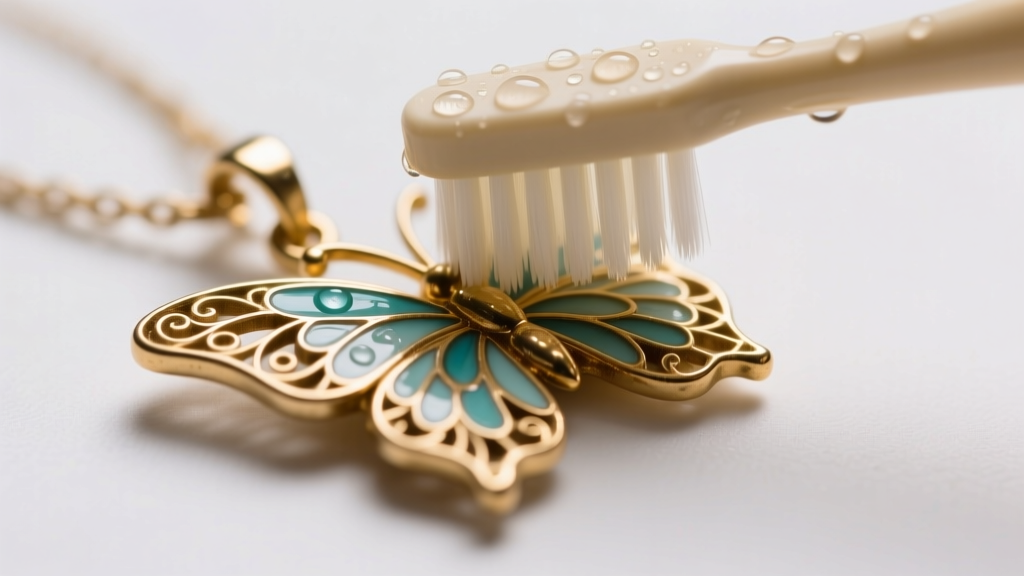
The Safe Surfactant Method
According to jewelry care guidelines outlined by The Spruce Crafts, mild surfactants are the safest route for plated costume jewelry. Follow this protocol:
- Prepare the Solution: Mix three drops of pH-neutral dish soap (like Dawn) into a bowl of distilled water. Avoid tap water, as trace minerals and chlorine can accelerate oxidation on exposed base metals.
- Targeted Agitation: Dip an extra-soft baby toothbrush into the solution. Gently scrub the filigree and crevices of the butterfly wings. Critical Warning: Avoid scrubbing any sections with painted enamel or glued-in stones, as prolonged moisture exposure will dissolve the factory adhesive.
- Rinsing and Drying: Rinse briefly under a slow stream of lukewarm distilled water. Immediately pat dry with a lint-free microfiber cloth, then use a hair dryer on the 'cool' setting to blast moisture out of the prong settings.
Fixing Broken Chains and Faulty Lobster Clasps
The standard chains used on 2000s-era Juicy Couture necklaces are typically 1.2mm to 1.5mm cable or curb chains. The weak point is almost always the jump ring connecting the chain to the lobster clasp. Over time, the tension on the jump ring causes it to pull apart, or the internal spring of the lobster clasp itself fails due to metal fatigue.
Sourcing the Right Replacement Hardware
Do not use standard craft-store jump rings. Plated brass jump rings are too soft and will snap under the weight of the heavy butterfly pendant. Instead, source 4mm, 20-gauge jump rings made from 14k gold-filled wire or surgical-grade stainless steel. As noted by the Gemological Institute of America (GIA), ensuring structural integrity at the clasp connection is vital for heavy pendants.
- Use two pairs of flat-nose or chain-nose pliers to grip the broken jump ring.
- Twist the ring open laterally (side-to-side) rather than pulling it apart outward, which distorts the circular shape.
- Thread the new 20-gauge jump ring through the end link of the 1.5mm chain and the loop of the replacement lobster clasp.
- Twist the ring closed until you hear and feel a subtle 'click' or 'snap', indicating the ends are perfectly flush and will not catch on clothing.
Replacing Missing Rhinestones and Enamel Touch-Ups
Juicy Couture heavily utilized pavé settings on their butterfly motifs. When a stone falls out, it leaves a dark, empty socket that drastically reduces the piece's value and visual appeal. Replacing these stones requires precision and the correct materials.
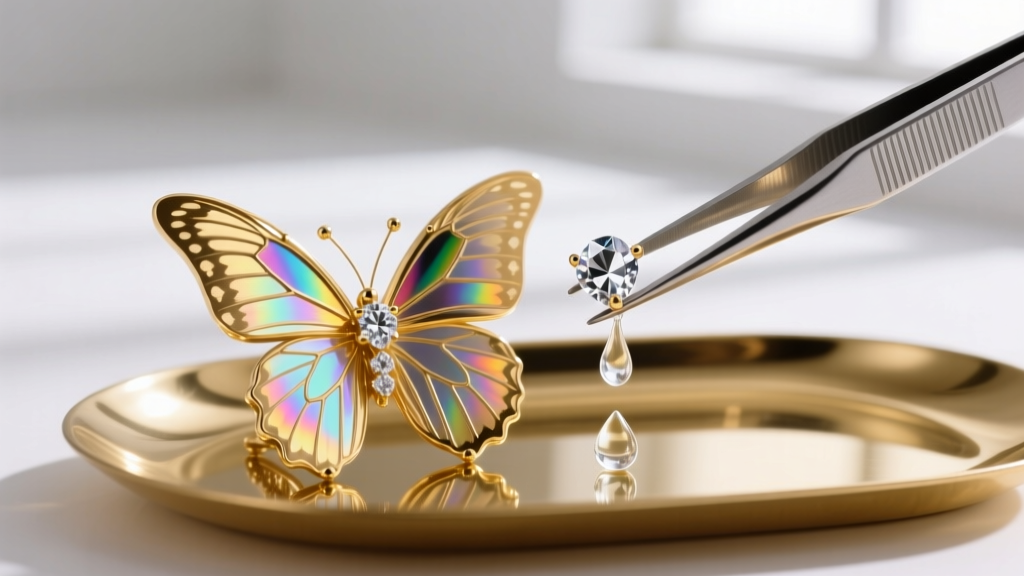
Identifying Stone Sizes and Adhesives
According to the sizing charts provided by Fire Mountain Gems, the vast majority of stones used on the Juicy Couture butterfly wings are SS12 (3.1mm)SS16 (3.9mm)
The Adhesive Debate: Never use superglue (cyanoacrylate) or standard E6000 for rhinestone replacement. Superglue emits fumes that will permanently 'fog' the crystal, and E6000 is too viscous, often oozing up the sides of the stone and ruining the facet edges. Instead, use Gem-Tac or a specialized jeweler's epoxy. Apply a microscopic drop into the socket using a syringe tip or a toothpick, wait 30 seconds for it to become tacky, and place the stone using wax-tipped tweezers. Allow 24 hours for a full cure.
Long-Term Storage and Anti-Tarnish Prevention
Once your Juicy Couture butterfly necklace is repaired and polished, proper storage is non-negotiable. The zinc alloy base metal is highly reactive to sulfur and humidity in the air. Store the necklace in a sealed, acid-free polyethylene ziplock bag along with a 3M anti-tarnish strip. Never store costume jewelry in PVC plastic bags or original cardboard boxes, as the off-gassing from these materials will cause rapid, irreversible oxidation. By following these precise troubleshooting steps, your vintage butterfly necklace will remain a pristine staple of your 2026 wardrobe for years to come.


