Troubleshooting a Tarnished White Gold Beaded Necklace
Is your white gold beaded necklace turning yellow or breaking? Learn expert troubleshooting tips to restore rhodium, fix clasps, and clean beads.

The Unique Challenges of White Gold Beaded Jewelry
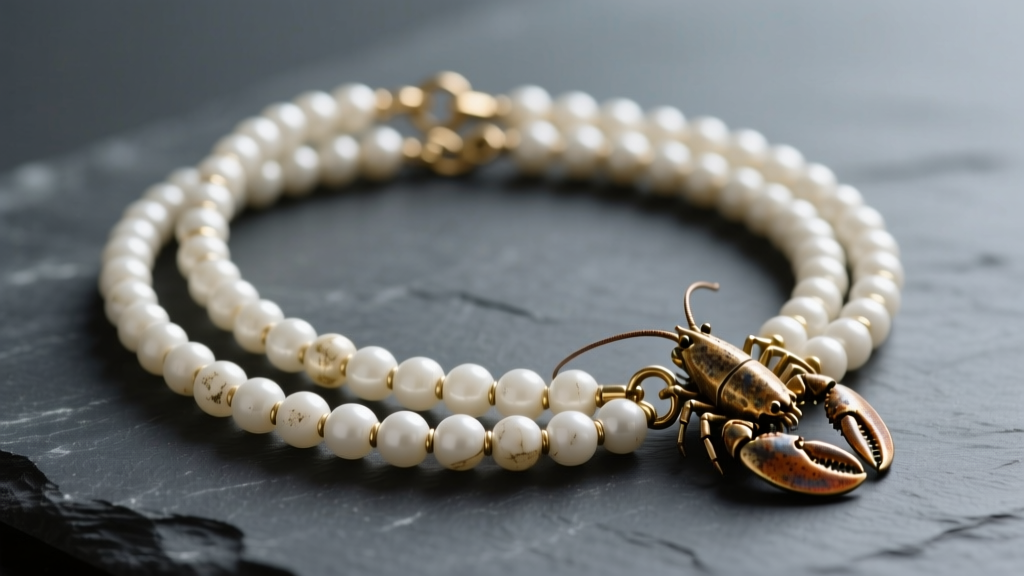
A white gold beaded necklace is a stunning, textured alternative to standard chains, offering a luxurious drape and brilliant light reflection. However, from a structural and metallurgical perspective, beaded necklaces present a unique set of troubleshooting challenges that solid chains do not. The continuous point-friction between individual beads, the stress placed on stringing materials, and the accelerated wear of rhodium plating at the drill holes can quickly turn a prized piece of jewelry into a tarnished, fragile liability.
Whether your necklace is composed entirely of solid 14k or 18k white gold beads, or features white gold accents interspersed with gemstones, understanding the mechanics of how these pieces fail is the first step toward restoration. In this comprehensive troubleshooting guide, we will diagnose the most common issues plaguing white gold beaded necklaces—from the dreaded 'yellowing' effect to catastrophic stringing failures—and provide actionable, expert-level solutions to restore your jewelry to its original glory.
Diagnosing the 'Yellowing' Problem: Rhodium Plating Friction
The most frequent complaint we receive regarding white gold jewelry is that it is turning yellow or brassy. To troubleshoot this, you must first understand that white gold is not naturally white; it is an alloy of pure yellow gold mixed with white metals like nickel, palladium, or silver. To achieve a bright, mirror-like white finish, the jewelry is electroplated with a microscopic layer of rhodium, a rare platinum-group metal.
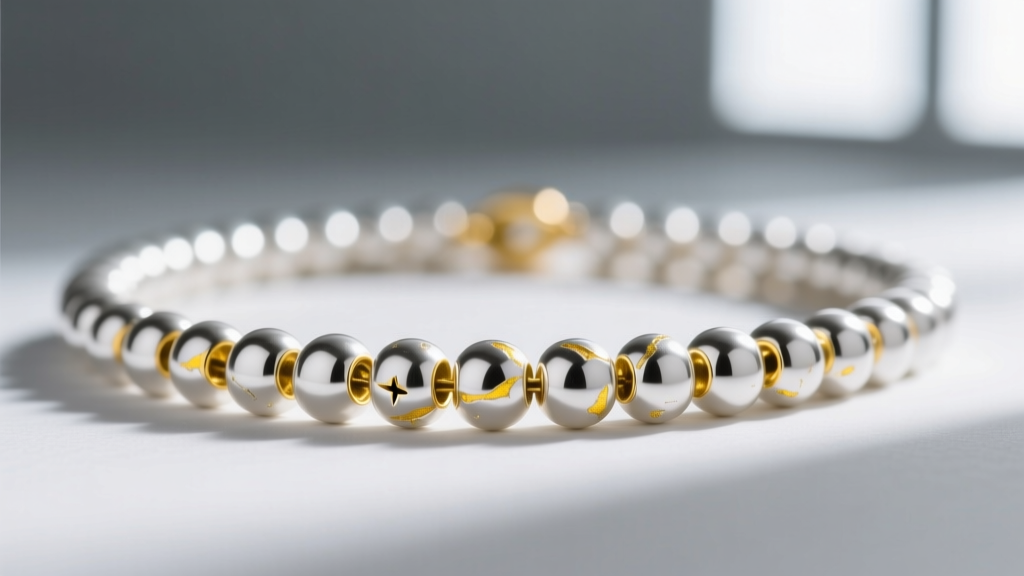
In a standard chain, rhodium wear occurs gradually across the surface links. In a white gold beaded necklace, however, the friction is heavily concentrated at the drill holes where the beads rub against each other or against the internal stringing wire. This point-friction acts like micro-sandpaper, stripping the rhodium plating (which is typically only 0.75 to 1.0 microns thick) much faster than on smooth surfaces.
Troubleshooting and Restoration Steps
- Assess the Wear: Examine the drill holes under a 10x jeweler's loupe. If you see a yellowish tint, the rhodium has worn through to the base alloy.
- Avoid DIY Polishing: Do not attempt to buff the yellow spots with a silver polishing cloth. Polishing cloths contain mild abrasives that will only remove more of the surrounding rhodium, worsening the problem.
- Professional Replating: The only permanent fix is professional rhodium replating. A jeweler will ultrasonically clean the piece, lightly polish the beads to remove scratches, and submerge the necklace in a rhodium electroplating bath. Expect to pay between $45 and $85 for this service, depending on the necklace's length and bead complexity.
For long-term maintenance, the Gemological Institute of America (GIA) recommends removing white gold jewelry before swimming or using harsh household chemicals, as chlorine can rapidly degrade the rhodium layer and weaken the underlying gold alloy.
Structural Failures: Troubleshooting Stringing and Wire Snapping
Unlike solid cast chains, most white gold beaded necklaces are not linked metal-to-metal. Instead, individual white gold beads are strung on a flexible core material. When a beaded necklace snaps, it is rarely the gold beads themselves that fail; it is the internal stringing material. The constant friction of the metal beads sawing against the stringing wire eventually causes catastrophic failure.
Comparing Stringing Materials and Failure Points
| Stringing Material | Diameter / Gauge | Best Application | Common Failure Mode |
|---|---|---|---|
| Nylon-Coated Stainless Steel (e.g., Soft Flex) | 0.019' (Medium) | Standard 4mm - 8mm white gold beads | Internal wire fraying at the crimp bead due to bead-on-bead friction. |
| Heavy-Duty Beading Wire | 0.024' (Heavy) | Large, heavy solid gold beads or gemstones | Stiffness causes kinking, leading to a weak point that snaps under tension. |
| Griffin Silk Cord | Size #6 (0.80mm) | Knotted pearl and white gold bead combinations | Silk degrades from skin oils and stretches, causing gaps between beads. |
| Solid White Gold Wire Links | 20-Gauge (0.81mm) | High-end, fully linked beaded designs | Wire links bend and pull open at the loops if the necklace is yanked. |
How to Fix and Prevent Snapping
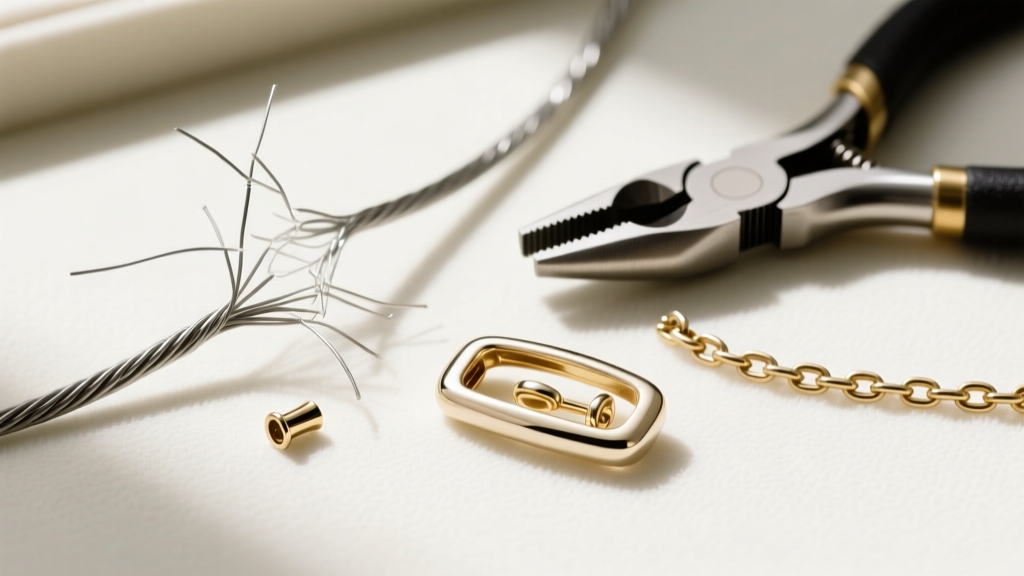
If your necklace frequently breaks near the clasp, the issue is likely a poorly executed crimp. Crimp beads secure the nylon-coated wire to the clasp jump ring. If a jeweler or manufacturer used a base-metal crimp bead, it will eventually oxidize and crumble. When having your white gold beaded necklace restrung, insist on 14k white gold or sterling silver crimp beads and request that the jeweler use a crimping plier tool to fold the bead into a secure, rounded shape, rather than simply crushing it flat with chain-nose pliers, which creates sharp edges that cut the wire.
Clasp and Jump Ring Troubleshooting for Heavy Beads
Solid white gold beads are exceptionally dense and heavy. A standard 18-inch necklace featuring 6mm solid 14k white gold beads can easily weigh over 40 grams. This significant weight places immense tensile stress on the clasp mechanism. If you are constantly finding your clasp open, or if the jump ring connecting the clasp to the beads has pulled apart, your hardware is undersized for the necklace's weight.
Upgrading Your Clasp Hardware
The lightweight spring-ring clasp commonly included on mass-market jewelry is entirely inadequate for a heavy white gold beaded necklace. The internal spring mechanism will fatigue, and the thin wire of the ring will bend open under the pendulum effect of walking. To troubleshoot and resolve this:
- Switch to a Box Clasp: For beaded necklaces over 30 grams, a box clasp (also known as a tongue-and-groove clasp) is mandatory. It features a folding lever that clicks securely into a boxed housing, distributing the weight across a wider surface area.
- Add a Figure-8 Safety Catch: A secondary wire that snaps over a small peg on the opposite side of the clasp. If the primary box clasp accidentally dislodges, the safety catch prevents the beads from scattering across the floor.
- Solder the Jump Rings: The jump rings connecting the clasp to the beading wire should be soldered shut with a laser welder. This eliminates the microscopic gap where the flexible wire can slip through and escape.
Safe Cleaning Protocols: Avoiding Gemstone and Alloy Damage
Cleaning a white gold beaded necklace requires extreme caution, especially if the design incorporates porous gemstones alongside the metal beads. While pure white gold beads can withstand rigorous cleaning, mixed-material necklaces require a tailored approach. The Jewelers of America strongly advises against using one-size-fits-all cleaning methods for complex beaded jewelry.
The Ultrasonic Cleaner Danger
Many consumers drop their beaded necklaces into home ultrasonic cleaners to remove lotion and sebum buildup from the drill holes. While ultrasonic waves are excellent for removing dirt from solid gold, the high-frequency vibrations can cause catastrophic damage to certain gemstone beads often paired with white gold. Opals, emeralds, pearls, and turquoise can fracture, craze, or lose their polish in an ultrasonic bath. Furthermore, the vibrations can loosen the adhesive inside glue-set crimp beads, leading to unexpected stringing failures.
The Expert Cleaning Method
To safely clean your white gold beaded necklace at home without risking structural or aesthetic damage, follow this protocol:
- Prepare a Mild Solution: Mix a few drops of phosphate-free dish soap (like Dawn) into a bowl of lukewarm distilled water. Avoid hot water, which can expand metal settings and crack temperature-sensitive beads.
- Agitate Gently: Submerge the necklace and gently swish it for 2 to 3 minutes. Do not scrub the beads with a toothbrush, as stiff bristles can scratch the rhodium plating and dull softer gemstone beads.
- Target the Drill Holes: Use a soft, lint-free microfiber cloth to gently wipe the surface of each bead. For stubborn grime trapped in the drill holes, use a wooden toothpick or a soft interdental brush to carefully dislodge the debris without scratching the metal.
- Dry Thoroughly: Lay the necklace flat on a dry towel. Ensure the area near the crimp beads and clasp is completely dry before storing, as trapped moisture can cause the internal steel wire to rust and expand, eventually snapping the nylon coating.
Final Thoughts on Beaded Necklace Maintenance
Troubleshooting a white gold beaded necklace requires looking beyond the surface shine and understanding the mechanical stresses placed on the piece. By monitoring the rhodium plating at the friction points, ensuring the internal stringing wire is appropriately gauged and crimped, and upgrading to heavy-duty clasps, you can transform a fragile piece of jewelry into a durable, lifelong heirloom. When in doubt, always consult a certified bench jeweler who specializes in beaded restringing and precious metal electroplating to ensure your necklace remains as secure as it is beautiful.


