Why the Necklace Clasp Slides Forward and How to Fix It
Discover why the necklace clasp keeps sliding to the front and learn 4 professional jeweler-approved fixes to balance your chain and pendants.

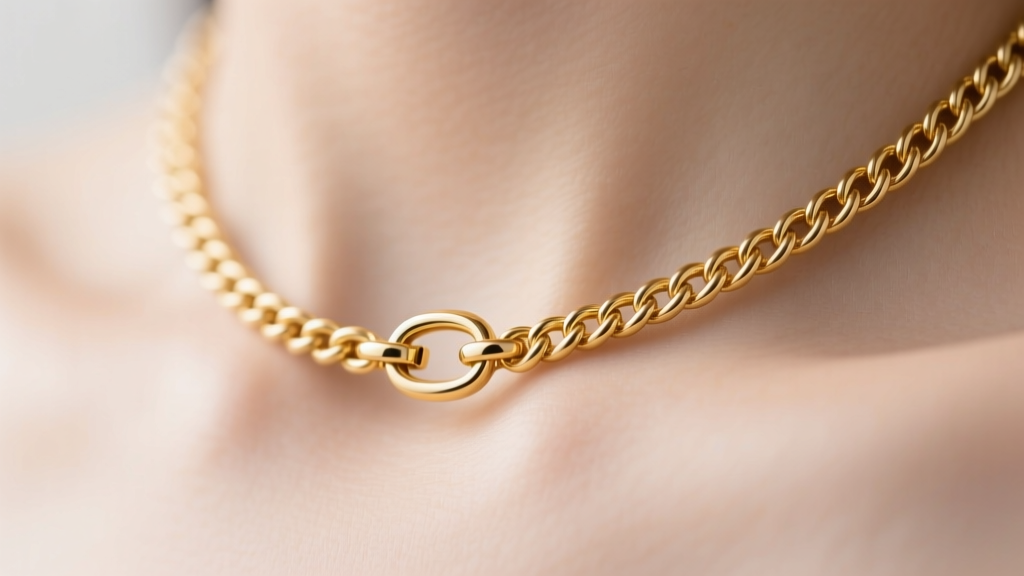
The Physics of Necklace Migration: Why It Happens
There are few things more frustrating in daily jewelry wear than constantly reaching back to adjust your chain. When the necklace clasp continually slides from the nape of your neck to the front, it is not a curse or a matter of bad luck—it is a predictable issue of physics. According to the Gemological Institute of America (GIA), proper jewelry wear relies on a balanced center of gravity. When that balance is disrupted by uneven weight distribution or low-friction materials, migration occurs.
The Center of Gravity Problem
The human neck is not a perfect cylinder; it is a sloped, conical shape that narrows toward the head. When you wear a chain, it naturally seeks the lowest point of equilibrium on this slope. If the clasp at the back is heavier than the chain links at the front, or if a heavy pendant pulls the front of the chain taut, the clasp will act as a counterweight on a pulley system. It slides up the slope of your neck, over the collarbone, and comes to rest right next to your pendant.
Metal Density and Weight Distribution
Not all clasps are created equal, and the metal composition of your jewelry plays a massive role in sliding. A standard 10mm 14k gold lobster clasp weighs approximately 1.2 grams. However, if you have upgraded your clasp to platinum for durability, you have introduced a massive weight imbalance. Platinum has a density of 21.45 g/cm³, compared to 14k gold’s density of roughly 12.9 g/cm³. A platinum lobster clasp can easily weigh over 2.5 grams. When paired with a lightweight 20-gauge or 22-gauge chain, the heavy platinum clasp will almost always drag the chain backward, pulling the front clasp area to the center of your chest.
Similarly, spring ring clasps are generally lighter than lobster clasps. Swapping a heavy lobster clasp for a 10mm 14k gold spring ring (which weighs roughly 0.6 grams) can instantly solve the sliding issue on very delicate chains without requiring any structural modifications.
Chain Types and Friction Coefficients
The architectural design of your chain dictates how much friction it generates against your skin and clothing. Smooth, tightly interlocked chains act like a slip-and-slide, while textured, open-link chains grip the skin and fabric, anchoring the necklace in place.
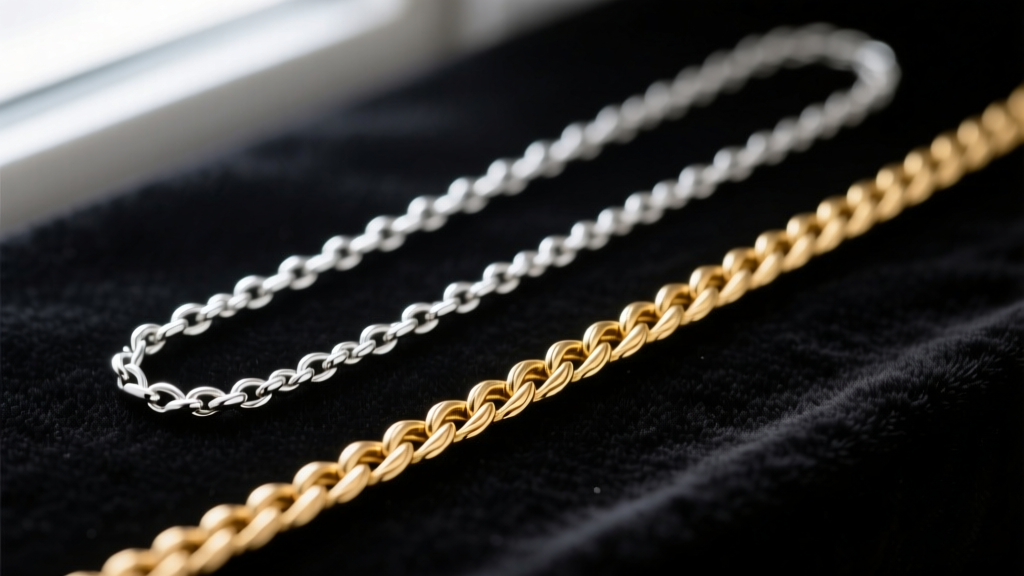
| Chain Type | Surface Texture | Friction Level | Sliding Risk |
|---|---|---|---|
| Snake Chain | Extremely Smooth / Rigid | Very Low | High |
| Box Chain | Smooth / Flat Surfaces | Low | High |
| Cable Chain | Moderate / Rounded Links | Medium | Medium |
| Rope Chain | High / Twisted Links | High | Low |
| Wheat Chain | Very High / Woven Links | Very High | Very Low |
If you are wearing a 2mm box chain or a snake chain, the lack of surface friction means that even a minor weight imbalance will result in constant clasp migration. The Jewelers of America often recommends textured chains for active wearers precisely because their higher friction coefficients help maintain the necklace's position.
4 Professional Fixes to Stop the Necklace from Flipping
If you are tired of the constant adjusting, here are four targeted troubleshooting methods to permanently fix the balance of your jewelry.
1. The Counterweight Method (Soldered or Clip-On)
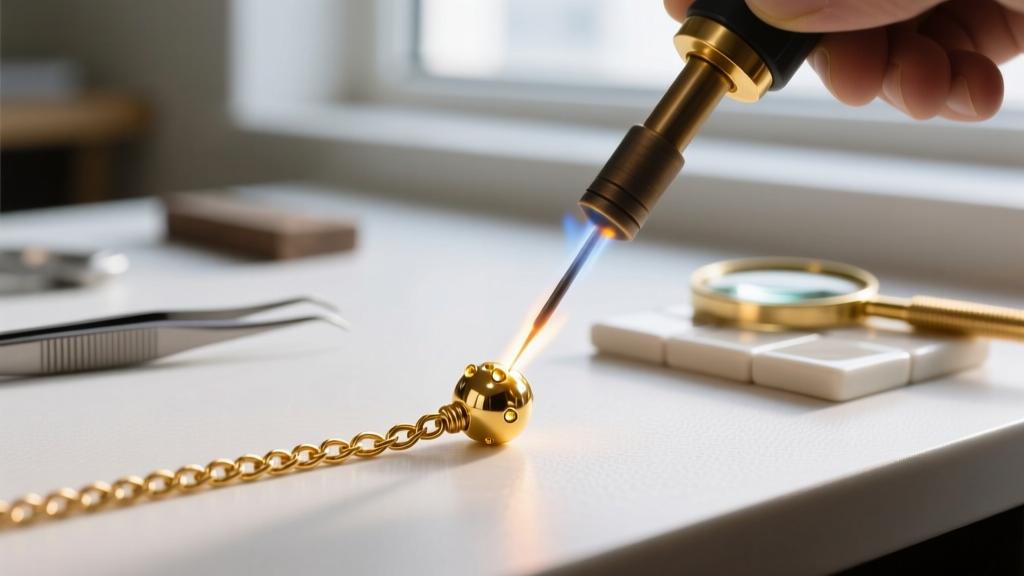
The most permanent solution is to add a counterweight to the back of the chain, directly opposite the clasp or integrated into it. A bench jeweler can solder a small 3mm or 4mm 14k gold bead (weighing about 0.2g to 0.4g) onto the jump ring adjacent to the clasp. This tiny addition of weight anchors the back of the necklace, preventing it from sliding up the slope of your neck. If you do not want to alter the chain permanently, you can purchase a decorative "clasp charm" or counterweight bead with a silicone-lined jump ring that clips onto the back of the chain and can be removed at will.
2. Silicone Clasp Stoppers
For a cheap, non-destructive, and immediate fix, use silicone O-rings. You can purchase packs of 1.5mm inner diameter silicone O-rings (often sold for jewelry making or watch repair) for under $10. By threading the chain through the O-ring before attaching the clasp, the silicone creates a high-friction barrier that grips the skin and prevents the metal clasp from gliding forward. This is especially effective for rigid snake chains and smooth box chains.
3. Upgrading to a Locking Clasp
Standard lobster clasps rely on a tiny internal spring that can weaken over time, causing the clasp to rotate freely on its jump ring. Upgrading to a specialized locking clasp—such as an X-clasp or a locking lobster clasp with a secondary safety latch—adds a slightly wider, more rigid profile to the back of the neck. The wider footprint distributes the weight more evenly and catches on the collar of your shirt or the natural crease of your neck, reducing forward migration.
4. The Chain Swap Strategy
If your pendant is heavy and your chain is a smooth box or snake style, the fundamental mismatch in friction and weight cannot always be solved with a counterweight. The best troubleshooting step is to swap the chain entirely. Move to a 1.5mm to 2.0mm wheat chain or a rope chain. The woven, textured links will grip your skin, and the structural integrity of a wheat chain is vastly superior for holding heavy pendants without stretching, keeping the entire piece anchored securely at your collarbone.
When to Consult a Bench Jeweler
While silicone stoppers and chain swaps are easy DIY fixes, you should visit a professional bench jeweler if your chain is stretching, if the jump rings are pulling apart, or if you want a seamless, soldered counterweight. Expect to pay between $35 and $65 for a jeweler to laser-weld or solder a custom gold counterweight bead onto a fine chain, ensuring the structural integrity of the precious metal is maintained without the heat damage associated with traditional torch soldering.
Pro Tip: Always check the gauge of your chain before adding heavy pendants. A 22-gauge chain (0.64mm thick) is purely decorative and will easily warp under a 5-gram pendant, permanently altering the chain's geometry and exacerbating the sliding issue. Stick to 18-gauge (1.02mm) or 16-gauge (1.29mm) chains for pendants weighing more than 4 grams.
By understanding the physics of weight distribution, metal density, and chain friction, you can easily troubleshoot why the necklace keeps shifting and apply the right mechanical fix to keep your jewelry exactly where it belongs.


