X Necklace Troubleshooting: Fix Snags, Knots & Tarnish
Troubleshoot common x necklace issues. Learn how to fix sharp pendant snags, stiff X-link chain joints, and slipping criss-cross choker knots.


The Structural Vulnerabilities of the X Necklace
The x necklace is a staple in modern jewelry boxes, spanning three distinct design categories: the literal letter X initial pendant, the structural X-link chain, and the criss-cross front-tie choker. While visually striking, the geometry of the letter X introduces unique structural vulnerabilities that standard necklaces do not face. Sharp inner angles catch on delicate fabrics, articulating X-links trap sebum and tarnish in their pivot points, and front-tie cords suffer from continuous friction-induced slippage.
As jewelry repair specialists and material experts, we see these specific failure modes constantly. Rather than retiring a damaged piece, most x necklace issues can be resolved at home with the right technical approach. Below is a comprehensive troubleshooting guide to restoring your favorite X-shaped jewelry to pristine, wearable condition.
1. The Snagging Dilemma: Filing Sharp X Pendant Bevels
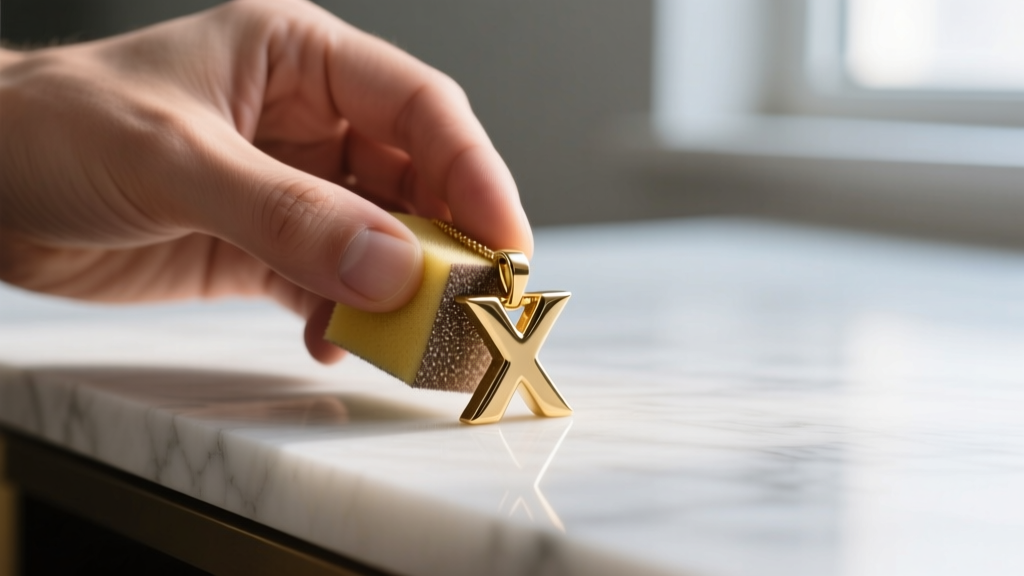
Cast letter X pendants—especially those made from brass, bronze, or sterling silver—are notorious for snagging on silk blouses and fine knits. This happens because the inner corners of the X (the acute angles where the two diagonal bars meet) are often left with sharp, unfinished bevels straight from the rubber mold casting process.
The DIY Smoothing Protocol
You do not need to send the pendant back to the manufacturer to fix this. You can safely round these inner corners using progressive abrasion without ruining the high-polish finish of the flat surfaces.
- Step 1: Secure the pendant in a rubber-jawed bench vise or hold it firmly against a leather bench pin.
- Step 2: Use a 3M Radial Bristle Disc (80 grit) mounted on a rotary tool at a low RPM (around 5,000) to gently round the sharp inner 90-degree corners. Apply zero pressure; let the bristles do the work.
- Step 3: Switch to a 600-grit, then a 1200-grit sanding sponge to hand-polish the newly rounded corners. This restores the mirror finish and eliminates the microscopic burrs that act like hooks on your clothing.
Expert Tip: Never use a standard metal file on a finished X pendant. Files leave deep, directional scratches that require a full professional repolish to remove.
2. X-Link Chain Articulation: Fixing Stiff Joints and Tarnish
X-link chains feature interlocking geometric links that lie flat against the collarbone. Because each link must pivot freely against the next, the joints are highly susceptible to accumulating a hardened mixture of dead skin cells, sebum, and silver sulfide (tarnish). When this gunk hardens, the chain loses its drape, becoming stiff and prone to permanent kinking.
Ultrasonic vs. Chemical Cleaning
Many owners make the critical mistake of using chemical silver dips (like Tarn-X) to clean X-link chains. According to the Gemological Institute of America (GIA), harsh chemical dips strip away the rhodium plating often used on white gold and sterling silver, and can cause hydrogen embrittlement in spring-hardened clasps. Furthermore, chemical dips leave a residue inside the X-link pivots that accelerates future tarnishing.
Instead, use an ultrasonic cleaner. The cavitation bubbles physically blast debris out of the microscopic gaps between the X-links.
Ultrasonic Cleaning Parameters for X-Links
| Parameter | Ideal Specification | Why It Matters |
|---|---|---|
| Frequency | 40 kHz to 45 kHz | Lower frequencies (20 kHz) are too aggressive and can pit soft metals or loosen gemstone settings on embellished X-links. |
| Temperature | 120°F - 140°F (49°C - 60°C) | Warm water softens hardened sebum, allowing the ultrasonic waves to penetrate the pivot joints effectively. |
| Solution | Ammonia-free mild surfactant | Ammonia can oxidize copper alloys (like rose gold or brass X-links). Use a dedicated jewelry ultrasonic concentrate. |
| Duration | 3 to 5 minutes | Any longer risks work-hardening the metal at the friction points, leading to micro-fractures. |
After ultrasonic cleaning, use a soft-bristled baby toothbrush to gently agitate the X-joints under warm running water, then dry immediately with a microfiber cloth to prevent water spots.
3. Criss-Cross Front-Tie X Necklaces: Stopping Knot Slippage
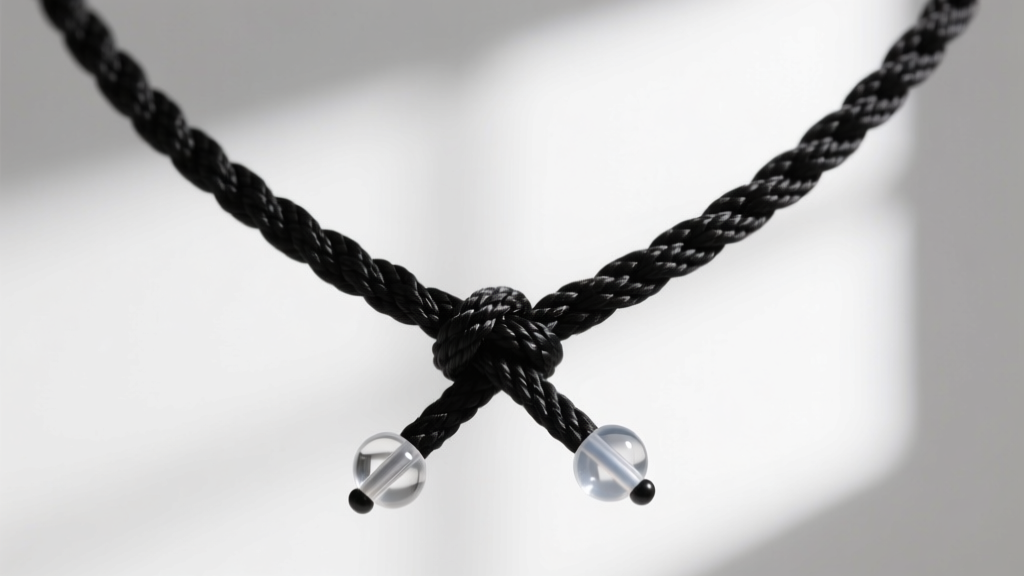
The criss-cross choker—where two cords cross in an 'X' at the front and tie at the back or slide through a central ring—is a massive trend. However, the sliding knots or friction beads used to adjust the length frequently slip throughout the day, causing the X to sit asymmetrically or hang too low.
Understanding Friction Coefficients
Slippage is a material science issue. Suede and unfinished leather cords have a low kinetic friction coefficient when exposed to the natural oils from your neck. As the cord absorbs oil, it becomes slick, and the sliding knot fails.
The Hardware Upgrade Solution
To permanently fix a slipping x necklace choker, you need to introduce a high-friction mechanical stop.
- Upgrade the Cord: Replace slick suede with 1.5mm waxed cotton cord. The wax coating provides a tacky surface that holds sliding knots securely in place while remaining flexible.
- Add Silicone Stoppers: Thread micro-silicone stopper beads (available from suppliers like Rio Grande Jewelry Supplies) onto the cord right behind the decorative sliding knot. The silicone grips the cotton fibers, creating a physical barrier that prevents the knot from creeping.
- Use a Diamond Knot: If your necklace relies on a simple overhand knot, re-tie it using a two-strand diamond knot (also known as a lanyard knot). This bulky, spherical knot creates internal friction that locks itself in place without the need for glue.
4. Bail and Jump Ring Failures on Heavy X Pendants
Because the letter X is a wide, geometric shape, cast metal X pendants tend to be heavier and have a higher center of gravity than simple circular or teardrop pendants. This creates a pendulum effect as the heavy X swings and seeks equilibrium on your chest. Over time, this constant lateral swinging fatigues the jump ring connecting the pendant to the chain.
Gauge and Hardness Upgrades
If your X pendant has pulled its jump ring open, do not simply squeeze the old ring shut with pliers. The metal has been work-hardened and will snap if bent back and forth. Instead, upgrade the finding:
- Gauge Size: Discard the standard 20-gauge or 22-gauge jump rings. Upgrade to an 18-gauge (1.0mm) or 16-gauge (1.2mm) jump ring. The thicker wire cross-section exponentially increases the tensile strength required to pull the ring open.
- Split Rings vs. Soldered Rings: For heavy solid silver or gold X pendants, use a double-loop split ring (which looks like a miniature keyring) or have a jeweler solder the jump ring closed. A soldered ring has infinite lateral strength compared to a split ring.
- Bail Reinforcement: If the hole in the X pendant's bail is wearing through the chain, insert a hardened steel bail liner or upgrade to a sterling silver tube bail to protect the chain links from abrasion.
Summary Troubleshooting Matrix
Keep this quick-reference guide handy to diagnose and treat your x necklace issues before they cause permanent damage to the piece or your wardrobe.
| Issue Identified | Root Cause | Expert Fix | Tools Required |
|---|---|---|---|
| Pendant snags on silk/knits | Sharp 90-degree inner bevels from casting | Progressive abrasion to round inner corners | 3M Radial Bristle Discs (80-400 grit), 1200-grit sanding sponge |
| X-link chain is stiff/kinked | Sebum and tarnish hardened in pivot joints | Ultrasonic cavitation cleaning at 40kHz | Ultrasonic cleaner, ammonia-free surfactant, microfiber cloth |
| Front-tie X choker slips | Low friction coefficient of oil-soaked suede | Swap to waxed cotton and add silicone stoppers | 1.5mm waxed cotton cord, micro-silicone beads, scissors |
| Jump ring pulls open | Pendulum effect fatiguing thin wire findings | Upgrade to 18-gauge or 16-gauge split/soldered rings | Chain-nose pliers, flush cutters, 18ga dead-soft jump rings |
Final Thoughts on X Necklace Maintenance
The x necklace is a bold, structural statement piece, but its geometry demands a slightly higher level of maintenance than standard jewelry. By proactively smoothing sharp casting bevels, utilizing ultrasonic technology for deep joint cleaning, and upgrading friction-dependent hardware, you can ensure your X necklaces remain flawless and functional for decades. Remember that investing a few dollars in high-quality findings—like 18-gauge jump rings and waxed cotton cords—will always outlast the temporary fixes of glue and cheap wire.


